
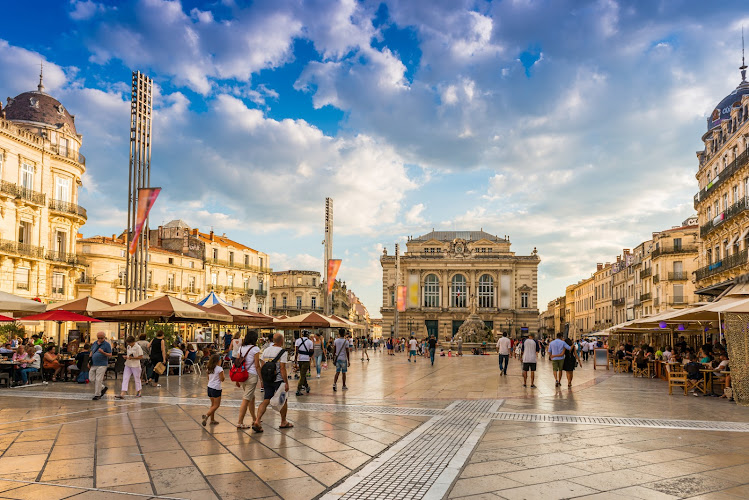
Place de la Comédie
About Place de la Comédie
Description
The Place de la Comédie in Montpellier is the kind of place that instantly pulls you in — not because it’s flashy or over-the-top, but because it feels alive in the most genuine way. It’s a huge open square, yes, but it’s also the city’s beating heart, where locals and travelers cross paths, grab a coffee, or just sit back and watch life unfold. I remember my first morning there — the air smelled faintly of roasted coffee beans and croissants, and a street artist was sketching portraits near the fountain. I didn’t plan to stay long, but somehow, two hours slipped by without me noticing.
Architecturally, this square is a masterpiece of contrasts. On one side, the grand façade of the Opéra Comédie dominates the view, while on the other, Belle Époque buildings with wrought-iron balconies line the streets. The Fontaine des Trois Grâces — created in the late 18th century — sits elegantly in the center, surrounded by people snapping photos or tossing coins for luck. The square’s layout is wide, pedestrian-friendly, and surprisingly calm despite the constant movement. There’s something grounding about it, as if the city’s long history seeps up through the cobblestones.
Of course, not everyone falls in love with it right away. Some visitors find it a bit crowded, especially in summer, and yes, it can get noisy when the café terraces fill up. But that’s part of the charm — it’s not a sterile postcard setting; it’s a living, breathing space. You’ll hear snippets of French, English, Spanish, even Occitan, and see everyone from students and street performers to elderly locals walking their dogs. It’s this blend of daily life and history that makes the Place de la Comédie feel so authentic.
And if you’re into people-watching (who isn’t?), this is your spot. Grab a seat at one of the outdoor cafés, order a café crème or maybe a glass of local rosé, and just let the world go by. The square changes character throughout the day — quiet in the early morning, bustling by noon, and almost magical when the lights of the Opéra flicker on at dusk. It’s the kind of place where you can lose track of time and not mind one bit.
Key Features
- The Opéra Comédie, an elegant 19th-century theater that anchors the square.
- The Fontaine des Trois Grâces, a beloved sculpture and meeting point for locals.
- Wide pedestrian areas ideal for strolling, photography, and street performances.
- Dozens of cafés and restaurants offering alfresco dining and local cuisine.
- Historic architecture showcasing Montpellier’s blend of classical and modern styles.
- Wheelchair-accessible entrances and parking, making it easy for all visitors to explore.
- Family-friendly environment with open spaces and entertainment for children.
What really sets this place apart, though, is the atmosphere. You can sense the centuries of history layered into its stones — from its 18th-century origins to its role as a modern-day gathering spot. Locals often call it “la Comédie” simply, which tells you everything about how central it is to daily life here. And if you’re lucky, you might stumble upon a spontaneous concert or a street performance that turns your casual stroll into something unforgettable.
Best Time to Visit
Timing matters when it comes to visiting the Place de la Comédie. Personally, I think spring and early autumn are the sweet spots. The weather’s warm but not stifling, and the light has that golden quality that makes every photo look like a painting. During summer, the square can get packed — especially in July and August when festivals bring in extra crowds. But if you thrive on energy and love a lively scene, that might be exactly your kind of experience.
Mornings are peaceful, perfect for exploring or sipping coffee before the day gets busy. By afternoon, the square fills with chatter, laughter, and the occasional street musician playing a tune that drifts through the air. Evenings are something else entirely — the buildings glow under soft lighting, and the whole square takes on a romantic, cinematic feel. If you’re a night owl, you’ll love how the cafés stay open late, blending music, conversation, and that unmistakable southern French charm.
Winter has its own appeal, too. The crowds thin out, the air turns crisp, and the holiday decorations add a cozy touch. It’s when you can really appreciate the architecture and details without distraction. So honestly, there’s no bad time to visit — it just depends on what kind of experience you’re after.
How to Get There
Getting to the Place de la Comédie is refreshingly easy. It’s right in the heart of Montpellier, so whether you’re arriving by train, tram, or on foot, you’ll find it without much effort. The main tram lines stop nearby, and if you’re coming from the Saint-Roch train station, it’s just a short walk — maybe ten minutes if you take your time. I once got slightly lost in the winding streets on my first visit, but honestly, that’s half the fun. Every turn reveals another charming café or boutique, and before you know it, you’re standing in the middle of the square.
Driving isn’t really necessary (or recommended) since the area is mostly pedestrianized, but if you must, there are underground parking options close by. For those using wheelchairs or strollers, accessibility is excellent — wide, smooth pavements and ramps make it easy to get around. And if you’re staying in the city center, you’ll likely pass through the square multiple times a day without even planning to. It’s that central.
Tips for Visiting
A few small things can make your visit even better. First, go early in the day if you want to take photos without too many people in the frame. The morning light is soft and flattering, especially on the Opéra façade. If you’re more of a night person, the square after sunset is pure magic — the mix of streetlights, music, and laughter gives it a completely different vibe.
Bring a bit of cash for street performers or local artists. They’re part of what makes the Place de la Comédie so special, and their work adds to the atmosphere. Also, don’t rush. It’s tempting to treat it as a quick stop on your itinerary, but the real magic happens when you slow down and just soak it in. Maybe order a drink at one of the cafés and strike up a conversation with the waiter — you’ll get a sense of Montpellier’s warmth and personality that no guidebook can capture.
If you’re traveling with kids, the open space is great for them to run around safely. And for accessibility, the square is well-equipped, so everyone can enjoy it comfortably. Just keep an eye on your belongings like you would in any busy public area. Lastly, if you’re visiting during one of Montpellier’s festivals or events, check the local schedule — the square often becomes the stage for parades, concerts, or art installations that transform it completely.
At the end of the day, the Place de la Comédie isn’t just a landmark — it’s an experience. It’s where the city’s past and present meet, where strangers become part of the same story for a fleeting moment. Whether you’re here for an afternoon or a week, it’s the kind of place that stays with you long after you’ve left. And honestly, that’s what travel is all about, isn’t it?
Key Features
- The Opéra Comédie, an elegant 19th-century theater that anchors the square.
- The Fontaine des Trois Grâces, a beloved sculpture and meeting point for locals.
- Wide pedestrian areas ideal for strolling, photography, and street performances.
- Dozens of cafés and restaurants offering alfresco dining and local cuisine.
- Historic architecture showcasing Montpellier’s blend of classical and modern styles.
- Wheelchair-accessible entrances and parking, making it easy for all visitors to explore.
- Family-friendly environment with open spaces and entertainment for children.
More Details
Updated November 9, 2025
Table of Contents
Description
The Place de la Comédie in Montpellier is the kind of place that instantly pulls you in — not because it’s flashy or over-the-top, but because it feels alive in the most genuine way. It’s a huge open square, yes, but it’s also the city’s beating heart, where locals and travelers cross paths, grab a coffee, or just sit back and watch life unfold. I remember my first morning there — the air smelled faintly of roasted coffee beans and croissants, and a street artist was sketching portraits near the fountain. I didn’t plan to stay long, but somehow, two hours slipped by without me noticing.
Architecturally, this square is a masterpiece of contrasts. On one side, the grand façade of the Opéra Comédie dominates the view, while on the other, Belle Époque buildings with wrought-iron balconies line the streets. The Fontaine des Trois Grâces — created in the late 18th century — sits elegantly in the center, surrounded by people snapping photos or tossing coins for luck. The square’s layout is wide, pedestrian-friendly, and surprisingly calm despite the constant movement. There’s something grounding about it, as if the city’s long history seeps up through the cobblestones.
Of course, not everyone falls in love with it right away. Some visitors find it a bit crowded, especially in summer, and yes, it can get noisy when the café terraces fill up. But that’s part of the charm — it’s not a sterile postcard setting; it’s a living, breathing space. You’ll hear snippets of French, English, Spanish, even Occitan, and see everyone from students and street performers to elderly locals walking their dogs. It’s this blend of daily life and history that makes the Place de la Comédie feel so authentic.
And if you’re into people-watching (who isn’t?), this is your spot. Grab a seat at one of the outdoor cafés, order a café crème or maybe a glass of local rosé, and just let the world go by. The square changes character throughout the day — quiet in the early morning, bustling by noon, and almost magical when the lights of the Opéra flicker on at dusk. It’s the kind of place where you can lose track of time and not mind one bit.
Key Features
- The Opéra Comédie, an elegant 19th-century theater that anchors the square.
- The Fontaine des Trois Grâces, a beloved sculpture and meeting point for locals.
- Wide pedestrian areas ideal for strolling, photography, and street performances.
- Dozens of cafés and restaurants offering alfresco dining and local cuisine.
- Historic architecture showcasing Montpellier’s blend of classical and modern styles.
- Wheelchair-accessible entrances and parking, making it easy for all visitors to explore.
- Family-friendly environment with open spaces and entertainment for children.
What really sets this place apart, though, is the atmosphere. You can sense the centuries of history layered into its stones — from its 18th-century origins to its role as a modern-day gathering spot. Locals often call it “la Comédie” simply, which tells you everything about how central it is to daily life here. And if you’re lucky, you might stumble upon a spontaneous concert or a street performance that turns your casual stroll into something unforgettable.
Best Time to Visit
Timing matters when it comes to visiting the Place de la Comédie. Personally, I think spring and early autumn are the sweet spots. The weather’s warm but not stifling, and the light has that golden quality that makes every photo look like a painting. During summer, the square can get packed — especially in July and August when festivals bring in extra crowds. But if you thrive on energy and love a lively scene, that might be exactly your kind of experience.
Mornings are peaceful, perfect for exploring or sipping coffee before the day gets busy. By afternoon, the square fills with chatter, laughter, and the occasional street musician playing a tune that drifts through the air. Evenings are something else entirely — the buildings glow under soft lighting, and the whole square takes on a romantic, cinematic feel. If you’re a night owl, you’ll love how the cafés stay open late, blending music, conversation, and that unmistakable southern French charm.
Winter has its own appeal, too. The crowds thin out, the air turns crisp, and the holiday decorations add a cozy touch. It’s when you can really appreciate the architecture and details without distraction. So honestly, there’s no bad time to visit — it just depends on what kind of experience you’re after.
How to Get There
Getting to the Place de la Comédie is refreshingly easy. It’s right in the heart of Montpellier, so whether you’re arriving by train, tram, or on foot, you’ll find it without much effort. The main tram lines stop nearby, and if you’re coming from the Saint-Roch train station, it’s just a short walk — maybe ten minutes if you take your time. I once got slightly lost in the winding streets on my first visit, but honestly, that’s half the fun. Every turn reveals another charming café or boutique, and before you know it, you’re standing in the middle of the square.
Driving isn’t really necessary (or recommended) since the area is mostly pedestrianized, but if you must, there are underground parking options close by. For those using wheelchairs or strollers, accessibility is excellent — wide, smooth pavements and ramps make it easy to get around. And if you’re staying in the city center, you’ll likely pass through the square multiple times a day without even planning to. It’s that central.
Tips for Visiting
A few small things can make your visit even better. First, go early in the day if you want to take photos without too many people in the frame. The morning light is soft and flattering, especially on the Opéra façade. If you’re more of a night person, the square after sunset is pure magic — the mix of streetlights, music, and laughter gives it a completely different vibe.
Bring a bit of cash for street performers or local artists. They’re part of what makes the Place de la Comédie so special, and their work adds to the atmosphere. Also, don’t rush. It’s tempting to treat it as a quick stop on your itinerary, but the real magic happens when you slow down and just soak it in. Maybe order a drink at one of the cafés and strike up a conversation with the waiter — you’ll get a sense of Montpellier’s warmth and personality that no guidebook can capture.
If you’re traveling with kids, the open space is great for them to run around safely. And for accessibility, the square is well-equipped, so everyone can enjoy it comfortably. Just keep an eye on your belongings like you would in any busy public area. Lastly, if you’re visiting during one of Montpellier’s festivals or events, check the local schedule — the square often becomes the stage for parades, concerts, or art installations that transform it completely.
At the end of the day, the Place de la Comédie isn’t just a landmark — it’s an experience. It’s where the city’s past and present meet, where strangers become part of the same story for a fleeting moment. Whether you’re here for an afternoon or a week, it’s the kind of place that stays with you long after you’ve left. And honestly, that’s what travel is all about, isn’t it?
Key Highlights
- The Opéra Comédie, an elegant 19th-century theater that anchors the square.
- The Fontaine des Trois Grâces, a beloved sculpture and meeting point for locals.
- Wide pedestrian areas ideal for strolling, photography, and street performances.
- Dozens of cafés and restaurants offering alfresco dining and local cuisine.
- Historic architecture showcasing Montpellier’s blend of classical and modern styles.
- Wheelchair-accessible entrances and parking, making it easy for all visitors to explore.
- Family-friendly environment with open spaces and entertainment for children.
Location
Places to Stay Near Place de la Comédie
Find and Book a Tour
Explore More Travel Guides
No reviews found! Be the first to review!
Traveler Reviews for Place de la Comédie
There are no reviews yet. Be the first one to write one.
Have you visited Place de la Comédie? Help other travelers by sharing your review.
You Might Also Like

Cathédrale Saint-Pierre de Montpellier

Aqueduc Saint-Clément

Esplanade Charles-de-Gaulle
Find Accommodations Nearby
Recommended Tours & Activities
Visitor Reviews
There are no reviews yet. Be the first one to write one.
Share Your Experience
Have you visited Place de la Comédie? Help other travelers by leaving a review.