
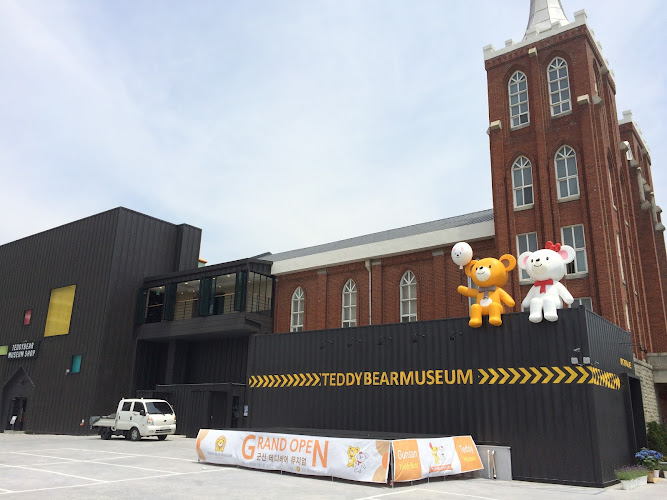
Teddy Bear Museum
About Teddy Bear Museum
Description
The Teddy Bear Museum in Gunsan, Jeonbuk, South Korea presents a curious, charming stop for travelers who like museums with personality. The museum collects teddy bears from different eras and places and arranges them into small dioramas, historical scenes, and playful exhibits that often nod to Korean culture, pop-culture moments, and global history. It is a place that feels less like a hush-of-a-traditional-museum and more like a friendly storyteller that happens to use plush animals as narrators. The tone inside tends toward whimsy, but there is genuine craft: many of the displays are well-curated, some are surprisingly artistic, and a few are intelligently informative about the history of the teddy bear and its cultural reach.
Travelers who come expecting a simple toy showcase usually leave with a richer impression — not because the museum suddenly becomes a history lecture, but because small details add up. Labels and captions often explain provenance, the era a bear represents, or the artisan techniques used. A visitor can find both factory-made mass-produced bears and handcrafted pieces displayed side by side, allowing a quick visual lesson in manufacturing, design trends, and why certain bears evoke nostalgia differently across generations.
Practical things matter here and the museum scores points for accessibility. There is a wheelchair accessible entrance, parking designed to be usable for visitors with mobility needs, and accessible restrooms. That exclusivity of thought — meaning the museum actually thinking about who will be walking in — is appreciated, especially when traveling with family members who need ramps or extra space. Onsite restrooms are present, though there is no full-service restaurant within the museum building. Snacks and light refreshments are sometimes available nearby, but visitors should plan around that when traveling with kids or scheduling a longer visit.
The layout is compact enough that it won’t swallow a whole morning, yet rich enough to occupy 60 to 90 minutes for most visitors who like to read captions, take photos, and linger at favorite scenes. The experience tends to be better when approached with curiosity rather than high expectations of museum grandeur. And yes, adults without kids often find themselves smiling at displays they didn’t expect to connect with — a little guilty pleasure that many travelers admit later. The museum does sell tickets at the entrance and occasionally offers special exhibition fees, seasonal displays, or themed events; ticketing tends to be straightforward, but carrying cash or a card is handy because sometimes small concessions or gift items are cash-only.
There are parts of the museum that highlight Korean motifs — traditional clothing, historical backdrops, and local stories rendered in teddy bear form — which is a nice way to blend global teddy-bear lore with place-based culture. Other sections play with global themes, from famous paintings reimagined with bears to miniature reenactments of historical scenes. For photographers this is unexpectedly fun: lighting is generally museum-friendly and many displays are arranged for close-up shots, though the usual museum etiquette about flash and touching applies.
It’s worth noting that the museum’s reputation is mixed among visitors; some praise the collection and family-friendly vibe, while others feel the experience could be deeper or that some exhibits show wear. This balanced reality means that the best way to enjoy the Teddy Bear Museum is to calibrate expectations: think boutique museum rather than national institution. For travelers who enjoy quirky stops, artful displays, or nostalgic dives into childhood icons, the place is an enjoyable addition to a Gunsan itinerary.
Practical tip embedded here because it matters: the museum is good for kids. There are sections designed to be engaging for younger visitors, with colorful scenes and accessible displays. Families report that children often lead the visit, pointing out details and inventing stories for the bears — which, honestly, is half the point. At the same time, parents should know that there is no sit-down restaurant inside, so plan mealtimes accordingly. A packed snack or a stop at a nearby cafe will smooth the day.
Visitors who like to integrate local exploration with museum stops will find the location convenient to other Gunsan attractions. That makes it an easy half-day outing: museum in the morning and a walk around historic neighborhoods or waterfront areas in the afternoon. Because the museum is modest in size, it pairs well with other local experiences rather than demanding an entire day. Travel itineraries that value variety will find this fit particularly well.
One small anecdote the writer notes because it often helps readers picture the place: on a chilly autumn afternoon, a small tour group trickled through and a grandmother paused the longest in front of a hand-sewn bear wearing a hanbok-like outfit. She smiled and then told a short story about a childhood toy. The group hung around, not because of a sign or a guide, but because the display invited personal memory. That moment — intimate and human — captures the museum’s oddball strength. It’s not always the flashiest attraction, but it creates those tiny moments of connection that travel is made of.
For photographers, collectors, or enthusiasts, there are elements worth noting that aren’t shouted from the ticket counter. Some bears are rare reproductions or artisan creations, and a careful walk-through reveals different eras represented by clothing style, stitching techniques, and materials. Collectors sometimes spot details that suggest a bear’s decade, and the museum labels frequently give hints. It’s a satisfying scavenger-hunt vibe for anyone with an eye for material culture. That said, if a visitor is expecting a deep academic dive on the history of toys, the experience may feel lighter than hoped; the emphasis leans toward display and delight more than rigorous scholarship.
A few operational realities round out the practical picture. The museum typically has predictable opening hours that suit daytrippers, but seasonal variations can apply. Crowds peak on weekends and during school holidays, when families show up in force. If a quieter visit is desired, weekdays or early mornings are preferable. The museum staff tend to be helpful and used to travelers; language barriers are manageable for basic questions, though bringing a translation app can be handy for detailed inquiries about exhibit descriptions or special programs.
The gift shop is small and curated, offering themed souvenirs that echo the exhibits — think small plush items, postcards, and novelty goods. Prices are what one would expect for a museum shop: not dirt cheap, but reasonable for souvenirs with regional flavor. Again, no large restaurant or cafe sits inside, so purchases here can be a nice tactile takeaway from the visit.
Accessibility and family-friendliness are repeated strengths. Wheelchair-accessible parking and restrooms, and an entrance configured for easy access, make the museum a realistic stop for visitors with mobility needs. For parents with strollers, the space is manageable though some narrower display aisles require a bit of navigation patience. The balance of child-focused exhibits with adult-appeal details helps multigenerational groups remain engaged together.
Finally, the Teddy Bear Museum works best as part of a thoughtful trip plan. Travelers who combine it with nearby historic sites, local seafood restaurants, or a stroll along Gunsan’s waterfront tend to have the most satisfying days. The museum rewards those who go in ready to be charmed rather than to be schooled, who appreciate small museum energy and the quiet pleasures of noticing craftsmanship and storytelling in tiny forms.
In short, the Teddy Bear Museum in Gunsan is a modest but memorable museum stop in Jeonbuk, South Korea. It offers family-friendly exhibits, solid accessibility features, a mix of local and global themes, and enough visual richness to make a 60–90 minute visit pleasant. It’s especially good for travelers who like offbeat cultural bites, collectors curious about plush history, or families looking for a gentle, indoor activity. For these travelers, the museum proves to be a thoughtfully curated pause in a larger Gunsan itinerary — and sometimes, that’s exactly the kind of travel memory that sticks.
Key Features
More Details
Updated August 29, 2025
Table of Contents
Description
The Teddy Bear Museum in Gunsan, Jeonbuk, South Korea presents a curious, charming stop for travelers who like museums with personality. The museum collects teddy bears from different eras and places and arranges them into small dioramas, historical scenes, and playful exhibits that often nod to Korean culture, pop-culture moments, and global history. It is a place that feels less like a hush-of-a-traditional-museum and more like a friendly storyteller that happens to use plush animals as narrators. The tone inside tends toward whimsy, but there is genuine craft: many of the displays are well-curated, some are surprisingly artistic, and a few are intelligently informative about the history of the teddy bear and its cultural reach.
Travelers who come expecting a simple toy showcase usually leave with a richer impression — not because the museum suddenly becomes a history lecture, but because small details add up. Labels and captions often explain provenance, the era a bear represents, or the artisan techniques used. A visitor can find both factory-made mass-produced bears and handcrafted pieces displayed side by side, allowing a quick visual lesson in manufacturing, design trends, and why certain bears evoke nostalgia differently across generations.
Practical things matter here and the museum scores points for accessibility. There is a wheelchair accessible entrance, parking designed to be usable for visitors with mobility needs, and accessible restrooms. That exclusivity of thought — meaning the museum actually thinking about who will be walking in — is appreciated, especially when traveling with family members who need ramps or extra space. Onsite restrooms are present, though there is no full-service restaurant within the museum building. Snacks and light refreshments are sometimes available nearby, but visitors should plan around that when traveling with kids or scheduling a longer visit.
The layout is compact enough that it won’t swallow a whole morning, yet rich enough to occupy 60 to 90 minutes for most visitors who like to read captions, take photos, and linger at favorite scenes. The experience tends to be better when approached with curiosity rather than high expectations of museum grandeur. And yes, adults without kids often find themselves smiling at displays they didn’t expect to connect with — a little guilty pleasure that many travelers admit later. The museum does sell tickets at the entrance and occasionally offers special exhibition fees, seasonal displays, or themed events; ticketing tends to be straightforward, but carrying cash or a card is handy because sometimes small concessions or gift items are cash-only.
There are parts of the museum that highlight Korean motifs — traditional clothing, historical backdrops, and local stories rendered in teddy bear form — which is a nice way to blend global teddy-bear lore with place-based culture. Other sections play with global themes, from famous paintings reimagined with bears to miniature reenactments of historical scenes. For photographers this is unexpectedly fun: lighting is generally museum-friendly and many displays are arranged for close-up shots, though the usual museum etiquette about flash and touching applies.
It’s worth noting that the museum’s reputation is mixed among visitors; some praise the collection and family-friendly vibe, while others feel the experience could be deeper or that some exhibits show wear. This balanced reality means that the best way to enjoy the Teddy Bear Museum is to calibrate expectations: think boutique museum rather than national institution. For travelers who enjoy quirky stops, artful displays, or nostalgic dives into childhood icons, the place is an enjoyable addition to a Gunsan itinerary.
Practical tip embedded here because it matters: the museum is good for kids. There are sections designed to be engaging for younger visitors, with colorful scenes and accessible displays. Families report that children often lead the visit, pointing out details and inventing stories for the bears — which, honestly, is half the point. At the same time, parents should know that there is no sit-down restaurant inside, so plan mealtimes accordingly. A packed snack or a stop at a nearby cafe will smooth the day.
Visitors who like to integrate local exploration with museum stops will find the location convenient to other Gunsan attractions. That makes it an easy half-day outing: museum in the morning and a walk around historic neighborhoods or waterfront areas in the afternoon. Because the museum is modest in size, it pairs well with other local experiences rather than demanding an entire day. Travel itineraries that value variety will find this fit particularly well.
One small anecdote the writer notes because it often helps readers picture the place: on a chilly autumn afternoon, a small tour group trickled through and a grandmother paused the longest in front of a hand-sewn bear wearing a hanbok-like outfit. She smiled and then told a short story about a childhood toy. The group hung around, not because of a sign or a guide, but because the display invited personal memory. That moment — intimate and human — captures the museum’s oddball strength. It’s not always the flashiest attraction, but it creates those tiny moments of connection that travel is made of.
For photographers, collectors, or enthusiasts, there are elements worth noting that aren’t shouted from the ticket counter. Some bears are rare reproductions or artisan creations, and a careful walk-through reveals different eras represented by clothing style, stitching techniques, and materials. Collectors sometimes spot details that suggest a bear’s decade, and the museum labels frequently give hints. It’s a satisfying scavenger-hunt vibe for anyone with an eye for material culture. That said, if a visitor is expecting a deep academic dive on the history of toys, the experience may feel lighter than hoped; the emphasis leans toward display and delight more than rigorous scholarship.
A few operational realities round out the practical picture. The museum typically has predictable opening hours that suit daytrippers, but seasonal variations can apply. Crowds peak on weekends and during school holidays, when families show up in force. If a quieter visit is desired, weekdays or early mornings are preferable. The museum staff tend to be helpful and used to travelers; language barriers are manageable for basic questions, though bringing a translation app can be handy for detailed inquiries about exhibit descriptions or special programs.
The gift shop is small and curated, offering themed souvenirs that echo the exhibits — think small plush items, postcards, and novelty goods. Prices are what one would expect for a museum shop: not dirt cheap, but reasonable for souvenirs with regional flavor. Again, no large restaurant or cafe sits inside, so purchases here can be a nice tactile takeaway from the visit.
Accessibility and family-friendliness are repeated strengths. Wheelchair-accessible parking and restrooms, and an entrance configured for easy access, make the museum a realistic stop for visitors with mobility needs. For parents with strollers, the space is manageable though some narrower display aisles require a bit of navigation patience. The balance of child-focused exhibits with adult-appeal details helps multigenerational groups remain engaged together.
Finally, the Teddy Bear Museum works best as part of a thoughtful trip plan. Travelers who combine it with nearby historic sites, local seafood restaurants, or a stroll along Gunsan’s waterfront tend to have the most satisfying days. The museum rewards those who go in ready to be charmed rather than to be schooled, who appreciate small museum energy and the quiet pleasures of noticing craftsmanship and storytelling in tiny forms.
In short, the Teddy Bear Museum in Gunsan is a modest but memorable museum stop in Jeonbuk, South Korea. It offers family-friendly exhibits, solid accessibility features, a mix of local and global themes, and enough visual richness to make a 60–90 minute visit pleasant. It’s especially good for travelers who like offbeat cultural bites, collectors curious about plush history, or families looking for a gentle, indoor activity. For these travelers, the museum proves to be a thoughtfully curated pause in a larger Gunsan itinerary — and sometimes, that’s exactly the kind of travel memory that sticks.
Key Highlights
Teddy Bear Museum
Location
Places to Stay Near Teddy Bear Museum
Find and Book a Tour
Explore More Travel Guides
No reviews found! Be the first to review!
Traveler Reviews for Teddy Bear Museum
There are no reviews yet. Be the first one to write one.
Have you visited Teddy Bear Museum? Help other travelers by sharing your review.
You Might Also Like
Gunsan Modern History Museum

Seonyudo Beach

Jinpo Marine Theme Park
Find Accommodations Nearby
Recommended Tours & Activities
Visitor Reviews
There are no reviews yet. Be the first one to write one.
Share Your Experience
Have you visited Teddy Bear Museum? Help other travelers by leaving a review.