
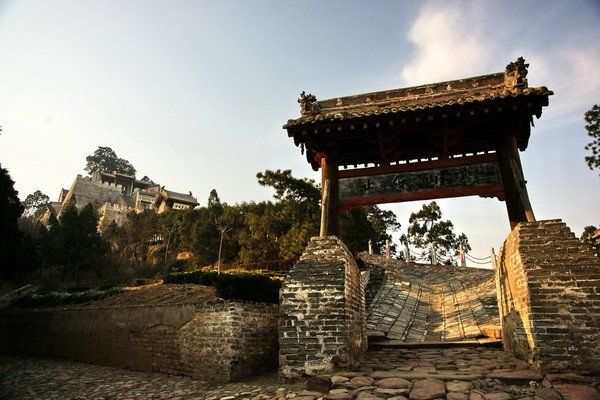
Hancheng
About Hancheng
Description
Hancheng is one of those Chinese cities that doesn’t shout for attention, and honestly, that’s part of its charm. Sitting in eastern Shaanxi Province, roughly 200 kilometers northeast of Xi’an, it rests right where the Yellow River curves and slows as it spills into the Guanzhong Plain. Geography nerds love that detail, but even if you’re not one, you’ll feel the importance of the place the moment you arrive. This city has been around for more than two millennia, and it shows, sometimes subtly, sometimes right in your face.
What struck me most the first time I visited Hancheng was how unapologetically local it feels. This isn’t a polished tourist showcase. It’s a working city with old alleyways, coal heritage, Confucian traditions, and a food culture that doesn’t bother to explain itself to outsiders. And I kind of respect that. You walk past modern apartment blocks and suddenly find a Ming-era courtyard tucked behind a noodle shop. That kind of contrast keeps you curious.
Hancheng is often associated with Sima Qian, the famous historian of the Han Dynasty, and locals take that seriously. His legacy isn’t just a museum exhibit; it’s woven into how the city talks about scholarship, honesty, and stubborn integrity. There’s a quiet pride here, not flashy, but firm. And yes, the Yellow River looms large, both physically and symbolically. It’s muddy, massive, and feels ancient in a way few rivers do.
Travelers who like glossy skylines might feel underwhelmed at first. But give Hancheng a day or two, slow your pace, wander without Google Maps glued to your hand, and it starts to open up. The city rewards patience. And good walking shoes.
Key Features
- Historic old town streets with preserved Ming and Qing dynasty courtyards
- Strong cultural link to Sima Qian, one of China’s most influential historians
- Proximity to the Yellow River, offering dramatic landscapes and local river lore
- Coal mining heritage that shaped the city’s modern identity
- Local Shaanxi cuisine that’s bold, salty, and unapologetically filling
- Traditional temples and ancestral halls still used by residents
- Less crowded attractions compared to nearby tourist-heavy cities
One small aside here: don’t underestimate the food. I once followed a group of retirees into a tiny eatery at 7 a.m. and ended up with the best bowl of hand-pulled noodles I’ve had outside Xi’an. No menu, lots of steam, zero English. Perfect.
Best Time to Visit
If you ask me, late spring and early autumn are your safest bets for visiting Hancheng. April to May brings mild temperatures and clearer skies, which is a blessing if you plan to walk the old streets or explore near the Yellow River. September and October feel similar, with cooler evenings and fewer rainstorms. Summer can be rough. It gets hot, sometimes stubbornly hot, and the humidity sneaks up on you when you least expect it.
Winter is quieter. Very quiet. And cold. But there’s a certain stark beauty to Hancheng in January, especially near the river, when the landscape looks stripped down to essentials. If you don’t mind bundling up and you enjoy seeing daily life without crowds, winter has its moments. Just don’t expect everything to be open, and pack patience along with your scarf.
Try to avoid major national holidays unless you enjoy navigating crowds and inflated prices. Hancheng isn’t as packed as Xi’an during these times, but domestic travel waves still reach here. And trust me, a calm old alley loses its magic when it turns into a shoulder-to-shoulder shuffle.
How to Get There
Most travelers reach Hancheng via Xi’an, which acts as the main transport hub in Shaanxi Province. From Xi’an, you can take a train or long-distance bus. Trains are generally more comfortable and predictable, and the journey takes a few hours depending on the service. It’s not a scenic ride per se, but watching the landscape flatten as you approach the Guanzhong Plain gives you a sense of where you’re headed.
Once you arrive in Hancheng, getting around is fairly straightforward. Taxis are affordable, and ride-hailing apps work reasonably well. The city isn’t massive, so short trips are the norm. If you’re like me and prefer walking, you’ll be happy to know that many of the historical areas are compact enough to explore on foot. Just keep an eye out for electric scooters. They come out of nowhere, I swear.
For those driving, roads are decent, though signage can be hit or miss if you don’t read Chinese. But honestly, unless you’re planning to explore remote villages nearby, public transport does the job just fine.
Tips for Visiting
First tip, and I say this with love: slow down. Hancheng isn’t a checklist destination. If you rush through it, you’ll miss the point. Sit in a small park, watch locals play cards, listen to the Shaanxi dialect roll by. That’s where the city lives.
Second, brush up on basic Mandarin phrases if you can. English isn’t widely spoken here, and while people are friendly, communication can be a puzzle. I once spent ten minutes acting out “no spicy” with hand gestures. It mostly worked. Mostly.
Food-wise, be adventurous but know your limits. Shaanxi cuisine leans heavy on wheat, oil, and strong flavors. It’s delicious, but if your stomach isn’t used to it, pace yourself. And always carry tissues. Trust me on this one.
Dress casually and practically. This isn’t a fashion city, and comfort goes a long way, especially if you plan to explore older neighborhoods with uneven stone paths. Also, keep some cash handy. While mobile payments are common, smaller shops and street vendors don’t always accept them.
Finally, manage your expectations. Hancheng won’t wow you with grand monuments at every corner. What it offers instead is a grounded, honest look at a Chinese city shaped by history, industry, and the ever-present Yellow River. If that sounds appealing, you’ll probably leave with more memories than photos. And sometimes, those are the best trips.
And hey, if you find yourself lingering longer than planned, don’t be surprised. Hancheng has a way of growing on you, quietly, one meal, one alley, one conversation at a time.
Key Features
- Historic old town streets with preserved Ming and Qing dynasty courtyards
- Strong cultural link to Sima Qian, one of China’s most influential historians
- Proximity to the Yellow River, offering dramatic landscapes and local river lore
- Coal mining heritage that shaped the city’s modern identity
- Local Shaanxi cuisine that’s bold, salty, and unapologetically filling
- Traditional temples and ancestral halls still used by residents
- Less crowded attractions compared to nearby tourist-heavy cities
More Details
Updated December 31, 2025
Table of Contents
Description
Hancheng is one of those Chinese cities that doesn’t shout for attention, and honestly, that’s part of its charm. Sitting in eastern Shaanxi Province, roughly 200 kilometers northeast of Xi’an, it rests right where the Yellow River curves and slows as it spills into the Guanzhong Plain. Geography nerds love that detail, but even if you’re not one, you’ll feel the importance of the place the moment you arrive. This city has been around for more than two millennia, and it shows, sometimes subtly, sometimes right in your face.
What struck me most the first time I visited Hancheng was how unapologetically local it feels. This isn’t a polished tourist showcase. It’s a working city with old alleyways, coal heritage, Confucian traditions, and a food culture that doesn’t bother to explain itself to outsiders. And I kind of respect that. You walk past modern apartment blocks and suddenly find a Ming-era courtyard tucked behind a noodle shop. That kind of contrast keeps you curious.
Hancheng is often associated with Sima Qian, the famous historian of the Han Dynasty, and locals take that seriously. His legacy isn’t just a museum exhibit; it’s woven into how the city talks about scholarship, honesty, and stubborn integrity. There’s a quiet pride here, not flashy, but firm. And yes, the Yellow River looms large, both physically and symbolically. It’s muddy, massive, and feels ancient in a way few rivers do.
Travelers who like glossy skylines might feel underwhelmed at first. But give Hancheng a day or two, slow your pace, wander without Google Maps glued to your hand, and it starts to open up. The city rewards patience. And good walking shoes.
Key Features
- Historic old town streets with preserved Ming and Qing dynasty courtyards
- Strong cultural link to Sima Qian, one of China’s most influential historians
- Proximity to the Yellow River, offering dramatic landscapes and local river lore
- Coal mining heritage that shaped the city’s modern identity
- Local Shaanxi cuisine that’s bold, salty, and unapologetically filling
- Traditional temples and ancestral halls still used by residents
- Less crowded attractions compared to nearby tourist-heavy cities
One small aside here: don’t underestimate the food. I once followed a group of retirees into a tiny eatery at 7 a.m. and ended up with the best bowl of hand-pulled noodles I’ve had outside Xi’an. No menu, lots of steam, zero English. Perfect.
Best Time to Visit
If you ask me, late spring and early autumn are your safest bets for visiting Hancheng. April to May brings mild temperatures and clearer skies, which is a blessing if you plan to walk the old streets or explore near the Yellow River. September and October feel similar, with cooler evenings and fewer rainstorms. Summer can be rough. It gets hot, sometimes stubbornly hot, and the humidity sneaks up on you when you least expect it.
Winter is quieter. Very quiet. And cold. But there’s a certain stark beauty to Hancheng in January, especially near the river, when the landscape looks stripped down to essentials. If you don’t mind bundling up and you enjoy seeing daily life without crowds, winter has its moments. Just don’t expect everything to be open, and pack patience along with your scarf.
Try to avoid major national holidays unless you enjoy navigating crowds and inflated prices. Hancheng isn’t as packed as Xi’an during these times, but domestic travel waves still reach here. And trust me, a calm old alley loses its magic when it turns into a shoulder-to-shoulder shuffle.
How to Get There
Most travelers reach Hancheng via Xi’an, which acts as the main transport hub in Shaanxi Province. From Xi’an, you can take a train or long-distance bus. Trains are generally more comfortable and predictable, and the journey takes a few hours depending on the service. It’s not a scenic ride per se, but watching the landscape flatten as you approach the Guanzhong Plain gives you a sense of where you’re headed.
Once you arrive in Hancheng, getting around is fairly straightforward. Taxis are affordable, and ride-hailing apps work reasonably well. The city isn’t massive, so short trips are the norm. If you’re like me and prefer walking, you’ll be happy to know that many of the historical areas are compact enough to explore on foot. Just keep an eye out for electric scooters. They come out of nowhere, I swear.
For those driving, roads are decent, though signage can be hit or miss if you don’t read Chinese. But honestly, unless you’re planning to explore remote villages nearby, public transport does the job just fine.
Tips for Visiting
First tip, and I say this with love: slow down. Hancheng isn’t a checklist destination. If you rush through it, you’ll miss the point. Sit in a small park, watch locals play cards, listen to the Shaanxi dialect roll by. That’s where the city lives.
Second, brush up on basic Mandarin phrases if you can. English isn’t widely spoken here, and while people are friendly, communication can be a puzzle. I once spent ten minutes acting out “no spicy” with hand gestures. It mostly worked. Mostly.
Food-wise, be adventurous but know your limits. Shaanxi cuisine leans heavy on wheat, oil, and strong flavors. It’s delicious, but if your stomach isn’t used to it, pace yourself. And always carry tissues. Trust me on this one.
Dress casually and practically. This isn’t a fashion city, and comfort goes a long way, especially if you plan to explore older neighborhoods with uneven stone paths. Also, keep some cash handy. While mobile payments are common, smaller shops and street vendors don’t always accept them.
Finally, manage your expectations. Hancheng won’t wow you with grand monuments at every corner. What it offers instead is a grounded, honest look at a Chinese city shaped by history, industry, and the ever-present Yellow River. If that sounds appealing, you’ll probably leave with more memories than photos. And sometimes, those are the best trips.
And hey, if you find yourself lingering longer than planned, don’t be surprised. Hancheng has a way of growing on you, quietly, one meal, one alley, one conversation at a time.
Key Highlights
- Historic old town streets with preserved Ming and Qing dynasty courtyards
- Strong cultural link to Sima Qian, one of China’s most influential historians
- Proximity to the Yellow River, offering dramatic landscapes and local river lore
- Coal mining heritage that shaped the city’s modern identity
- Local Shaanxi cuisine that’s bold, salty, and unapologetically filling
- Traditional temples and ancestral halls still used by residents
- Less crowded attractions compared to nearby tourist-heavy cities
Location
Places to Stay Near Hancheng
Find and Book a Tour
Explore More Travel Guides
No reviews found! Be the first to review!
Traveler Reviews for Hancheng
There are no reviews yet. Be the first one to write one.
Have you visited Hancheng? Help other travelers by sharing your review.
You Might Also Like
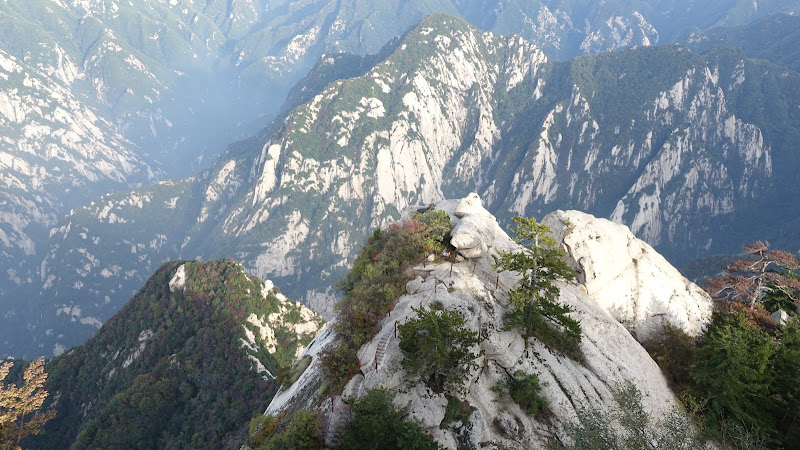
Huashan Mountain West Peak Lotus Peak
Kaiyuan Square
Find Accommodations Nearby
Recommended Tours & Activities
Visitor Reviews
There are no reviews yet. Be the first one to write one.
Share Your Experience
Have you visited Hancheng? Help other travelers by leaving a review.