
Acueducto de Querétaro
About Acueducto de Querétaro
Description
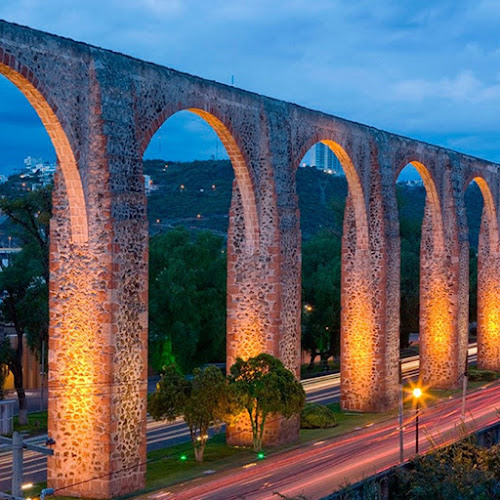
The Acueducto de Querétaro is one of those places that makes you stop mid-step and just stare. Rising proudly above the city with its 74 arches, this 18th-century aqueduct is a masterpiece of colonial engineering and a symbol of Santiago de Querétaro. It stretches nearly 1,300 meters long and soars over 28 meters high, which is pretty impressive when you remember it was built almost 300 years ago, stone by stone, without the machinery we take for granted today. Locals often call it “Los Arcos,” and honestly, once you see those sweeping arches cutting across the skyline, you’ll understand why it’s become the city’s postcard image.
What makes it even more special is that it wasn’t just built for beauty—it had a very practical purpose. The aqueduct was designed to transport clean water into the growing city, solving a problem that was critical at the time. Today, it no longer carries water, but it continues to carry a sense of pride, history, and identity for the people of Querétaro. Visitors often describe it as breathtaking, though some will say it’s “just an aqueduct” if you don’t take the time to learn its story. To me, that’s part of its charm—this blend of functionality and grandeur that’s so rare.
And here’s a little personal note: the first time I saw it, I was riding in a taxi at sunset. The driver slowed down just enough for me to catch the arches glowing in the fading light, and I swear it felt like stepping into a painting. It’s not just a monument; it’s a backdrop to everyday life in the city. People jog along its base, kids play nearby, and photographers—both professional and amateur—can’t resist snapping it from every angle. It’s one of those landmarks that feels alive because the city has grown around it, not in spite of it.
Key Features
- 74 massive stone arches, each built with local pink quarry stone
- Height of approximately 28.5 meters, making it one of Mexico’s tallest colonial aqueducts
- Length of nearly 1,300 meters, stretching dramatically across the cityscape
- Constructed between 1726 and 1738, showcasing Spanish colonial engineering
- Wheelchair accessible areas and pathways nearby for easy viewing
- Family-friendly environment, with open spaces suitable for children
- One of the most photographed landmarks in Querétaro, especially at sunrise and sunset
Best Time to Visit
If you’re asking me, the best time to see the aqueduct is early in the morning or just before sunset. The soft light makes the pink stone glow, and it’s way easier to get those dreamy photos without harsh midday shadows. Plus, mornings are quieter—you’ll mostly find joggers, dog walkers, and the occasional street vendor setting up shop. Evenings, on the other hand, bring a buzz of energy. Locals gather, traffic hums along the base, and the arches light up as the sky darkens. It’s a totally different vibe, and honestly, both are worth experiencing.
Weather-wise, Querétaro is pretty forgiving most of the year. The dry season from November to April is ideal if you want clear skies, but don’t overlook the rainy season either. I once visited in July, right after a summer shower, and the stone arches against the dark storm clouds were dramatic in a way I’ll never forget. If you’re into photography, that moody atmosphere is gold.
How to Get There
The aqueduct is hard to miss—it literally cuts across part of the city. If you’re staying downtown, you can easily walk to viewpoints, though be ready for some uphill stretches. Taxis and rideshare apps are cheap and convenient, and most drivers know exactly where to take you if you just say “Los Arcos.” Public buses also pass near the aqueduct, but unless you’re comfortable navigating local routes, I’d stick with a cab or rideshare for simplicity.
For the best panoramic views, locals often recommend heading to the Mirador de los Arcos, a lookout point that gives you a sweeping perspective of the entire structure against the city. Another option is simply strolling along Calzada de los Arcos, where you can walk right beneath the arches and feel their scale tower above you. I’ve done both, and honestly, I’d suggest doing both if you can. Seeing it from below and then from afar gives you two totally different experiences.
Tips for Visiting
Here’s the thing: while the aqueduct is open to everyone and you don’t need a ticket, a little planning makes the visit way more enjoyable. Wear comfortable shoes because you’ll want to walk around and explore different angles. Bring a camera or at least clear some space on your phone—you’ll take more photos than you expect.
If you’re traveling with kids, no worries. The open spaces around the arches are perfect for them to run around safely, and there are usually vendors selling snacks and drinks nearby. It’s also pretty accessible for those with mobility needs, though some of the sidewalks can be uneven, so watch your step.
One underrated tip: go at different times of day if your schedule allows. Morning light, afternoon hustle, and nighttime illumination each give the aqueduct a different personality. And if you’re into history, read up a little before you go. Knowing that this structure was built almost three centuries ago to solve a very real problem of water scarcity makes you appreciate it so much more.
Lastly, don’t just snap a photo and leave. Sit for a while, grab a coffee from a nearby café, and watch how the city moves around it. That’s when you really get it—the aqueduct isn’t just a monument, it’s part of daily life in Querétaro. And that’s what makes it unforgettable.
Key Features
- 74 massive stone arches, each built with local pink quarry stone
- Height of approximately 28.5 meters, making it one of Mexico’s tallest colonial aqueducts
- Length of nearly 1,300 meters, stretching dramatically across the cityscape
- Constructed between 1726 and 1738, showcasing Spanish colonial engineering
- Wheelchair accessible areas and pathways nearby for easy viewing
- Family-friendly environment, with open spaces suitable for children
- One of the most photographed landmarks in Querétaro, especially at sunrise and sunset
More Details
Updated September 23, 2025
Table of Contents
Description
The Acueducto de Querétaro is one of those places that makes you stop mid-step and just stare. Rising proudly above the city with its 74 arches, this 18th-century aqueduct is a masterpiece of colonial engineering and a symbol of Santiago de Querétaro. It stretches nearly 1,300 meters long and soars over 28 meters high, which is pretty impressive when you remember it was built almost 300 years ago, stone by stone, without the machinery we take for granted today. Locals often call it “Los Arcos,” and honestly, once you see those sweeping arches cutting across the skyline, you’ll understand why it’s become the city’s postcard image.
What makes it even more special is that it wasn’t just built for beauty—it had a very practical purpose. The aqueduct was designed to transport clean water into the growing city, solving a problem that was critical at the time. Today, it no longer carries water, but it continues to carry a sense of pride, history, and identity for the people of Querétaro. Visitors often describe it as breathtaking, though some will say it’s “just an aqueduct” if you don’t take the time to learn its story. To me, that’s part of its charm—this blend of functionality and grandeur that’s so rare.
And here’s a little personal note: the first time I saw it, I was riding in a taxi at sunset. The driver slowed down just enough for me to catch the arches glowing in the fading light, and I swear it felt like stepping into a painting. It’s not just a monument; it’s a backdrop to everyday life in the city. People jog along its base, kids play nearby, and photographers—both professional and amateur—can’t resist snapping it from every angle. It’s one of those landmarks that feels alive because the city has grown around it, not in spite of it.
Key Features
- 74 massive stone arches, each built with local pink quarry stone
- Height of approximately 28.5 meters, making it one of Mexico’s tallest colonial aqueducts
- Length of nearly 1,300 meters, stretching dramatically across the cityscape
- Constructed between 1726 and 1738, showcasing Spanish colonial engineering
- Wheelchair accessible areas and pathways nearby for easy viewing
- Family-friendly environment, with open spaces suitable for children
- One of the most photographed landmarks in Querétaro, especially at sunrise and sunset
Best Time to Visit
If you’re asking me, the best time to see the aqueduct is early in the morning or just before sunset. The soft light makes the pink stone glow, and it’s way easier to get those dreamy photos without harsh midday shadows. Plus, mornings are quieter—you’ll mostly find joggers, dog walkers, and the occasional street vendor setting up shop. Evenings, on the other hand, bring a buzz of energy. Locals gather, traffic hums along the base, and the arches light up as the sky darkens. It’s a totally different vibe, and honestly, both are worth experiencing.
Weather-wise, Querétaro is pretty forgiving most of the year. The dry season from November to April is ideal if you want clear skies, but don’t overlook the rainy season either. I once visited in July, right after a summer shower, and the stone arches against the dark storm clouds were dramatic in a way I’ll never forget. If you’re into photography, that moody atmosphere is gold.
How to Get There
The aqueduct is hard to miss—it literally cuts across part of the city. If you’re staying downtown, you can easily walk to viewpoints, though be ready for some uphill stretches. Taxis and rideshare apps are cheap and convenient, and most drivers know exactly where to take you if you just say “Los Arcos.” Public buses also pass near the aqueduct, but unless you’re comfortable navigating local routes, I’d stick with a cab or rideshare for simplicity.
For the best panoramic views, locals often recommend heading to the Mirador de los Arcos, a lookout point that gives you a sweeping perspective of the entire structure against the city. Another option is simply strolling along Calzada de los Arcos, where you can walk right beneath the arches and feel their scale tower above you. I’ve done both, and honestly, I’d suggest doing both if you can. Seeing it from below and then from afar gives you two totally different experiences.
Tips for Visiting
Here’s the thing: while the aqueduct is open to everyone and you don’t need a ticket, a little planning makes the visit way more enjoyable. Wear comfortable shoes because you’ll want to walk around and explore different angles. Bring a camera or at least clear some space on your phone—you’ll take more photos than you expect.
If you’re traveling with kids, no worries. The open spaces around the arches are perfect for them to run around safely, and there are usually vendors selling snacks and drinks nearby. It’s also pretty accessible for those with mobility needs, though some of the sidewalks can be uneven, so watch your step.
One underrated tip: go at different times of day if your schedule allows. Morning light, afternoon hustle, and nighttime illumination each give the aqueduct a different personality. And if you’re into history, read up a little before you go. Knowing that this structure was built almost three centuries ago to solve a very real problem of water scarcity makes you appreciate it so much more.
Lastly, don’t just snap a photo and leave. Sit for a while, grab a coffee from a nearby café, and watch how the city moves around it. That’s when you really get it—the aqueduct isn’t just a monument, it’s part of daily life in Querétaro. And that’s what makes it unforgettable.
Key Highlights
- 74 massive stone arches, each built with local pink quarry stone
- Height of approximately 28.5 meters, making it one of Mexico’s tallest colonial aqueducts
- Length of nearly 1,300 meters, stretching dramatically across the cityscape
- Constructed between 1726 and 1738, showcasing Spanish colonial engineering
- Wheelchair accessible areas and pathways nearby for easy viewing
- Family-friendly environment, with open spaces suitable for children
- One of the most photographed landmarks in Querétaro, especially at sunrise and sunset
Location
Places to Stay Near Acueducto de Querétaro
Find and Book a Tour
Explore More Travel Guides
No reviews found! Be the first to review!
Traveler Reviews for Acueducto de Querétaro
There are no reviews yet. Be the first one to write one.
Have you visited Acueducto de Querétaro? Help other travelers by sharing your review.
You Might Also Like

Templo de San Francisco

Mirador de los Arcos

Mucal Museum Calendar
Find Accommodations Nearby
Recommended Tours & Activities
Visitor Reviews
There are no reviews yet. Be the first one to write one.
Share Your Experience
Have you visited Acueducto de Querétaro? Help other travelers by leaving a review.