
The Grand Kugel
About The Grand Kugel
Description
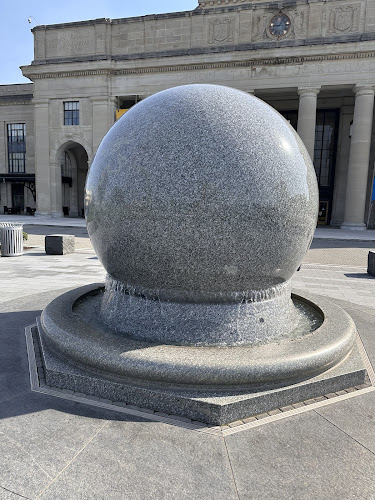
The Grand Kugel in Richmond, Virginia, is one of those places that makes you stop mid-step and just stare for a moment. It’s a 29-ton granite sphere that floats—yes, floats—on a thin layer of water. The idea sounds almost impossible until you see it with your own eyes. Carved from solid South African black granite, the massive globe sits outside the Science Museum of Virginia, quietly spinning and glistening under the sunlight. It’s not flashy or loud, but it has this quiet power that draws people in.
I remember the first time I saw it—I was expecting something a bit smaller, maybe the size of a beach ball or something you could wrap your arms around. But no, this thing is nearly nine feet in diameter and weighs as much as a small herd of elephants. The engineering behind it is mind-blowing. Water pressure lifts the entire stone just enough that it can rotate with the gentlest push of a hand. Kids love it because they can actually move something that seems immovable. Adults? They just stand there, scratching their heads, wondering how on earth it works.
What’s fascinating is that the Grand Kugel isn’t just a random piece of art. It’s part of the Mary Morton Parsons Earth-Moon Sculpture, which includes a smaller kugel representing the Moon placed about 250 feet away at a scale distance. The concept ties science and art together beautifully—it’s a visual representation of our planet and its satellite, all in motion, all powered by water and gravity. There’s something poetic about that, don’t you think?
The sculpture has had its ups and downs over the years. The original globe developed cracks and had to be replaced, which was a pretty big deal for the locals. But the museum restored it, and now it’s back to its mesmerizing, floating glory. The Grand Kugel has become one of those must-see Richmond landmarks that people talk about long after their visit. It’s the kind of spot where you can take a quiet moment, rest your mind, and feel oddly connected to something bigger—literally and figuratively.
Key Features
- Recognized as the world’s largest floating granite sphere, weighing approximately 29 tons.
- Carved from solid South African black granite, polished to a flawless shine.
- Operates on a thin film of water that allows the massive sphere to rotate effortlessly.
- Part of the Mary Morton Parsons Earth-Moon Sculpture, symbolizing Earth and its Moon at scale.
- Located outside the Science Museum of Virginia, easily accessible to both museum visitors and passersby.
- Wheelchair-accessible and family-friendly, with plenty of open space for kids to explore safely.
- Photogenic from every angle—especially when the sunlight hits the granite just right.
Best Time to Visit
If you’re planning to see the Grand Kugel, timing can make a big difference. I’ve been there on chilly winter mornings when the mist from the water catches the sunlight and creates this faint halo around the sphere—it’s magical, but your fingers might go numb if you linger too long. Spring and fall, though, are just about perfect. The weather’s mild, and the surrounding gardens and museum grounds have that fresh, lively feel.
Summer afternoons can get a bit crowded, especially when school’s out and families are exploring the Science Museum. But honestly, watching kids react to the Kugel for the first time is part of the fun. They push it, giggle when it moves, and then call their parents over to try. If you prefer a quieter moment, go early in the morning or late in the afternoon. The light is softer then, and the granite seems to glow from within.
How to Get There
Reaching the Grand Kugel is pretty straightforward, whether you’re driving, biking, or taking public transportation. It’s right along one of Richmond’s main thoroughfares, so you really can’t miss it. There’s plenty of parking nearby, including accessible spots for visitors who need them. If you’re using public transit, several bus routes stop close to the Science Museum area.
For those exploring Richmond on foot or by bike, it’s a pleasant stop along a route filled with other interesting landmarks and eateries. I’ve often grabbed a coffee from a nearby café and just sat on one of the benches watching people interact with the sculpture. It’s that kind of place—casual, open, and easy to enjoy without a lot of planning.
Tips for Visiting
Here’s the thing about the Grand Kugel—it’s simple, but it rewards curiosity. Don’t just glance at it and move on. Walk around it. Touch it. Give it a gentle push and watch how it glides with almost no resistance. It’s oddly satisfying, almost meditative.
- Go early or late in the day: You’ll avoid the crowds and get better lighting for photos. The reflections on the granite are especially stunning during golden hour.
- Bring kids or curious friends: It’s one of those rare attractions that’s both educational and fun. Everyone ends up learning something about physics without even realizing it.
- Check out the smaller “Moon” kugel: It’s easy to miss, but it’s part of the same art installation and adds a neat perspective on scale.
- Stay for the Science Museum: If you’ve got time, the museum itself is worth exploring. It’s full of interactive exhibits that complement the scientific wonder of the Kugel outside.
- Don’t rush: The Kugel isn’t about spectacle—it’s about subtle amazement. Take a few minutes to appreciate the craftsmanship and the physics that make it possible.
One small piece of advice from personal experience—if you’re visiting on a hot summer day, bring water. The granite absorbs heat, and while it’s not uncomfortable, standing there under the sun for too long can make you wish you had a cold drink handy. Also, if you’re into photography, bring a wide-angle lens. The sphere’s size can be tricky to capture otherwise, and the reflections of the sky and nearby buildings make for some incredible shots.
And if you’re the kind of traveler who loves discovering those “hidden in plain sight” spots, the Grand Kugel is exactly that. It’s not a massive tourist trap, but it’s one of those experiences that sticks with you. You walk away thinking about how something so heavy can move so easily, and maybe, just maybe, you start thinking about balance in your own life too. Funny how art and science can do that sometimes.
So, whether you’re in Richmond for a weekend getaway or just passing through, carve out a few minutes to visit this engineering marvel. It’s a quiet wonder, a bit of science, a bit of art, and a whole lot of human ingenuity—all rolled into one perfectly round, floating masterpiece.
Key Features
- Recognized as the world’s largest floating granite sphere, weighing approximately 29 tons.
- Carved from solid South African black granite, polished to a flawless shine.
- Operates on a thin film of water that allows the massive sphere to rotate effortlessly.
- Part of the Mary Morton Parsons Earth-Moon Sculpture, symbolizing Earth and its Moon at scale.
- Located outside the Science Museum of Virginia, easily accessible to both museum visitors and passersby.
- Wheelchair-accessible and family-friendly, with plenty of open space for kids to explore safely.
- Photogenic from every angle—especially when the sunlight hits the granite just right.
More Details
Updated October 9, 2025
Table of Contents
Description
The Grand Kugel in Richmond, Virginia, is one of those places that makes you stop mid-step and just stare for a moment. It’s a 29-ton granite sphere that floats—yes, floats—on a thin layer of water. The idea sounds almost impossible until you see it with your own eyes. Carved from solid South African black granite, the massive globe sits outside the Science Museum of Virginia, quietly spinning and glistening under the sunlight. It’s not flashy or loud, but it has this quiet power that draws people in.
I remember the first time I saw it—I was expecting something a bit smaller, maybe the size of a beach ball or something you could wrap your arms around. But no, this thing is nearly nine feet in diameter and weighs as much as a small herd of elephants. The engineering behind it is mind-blowing. Water pressure lifts the entire stone just enough that it can rotate with the gentlest push of a hand. Kids love it because they can actually move something that seems immovable. Adults? They just stand there, scratching their heads, wondering how on earth it works.
What’s fascinating is that the Grand Kugel isn’t just a random piece of art. It’s part of the Mary Morton Parsons Earth-Moon Sculpture, which includes a smaller kugel representing the Moon placed about 250 feet away at a scale distance. The concept ties science and art together beautifully—it’s a visual representation of our planet and its satellite, all in motion, all powered by water and gravity. There’s something poetic about that, don’t you think?
The sculpture has had its ups and downs over the years. The original globe developed cracks and had to be replaced, which was a pretty big deal for the locals. But the museum restored it, and now it’s back to its mesmerizing, floating glory. The Grand Kugel has become one of those must-see Richmond landmarks that people talk about long after their visit. It’s the kind of spot where you can take a quiet moment, rest your mind, and feel oddly connected to something bigger—literally and figuratively.
Key Features
- Recognized as the world’s largest floating granite sphere, weighing approximately 29 tons.
- Carved from solid South African black granite, polished to a flawless shine.
- Operates on a thin film of water that allows the massive sphere to rotate effortlessly.
- Part of the Mary Morton Parsons Earth-Moon Sculpture, symbolizing Earth and its Moon at scale.
- Located outside the Science Museum of Virginia, easily accessible to both museum visitors and passersby.
- Wheelchair-accessible and family-friendly, with plenty of open space for kids to explore safely.
- Photogenic from every angle—especially when the sunlight hits the granite just right.
Best Time to Visit
If you’re planning to see the Grand Kugel, timing can make a big difference. I’ve been there on chilly winter mornings when the mist from the water catches the sunlight and creates this faint halo around the sphere—it’s magical, but your fingers might go numb if you linger too long. Spring and fall, though, are just about perfect. The weather’s mild, and the surrounding gardens and museum grounds have that fresh, lively feel.
Summer afternoons can get a bit crowded, especially when school’s out and families are exploring the Science Museum. But honestly, watching kids react to the Kugel for the first time is part of the fun. They push it, giggle when it moves, and then call their parents over to try. If you prefer a quieter moment, go early in the morning or late in the afternoon. The light is softer then, and the granite seems to glow from within.
How to Get There
Reaching the Grand Kugel is pretty straightforward, whether you’re driving, biking, or taking public transportation. It’s right along one of Richmond’s main thoroughfares, so you really can’t miss it. There’s plenty of parking nearby, including accessible spots for visitors who need them. If you’re using public transit, several bus routes stop close to the Science Museum area.
For those exploring Richmond on foot or by bike, it’s a pleasant stop along a route filled with other interesting landmarks and eateries. I’ve often grabbed a coffee from a nearby café and just sat on one of the benches watching people interact with the sculpture. It’s that kind of place—casual, open, and easy to enjoy without a lot of planning.
Tips for Visiting
Here’s the thing about the Grand Kugel—it’s simple, but it rewards curiosity. Don’t just glance at it and move on. Walk around it. Touch it. Give it a gentle push and watch how it glides with almost no resistance. It’s oddly satisfying, almost meditative.
- Go early or late in the day: You’ll avoid the crowds and get better lighting for photos. The reflections on the granite are especially stunning during golden hour.
- Bring kids or curious friends: It’s one of those rare attractions that’s both educational and fun. Everyone ends up learning something about physics without even realizing it.
- Check out the smaller “Moon” kugel: It’s easy to miss, but it’s part of the same art installation and adds a neat perspective on scale.
- Stay for the Science Museum: If you’ve got time, the museum itself is worth exploring. It’s full of interactive exhibits that complement the scientific wonder of the Kugel outside.
- Don’t rush: The Kugel isn’t about spectacle—it’s about subtle amazement. Take a few minutes to appreciate the craftsmanship and the physics that make it possible.
One small piece of advice from personal experience—if you’re visiting on a hot summer day, bring water. The granite absorbs heat, and while it’s not uncomfortable, standing there under the sun for too long can make you wish you had a cold drink handy. Also, if you’re into photography, bring a wide-angle lens. The sphere’s size can be tricky to capture otherwise, and the reflections of the sky and nearby buildings make for some incredible shots.
And if you’re the kind of traveler who loves discovering those “hidden in plain sight” spots, the Grand Kugel is exactly that. It’s not a massive tourist trap, but it’s one of those experiences that sticks with you. You walk away thinking about how something so heavy can move so easily, and maybe, just maybe, you start thinking about balance in your own life too. Funny how art and science can do that sometimes.
So, whether you’re in Richmond for a weekend getaway or just passing through, carve out a few minutes to visit this engineering marvel. It’s a quiet wonder, a bit of science, a bit of art, and a whole lot of human ingenuity—all rolled into one perfectly round, floating masterpiece.
Key Highlights
- Recognized as the world’s largest floating granite sphere, weighing approximately 29 tons.
- Carved from solid South African black granite, polished to a flawless shine.
- Operates on a thin film of water that allows the massive sphere to rotate effortlessly.
- Part of the Mary Morton Parsons Earth-Moon Sculpture, symbolizing Earth and its Moon at scale.
- Located outside the Science Museum of Virginia, easily accessible to both museum visitors and passersby.
- Wheelchair-accessible and family-friendly, with plenty of open space for kids to explore safely.
- Photogenic from every angle—especially when the sunlight hits the granite just right.
Location
Places to Stay Near The Grand Kugel
Find and Book a Tour
Explore More Travel Guides
No reviews found! Be the first to review!
Traveler Reviews for The Grand Kugel
There are no reviews yet. Be the first one to write one.
Have you visited The Grand Kugel? Help other travelers by sharing your review.
You Might Also Like
Richmond, BC V7C
Rosie the Riveter National Historical Park

Richmond Park
Find Accommodations Nearby
Recommended Tours & Activities
Visitor Reviews
There are no reviews yet. Be the first one to write one.
Share Your Experience
Have you visited The Grand Kugel? Help other travelers by leaving a review.