
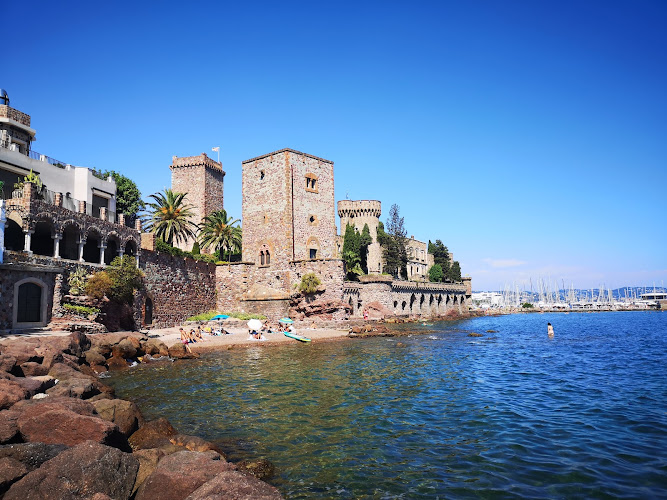
Château de la Napoule
About Château de la Napoule
Description
Step through the iron gates and it’s like you’ve wandered off your timeline and into a living daydream. Château de la Napoule somehow manages to be bold and whimsical, romantic and resolute, all at once. I’ll be perfectly honest: I didn’t expect to fall so hard for a castle perched right at the edge of the Mediterranean, but the mix of gothic towers and sunlit terraces just gets under your skin. If you meander its labyrinthine corridors and sun-dappled gardens, it quickly becomes clear Château de la Napoule isn’t your average French chateau—it’s a canvas, a sculpture, an artist’s playground, a testament to what obsession and artistry can build from ruins.
At its heart is the story of Henry Clews Jr., an eccentric American sculptor who stumbled upon this ruined medieval fortress in the early 20th century with his equally bold wife Marie. The place was crumbling (honestly, a lot of folks would have walked away), but they saw potential. Henry, brushes and sculpting tools in hand, fell in love with the stones and, like any committed artist, poured years into transforming it into a surreal wonderland infused with his own creative vision. Today, the chateau is still animated by this artistic energy, now serving as a museum and arts hub. Walk around, and it’s as if the walls themselves might crack a wry smile—or, at the very least, wink at you as you pass.
Most folks come here expecting just another castle, but what they actually discover is a true oddity in the best way. You’ll find sculptures peeking out of archways, bizarre carvings on the walls, gothic windows framing sea views, even whimsical mosaics. There’s a magical feeling, and the Mediterranean breeze doesn’t hurt. Travelers, artists, history buffs, families with whimsical kids—all end up a little spellbound. Like that one time I found myself staring at what I thought was a grotesque little gargoyle, only for a friendly docent to tell me it actually represented Clews’ pet monkey. Where else do you get that?
It isn’t crowded with gold leaf and velvet ropes, nor does it boast Versailles-level grandeur. But there’s irreverent humor here, deep storytelling, and quirky artistic bravado wrapped into every stone—plus sweeping sea views, a lush garden, and a surprising sense of peace. I’d call it one of the French Riviera’s most distinctive and playful historic sites, and a place where you can just breathe, gawk, and maybe get inspired to create something, too.
Key Features
- Rich Artistic Heritage: Home and studio of Henry Clews Jr., with his whimsical sculptures and paintings on show throughout the castle and garden.
- Museum and Arts Center: Hosts seasonal exhibitions, workshops, cultural residency programs, and events focusing on contemporary art. The programs sometimes bring a real buzz to the old stone walls.
- Enchanting Gardens: The terraced gardens offer a winding, almost maze-like layout, brimming with Mediterranean plants, secret corners, fountains, and sea views that’ll fill up your camera roll in no time.
- Historical Oddities: From ancient dungeons to playful mosaics, hidden symbolism in nearly every carving, and the Clews’ “eternal love tomb” (a touch gothic, a smidge romantic, unquestionably unusual).
- Family-Friendly Activities: Kids always seem smitten with the garden and story-driven tours—there’s a fairy-tale flavor and a heap of creative programs tailored for little ones.
- LGBTQ+ Friendly and Inclusive: Safe, welcoming space for all travelers; notably open and diverse atmosphere, which, frankly, makes everyone feel more at ease.
- Free Street Parking: More rare than you’d expect on the Riviera—leave the stress of parking tickets behind.
- Panorama on the Azure Coast: Sweeping sea views from ramparts and gardens—a perfect backdrop for those “wish you were here” moments.
- Events & Weddings: Available as a venue, with a reputation for unforgettable settings for special occasions (if you’re the type to dream about fairy-tale weddings or just wild parties beside the sea).
- Quirky Tours with Personal Stories: Tours often led by deeply knowledgeable guides who truly seem to love the place—sometimes even tossing in weird, wonderful tidbits hidden from guidebooks.
Best Time to Visit
Let’s talk seasons, because, honestly, your experience can flip completely depending on when you turn up. Spring (March to June) is a personal favorite. The gardens burst with color, the Mediterranean air has that sweet salty tang, and crowds are just sparse enough that you can twirl around the fountains without bumping elbows. I always say: if you hate queuing, avoid high summer. July and August mean throngs of travelers (not quite Times Square, but you’ll feel it), and the coastal heat can get pretty intense—not exactly ideal castle-exploring weather if you ask me.
Autumn (September through early November) is magic—cooler temps, golden light, and a bit of that nostalgic hush as the Riviera slows down. If you’re into photography, this is the moment for that soft glow over sea and stone. Winter is perfectly peaceful. Sure, some exhibits might be closed, and you won’t want to picnic in the gardens, but the tranquility...oh, it’s sublime, especially for soaking up the history sans clamor. The chateau sometimes hosts festive holiday events, too, which definitely shake up the quiet with a creative twist.
How to Get There
Trust me, getting to Château de la Napoule shouldn’t be daunting. If you’re already somewhere along the Côte d’Azur, great news: you’ve got choices. Coming by car is easiest—especially with the luxury of free street parking nearby (a tiny miracle, frankly, in this part of France). Simply follow the main coastal road, soak up those sea views, and keep your eyes peeled for the medieval towers.
If you’re a fan of public transit—I usually am, for that local vibe and to dodge parking angst—the SNCF Mandelieu-La Napoule train station is less than 10 minutes on foot. Trains here are frequent and link up easily from Cannes or Nice. There’s also a decent bus network connecting most of the coastal towns, though service can be patchy in late evenings or on Sundays (one lesson I learned the hard way—don’t be me).
Cyclists and walkers: there’s a lovely coastal path running just nearby, so if you’re the kind who enjoys ambling with salt spray in your hair, that’s an option too. Taxis and ride-sharing operate regularly, though during festival weekends or high summer, book ahead unless you enjoy long waits and grumpy drivers. My big tip is: check local schedules, as French Riviera transport tends to be...let’s say, liberated from strict punctuality.
Tips for Visiting
- Set aside at least 2 hours. There’s much more to explore than meets the eye—from hidden galleries to garden mazes and the odd secret door (yes, actual secret doors).
- Bring sun protection. Even in spring, those gardens get bright, and shaded corners fill up fast around noon.
- Pack a snack. There’s sometimes a small café, sometimes not. The rules of “French opening hours” can be very creative, so it’s smart to have a snack or picnic—don’t count on baguettes magically appearing.
- Check for temporary exhibitions and events. These can be the highlight of your visit. The resident artists or special exhibits bring extra flair—and sometimes, artistic chaos of the good kind.
- Dress for stairs and uneven ground. The castle’s charm is also its wildness—think cobblestones, hidden nooks, lots of steps. Heels or flip-flops? Not your friends here.
- Photography is encouraged—in most places. But keep an eye out for signs; a few sections are protected for conservation (or maybe just to keep things mysterious).
- Guided tours are worth it. The guides inject infectious passion and surprise you with anecdotes that don’t show up in any printed flyer (like the one about the missing gargoyle or the eccentric artist parties of the 1920s).
- Accessibility: Not all areas are wheelchair-friendly, and there’s no wheelchair-accessible restroom, unfortunately. Call ahead if mobility is a concern, and staff are usually eager to help as best as they can.
- Family Travelers: Kids love the fantasy feel and garden games, but keep a close watch—old castles come with sudden steps, pond edges, and one or two slightly spooky statues. (My niece still talks about the dragon fountain for days after.)
- Support local artists. The shop and rotating exhibits often include works from newer generations. Picking up a print or ceramic is a fantastic way to bring a piece of
Key Features
- Key Features
- Best Time to Visit
- How to Get There
- Tips for Visiting
More Details
Updated June 25, 2025
Table of Contents
Description
Step through the iron gates and it’s like you’ve wandered off your timeline and into a living daydream. Château de la Napoule somehow manages to be bold and whimsical, romantic and resolute, all at once. I’ll be perfectly honest: I didn’t expect to fall so hard for a castle perched right at the edge of the Mediterranean, but the mix of gothic towers and sunlit terraces just gets under your skin. If you meander its labyrinthine corridors and sun-dappled gardens, it quickly becomes clear Château de la Napoule isn’t your average French chateau—it’s a canvas, a sculpture, an artist’s playground, a testament to what obsession and artistry can build from ruins.
At its heart is the story of Henry Clews Jr., an eccentric American sculptor who stumbled upon this ruined medieval fortress in the early 20th century with his equally bold wife Marie. The place was crumbling (honestly, a lot of folks would have walked away), but they saw potential. Henry, brushes and sculpting tools in hand, fell in love with the stones and, like any committed artist, poured years into transforming it into a surreal wonderland infused with his own creative vision. Today, the chateau is still animated by this artistic energy, now serving as a museum and arts hub. Walk around, and it’s as if the walls themselves might crack a wry smile—or, at the very least, wink at you as you pass.
Most folks come here expecting just another castle, but what they actually discover is a true oddity in the best way. You’ll find sculptures peeking out of archways, bizarre carvings on the walls, gothic windows framing sea views, even whimsical mosaics. There’s a magical feeling, and the Mediterranean breeze doesn’t hurt. Travelers, artists, history buffs, families with whimsical kids—all end up a little spellbound. Like that one time I found myself staring at what I thought was a grotesque little gargoyle, only for a friendly docent to tell me it actually represented Clews’ pet monkey. Where else do you get that?
It isn’t crowded with gold leaf and velvet ropes, nor does it boast Versailles-level grandeur. But there’s irreverent humor here, deep storytelling, and quirky artistic bravado wrapped into every stone—plus sweeping sea views, a lush garden, and a surprising sense of peace. I’d call it one of the French Riviera’s most distinctive and playful historic sites, and a place where you can just breathe, gawk, and maybe get inspired to create something, too.
Key Features
- Rich Artistic Heritage: Home and studio of Henry Clews Jr., with his whimsical sculptures and paintings on show throughout the castle and garden.
- Museum and Arts Center: Hosts seasonal exhibitions, workshops, cultural residency programs, and events focusing on contemporary art. The programs sometimes bring a real buzz to the old stone walls.
- Enchanting Gardens: The terraced gardens offer a winding, almost maze-like layout, brimming with Mediterranean plants, secret corners, fountains, and sea views that’ll fill up your camera roll in no time.
- Historical Oddities: From ancient dungeons to playful mosaics, hidden symbolism in nearly every carving, and the Clews’ “eternal love tomb” (a touch gothic, a smidge romantic, unquestionably unusual).
- Family-Friendly Activities: Kids always seem smitten with the garden and story-driven tours—there’s a fairy-tale flavor and a heap of creative programs tailored for little ones.
- LGBTQ+ Friendly and Inclusive: Safe, welcoming space for all travelers; notably open and diverse atmosphere, which, frankly, makes everyone feel more at ease.
- Free Street Parking: More rare than you’d expect on the Riviera—leave the stress of parking tickets behind.
- Panorama on the Azure Coast: Sweeping sea views from ramparts and gardens—a perfect backdrop for those “wish you were here” moments.
- Events & Weddings: Available as a venue, with a reputation for unforgettable settings for special occasions (if you’re the type to dream about fairy-tale weddings or just wild parties beside the sea).
- Quirky Tours with Personal Stories: Tours often led by deeply knowledgeable guides who truly seem to love the place—sometimes even tossing in weird, wonderful tidbits hidden from guidebooks.
Best Time to Visit
Let’s talk seasons, because, honestly, your experience can flip completely depending on when you turn up. Spring (March to June) is a personal favorite. The gardens burst with color, the Mediterranean air has that sweet salty tang, and crowds are just sparse enough that you can twirl around the fountains without bumping elbows. I always say: if you hate queuing, avoid high summer. July and August mean throngs of travelers (not quite Times Square, but you’ll feel it), and the coastal heat can get pretty intense—not exactly ideal castle-exploring weather if you ask me.
Autumn (September through early November) is magic—cooler temps, golden light, and a bit of that nostalgic hush as the Riviera slows down. If you’re into photography, this is the moment for that soft glow over sea and stone. Winter is perfectly peaceful. Sure, some exhibits might be closed, and you won’t want to picnic in the gardens, but the tranquility…oh, it’s sublime, especially for soaking up the history sans clamor. The chateau sometimes hosts festive holiday events, too, which definitely shake up the quiet with a creative twist.
How to Get There
Trust me, getting to Château de la Napoule shouldn’t be daunting. If you’re already somewhere along the Côte d’Azur, great news: you’ve got choices. Coming by car is easiest—especially with the luxury of free street parking nearby (a tiny miracle, frankly, in this part of France). Simply follow the main coastal road, soak up those sea views, and keep your eyes peeled for the medieval towers.
If you’re a fan of public transit—I usually am, for that local vibe and to dodge parking angst—the SNCF Mandelieu-La Napoule train station is less than 10 minutes on foot. Trains here are frequent and link up easily from Cannes or Nice. There’s also a decent bus network connecting most of the coastal towns, though service can be patchy in late evenings or on Sundays (one lesson I learned the hard way—don’t be me).
Cyclists and walkers: there’s a lovely coastal path running just nearby, so if you’re the kind who enjoys ambling with salt spray in your hair, that’s an option too. Taxis and ride-sharing operate regularly, though during festival weekends or high summer, book ahead unless you enjoy long waits and grumpy drivers. My big tip is: check local schedules, as French Riviera transport tends to be…let’s say, liberated from strict punctuality.
Tips for Visiting
- Set aside at least 2 hours. There’s much more to explore than meets the eye—from hidden galleries to garden mazes and the odd secret door (yes, actual secret doors).
- Bring sun protection. Even in spring, those gardens get bright, and shaded corners fill up fast around noon.
- Pack a snack. There’s sometimes a small café, sometimes not. The rules of “French opening hours” can be very creative, so it’s smart to have a snack or picnic—don’t count on baguettes magically appearing.
- Check for temporary exhibitions and events. These can be the highlight of your visit. The resident artists or special exhibits bring extra flair—and sometimes, artistic chaos of the good kind.
- Dress for stairs and uneven ground. The castle’s charm is also its wildness—think cobblestones, hidden nooks, lots of steps. Heels or flip-flops? Not your friends here.
- Photography is encouraged—in most places. But keep an eye out for signs; a few sections are protected for conservation (or maybe just to keep things mysterious).
- Guided tours are worth it. The guides inject infectious passion and surprise you with anecdotes that don’t show up in any printed flyer (like the one about the missing gargoyle or the eccentric artist parties of the 1920s).
- Accessibility: Not all areas are wheelchair-friendly, and there’s no wheelchair-accessible restroom, unfortunately. Call ahead if mobility is a concern, and staff are usually eager to help as best as they can.
- Family Travelers: Kids love the fantasy feel and garden games, but keep a close watch—old castles come with sudden steps, pond edges, and one or two slightly spooky statues. (My niece still talks about the dragon fountain for days after.)
- Support local artists. The shop and rotating exhibits often include works from newer generations. Picking up a print or ceramic is a fantastic way to bring a piece of
Key Highlights
- Key Features
- Best Time to Visit
- How to Get There
- Tips for Visiting
Location
Places to Stay Near Château de la Napoule
Find and Book a Tour
Explore More Travel Guides
No reviews found! Be the first to review!
Traveler Reviews for Château de la Napoule
There are no reviews yet. Be the first one to write one.
Have you visited Château de la Napoule? Help other travelers by sharing your review.
You Might Also Like

Mairie

Novotel Massy Palaiseau

The Kit Kat
Find Accommodations Nearby
Recommended Tours & Activities
Visitor Reviews
There are no reviews yet. Be the first one to write one.
Share Your Experience
Have you visited Château de la Napoule? Help other travelers by leaving a review.