
Rock Sculpture of Decebalus
About Rock Sculpture of Decebalus
Description
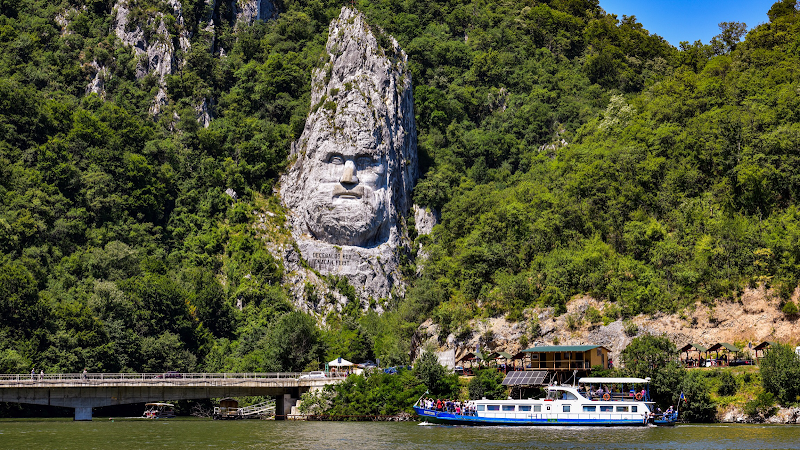
Standing tall and proud on a rocky riverside outcrop, the Rock Sculpture of Decebalus is one of those rare sites that completely catches you off guard—no hype required. Seriously, it’s not every day you’re staring straight into the unwavering gaze of a local king, forever immortalized in stone, who dared to face down the mighty Roman Empire. There’s something quietly awe-inspiring about the scale of the sculpture—at 40 meters high and 25 meters wide, Decebalus looks directly across the Danube as if still guarding his land.
Now, I’ll just say, when you round that corner of the Danube, either by boat or from the road, it hits you: this isn’t just a quirky tourist stop. It’s steeped in a defiance that’s kind of contagious. The king’s stern face and chiseled beard are etched right into the cliff, and it’s no wonder travelers pull over or cut their engines mid-river, cameras ready. There’s an undeniable energy here. And yet, there’s a bit of a legend in the making—this isn’t some centuries-old relic, but a relatively fresh feat of human ambition.
The project kicked off in the 1990s, and frankly, people thought it was absolutely bonkers at first. It took a handful of gutsy sculptors and, get this, over a decade to finish! The whole thing is a tribute to Decebalus, last king of Dacia, a fierce rival to Roman Emperor Trajan. So, if you’re ever in Romania and want a story to bring home that isn’t tucked into some musty museum, this epic riverside carving delivers.
One more thing—I’ve seen my fair share of roadside attractions, and most fade into the rearview. This one? It lingers. Maybe it’s the way the sunlight dances over craggy stone, or just knowing the king’s spirit lives on in such wild, stubborn rock. It feels a bit like a secret, even though boatloads of travelers show up each year.
Key Features
- Colossal Size: The sculpture is the largest stone carving in Europe at 40 meters high and 25 meters across. It’s just jaw-dropping in person.
- Unique Modern Monument: Unlike most historic statues, this was sculpted between 1994-2004, making it a modern tribute with ancient roots.
- Historic Significance: Depicts Decebalus, the last king of Dacia, symbolizing resistance against the Roman Empire.
- Natural Setting: Perched dramatically above the Danube River surrounded by lush woodlands and limestone cliffs—an absolute dream for photographers.
- Boat Access: Explore close-up views from river trips or enjoy a picnic on the opposite bank—totally different vibes each way.
- Accessible Attraction: Both families and solo adventurers find it easy to drop by, and it’s engaging for kids who love a good tale of kings and empires.
- Inscription: There’s a Latin inscription at the base: “DECEBALUS REX—DRAGAN FECIT” (“King Decebalus—Made by Dragan”), which is sort of its own talking point.
- Cultural Curiosity: The statue was privately funded by Romanian businessman Iosif Constantin Drăgan—a pretty unusual move that feels like a legend itself.
- Unexpected Popularity: While not everybody leaves awestruck (fair—can’t please everyone!), the vast majority of travelers rate this as a must-see or at least a trip highlight.
- Proximity to Other Landmarks: The area is peppered with Roman ruins and even the ancient Tabula Traiana plaque—making the sculpture feel like just the start of a long story.
Best Time to Visit
If you want my honest advice, the best time to visit the Rock Sculpture of Decebalus is during late spring or early autumn. Why? Fewer crowds, and the surrounding landscape absolutely bursts with color—you get that freshest green in May, or golden leaves framing the sculpture in September and October. Mid-summer, I’ll admit, can be scorching hot, and the site gets busy with busloads of sun-chasing travelers. It’s still worth it if that’s the only time you can make it, but if you do, aim for early morning or late afternoon for soft light and cooler air.
Winter has its own charm, sure, but access can be a bit trickier if the weather turns (watch out for icy patches on winding roads). And, honestly, seeing Decebalus’s face dusted with a bit of snow has a sort of Game of Thrones feel—just keep that in mind if you’re chasing dramatic Instagrams. For real outdoor lovers, the Danube’s misty mornings in spring add a moody, cinematic vibe to your visit; can’t recommend that enough.
How to Get There
Getting to the Rock Sculpture of Decebalus is half the adventure, and genuinely, the journey itself is something to savor. Most folks start out from Orșova, a small city nearby (you’ll smell the river air before you see the water). From there, you’ve got the scenic route via DN57—just hug the bends along the Danube and soon enough, you’ll spot Decebalus looming ahead. That drive? Sheer pleasure if you love winding riverside roads flanked by thick forest, sharp cliffs, and the odd fisherman casting his luck.
If you fancy making a real day out of it, take a boat ride from Orșova or the little riverside villages. The boat tours glide right past the statue, giving front-row views no roadside pitstop can match. I’ve done both, and honestly, seeing Decebalus from the water... just hits different. If you’re traveling as a group or with family, boat operators happily accommodate, and the guides usually sprinkle in wry stories of the king that stick with you long after.
Buses and taxis ply between neighboring towns and the site, but car and boat are by far the most enjoyable. If you do drive, keep an eye out for sudden, sharp turns and the odd roadside goat—local charm at its best! Parking near the statue is easy enough, but do bring some change for local vendors or snack stands, which pop up in peak season.
Tips for Visiting
- Bring Binoculars or a Zoom Lens: While the sculpture is massive, if you want to catch the fine details (like the king’s eyes and the text at the base), having binoculars or a decent camera lens really makes the difference.
- Boat Trip vs. Roadside View: It’s worth considering both perspectives if you can swing it. The boat offers that rare, up-close look, while the roadside pull-offs are perfect for quick stops and panoramic snaps.
- Beat the Crowds: Aim to arrive early (pre-10am) or later in the afternoon. Midday brings larger groups—but on the plus side, that’s a great time for people-watching and picking up local tidbits from guides.
- Kids Love a Story: If you’re visiting with children, prime them on the legend of Decebalus. There’s something about a king battling Romans that sparks imaginations, and a little drama goes a long way on road trips.
- Pack Snacks and Water: While there are a few local vendors during high season, options can be limited off-peak. There’s nothing worse than discovering a world-class view with an empty stomach—trust me.
- Weather Watch: The cliffs can get slippery after rain, and shade is limited around the main viewing areas. Sunglasses, hats, and walking shoes are worth the extra packing space.
- Respect the Site: The sculpture is an active part of the natural cliff—don’t try climbing it or wandering beyond marked trails. Locals take a great deal of pride in Decebalus and his legacy.
- Combine with Local Sights: You’re in a region brimming with Roman ruins, caves, and fishing villages. Don’t make the mistake of seeing just the statue and heading out; the area truly rewards explorers willing to veer off the main route.
- Support Local Guides: Consider hiring a local for the boat trip or a short walking tour. They share stories, point out things you’d otherwise miss, and help keep the tradition alive—plus, it’s a good way to give back to the community.
- Best Kept Secret: There’s a small shaded cove just downriver, perfect for a quiet picnic or skipping stones. Sometimes I head down and just let the king’s stern face loom in silence—a reminder to hold your ground, even when the current is strong.
And there you have it—a one-of-a-kind, kingly detour that’s got just the right
Key Features
- Key Features
- Best Time to Visit
- How to Get There
- Tips for Visiting
More Details
Updated July 5, 2025
Table of Contents
Description
Standing tall and proud on a rocky riverside outcrop, the Rock Sculpture of Decebalus is one of those rare sites that completely catches you off guard—no hype required. Seriously, it’s not every day you’re staring straight into the unwavering gaze of a local king, forever immortalized in stone, who dared to face down the mighty Roman Empire. There’s something quietly awe-inspiring about the scale of the sculpture—at 40 meters high and 25 meters wide, Decebalus looks directly across the Danube as if still guarding his land.
Now, I’ll just say, when you round that corner of the Danube, either by boat or from the road, it hits you: this isn’t just a quirky tourist stop. It’s steeped in a defiance that’s kind of contagious. The king’s stern face and chiseled beard are etched right into the cliff, and it’s no wonder travelers pull over or cut their engines mid-river, cameras ready. There’s an undeniable energy here. And yet, there’s a bit of a legend in the making—this isn’t some centuries-old relic, but a relatively fresh feat of human ambition.
The project kicked off in the 1990s, and frankly, people thought it was absolutely bonkers at first. It took a handful of gutsy sculptors and, get this, over a decade to finish! The whole thing is a tribute to Decebalus, last king of Dacia, a fierce rival to Roman Emperor Trajan. So, if you’re ever in Romania and want a story to bring home that isn’t tucked into some musty museum, this epic riverside carving delivers.
One more thing—I’ve seen my fair share of roadside attractions, and most fade into the rearview. This one? It lingers. Maybe it’s the way the sunlight dances over craggy stone, or just knowing the king’s spirit lives on in such wild, stubborn rock. It feels a bit like a secret, even though boatloads of travelers show up each year.
Key Features
- Colossal Size: The sculpture is the largest stone carving in Europe at 40 meters high and 25 meters across. It’s just jaw-dropping in person.
- Unique Modern Monument: Unlike most historic statues, this was sculpted between 1994-2004, making it a modern tribute with ancient roots.
- Historic Significance: Depicts Decebalus, the last king of Dacia, symbolizing resistance against the Roman Empire.
- Natural Setting: Perched dramatically above the Danube River surrounded by lush woodlands and limestone cliffs—an absolute dream for photographers.
- Boat Access: Explore close-up views from river trips or enjoy a picnic on the opposite bank—totally different vibes each way.
- Accessible Attraction: Both families and solo adventurers find it easy to drop by, and it’s engaging for kids who love a good tale of kings and empires.
- Inscription: There’s a Latin inscription at the base: “DECEBALUS REX—DRAGAN FECIT” (“King Decebalus—Made by Dragan”), which is sort of its own talking point.
- Cultural Curiosity: The statue was privately funded by Romanian businessman Iosif Constantin Drăgan—a pretty unusual move that feels like a legend itself.
- Unexpected Popularity: While not everybody leaves awestruck (fair—can’t please everyone!), the vast majority of travelers rate this as a must-see or at least a trip highlight.
- Proximity to Other Landmarks: The area is peppered with Roman ruins and even the ancient Tabula Traiana plaque—making the sculpture feel like just the start of a long story.
Best Time to Visit
If you want my honest advice, the best time to visit the Rock Sculpture of Decebalus is during late spring or early autumn. Why? Fewer crowds, and the surrounding landscape absolutely bursts with color—you get that freshest green in May, or golden leaves framing the sculpture in September and October. Mid-summer, I’ll admit, can be scorching hot, and the site gets busy with busloads of sun-chasing travelers. It’s still worth it if that’s the only time you can make it, but if you do, aim for early morning or late afternoon for soft light and cooler air.
Winter has its own charm, sure, but access can be a bit trickier if the weather turns (watch out for icy patches on winding roads). And, honestly, seeing Decebalus’s face dusted with a bit of snow has a sort of Game of Thrones feel—just keep that in mind if you’re chasing dramatic Instagrams. For real outdoor lovers, the Danube’s misty mornings in spring add a moody, cinematic vibe to your visit; can’t recommend that enough.
How to Get There
Getting to the Rock Sculpture of Decebalus is half the adventure, and genuinely, the journey itself is something to savor. Most folks start out from Orșova, a small city nearby (you’ll smell the river air before you see the water). From there, you’ve got the scenic route via DN57—just hug the bends along the Danube and soon enough, you’ll spot Decebalus looming ahead. That drive? Sheer pleasure if you love winding riverside roads flanked by thick forest, sharp cliffs, and the odd fisherman casting his luck.
If you fancy making a real day out of it, take a boat ride from Orșova or the little riverside villages. The boat tours glide right past the statue, giving front-row views no roadside pitstop can match. I’ve done both, and honestly, seeing Decebalus from the water… just hits different. If you’re traveling as a group or with family, boat operators happily accommodate, and the guides usually sprinkle in wry stories of the king that stick with you long after.
Buses and taxis ply between neighboring towns and the site, but car and boat are by far the most enjoyable. If you do drive, keep an eye out for sudden, sharp turns and the odd roadside goat—local charm at its best! Parking near the statue is easy enough, but do bring some change for local vendors or snack stands, which pop up in peak season.
Tips for Visiting
- Bring Binoculars or a Zoom Lens: While the sculpture is massive, if you want to catch the fine details (like the king’s eyes and the text at the base), having binoculars or a decent camera lens really makes the difference.
- Boat Trip vs. Roadside View: It’s worth considering both perspectives if you can swing it. The boat offers that rare, up-close look, while the roadside pull-offs are perfect for quick stops and panoramic snaps.
- Beat the Crowds: Aim to arrive early (pre-10am) or later in the afternoon. Midday brings larger groups—but on the plus side, that’s a great time for people-watching and picking up local tidbits from guides.
- Kids Love a Story: If you’re visiting with children, prime them on the legend of Decebalus. There’s something about a king battling Romans that sparks imaginations, and a little drama goes a long way on road trips.
- Pack Snacks and Water: While there are a few local vendors during high season, options can be limited off-peak. There’s nothing worse than discovering a world-class view with an empty stomach—trust me.
- Weather Watch: The cliffs can get slippery after rain, and shade is limited around the main viewing areas. Sunglasses, hats, and walking shoes are worth the extra packing space.
- Respect the Site: The sculpture is an active part of the natural cliff—don’t try climbing it or wandering beyond marked trails. Locals take a great deal of pride in Decebalus and his legacy.
- Combine with Local Sights: You’re in a region brimming with Roman ruins, caves, and fishing villages. Don’t make the mistake of seeing just the statue and heading out; the area truly rewards explorers willing to veer off the main route.
- Support Local Guides: Consider hiring a local for the boat trip or a short walking tour. They share stories, point out things you’d otherwise miss, and help keep the tradition alive—plus, it’s a good way to give back to the community.
- Best Kept Secret: There’s a small shaded cove just downriver, perfect for a quiet picnic or skipping stones. Sometimes I head down and just let the king’s stern face loom in silence—a reminder to hold your ground, even when the current is strong.
And there you have it—a one-of-a-kind, kingly detour that’s got just the right
Key Highlights
- Key Features
- Best Time to Visit
- How to Get There
- Tips for Visiting
Location
Places to Stay Near Rock Sculpture of Decebalus
Find and Book a Tour
Explore More Travel Guides
No reviews found! Be the first to review!
Traveler Reviews for Rock Sculpture of Decebalus
There are no reviews yet. Be the first one to write one.
Have you visited Rock Sculpture of Decebalus? Help other travelers by sharing your review.
You Might Also Like

Hanul Drumeților
Monumentul Muncii Forțate

The Heroes
Find Accommodations Nearby
Recommended Tours & Activities
Visitor Reviews
There are no reviews yet. Be the first one to write one.
Share Your Experience
Have you visited Rock Sculpture of Decebalus? Help other travelers by leaving a review.