
Dutch Reformed Church
About Dutch Reformed Church
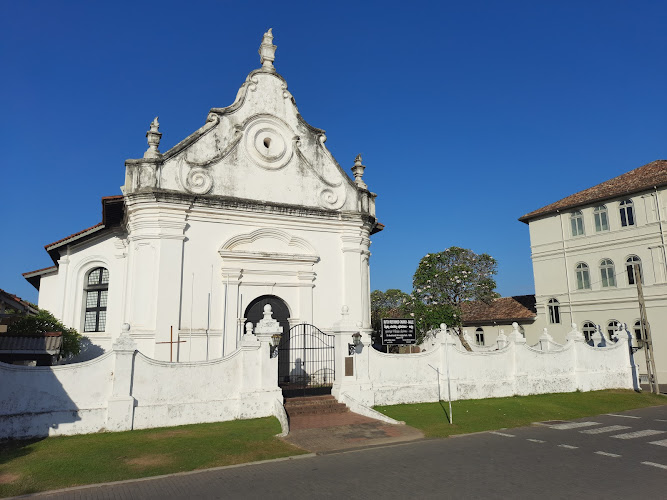
The Dutch Reformed Church in Galle is one of those quiet gems that sneaks up on you with its charm. It’s not some grandiose cathedral with soaring spires, but rather a modest 18th-century building that holds a surprising depth of history and character. When you step inside, you’ll immediately notice the stained-glass windows casting colorful patterns on the honeycomb floors — but here’s the twist: those floors are actually made from old tombstones, which adds this eerie yet fascinating vibe you don’t often find in churches. It’s a subtle reminder of the layers of life and death woven into this place.
Built back in 1755 by the Dutch East India Company, the church is a striking example of colonial architecture blended with local influences. The style takes inspiration from the ancient Doric order, giving it a sturdy, no-nonsense look, but with intricate carvings and a gable that really catches the eye. Walking around, you might find yourself thinking about the hands that built it—like Abraham Antonius, the woodworker who supervised the construction and was also involved in shipbuilding nearby. That connection to the sea and trade routes gives the church a sort of grounded, worldly feel.
Inside, the atmosphere is peaceful yet stirring. There’s a hexagonal pulpit crafted from Malaysian calamander wood and local satinwood, which is a beautiful nod to the mingling of cultures. And don’t miss the second-hand pipe organ from Colombo, installed in 1760 — it’s like a musical time capsule waiting to tell its stories. The church also stands right within the historic Galle Fort, a UNESCO World Heritage site, so it’s surrounded by centuries of history that you can almost feel breathing through the walls.
Accessibility-wise, the church welcomes everyone. It’s got wheelchair accessible entrances and parking, which is a big plus because sometimes these historic spots can be a bit tricky to navigate if you have mobility concerns. So, if you’re someone who appreciates history, architecture, or just wants a quiet spot to reflect away from the usual tourist hustle, this church is worth carving out some time for.
Key Features
- Stained-glass windows that cast beautiful, colorful light inside the church
- Honeycomb floors made from old tombstones, blending history with artistry
- Ancient Doric architectural style with intricate Dutch colonial carvings
- Hexagonal pulpit crafted from Malaysian calamander wood and local satinwood
- Historic pipe organ from Colombo dating back to 1760
- Located inside the UNESCO World Heritage-listed Galle Fort
- Wheelchair accessible entrances and parking facilities
- Rich colonial history linked to the Dutch East India Company and shipbuilding
Best Time to Visit
So, when’s the best time to check out the Dutch Reformed Church? Honestly, anytime you’re in Galle Fort is a good time, but if you want to avoid the crowds and really soak in the atmosphere, early mornings or late afternoons during the dry season (December to March) are your best bets. The light during these times is just magical, especially through those stained-glass windows. Plus, the weather’s kinder then — less chance of sudden downpours messing up your plans.
Visiting on a weekday can also make a difference. Weekends tend to draw more tourists, and while that’s not always a bad thing, the church’s peaceful vibe can get a bit diluted. If you’re a history buff or someone who likes to take photos without a sea of people in the background, midweek visits are your friend.
How to Get There
Getting to the Dutch Reformed Church is pretty straightforward once you’re in Galle. The church sits right in the heart of Galle Fort, which is easy to reach from the city center. If you’re coming from Colombo or other parts of Sri Lanka, you can take a train or bus to Galle town — the train ride along the coast is actually a bit of an adventure itself, with stunning ocean views that make the journey part of the fun.
Once in Galle, the fort is a short tuk-tuk ride or a leisurely walk away depending on where you’re staying. If you’re like me and enjoy wandering, walking through the fort’s narrow streets is a treat on its own — every corner has something to catch your eye, from colonial buildings to quirky shops and cafes. Parking is available nearby, and since the church is wheelchair accessible, it’s convenient for all types of travelers.
Tips for Visiting
Here’s the thing about the Dutch Reformed Church — it’s not just a photo op or a quick stop. Take your time, soak it in, and maybe even imagine the stories that unfolded within those walls over the centuries. It’s a quiet spot, so keep your voice down and respect the sanctity of the place.
Wear comfortable shoes because the floors, made of tombstones, can be uneven in spots. And while it’s wheelchair accessible, some parts of the surrounding fort might be a bit challenging, so plan accordingly if mobility is a concern.
If you’re into history, consider pairing your visit with a guided tour of Galle Fort — it’ll give you a richer context for the church and the colonial legacy that shaped this area. Also, don’t hesitate to chat with locals or guides; they often have the best stories and little-known tidbits that you won’t find in guidebooks.
Lastly, bring a camera but remember to be respectful. Flash photography might not be allowed inside, and sometimes it’s just nicer to experience the place with your own eyes rather than through a lens. Trust me, the memory of those stained-glass colors dancing on the tombstone floors sticks with you way longer than any photo.
Key Features
- Stained-glass windows that cast beautiful, colorful light inside the church
- Honeycomb floors made from old tombstones, blending history with artistry
- Ancient Doric architectural style with intricate Dutch colonial carvings
- Hexagonal pulpit crafted from Malaysian calamander wood and local satinwood
- Historic pipe organ from Colombo dating back to 1760
- Located inside the UNESCO World Heritage-listed Galle Fort
- Wheelchair accessible entrances and parking facilities
- Rich colonial history linked to the Dutch East India Company and shipbuilding
You Might Also Like
666 A9
8 Grusoult

Abhayagiriya
Tours & Activities
GetYourGuide provides this tour inventory. We may earn a commission if you book through it; verify current availability, prices, and terms with the provider.
Visitor Reviews
There are no reviews yet. Be the first one to write one.
Share Your Experience
Have you visited Dutch Reformed Church? Help other travelers by leaving a review.