
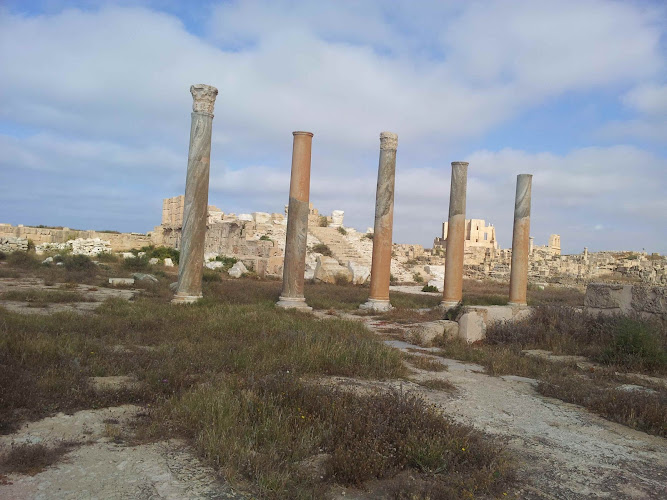
Judicial Basilica
About Judicial Basilica
Description
The Judicial Basilica in Sabratah, Libya, tucked within the grand ruins of this ancient Roman city, remains one of the most fascinating glimpses into the civic life of Roman North Africa. It’s the kind of place where the stones seem to whisper about the people who once filled its halls, debating justice, politics, and trade in what was once one of the most important cities of the Roman Empire. Today, traces of that thriving past still cling to the limestone walls and crumbling columns, each weathered piece revealing a different chapter of its long story. What really strikes first-time visitors isn’t just the architecture—it’s the atmosphere. Standing under the Mediterranean sun amid those centuries-old ruins, there’s a stillness that pulls you back through time.
This basilica, sometimes called the Basilica of Justinian because of later Byzantine influence, was not a church in the early sense of the term, but more like a courthouse—a place where Roman law and public life intersected. During the 2nd and 3rd centuries AD, it was the administrative heart of the city, where legal matters and civic ceremonies were conducted. When Christianity spread through the region during the Byzantine period, parts of it were repurposed for religious use. You can almost sense that layered history as you walk through the remaining marble pavements and Corinthian columns. Some of them still stand tall against the deep blue of the Mediterranean coast, only a short distance away.
Visitors often find themselves pausing here longer than expected. Perhaps it’s the way light moves through the open forums nearby, or how the sea breeze sweeps across the marble floors. Having traveled through Roman sites like Leptis Magna and Oea, I can say there’s something uniquely intimate about Sabratah’s Judicial Basilica—it doesn’t overwhelm you like some of the grander ruins. Instead, it invites you to slow down, observe, imagine. You start to picture lawyers in white togas, witnesses waiting nervously, and magistrates proclaiming their verdicts under the watchful eyes of statues that stood where only fragments remain today.
This archaeological site, part of the UNESCO World Heritage property of Sabratha, represents not just architectural brilliance but also the crossroads of cultures—Roman, Phoenician, and later Byzantine. The Judicial Basilica stands as a stone record of those transitions, surviving the winds of African coastal storms and centuries of shifting rule. It’s remarkable that after all that, so much is still visible today—the outline of the basilica, the stepped altar once used for public ceremonies, even traces of mosaic floors that hint at the artistic life during Rome’s African provinces. It’s easy to get lost imagining how this spot once connected the bustling port city to the wide Mediterranean trade routes.
Children and families will find this site approachable too. Unlike more enclosed monuments, the Judicial Basilica offers open space to wander and explore. And for adults who love archaeology—or even just the romance of ancient ruins—it’s a place that reminds how human our ancestors were, how little and how much we’ve changed.
Key Features
- Roman and Byzantine Architecture: The Judicial Basilica exhibits both Roman-era civic design and later Byzantine restorations, reflecting centuries of evolving architectural style across North Africa.
- Historical Significance: Once central to public and judicial life, it served as the forum for legal proceedings, administrative duties, and social gatherings in the city of Sabratha, Libya.
- Corinthian Columns and Marble Floors: Although time has eroded much, several marble columns still stand proudly, offering glimpses into the elegance that defined Sabratha’s public buildings.
- UNESCO World Heritage Site: The Judicial Basilica is part of Sabratha’s greater archaeological site, recognized globally for its outstanding preservation of ancient Roman urban life.
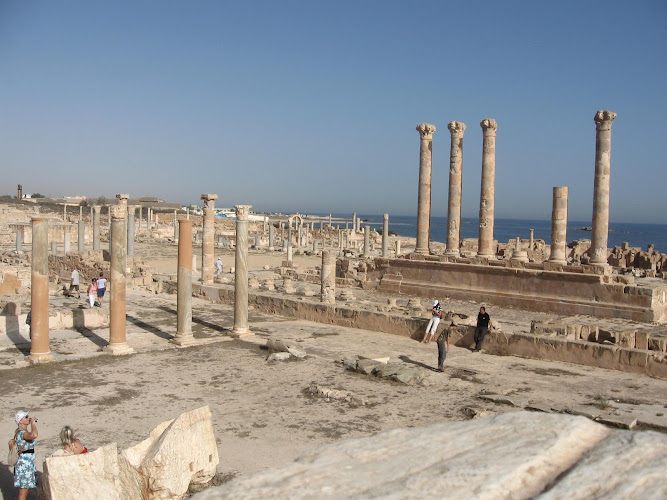
- Scenic Location on the Mediterranean Coast: From the basilica, visitors can look toward the turquoise sea, about 70 km west of Tripoli—an unforgettable view combining history and natural beauty.
- Nearby Monuments: Close to the Roman Theatre, the Forum Baths, and other temples such as those dedicated to Liber Pater and Isis, forming a compact but powerful cluster of ancient wonders.
- Family-Friendly Experience: The wide, open areas make it accessible for children and educational for young learners curious about Roman civilization in Libya.
Best Time to Visit
For most travelers, the best time to visit the Judicial Basilica in Sabratah is between October and April, when the Mediterranean climate softens into mild temperatures—perfect for exploring ancient ruins without the harsh midday heat. In summer, Libya’s coast can be sweltering, and the stones themselves radiate warmth long after sunset. If you’ve ever visited Roman ruins under the midday sun, you’ll know why locals say the early morning light is your best friend. Around sunrise, when the site opens, the basilica’s pale stone takes on this golden glow that almost brings the carvings and columns to life. Photographers absolutely love it.
Winter visitors find another kind of charm—cooler air, fewer tourists, and sometimes the sound of distant waves echoing around the ruins. There’s a certain solitude that makes you feel as though you have the entire ancient city to yourself. And for those sensitive to crowds, it’s worth noting that unlike more commercialized heritage sites in Europe, Sabratha remains peaceful year-round. That’s part of what makes this experience so rewarding—it feels almost like a privilege, discovering a rarely trodden corner of Roman history by the sea.
How to Get There
Reaching the Judicial Basilica in Sabratah, Libya, involves a scenic coastal drive that offers a preview of the region’s shifting landscapes—from modern city streets in Tripoli to open stretches along the Mediterranean coast. The basilica lies about 70 kilometers west of Tripoli, and the route generally takes around an hour and a half by car, depending on stops. Travelers often pair their visit with other Roman cities in the region—Oea (modern Tripoli) and Leptis Magna—to experience the famed “Three Cities” of ancient Tripolitania.
Public transportation in this part of Libya can be unpredictable, so most visitors hire a local guide or arrange a driver familiar with the archaeological zone. It not only simplifies logistics but also connects you with people who can share stories about the discoveries made here during early 20th-century excavations by Italian archaeologists. Hearing how workers unearthed mosaic floors or the fragments of law tablets adds a whole new layer of appreciation.
If you’re coming from farther afield, Tripoli International Airport is the usual entry point, with car rental options or private tours that include Sabratha as a highlight stop. The drive itself—hugging the Mediterranean coast—is worth the journey. I remember my own trip vividly: passing olive groves, watching fishing boats fade into the horizon, feeling that unmistakable anticipation that only history-rich destinations evoke. And just when you think you’ve left modern civilization behind, the columns of the Judicial Basilica appear—silent, solemn, and commanding—as if waiting to be rediscovered again.
Tips for Visiting
Exploring the Judicial Basilica and the surrounding archaeological site can easily fill half a day if not longer. It’s one of those places where wandering pays off—every corner has something unexpected. But a few practical tips can make your visit smoother and more memorable:
- Start early: The light is at its best in the morning, and you’ll have the site largely to yourself. The stonework catches the sunrise beautifully.
- Wear comfortable shoes: The terrain is uneven—it’s an ancient ruin, after all—so walking shoes are essential. Leave the sandals for the beach.
- Bring water and a hat: Shade is scarce, and the Mediterranean sun can be unforgiving, even in cooler months.
- Travel with a local guide: Beyond convenience, guides bring these places back to life by explaining hidden details, like an inscription half-buried near the Byzantine wall or the way Roman builders aligned the basilica with the main forum axis.
- Combine visits: Pair the Judicial Basilica with other nearby landmarks. The Roman Theatre, one of the best preserved in Africa, is a short walk away, and its acoustics still amaze travelers centuries later.
- Photography tip: Capture the basilica from a slightly elevated point near the forum. The columns framed against the sea are spectacular, especially if you’re after that perfect Mediterranean shot to remember your trip.
- Respect the ruins: These structures have weathered two millennia—touch gently, avoid climbing, and tread lightly. It’s not just a historical site; it’s a story written in stone.
And maybe the best advice? Take your time. Too often, travelers rush through ancient cities like they’re ticking boxes on a map. But the Judicial Basilica in Sabratah rewards curiosity. Gaze at the details of the marble, wonder about the people who argued their cases here, listen for the seabirds calling across what was once the center of Roman Africa’s legal life. It’s a place that leaves you reflecting—not just on history, but on continuity. Empires rise and fall, yet the basilica still stands, quietly, patiently, waiting for the next visitor to pause and listen.
For those with a taste for ancient history, photography, or simple exploration, the Judicial Basilica in the ancient city of Sabratha, Libya, remains one of the most evocative Roman ruins in the world. It’s part architectural marvel, part archaeological puzzle, and entirely unforgettable once you’ve been there. Standing amid those ruins, with the sound of waves in the background, you realize you’re not just observing history—you’re standing right inside it.
Key Features
- Long nave and columned aisles indicative of a Roman basilica layout
- Proximity to the forum and other major Sabratah ruins (theatre, baths)
- Stone paving and architectural fragments showing Antonine/Severan-era renovation
- Panoramic views across the archaeological park and Mediterranean light
- Informative onsite signage and pathways linking to nearby excavations
More Details
Updated October 20, 2025
Table of Contents
Description
The Judicial Basilica in Sabratah, Libya, tucked within the grand ruins of this ancient Roman city, remains one of the most fascinating glimpses into the civic life of Roman North Africa. It’s the kind of place where the stones seem to whisper about the people who once filled its halls, debating justice, politics, and trade in what was once one of the most important cities of the Roman Empire. Today, traces of that thriving past still cling to the limestone walls and crumbling columns, each weathered piece revealing a different chapter of its long story. What really strikes first-time visitors isn’t just the architecture—it’s the atmosphere. Standing under the Mediterranean sun amid those centuries-old ruins, there’s a stillness that pulls you back through time.
This basilica, sometimes called the Basilica of Justinian because of later Byzantine influence, was not a church in the early sense of the term, but more like a courthouse—a place where Roman law and public life intersected. During the 2nd and 3rd centuries AD, it was the administrative heart of the city, where legal matters and civic ceremonies were conducted. When Christianity spread through the region during the Byzantine period, parts of it were repurposed for religious use. You can almost sense that layered history as you walk through the remaining marble pavements and Corinthian columns. Some of them still stand tall against the deep blue of the Mediterranean coast, only a short distance away.
Visitors often find themselves pausing here longer than expected. Perhaps it’s the way light moves through the open forums nearby, or how the sea breeze sweeps across the marble floors. Having traveled through Roman sites like Leptis Magna and Oea, I can say there’s something uniquely intimate about Sabratah’s Judicial Basilica—it doesn’t overwhelm you like some of the grander ruins. Instead, it invites you to slow down, observe, imagine. You start to picture lawyers in white togas, witnesses waiting nervously, and magistrates proclaiming their verdicts under the watchful eyes of statues that stood where only fragments remain today.
This archaeological site, part of the UNESCO World Heritage property of Sabratha, represents not just architectural brilliance but also the crossroads of cultures—Roman, Phoenician, and later Byzantine. The Judicial Basilica stands as a stone record of those transitions, surviving the winds of African coastal storms and centuries of shifting rule. It’s remarkable that after all that, so much is still visible today—the outline of the basilica, the stepped altar once used for public ceremonies, even traces of mosaic floors that hint at the artistic life during Rome’s African provinces. It’s easy to get lost imagining how this spot once connected the bustling port city to the wide Mediterranean trade routes.
Children and families will find this site approachable too. Unlike more enclosed monuments, the Judicial Basilica offers open space to wander and explore. And for adults who love archaeology—or even just the romance of ancient ruins—it’s a place that reminds how human our ancestors were, how little and how much we’ve changed.
Key Features
- Roman and Byzantine Architecture: The Judicial Basilica exhibits both Roman-era civic design and later Byzantine restorations, reflecting centuries of evolving architectural style across North Africa.
- Historical Significance: Once central to public and judicial life, it served as the forum for legal proceedings, administrative duties, and social gatherings in the city of Sabratha, Libya.
- Corinthian Columns and Marble Floors: Although time has eroded much, several marble columns still stand proudly, offering glimpses into the elegance that defined Sabratha’s public buildings.
- UNESCO World Heritage Site: The Judicial Basilica is part of Sabratha’s greater archaeological site, recognized globally for its outstanding preservation of ancient Roman urban life.
- Scenic Location on the Mediterranean Coast: From the basilica, visitors can look toward the turquoise sea, about 70 km west of Tripoli—an unforgettable view combining history and natural beauty.
- Nearby Monuments: Close to the Roman Theatre, the Forum Baths, and other temples such as those dedicated to Liber Pater and Isis, forming a compact but powerful cluster of ancient wonders.
- Family-Friendly Experience: The wide, open areas make it accessible for children and educational for young learners curious about Roman civilization in Libya.
Best Time to Visit
For most travelers, the best time to visit the Judicial Basilica in Sabratah is between October and April, when the Mediterranean climate softens into mild temperatures—perfect for exploring ancient ruins without the harsh midday heat. In summer, Libya’s coast can be sweltering, and the stones themselves radiate warmth long after sunset. If you’ve ever visited Roman ruins under the midday sun, you’ll know why locals say the early morning light is your best friend. Around sunrise, when the site opens, the basilica’s pale stone takes on this golden glow that almost brings the carvings and columns to life. Photographers absolutely love it.
Winter visitors find another kind of charm—cooler air, fewer tourists, and sometimes the sound of distant waves echoing around the ruins. There’s a certain solitude that makes you feel as though you have the entire ancient city to yourself. And for those sensitive to crowds, it’s worth noting that unlike more commercialized heritage sites in Europe, Sabratha remains peaceful year-round. That’s part of what makes this experience so rewarding—it feels almost like a privilege, discovering a rarely trodden corner of Roman history by the sea.
How to Get There
Reaching the Judicial Basilica in Sabratah, Libya, involves a scenic coastal drive that offers a preview of the region’s shifting landscapes—from modern city streets in Tripoli to open stretches along the Mediterranean coast. The basilica lies about 70 kilometers west of Tripoli, and the route generally takes around an hour and a half by car, depending on stops. Travelers often pair their visit with other Roman cities in the region—Oea (modern Tripoli) and Leptis Magna—to experience the famed “Three Cities” of ancient Tripolitania.
Public transportation in this part of Libya can be unpredictable, so most visitors hire a local guide or arrange a driver familiar with the archaeological zone. It not only simplifies logistics but also connects you with people who can share stories about the discoveries made here during early 20th-century excavations by Italian archaeologists. Hearing how workers unearthed mosaic floors or the fragments of law tablets adds a whole new layer of appreciation.
If you’re coming from farther afield, Tripoli International Airport is the usual entry point, with car rental options or private tours that include Sabratha as a highlight stop. The drive itself—hugging the Mediterranean coast—is worth the journey. I remember my own trip vividly: passing olive groves, watching fishing boats fade into the horizon, feeling that unmistakable anticipation that only history-rich destinations evoke. And just when you think you’ve left modern civilization behind, the columns of the Judicial Basilica appear—silent, solemn, and commanding—as if waiting to be rediscovered again.
Tips for Visiting
Exploring the Judicial Basilica and the surrounding archaeological site can easily fill half a day if not longer. It’s one of those places where wandering pays off—every corner has something unexpected. But a few practical tips can make your visit smoother and more memorable:
- Start early: The light is at its best in the morning, and you’ll have the site largely to yourself. The stonework catches the sunrise beautifully.
- Wear comfortable shoes: The terrain is uneven—it’s an ancient ruin, after all—so walking shoes are essential. Leave the sandals for the beach.
- Bring water and a hat: Shade is scarce, and the Mediterranean sun can be unforgiving, even in cooler months.
- Travel with a local guide: Beyond convenience, guides bring these places back to life by explaining hidden details, like an inscription half-buried near the Byzantine wall or the way Roman builders aligned the basilica with the main forum axis.
- Combine visits: Pair the Judicial Basilica with other nearby landmarks. The Roman Theatre, one of the best preserved in Africa, is a short walk away, and its acoustics still amaze travelers centuries later.
- Photography tip: Capture the basilica from a slightly elevated point near the forum. The columns framed against the sea are spectacular, especially if you’re after that perfect Mediterranean shot to remember your trip.
- Respect the ruins: These structures have weathered two millennia—touch gently, avoid climbing, and tread lightly. It’s not just a historical site; it’s a story written in stone.
And maybe the best advice? Take your time. Too often, travelers rush through ancient cities like they’re ticking boxes on a map. But the Judicial Basilica in Sabratah rewards curiosity. Gaze at the details of the marble, wonder about the people who argued their cases here, listen for the seabirds calling across what was once the center of Roman Africa’s legal life. It’s a place that leaves you reflecting—not just on history, but on continuity. Empires rise and fall, yet the basilica still stands, quietly, patiently, waiting for the next visitor to pause and listen.
For those with a taste for ancient history, photography, or simple exploration, the Judicial Basilica in the ancient city of Sabratha, Libya, remains one of the most evocative Roman ruins in the world. It’s part architectural marvel, part archaeological puzzle, and entirely unforgettable once you’ve been there. Standing amid those ruins, with the sound of waves in the background, you realize you’re not just observing history—you’re standing right inside it.
Key Highlights
- Long nave and columned aisles indicative of a Roman basilica layout
- Proximity to the forum and other major Sabratah ruins (theatre, baths)
- Stone paving and architectural fragments showing Antonine/Severan-era renovation
- Panoramic views across the archaeological park and Mediterranean light
- Informative onsite signage and pathways linking to nearby excavations
Location
Places to Stay Near Judicial Basilica
Find and Book a Tour
Explore More Travel Guides
No reviews found! Be the first to review!
Traveler Reviews for Judicial Basilica
There are no reviews yet. Be the first one to write one.
Have you visited Judicial Basilica? Help other travelers by sharing your review.
Nearby Attractions
You Might Also Like

Sabratha Ancient Theatre

Serapaeum (Sabratha)
Sabratah
Find Accommodations Nearby
Recommended Tours & Activities
Visitor Reviews
There are no reviews yet. Be the first one to write one.
Share Your Experience
Have you visited Judicial Basilica? Help other travelers by leaving a review.