

Serapaeum (Sabratha)
About Serapaeum (Sabratha)
Description
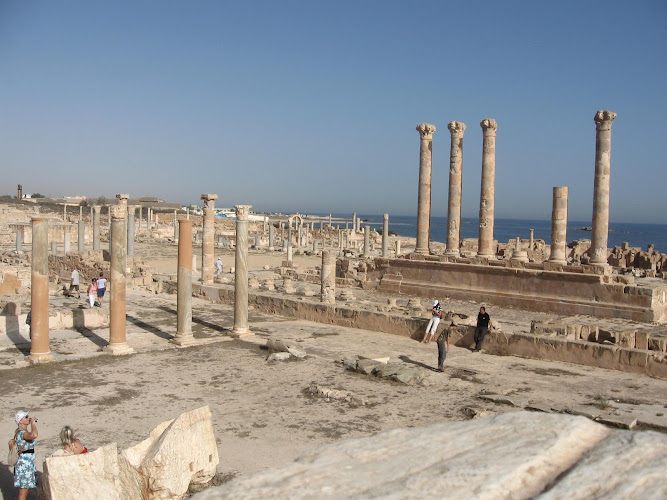
The Serapaeum in Sabratha, Libya, is one of those ancient sites that somehow manage to whisper stories from more than two thousand years ago. Right along the Mediterranean coast, this archaeological site lies within the remains of the ancient city of Sabratha—a city that was once part of the Roman Tripolis region, alongside Oea (modern Tripoli) and Leptis Magna. Originally established as a Phoenician trading post around the 6th or 5th century BC, Sabratha evolved into a thriving port city under Roman rule, and the Serapaeum stands as a strong reminder of that blend of cultures. It’s the kind of place that makes you pause and think—people built all of this using only stone, determination, and belief.
The Serapaeum is dedicated to Serapis, a Greco-Egyptian deity associated with both the god Liber Pater and Isis. That multicultural mixture—part Egyptian, part Greek, part Roman—shows how cosmopolitan this region of North Africa once was. The site isn’t overly large compared to something like the grand Roman theatre a short walk away, but its charm lies in its compact, carefully preserved details. Even if you’ve seen Roman temples in Italy or Greece, there’s something unique about the way this one nestles among the Libyan ruins. Maybe it’s the light. Honestly, the afternoon sun has a way of turning the stone a golden color that photographs can’t quite do justice.
Archaeologists believe the temple dates back to around the 2nd or 3rd century AD, rebuilt during that time as Sabratha prospered under the Roman Empire. The columns, though weathered, still rise proud and symmetrical. Intricate carvings, once painted in vivid tones, now bear the subtle gray hues of limestone polished by sea winds and centuries. And while the structure isn’t completely intact—few ruins from that period are—it still gives a vivid sense of ancient religious life. You can easily imagine priests offering sacrifices or merchants leaving offerings before departing the port.
For travelers, this is an essential stop in understanding Sabratha’s history. You’re not just walking through stones; you’re tracing the steps of civilizations that traded, worshipped, and dreamed by these shores. Families often find it a surprisingly good stop for kids, who tend to love exploring the hidden nooks around the ruins. It feels adventurous, even slightly mystical. And for history enthusiasts, it’s essentially a living textbook on classical architecture and cultural fusion in Roman Africa.
Key Features
- Historical Significance: Part of the ancient city of Sabratha, which became a thriving Roman city in the province of Africa Nova after the Punic Wars.
- Architectural Influence: A temple blending Egyptian, Greek, and Roman architectural styles dedicated to Serapis, Liber Pater, and Isis.
- Setting: Situated near the Mediterranean Sea, offering scenic coastal views and a sense of timeless tranquility.
- Archaeological Heritage: Recognized as part of Sabratha’s UNESCO World Heritage listing, known for its well-preserved Roman remains.
- Unique Carvings & Layout: Features columns, altars, and stone panels with religious motifs tied to Roman-era spirituality.
- Nearby Attractions: Located close to other landmarks such as the Roman theatre, forum baths, and basilicas of Sabratha.
- Educational Value: Offers insight into how spiritual and trade exchanges shaped North African Roman architecture.
- Atmosphere: Quiet, contemplative, and surrounded by sea breezes—a perfect combination for reflection and photography.
If you’ve ever stood somewhere and felt truly small in the grand scale of human history, that’s exactly the kind of sensation this site delivers. The fact that so much of it remains standing is incredible, considering the centuries of wind, salt, and sun it has endured. I couldn’t help thinking how these stones have seen empires rise and fall, even as the nearby Mediterranean kept its steady rhythm.
Best Time to Visit
The best time to visit the Serapaeum (Sabratha) is generally from October through April. During these months, the weather along Libya’s western coast stays pleasantly mild, making exploration easier and more enjoyable. Summer can be hot—fiercely so—especially around midday when the sun beats directly down on the ancient stones. But in winter or spring, the temperatures hover around 20°C (68°F), perfect for walking between ruins without feeling drained.
Early mornings work wonders for both photography and solitude. The temple’s eastern columns catch that golden glow as the sun rises over the sea, and it honestly feels like a moment frozen in time. And if you’re lucky enough to visit just after rain, the air takes on a clarity that brings every texture of the stone into sharp focus. Bring a light jacket for cooler breezes from the sea, especially in January or February.
How to Get There
Reaching Sabratha from Tripoli, the Libyan capital, is relatively straightforward—about 70 kilometers west along the coastal highway. The road hugs the Mediterranean for most of the journey, so even the drive itself feels like a small adventure. For those with a love of history, that route also symbolically connects you to the ancient Roman cities of Tripolis: Oea (modern Tripoli), Leptis Magna, and Sabratha.
Many travelers prefer to hire a private car or local guide, as signage can sometimes be limited and public transportation inconsistent. Once you arrive in Sabratha, the archaeological site is well-marked, and local guides often stand ready to share their personal knowledge. If you’ve ever enjoyed hearing living memories—a grandmother’s story, a fisherman’s version of the past—you’ll appreciate how those local perspectives enrich your understanding here.
For those visiting with children or in small groups, chartered tours often include stops at the Serapaeum, the Roman theatre, and the museum nearby, which houses mosaics and small artifacts excavated from the site. It’s a day that flows seamlessly between history and coastal scenery. And honestly, no matter your mode of transport, arriving and spotting the ruins against the sea will stay with you for long after you’ve left.
Tips for Visiting
Visiting the Serapaeum isn’t complicated, but a few small tips go a long way toward making the experience richer. Wear comfortable shoes—seriously, you’ll thank yourself later. The ground is uneven, with sand and stone steps that have been shaped by millennia of foot traffic. I once made the mistake of wearing flat sandals on my first visit—bad idea—but I’ve learned my lesson: solid soles are your friend here.
Bring water, especially if visiting outside of winter. Shade is limited, and once you’re wandering among the ruins, it’s easy to lose track of time. A hat or scarf helps too, not only for the sun but for sudden coastal winds that can whip through even on a calm morning.
Consider hiring a local guide. Not only does it support the community, but hearing the stories about how the site was excavated and restored adds an incredible human layer to the ancient stones. Some guides have been working here for generations—their parents and grandparents took part in early excavations after the Italian archaeologists restored large portions of Sabratha in the 20th century.
Photography-wise, bring patience along with your camera. The angles change beautifully with light, especially around sunset when the ruins take on this warm bronze hue. If you’re traveling with kids, they’ll likely enjoy playing archaeological explorer—just remind them to tread lightly; after all, those stones have survived the Punic Wars, Roman Empire, and centuries of weathering.
Perhaps most importantly, take time to simply stand there and absorb it. So many travel experiences are rushed, but here, slowing down brings the rewards. The Serapaeum (Sabratha) isn’t just another ruin—it’s a small testament to how belief, trade, and artistry once converged on the Libyan coast. You might even hear the distant echo of waves mixing with history itself.
Key Features
- Key Features
- Best Time to Visit
- How to Get There
- Tips for Visiting
More Details
Updated October 20, 2025
Table of Contents
Description
The Serapaeum in Sabratha, Libya, is one of those ancient sites that somehow manage to whisper stories from more than two thousand years ago. Right along the Mediterranean coast, this archaeological site lies within the remains of the ancient city of Sabratha—a city that was once part of the Roman Tripolis region, alongside Oea (modern Tripoli) and Leptis Magna. Originally established as a Phoenician trading post around the 6th or 5th century BC, Sabratha evolved into a thriving port city under Roman rule, and the Serapaeum stands as a strong reminder of that blend of cultures. It’s the kind of place that makes you pause and think—people built all of this using only stone, determination, and belief.
The Serapaeum is dedicated to Serapis, a Greco-Egyptian deity associated with both the god Liber Pater and Isis. That multicultural mixture—part Egyptian, part Greek, part Roman—shows how cosmopolitan this region of North Africa once was. The site isn’t overly large compared to something like the grand Roman theatre a short walk away, but its charm lies in its compact, carefully preserved details. Even if you’ve seen Roman temples in Italy or Greece, there’s something unique about the way this one nestles among the Libyan ruins. Maybe it’s the light. Honestly, the afternoon sun has a way of turning the stone a golden color that photographs can’t quite do justice.
Archaeologists believe the temple dates back to around the 2nd or 3rd century AD, rebuilt during that time as Sabratha prospered under the Roman Empire. The columns, though weathered, still rise proud and symmetrical. Intricate carvings, once painted in vivid tones, now bear the subtle gray hues of limestone polished by sea winds and centuries. And while the structure isn’t completely intact—few ruins from that period are—it still gives a vivid sense of ancient religious life. You can easily imagine priests offering sacrifices or merchants leaving offerings before departing the port.
For travelers, this is an essential stop in understanding Sabratha’s history. You’re not just walking through stones; you’re tracing the steps of civilizations that traded, worshipped, and dreamed by these shores. Families often find it a surprisingly good stop for kids, who tend to love exploring the hidden nooks around the ruins. It feels adventurous, even slightly mystical. And for history enthusiasts, it’s essentially a living textbook on classical architecture and cultural fusion in Roman Africa.
Key Features
- Historical Significance: Part of the ancient city of Sabratha, which became a thriving Roman city in the province of Africa Nova after the Punic Wars.
- Architectural Influence: A temple blending Egyptian, Greek, and Roman architectural styles dedicated to Serapis, Liber Pater, and Isis.
- Setting: Situated near the Mediterranean Sea, offering scenic coastal views and a sense of timeless tranquility.
- Archaeological Heritage: Recognized as part of Sabratha’s UNESCO World Heritage listing, known for its well-preserved Roman remains.
- Unique Carvings & Layout: Features columns, altars, and stone panels with religious motifs tied to Roman-era spirituality.
- Nearby Attractions: Located close to other landmarks such as the Roman theatre, forum baths, and basilicas of Sabratha.
- Educational Value: Offers insight into how spiritual and trade exchanges shaped North African Roman architecture.
- Atmosphere: Quiet, contemplative, and surrounded by sea breezes—a perfect combination for reflection and photography.
If you’ve ever stood somewhere and felt truly small in the grand scale of human history, that’s exactly the kind of sensation this site delivers. The fact that so much of it remains standing is incredible, considering the centuries of wind, salt, and sun it has endured. I couldn’t help thinking how these stones have seen empires rise and fall, even as the nearby Mediterranean kept its steady rhythm.
Best Time to Visit
The best time to visit the Serapaeum (Sabratha) is generally from October through April. During these months, the weather along Libya’s western coast stays pleasantly mild, making exploration easier and more enjoyable. Summer can be hot—fiercely so—especially around midday when the sun beats directly down on the ancient stones. But in winter or spring, the temperatures hover around 20°C (68°F), perfect for walking between ruins without feeling drained.
Early mornings work wonders for both photography and solitude. The temple’s eastern columns catch that golden glow as the sun rises over the sea, and it honestly feels like a moment frozen in time. And if you’re lucky enough to visit just after rain, the air takes on a clarity that brings every texture of the stone into sharp focus. Bring a light jacket for cooler breezes from the sea, especially in January or February.
How to Get There
Reaching Sabratha from Tripoli, the Libyan capital, is relatively straightforward—about 70 kilometers west along the coastal highway. The road hugs the Mediterranean for most of the journey, so even the drive itself feels like a small adventure. For those with a love of history, that route also symbolically connects you to the ancient Roman cities of Tripolis: Oea (modern Tripoli), Leptis Magna, and Sabratha.
Many travelers prefer to hire a private car or local guide, as signage can sometimes be limited and public transportation inconsistent. Once you arrive in Sabratha, the archaeological site is well-marked, and local guides often stand ready to share their personal knowledge. If you’ve ever enjoyed hearing living memories—a grandmother’s story, a fisherman’s version of the past—you’ll appreciate how those local perspectives enrich your understanding here.
For those visiting with children or in small groups, chartered tours often include stops at the Serapaeum, the Roman theatre, and the museum nearby, which houses mosaics and small artifacts excavated from the site. It’s a day that flows seamlessly between history and coastal scenery. And honestly, no matter your mode of transport, arriving and spotting the ruins against the sea will stay with you for long after you’ve left.
Tips for Visiting
Visiting the Serapaeum isn’t complicated, but a few small tips go a long way toward making the experience richer. Wear comfortable shoes—seriously, you’ll thank yourself later. The ground is uneven, with sand and stone steps that have been shaped by millennia of foot traffic. I once made the mistake of wearing flat sandals on my first visit—bad idea—but I’ve learned my lesson: solid soles are your friend here.
Bring water, especially if visiting outside of winter. Shade is limited, and once you’re wandering among the ruins, it’s easy to lose track of time. A hat or scarf helps too, not only for the sun but for sudden coastal winds that can whip through even on a calm morning.
Consider hiring a local guide. Not only does it support the community, but hearing the stories about how the site was excavated and restored adds an incredible human layer to the ancient stones. Some guides have been working here for generations—their parents and grandparents took part in early excavations after the Italian archaeologists restored large portions of Sabratha in the 20th century.
Photography-wise, bring patience along with your camera. The angles change beautifully with light, especially around sunset when the ruins take on this warm bronze hue. If you’re traveling with kids, they’ll likely enjoy playing archaeological explorer—just remind them to tread lightly; after all, those stones have survived the Punic Wars, Roman Empire, and centuries of weathering.
Perhaps most importantly, take time to simply stand there and absorb it. So many travel experiences are rushed, but here, slowing down brings the rewards. The Serapaeum (Sabratha) isn’t just another ruin—it’s a small testament to how belief, trade, and artistry once converged on the Libyan coast. You might even hear the distant echo of waves mixing with history itself.
Key Highlights
- Key Features
- Best Time to Visit
- How to Get There
- Tips for Visiting
Location
Places to Stay Near Serapaeum (Sabratha)
Find and Book a Tour
Explore More Travel Guides
No reviews found! Be the first to review!
Traveler Reviews for Serapaeum (Sabratha)
There are no reviews yet. Be the first one to write one.
Have you visited Serapaeum (Sabratha)? Help other travelers by sharing your review.
You Might Also Like
Sabratah
Grand Park Tuesday Market
Christian Basilica
Find Accommodations Nearby
Recommended Tours & Activities
Visitor Reviews
There are no reviews yet. Be the first one to write one.
Share Your Experience
Have you visited Serapaeum (Sabratha)? Help other travelers by leaving a review.