
Culture and Leisure Park
About Culture and Leisure Park
Key Features
More Details
Updated April 16, 2024
## Culture and Leisure Park (Park Kultury i Wypoczynku) in Gliwice: a locals’ forest-park with real breathing room
If you’re looking at “Culture and Leisure Park” on Chorzowska Street, you’re almost certainly seeing the English label for Park Kultury i Wypoczynku w Gliwicach—a large, natural-character municipal woodland in the Zatorze district of Gliwice, Silesian Voivodeship.
One quick data-quality note before we get practical: your dataset lists city = Chorzów, but the address (Chorzowska, 44-100) and the park’s canonical references place it in Gliwice—and “Chorzowska” here is the street name, not the city. If you’re cleaning location fields, this is a classic “street name looks like a place name” mismatch.
—
## What this park actually is (and why it feels different from a “city park”)
This isn’t a manicured, flowerbed-heavy promenade. Official descriptions characterize it as a municipal forest with a natural character, founded in the 17th century, and belonging to the GOP protective forest belt (Leśny Pas Ochronny GOP). It’s also flagged as valuable for birdlife (ornithofauna), with proposals for landscape-protection status.
Size-wise, it’s big enough to feel like you’ve left town: Wikipedia lists a precise area of 197.6026 hectares.
—
## Location, edges, and the easiest mental map
The park sits in eastern Gliwice. Its boundaries are described (west to north) in a way that’s helpful when navigating on foot:
– West edge: near Cmentarz Lipowy and the new Jewish cemetery
– South edge: along Brzozowa and Chorzowska streets
– Northeast edge: by Aleja Jana Nowaka-Jeziorańskiego
– North edge: open agricultural fields
That “south edge” detail matters if you’re arriving by taxi or car: Chorzowska is explicitly named as one of the bordering streets.
—
## What to do here, beyond “take a walk”
### 1) Follow the short educational trail (easy, structured, surprisingly useful)
Inside the park is a marked educational path with multiple information boards on common tree species. The documented length is 975 meters, running between playground areas (one near Brzozowa, one near Horsta Bienka).
If you’re traveling with kids—or you just like having a “point” to your stroll—this is an underrated way to make the visit feel like more than wandering.
### 2) Seek out the small hills (they’re not natural)
The park contains seven low rises (up to a dozen-ish meters). They’re described as remnants of backstops from a former shooting range—a detail most visitors miss unless someone tells them.
It’s a subtle example of how Silesian landscapes often layer recreation on top of older infrastructure and land use.
### 3) Tree-spotting that’s actually specific (and not “there are trees”)
A source list of common species in the municipal forest includes (Polish + Latin):
– Red oak (Quercus rubra)
– European ash (Fraxinus excelsior)
– European beech (Fagus sylvatica)
– Silver birch (Betula pendula)
– Black alder (Alnus glutinosa)
– Eastern white pine (Pinus strobus)
– Norway spruce (Picea abies)
– Scots pine (Pinus sylvestris)
– Black locust (Robinia pseudoacacia)
If you like photography, this list hints at what your textures and colors will be depending on season (beech stands vs. birch edges vs. conifer patches).
### 4) The “tężnia solankowa” reference (verify onsite, but it’s widely mentioned)
A locally logged walking route explicitly references a tężnia solankowa (a brine graduation tower used for salt aerosol inhalation), describing a walk that skips it as the “main point.” Outdoor
Because that’s not an official municipal page, treat it as a strong hint rather than a guarantee of current condition—especially if you’re visiting in winter or during maintenance.
—
## How long to plan (realistic time blocks)
– 30–45 minutes: quick decompression loop near the south edge (Brzozowa/Chorzowska side)
– 60–90 minutes: include the 975 m educational trail and a few detours to the low hills
– 2+ hours: a slow, bird-listening ramble toward the northern fields edge (best if you enjoy quieter paths)
—
## When to go: seasonality that changes the experience
Because this is largely wooded, your experience shifts with light, leaf cover, and ground conditions:
– Spring: fresh canopy + high bird activity (consistent with the park’s ornithofauna value)
– Summer: shadier than many urban parks; better heat relief
– Autumn: beech and oak leaf fall makes the paths feel cinematic (and slippery after rain)
– Winter: fewer people, more visibility through the trees; expect muddy or icy patches on unpaved sections
—
## Practical tips (the things that save you annoyance)
– Entry points: If you’re navigating, aim for the south edge streets (Brzozowa / Chorzowska) as reliable “touch points” in maps.
– Footwear: This is a forest-park; closed-toe shoes beat fashion sneakers in wet months.
– Dog etiquette: Standard Poland norms apply—keep control near playground areas and busier junctions (especially on weekends).
– Accessibility: Expect mixed surfaces; if you need smoother rolling paths, plan to scout the main tracks first rather than committing deep into narrower woodland routes.
—
## Nearby context: easy add-ons in Gliwice
If you’re building a “half-day Gliwice” plan, this park works well as a nature buffer between more built-up stops. General travel guides for Gliwice consistently highlight major city sights and make it easy to sequence nature + architecture in one outing.
—
—
## Outdated-data flags (what I would double-check before publishing)
– City field mismatch (Chorzów vs. Gliwice): Correct to Gliwice for consistency with address and authoritative references.
– Any specific “attractions” inside the park (e.g., brine tower): Confirm current status onsite or via an official municipal source before presenting as guaranteed. Outdoor
If you want, paste your existing Gliwice category URLs (or your internal-link map), and I’ll swap the suggested slugs for real, exact internal links without guessing.
Table of Contents
Key Highlights
Culture and Leisure Park
Location
Places to Stay Near Culture and Leisure Park
Find and Book a Tour
Explore More Travel Guides
No reviews found! Be the first to review!
Traveler Reviews for Culture and Leisure Park
There are no reviews yet. Be the first one to write one.
Have you visited Culture and Leisure Park? Help other travelers by sharing your review.
You Might Also Like

Chorzów estakada
Chorzów
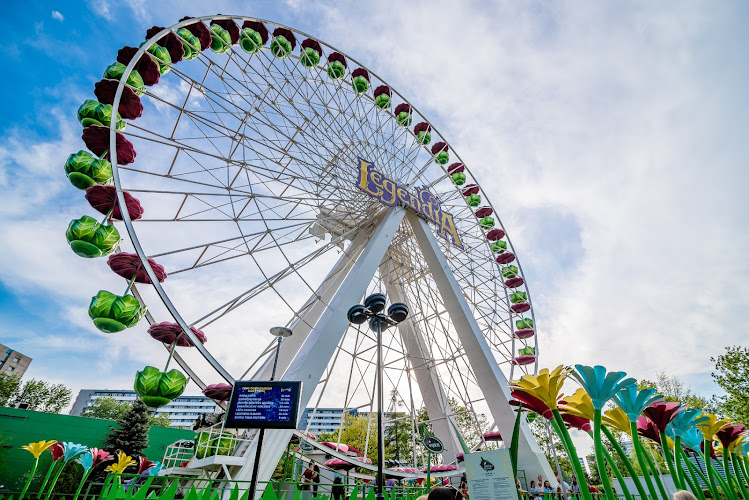
Legendia Silesian Amusement Park
Find Accommodations Nearby
Recommended Tours & Activities
Visitor Reviews
There are no reviews yet. Be the first one to write one.
Share Your Experience
Have you visited Culture and Leisure Park? Help other travelers by leaving a review.