
Friedrich List Denkmal
About Friedrich List Denkmal
Key Features
More Details
Updated April 16, 2024
## Friedrich List Denkmal (Listplatz, Reutlingen): what it is, why it matters, and what to look for
If you arrive in Reutlingen by train, you’re likely to encounter the Friedrich List Denkmal almost immediately: a bronze monument on Listplatz (Listpl., 72764 Reutlingen) honoring the city’s best-known native son, Daniel Friedrich List (1789–1846).
This isn’t a “hidden gem” situation. It’s a deliberately public landmark in the transit spine of the city—an everyday reminder of how closely 19th-century Germany tied economic thinking to infrastructure, trade policy, and state-building.
### Quick facts (grounded)
– Name: Friedrich List Monument / Friedrich-List-Denkmal
– Location: Listplatz, 72764 Reutlingen, Germany (near the train station area)
– Coordinates (given): 48.4953344, 9.21038
– Material/form: Bronze figure (described as a bronze statue/bronze casting)
– Design & casting: Designed by sculptor Gustav Adolph Kietz; cast by Georg (Ferdinand) Howaldt
– Timeline (as reported by local tourism/history sources): created in 1862 and associated with the 1863 monument in Reutlingen
– Inauguration date: 6 August 1863 (on List’s birthday)
– WWII note: the monument is reported to have survived the 1945 bombing attack without damage
> Data freshness flag: Your provided rating (4.6) is plausible, but ratings are volatile by nature (Google/UGC scores can change weekly). Treat any numeric star rating as a snapshot, not a stable fact.
—
## Who Friedrich List was (only what’s well-attested)
Friedrich List was born in Reutlingen on 6 August 1789 and died on 30 November 1846 in Kufstein. He is widely described as a German economist and political theorist whose work argued for national economic development strategies; modern summaries commonly link him to support for a German customs union (Zollverein) and the expansion of railways.
That matters here because the monument is not just “a statue of a famous local.” It’s a civic statement: Reutlingen is saying, in bronze and stone, that List’s ideas about trade integration and transport networks belong in the public square—literally.
—
## What to look for on site (details you can verify in seconds)
Because this is an outdoor memorial at a major square, your best experience comes from slowing down and reading the monument like a document.
### 1) The authorship: Kietz + Howaldt
Local tourism text identifies the creators: Kietz as sculptor and Howaldt as caster.
That pairing is useful context: in 19th-century monument-making, who designed the work and who executed the casting can tell you a lot about the technical ambition and the network of patronage behind it.
### 2) The base and setting
A heritage listing for Reutlingen describes the monument as a bronze figure on a high granite pedestal, tied to the date 1863.
Even if you’re not a sculpture person, pedestal choices matter: granite signals permanence and municipal seriousness—this was never intended to be temporary decoration.
### 3) The survival story (1945)
The Reutlingen tourism page emphasizes that the monument survived the 1945 bombing attack without damage.
If you care about urban history, this kind of detail is a prompt: look around Listplatz and ask what else in the immediate area is postwar rebuild versus older fabric. (You don’t need a museum label to start noticing.)
—
## How to visit efficiently
This is a public outdoor landmark at Listplatz.
A practical way to treat it is as a 5–15 minute “arrival ritual”—a quick orientation point that anchors you in Reutlingen’s identity: trade, mobility, and civic modernity.
If you’re documenting places (photos, notes, field research), capture:
– A full-height shot showing statue + pedestal (context matters).
– A close-up of any plaques/inscriptions you find on-site (these can contain dates/names not visible in web snippets).
– A wide shot that shows its relationship to the square—because placement is part of the message.
—
## Contextual internal links (RealJourneyTravels.com)
If you want to keep a consistent “Germany culture + civic history” thread across your site, these two pieces are natural companions:
– Fridericianum (Kassel) — museum/cultural context with strong civic history overlap: /fridericianum/
– Friedensplatz Oberhausen — another public square lens for reading German urban spaces: /friedensplatz-oberhausen/
—
## Why this monument earns a stop (in one honest sentence)
The Friedrich List Denkmal is worth your time because it compresses a big 19th-century European story—economics, railways, and nation-scale trade policy—into something you can stand beside, photograph, and interrogate in the middle of an ordinary day.
Table of Contents
Key Highlights
Friedrich List Denkmal
Location
Places to Stay Near Friedrich List Denkmal
Find and Book a Tour
Explore More Travel Guides
No reviews found! Be the first to review!
Traveler Reviews for Friedrich List Denkmal
There are no reviews yet. Be the first one to write one.
Have you visited Friedrich List Denkmal? Help other travelers by sharing your review.
You Might Also Like
Gaststätte Gartentor
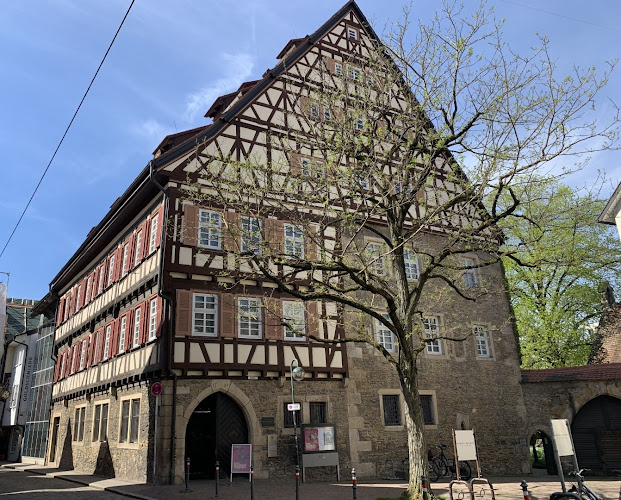
Reutlingen city museum
Alte Feuerwache
Find Accommodations Nearby
Recommended Tours & Activities
Visitor Reviews
There are no reviews yet. Be the first one to write one.
Share Your Experience
Have you visited Friedrich List Denkmal? Help other travelers by leaving a review.