
Gyumri
About Gyumri
Key Features
More Details
Updated April 16, 2024
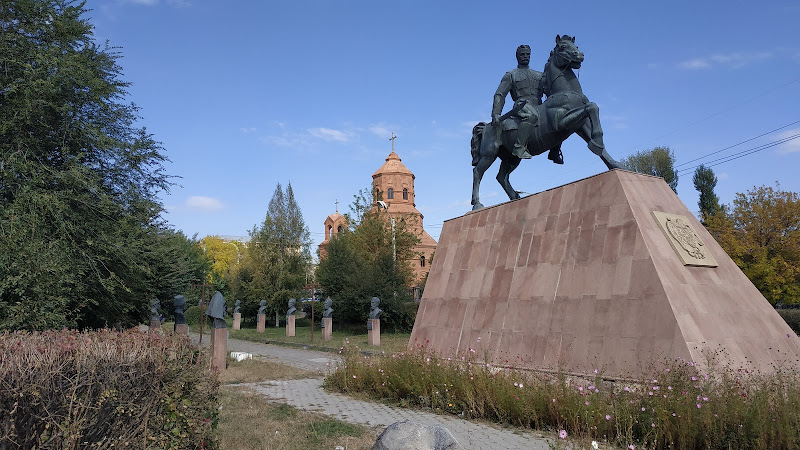
Vardanants Square, Gyumri – Tours to Uzbekistan & Central Asia & Caucasus
## Gyumri, Armenia: a practical guide to the country’s second city (without rushing it)
Gyumri sits in Armenia’s Shirak Province at roughly 40.7929, 43.8465 (your coordinates). It’s widely described as Armenia’s second-largest city, and it feels like a place where daily life and cultural memory still show on the street—especially in the older stone neighborhoods and the post-earthquake layers of rebuilding. Travel
A key part of understanding Gyumri is the 1988 earthquake (often referred to internationally as the Spitak/Armenian earthquake). Reporting on the 30-year mark notes the disaster killed more than 25,000 people and destroyed tens of thousands of homes across the region; Gyumri (then known as Leninakan) was among the hardest-hit urban centers.
What follows is a grounded, visitor-ready way to spend time here—focused on what you can reliably plan, plus a few less-obvious angles that reward a slower pace.
—
## Start in the historic core: Kumayri and the “black tuff” streets
If you want “Gyumri in one walk,” make it the Kumayri historic district, the city’s oldest area and the place where older masonry buildings, courtyards, and workshops still define the rhythm.
### A smart walking loop
– Begin at (or near) Vardanants Square for orientation, then peel off into side streets as soon as you can. (Squares in post-Soviet cities can feel expansive; the side streets are where Gyumri gets specific.)
– Look for tuff-stone façades and the “city-house” pattern—buildings that present a formal street face but hide domestic life in interior courtyards (a recurring theme in Gyumri’s urban history).
Practical note: sidewalks can be uneven, and winter conditions can add ice. If someone in your group has mobility needs, plan shorter loops with plenty of café breaks and use taxis between clusters.
—
## One museum that actually explains the city: Dzitoghtsyan (Urban Life & Architecture)
The Museum of Folk Architecture and Urban Life of Gyumri (often called the Dzitoghtsyan Museum) is your best “context engine” for the city: it’s set in a 19th-century house in Kumayri, founded in 1984, and explicitly focused on urban daily life, local architecture, and social history.
What makes it worth prioritizing:
– It ties the built environment (materials, courtyards, interior layouts) to social customs, instead of treating architecture like a photo backdrop.
– The museum’s own history is entwined with the earthquake era; its building survived the 1988 disaster and later reopened for exhibitions.
Time budget: 60–90 minutes is realistic if you read labels and don’t sprint.
—
## Sev Berd (Black Fortress): the best “wide-angle” stop
Gyumri’s Black Fortress (Sev Berd) is the city’s most striking military structure—massive, circular, and built for a different era of regional security logic. It’s also an easy place to get panoramic views and a sense of scale outside the historic core. Travel
How to do it well
– Go late afternoon if you want softer light for photography.
– Treat it as a short, high-impact stop (30–45 minutes). Pair it with a café or dinner back in town.
Outdated-data flag: opening hours and access rules can change seasonally; verify locally before you commit your timing. (Many online listings and tour pages lag reality.)
—
## A meaningful lens on the city: earthquake recovery and what’s changed
If you want to understand why Gyumri looks the way it does today, you need the “after” story, not just the “before.” A recent architecture-focused overview notes that the city’s regeneration has been unfolding for decades, shaped by population change and long-term restoration of the built environment after the 1988 destruction.
A grounded way to engage with this (without turning your visit into disaster tourism):
– Notice contrasts: preserved historic blocks vs. later construction and temporary housing patterns.
– Choose at least one experience that directly supports local culture today (museum ticket, local craft purchase, independent café).
For context on the scale of disruption, one community-focused account describes major losses in public infrastructure and large numbers of families left homeless in Gyumri after the earthquake.
—
## What to eat in Gyumri: start with ponchik (and don’t overthink it)
Gyumri is strongly associated with ponchik, and one repeatedly cited “institution” is Ponchik Monchik, known for large filled doughnuts (with multiple sources highlighting the shop’s popularity).
How to approach it like a local, not a checklist:
– Go when you actually want something sweet (mid-morning or mid-afternoon), not right after a heavy meal.
– If you’re traveling with dietary restrictions, ask directly about fillings and preparation (nuts, dairy, etc.). Ingredient transparency varies by venue, so the simplest path is to ask in-person.
—
## Getting to Gyumri from Yerevan: train/minibus basics you can plan around
The most dependable high-level guidance from a current Armenian transport timetable resource is that minibus or train can take around 2h 20m (for typical “no-car” travel). for Armenia
A separate travel explainer notes an express electric train option that can take just over two hours, with advice to buy tickets ahead due to limited capacity.
Outdated-data flag (important): specific departure times and service frequency change. Don’t lock your day to a blog-post timetable—use a live timetable source close to travel day and confirm at the station. for Armenia
—
## A simple 1–2 day itinerary (built for real pace)
### One full day (the “first-time” plan)
– Morning: Kumayri walk + coffee
– Late morning: Dzitoghtsyan Museum (Urban Life & Architecture)
– Lunch: something casual; save room for a sweet stop later
– Afternoon: Black Fortress (Sev Berd) for views Travel
– Late afternoon: Ponchik Monchik (or another bakery/café if lines are intense)
– Evening: slow wander back through the center; pick a place that feels lively and local rather than “designed for visitors”
### Add a second day if you can
Use it for:
– A slower neighborhood walk (better photos, fewer crowds)
– Another museum or gallery that matches your interests (art, local history, or contemporary cultural spaces) Travel
—
## Inclusivity, safety, and respectful travel notes
– Language: Armenian is primary; Russian may be used by some residents and services. If you only speak English, keep a translation app handy and default to polite, simple requests.
– Accessibility: expect uneven paving in older areas; plan rest stops and use taxis strategically.
– Photography: the architecture invites it—just avoid photographing people in distress or private courtyards without clear permission.
—
## Two contextual internal link opportunities (RealJourneyTravels.com)
If your site has (or will have) these hub pages, they fit naturally inside this article:
– Link from “getting to Gyumri from Yerevan” → /yerevan/ (transport tips + where to stay before/after)
– Link from “Armenia’s second city” / “planning a wider itinerary” → /armenia/ (visa basics, SIMs, money, route-building)
(If those exact URLs don’t exist, use your closest equivalents.)
—
If you want, I can also generate FAQ schema questions that match this exact guide (transport time, best area to walk, what the Dzitoghtsyan museum covers, how long to spend at Black Fortress)—kept strictly to what the cited sources support.
Table of Contents
Key Highlights
Gyumri
Location
Places to Stay Near Gyumri
Find and Book a Tour
Explore More Travel Guides
No reviews found! Be the first to review!
Traveler Reviews for Gyumri
There are no reviews yet. Be the first one to write one.
Have you visited Gyumri? Help other travelers by sharing your review.
You Might Also Like
Hovhannes Shiraz House-Museum
Cobweb Art Gallery and Museum
Victory Park Gyumri
Find Accommodations Nearby
Recommended Tours & Activities
Visitor Reviews
There are no reviews yet. Be the first one to write one.
Share Your Experience
Have you visited Gyumri? Help other travelers by leaving a review.