
Historic Montrose Court
About Historic Montrose Court
Key Features
More Details
Updated June 11, 2025
Historic Photos Johnson City, Tennessee Volume 6
## Historic Montrose Court (Montrose Court Apartments): what it is, where it is, why it matters
Historic Montrose Court—also known as the Montrose Court Apartments—is a Tudor Revival apartment complex built in 1922 in Johnson City, Tennessee. It’s listed on the National Register of Historic Places (NRHP reference #80003879) and was added April 21, 1980.
If you like early-20th-century city growth stories, this building is a clean example: purposeful “modern” apartments (for the era), built for a specific corporate workforce, and still legible as a piece of Johnson City’s built environment.
### Quick facts (from your dataset + public records)
– Name: Historic Montrose Court (Montrose Court Apartments)
– Address (commonly mapped): 1101–1151 Boyd St, Johnson City, TN 37604
– Site context: Located on Boyd Street at/near Locust Street and Southwest Avenue Commons
– Coordinates: 36.3067551, -82.3574117 (as provided)
– Rating: 4.4 (as provided)
– NRHP: Listed April 21, 1980; reference #80003879
– Architectural style: Tudor Revival
## The backstory: why this apartment building was built in 1922
Montrose Court was constructed in 1922 on land owned by George Carter. A group of local businessmen (including Carter) formed the Southwest Apartment Company and hired Johnson City architect Donald R. Beeson, Sr. to design the building.
The intent wasn’t just “more housing.” According to a Johnson City historic planning document, the complex was built to house German executives of the Bemberg Corporation, a textile company located in Elizabethton. That one detail helps explain why the building read as upmarket for its time—and why it was worth documenting and preserving later.
### What counted as “luxury” in 1922 (and what’s notable today)
The same document records several original “luxury features,” including:
– Built-in tubs
– Parking garages
– Murphy beds
Those details matter because they show how quickly American middle/upper-middle housing expectations were shifting in the 1920s—especially in growing, rail-and-industry-connected towns.
## Architecture: what “Tudor Revival” means here
The complex is explicitly identified as Tudor Revival in local historic documentation. Photographic documentation and NRHP-related listings also associate it with Tudor Revival architecture and confirm the 1922 build date. Commons
What you can reliably take away from the exterior (without guessing at interior access or current condition):
– It’s a large, purpose-built apartment complex, not a single-family historic home.
– The Tudor Revival classification signals a deliberate “Old World” visual language that was popular in U.S. domestic and multi-family architecture in the early 20th century.
## Preservation status: the NRHP listing (what it does—and doesn’t—mean)
Montrose Court Apartments were listed on the National Register of Historic Places on April 21, 1980 (NRHP #80003879).
It’s worth being precise about the practical implication: the NRHP is the official U.S. list of historic places worthy of preservation, administered by the National Park Service as part of a national program to identify, evaluate, and protect historic resources. Park Service
(Being listed does not automatically mean the property is publicly accessible; access depends on ownership and use.)
## Visiting responsibly: how to experience Montrose Court on the ground
Because this is an apartment complex (a residential building by design), the most universally respectful approach is to treat it as an exterior-view site unless you have a specific, legitimate reason to go inside.
Practical, non-negotiable etiquette points:
– View from public right-of-way (sidewalks/streets) and keep noise down.
– Don’t photograph residents or private entry areas.
– Avoid blocking driveways (the building historically included garages, and accessways still matter).
### What to pair it with nearby (historically coherent context)
Montrose Court is directly connected to Johnson City’s early-20th-century residential growth patterns. The same city document that describes Montrose Court does so while discussing the area’s historic residential development and architectural variety.
So, if you’re building a walking route, keep it tight: focus on nearby historic residential streets and architecture rather than trying to force it into a “top attractions” checklist.
## Address + data quality notes (flagging what may be outdated or inconsistent)
You provided 1101–1151 Boyd St as the address range. Separately, historic documentation references Montrose Court as constructed at 701 West Locust Street and describes its placement in the neighborhood context. This kind of mismatch is common for large buildings that span corners, have multiple entrances, or have had address conventions change over decades.
What’s safe to conclude:
– The building is associated with Boyd Street near Locust Street/Southwest Avenue in Johnson City. Commons
– Mapping directories may display different address strings for the same property footprint over time.
If you publish this, it’s worth adding a short editor’s note like: “Some sources list Montrose Court under Boyd St, others under W Locust St; both refer to the same historic complex.”
## Internal links to add (site-dependent)
I can’t know your exact RealJourneyTravels.com URL structure, but these are the two cleanest contextual internal link targets:
– Johnson City travel guide (anchor example: “More things to do in Johnson City, TN”)
– National Register of Historic Places explainer (anchor example: “What it means when a building is on the National Register of Historic Places”) Park Service
## Why Montrose Court is worth your time (in one paragraph, no hype)
Montrose Court’s value is that it’s not a museum piece—it’s a documented snapshot of 1922 urban housing, shaped by corporate presence (Bemberg in Elizabethton), designed by a named local architect (Donald R. Beeson, Sr.), and preserved formally via the NRHP in 1980. That combination is what makes it a strong “readable” landmark from the sidewalk: the story is still attached to the building.
Table of Contents
Key Highlights
Historic Montrose Court
Location
Places to Stay Near Historic Montrose Court"What a place to live."
Find and Book a Tour
Explore More Travel Guides
No reviews found! Be the first to review!
Traveler Reviews for Historic Montrose Court
There are no reviews yet. Be the first one to write one.
Have you visited Historic Montrose Court? Help other travelers by sharing your review.
You Might Also Like
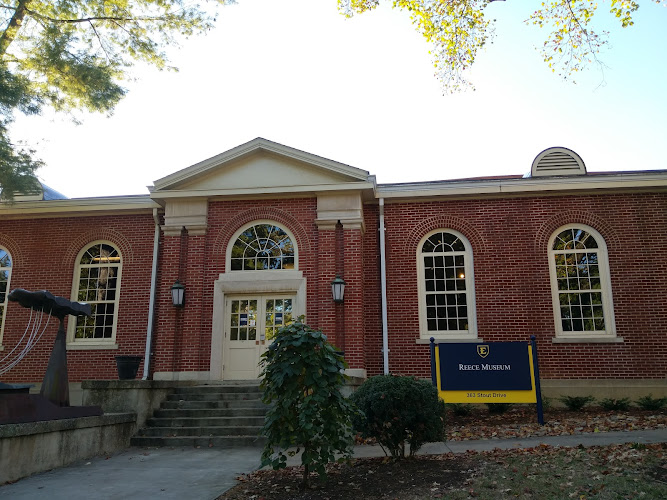
Reece Museum
Hands On Discovery Center
Appalachian GhostWalks
Find Accommodations Nearby
Recommended Tours & Activities
Visitor Reviews
There are no reviews yet. Be the first one to write one.
Share Your Experience
Have you visited Historic Montrose Court? Help other travelers by leaving a review.