
Last modified August 27, 2026
Greece’s spiritual landscape unfolds through thousands of churches – from world-famous Byzantine monasteries perched on impossible cliffs to intimate island chapels where fishermen light candles before dawn. As you plan your 2025 Greek odyssey, these 20 sacred sites (spanning mainland peaks to Cycladic shores) offer an extraordinary journey through faith, art, and millennia of devotion. Each tells its own story of miracles, martyrdom, and the enduring Orthodox tradition that shapes Greek identity.
Most Stunning Churches in Greece to Visit
1. Anastasi Church, Oia – Santorini’s Iconic Blue Dome at Sunrise
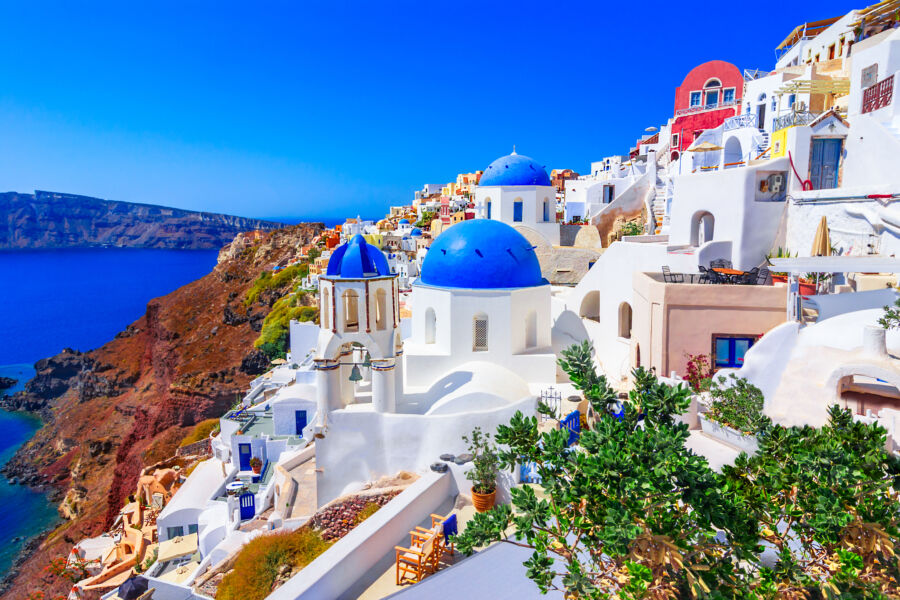
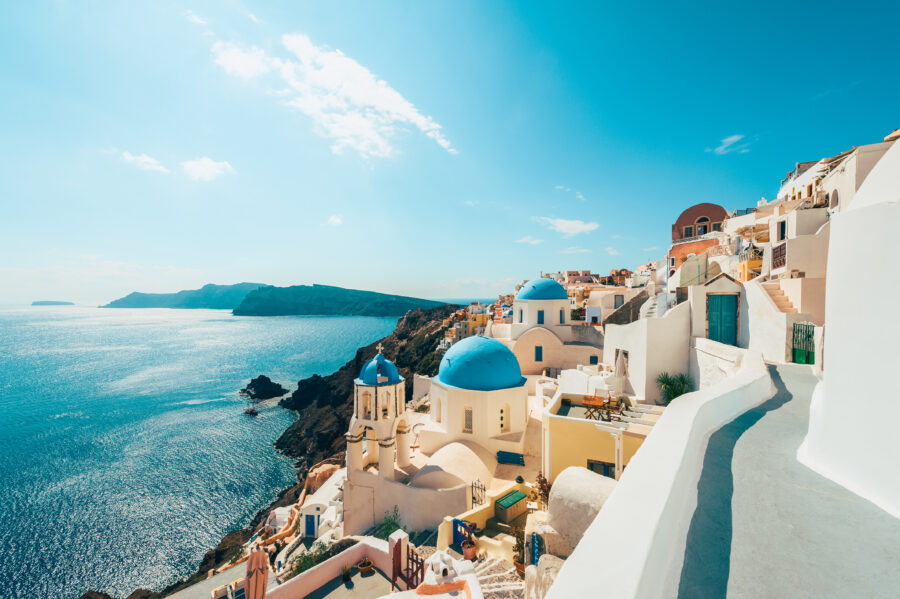
Perched on Santorini’s dramatic caldera rim in Oia, the Church of the Resurrection (Anastasi) presents the Cyclades’ most photographed scene. Built in 1865, this brilliant white church crowned with its signature cobalt-blue dome has become synonymous with Greek island dreams. The pink bell tower adds an unexpected splash of color against the infinite blue of the Aegean Sea.
Just 10 meters away stands its twin, Agios Spyridon (1867), with matching blue dome and bell tower – together they create the postcard-perfect composition that graces a million travel memories. Inside Anastasi, humble icons and flickering oil lamps remind visitors this is first a place of worship, not merely a photo opportunity. The church represents the resilience of Santorini’s people, rebuilt after earthquakes with the same devotion that has sustained the island through volcanic catastrophes and pirate raids.
2026 Travel Tip: With Easter falling on April 20 in 2026 (coinciding with Western Easter), expect larger crowds. For the quintessential sunrise photo without tour groups, arrive by 6:00 AM in summer.
The exact viewpoint is found by heading to Panagia Akathistos Church in Oia’s main square, then following the path between buildings toward the sea. A red carpet now protects the marble path where devoted pilgrims sometimes crawl to show their faith.
2. Panagia Paraportiani, Mykonos – A Whitewashed Seaside Wonder

In Mykonos Town’s ancient Kastro quarter, Panagia Paraportiani stands as a sculptural marvel of Cycladic architecture. This isn’t one church but five chapels organically fused over centuries (15th-17th) into a single, dreamlike structure. Four small chapels form the base, with a fifth crowning the asymmetrical composition like white frosting melting in the Aegean sun.
The name “Our Lady of the Side Gate” recalls its origin beside a now-vanished castle entrance. Its smooth, curved walls – perpetually whitewashed by devoted locals – create an almost alien beauty that has made it one of the world’s most photographed churches.
While the interior rarely opens to visitors, the exterior alone justifies the pilgrimage. Designated a national monument, Paraportiani epitomizes the Greek genius for creating profound beauty from simple materials.
2026 Travel Tip: Visit at golden hour (sunset) when the white walls glow warmest, or early morning (before 9 AM) to avoid cruise ship crowds. The church is freely accessible 24/7 from the waterfront. Combine with a stroll through Little Venice nearby, and keep an eye out for Petros the Pelican’s successors who still waddle the cobblestoned streets.
3. Monasteries of Meteora – Sky-High Sanctuaries “Suspended in Air”
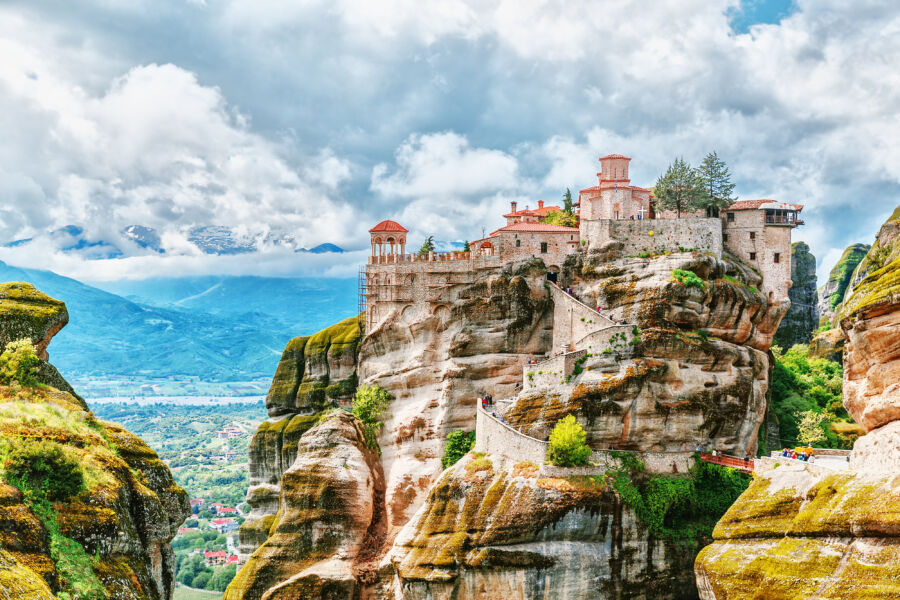
Rising from the Thessalian plain like stone fingers reaching toward heaven, Meteora’s monasteries defy both gravity and comprehension. Six active monasteries remain from the original 24, each perched atop sandstone pillars up to 400 meters high. Built between the 14th-16th centuries by hermit monks seeking literal elevation from worldly concerns, these “suspended in air” sanctuaries required rope ladders and winched nets for access until the 1920s.
Each monastery charges €3 entrance and follows different schedules – all six are open on weekends. Great Meteoron (the largest) and Varlaam showcase spectacular frescoes and medieval manuscripts. Holy Trinity, featured in For Your Eyes Only, rewards its 140-step climb with breathtaking views.
St. Stephen’s, reached by a simple footbridge, offers step-free access for visitors with mobility challenges. UNESCO recognized Meteora for its “columns of the sky” and post-Byzantine art that merge natural wonder with human devotion.
2026 Travel Tip: Summer hours run 9:00 AM-4:00 PM (with variations), while winter hours are typically 9:30 AM-2:00 PM. Visit during shoulder seasons (April-May, September-October) for ideal weather and smaller crowds. E-bikes (€25/day) offer an excellent alternative to driving between monasteries. Book accommodations in Kalambaka or Kastraki early, especially around Greek Easter (April 20, 2025).
4. Church of Agia Theodora, Vasta – The Miracle Chapel with 17 Trees on Its Roof

Deep in an Arcadian forest near Vasta village, one of Christianity’s most extraordinary miracles continues to flourish. Seventeen massive oak and elm trees, some over 30 feet tall, grow directly from the roof of this tiny 12th-century stone chapel. Scientifically investigated multiple times, researchers discovered the trees’ roots snake invisibly through the walls to reach an underground spring – yet not a single root penetrates the chapel’s interior, and the ancient structure shows no signs of collapse under tons of living wood.
Local tradition preserves a poignant legend: Theodora, a pious young woman, disguised herself as a male soldier to defend her village from bandits. Mortally wounded and facing death, she prayed: “Let my body become a church, my hair a forest, and my blood a spring.”
Today, water indeed flows beneath the church, the roof forest thrives, and villagers venerate Saint Theodora for her sacrifice. The single-room sanctuary, lit by candles and faith, remains structurally perfect despite its impossible burden.
2026 Travel Tip: This hidden gem lies 3 hours from Athens via Arcadia’s winding mountain roads. GPS coordinates: 37.4719°N, 22.0983°E. Visit in late spring or summer when the canopy is fullest.
A small café nearby sells local honey and hand-painted icons. Entry is free, but consider leaving a donation for maintenance. The site’s remote location means you’ll often have this miracle to yourself.
See Related: Best Places to Visit in Europe This Year
5. Church of Agios Spyridon, Corfu – Miraculous Relics and a Soaring Bell Tower

Corfu Town’s skyline is dominated by the distinctive red-domed bell tower of Agios Spyridon, the island’s most beloved church and home to extraordinary miracles. Built in 1589, this single-nave basilica houses the incorrupt body of Saint Spyridon, a 4th-century Cypriot bishop whose miraculous interventions saved Corfu from plague, famine, and Ottoman siege.
The saint’s relics, kept in an ornate silver sarcophagus, remain mysteriously preserved and flexible after 1,700 years. Remarkably, his feet are re-shod annually as believers insist he wears out silk slippers walking the world performing miracles.
Inside, golden Byzantine icons gleam in the candlelight while clouds of incense rise toward the painted dome. The campanile, tallest in the Ionian Islands, serves as a beacon for arriving ferries and a symbol of Corfu’s enduring faith.
2026 Travel Tip: Open daily 6:00 AM-10:00 PM, dress modestly (no shorts/bare shoulders). Time your visit for a litany procession – especially powerful during Easter Week (April 20, 2025) or the saint’s summer feast (August 11) when his relics are paraded through the Venetian streets accompanied by philharmonic bands. The church sits in the heart of the UNESCO-listed old town, perfect for combining with café culture.
6. Panagia Ekatontapiliani, Paros – The “Church of 100 Doors”

On Paros, just minutes from the ferry port, stands one of Christianity’s most ancient and mysterious churches. Panagia Ekatontapiliani (Our Lady of the Hundred Gates) dates to the 4th century, reputedly founded by Saint Helena during her quest for the True Cross. Legend whispers that while 99 doors are visible, the hidden 100th will reveal itself only when Constantinople returns to Greek hands.
This Byzantine complex survived earthquakes, pirates, and time itself. Today’s basilica, largely from Emperor Justinian’s era, encompasses multiple chapels, one of Greece’s oldest baptisteries with an cruciform marble font, and priceless icons.
The worn marble floors tell of countless pilgrims over 17 centuries. As the Aegean’s second-most important Marian shrine after Tinos, Ekatontapiliani draws believers seeking the Virgin’s protection.
2026 Travel Tip: Located in Parikia town, it’s a 5-minute walk from the ferry dock. The adjacent Byzantine Museum displays remarkable Christian artifacts.
Visit early morning for photography without crowds, but don’t miss the August 15 Dormition feast – candles, incense, and centuries-old chants create an unforgettable atmosphere. Count those doors yourself!
7. Monastery of Arkadi, Crete – A Shrine of Freedom and Sacrifice
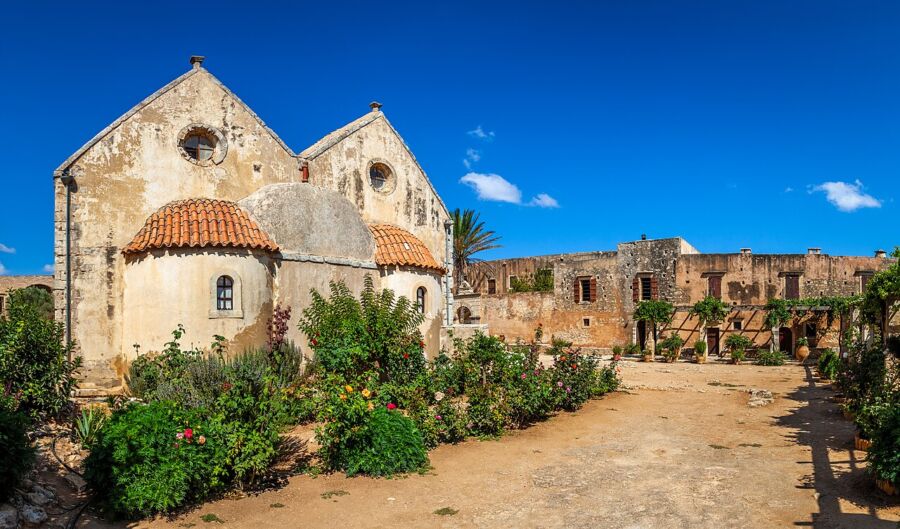
Set against Crete’s rugged mountains 23 km southeast of Rethymno, Arkadi Monastery stands as Greece’s most potent symbol of the price of freedom. This 16th-century fortress-monastery, with its remarkable Renaissance-Baroque façade, became immortal through tragedy. On November 9, 1866, rather than surrender to 15,000 Ottoman troops, Abbot Gabriel and 943 Cretan rebels – mostly women and children – chose martyrdom, detonating the gunpowder storage in a devastating explosion.
The “Holocaust of Arkadi” shocked Europe and galvanized support for Cretan independence. Today, visitors can explore the restored church with its ornate twin bell towers, the old wine cellars, the refectory still bearing sword marks, and the powder magazine where the explosion occurred.
An ossuary holds skulls of the martyrs, while a museum displays period weapons and religious artifacts. UNESCO designated Arkadi a European Monument of Freedom.
2026 Travel Tip: Open daily with varying seasonal hours: April-May 9:00 AM-7:00 PM, June-August until 8:00 PM, winter 9:00 AM-4:00 PM. Entry €3. The November 8 memorial service remains deeply moving.
Drive through olive groves from Rethymno (30 minutes) or join organized tours. The cypress in the courtyard still bears an embedded cannonball from the siege.
8. Panagia Hozoviotissa, Amorgos – A Monastery Defying Gravity

Clinging to a sheer cliff face 300 meters above the Aegean, Hozoviotissa Monastery appears painted onto the rock itself. This architectural miracle, founded in 1088, rises nine stories within a facade just 5 meters wide. Reaching it requires climbing 300 stone steps carved into the precipice – a breathtaking ascent rewarded by equally breathtaking views and warm monastic hospitality.
Legend tells of a miraculous icon of the Virgin that floated from Palestine during the Iconoclast period, coming ashore below these cliffs. The monastery was built to house this treasure, essentially wedged into the rock face with rooms carved deep into the mountain. The few resident monks maintain centuries-old traditions, welcoming visitors with loukoumi (Turkish delight) and psimeni raki (warm spiced liqueur) in rooms where the rock ceiling drips with moisture.
2026 Travel Tip: Open daily, modest dress required (wraps provided). The 15-20 minute climb is best in early morning or late afternoon to avoid heat. The monastery appears most photogenic in late morning light.
Amorgos remains relatively undiscovered – in 2026 you might still have this marvel nearly to yourself. Don’t miss the filming locations from The Big Blue while on the island.
9. Monastery of St. John, Patmos – Where Revelation Was Written

Crowning Patmos like a medieval crown, the Monastery of St. John the Theologian has guarded Christianity’s most mysterious text for over 900 years. Founded in 1088, this fortress-monastery rises above the Cave of the Apocalypse where tradition holds St. John received his visions and wrote Revelation around 95 AD. Both monastery and cave are UNESCO World Heritage sites, recognized for their profound spiritual significance.
Within the monastery’s massive walls, Byzantine frescoes illuminate the katholikon while the treasury dazzles with manuscripts, icons, and jeweled artifacts. The library preserves over 330 medieval codices and 2,000 printed books.
From the ramparts, views sweep across the Dodecanese to Turkey’s coast. Below in Chora, the sacred cave preserves the rock where John laid his head and the triple fissure through which God’s voice reportedly thundered.
2026 Travel Tip: Ferries connect Patmos with Piraeus and other islands. Modest dress essential; photography restricted in some areas.
With Easter 2025 on April 20, Holy Week services here are extraordinarily moving – ancient rituals in the very place where Christianity’s final book was born. The monastery’s working monks maintain a living tradition of chant and prayer.
10. Church of Agios Dimitrios, Thessaloniki – A Martyr’s Basilica and Greece’s Largest Church

In the heart of Thessaloniki stands Greece’s largest church, a massive five-aisled basilica dedicated to the city’s patron saint. The Church of Agios Dimitrios marks the site where the young Roman officer was imprisoned and martyred in 303 AD for his Christian faith. For centuries, fragrant myrrh oil seeped from his tomb, earning Dimitrios the title “Myrovlitis” (Myrrh-Gusher) and drawing pilgrims from across the Orthodox world.
Today’s church, rebuilt after the devastating 1917 fire, preserves remarkable 7th-century mosaics that survived the flames – including delicate golden depictions of St. Dimitrios with children. The crypt, where Dimitrios was martyred in a Roman bath, now functions as a museum (open Wednesday-Monday 8:00 AM-8:00 PM, Friday until 9:00 PM). The saint’s relics rest in a silver reliquary, and locals credit his miraculous interventions for saving the city countless times – even its 1912 liberation occurred on his feast day, October 26.
2026 Travel Tip: Open daily 6:00 AM-8:00 PM (some sources say 10:00 PM), free entry. Located near the Roman Forum in the city center.
The October 26 feast remains Thessaloniki’s biggest celebration with processions, but any Friday evening crypt service offers a uniquely mystical experience. Combine with nearby Byzantine sites for a full day of spiritual archaeology.
11. Hagia Sophia, Thessaloniki – A Golden Dome of Divine Wisdom

Not to be confused with Istanbul’s namesake, Thessaloniki’s 8th-century Hagia Sophia stands as one of Greece’s most important Byzantine churches. This domed cruciform basilica symbolizes Orthodoxy’s triumph over Iconoclasm – its magnificent dome mosaic of Christ’s Ascension, installed 787-797 AD, replaced an earlier simple cross when icon veneration was restored.
Look up 32 meters to see Christ Pantocrator enthroned in golden glory, surrounded by the Virgin Mary and Apostles in what experts consider the finest surviving example of the “Macedonian Renaissance.” Despite conversions to a mosque (note the Ottoman inscriptions) and damage from fires, the church retains its harmonic Byzantine proportions. The exceptional acoustics occasionally host Byzantine choral performances that transport listeners back a millennium.
2026 Travel Tip: Located near Aristotelous Square, easily combined with city center sightseeing. Photography allowed without flash – bring binoculars or zoom lens to appreciate the dome details. While Thessaloniki offers year-round appeal, spring 2025 brings perfect weather for exploring its UNESCO-listed Byzantine monuments on foot.
See Related: Best Cities in Europe to Enjoy Winter Without the Crowds
12. Panagia Kapnikarea, Athens – An 11th-Century Gem Amid Shopping Streets

In the heart of Athens’ busiest shopping thoroughfare, Ermou Street, an 11th-century Byzantine chapel creates an island of tranquility amid commercial chaos. Panagia Kapnikarea, one of Athens’ oldest churches (c. 1050), sits slightly below modern street level – a reminder of the city’s accumulated millennia. King Ludwig I of Bavaria personally saved it from demolition in the 1830s when city planners wanted to straighten the street.
This diminutive cruciform church showcases Byzantine architecture at its most refined: an elegant dome supported by ancient columns likely recycled from a pagan temple to Athena. The interior features vibrant 1950s frescoes by renowned iconographer Fotis Kontoglou, executed in traditional Byzantine style.
Above the entrance, his mosaic of the Virgin and Child glows against the old stones. Athenians pop in throughout the day to light candles, maintaining worship traditions spanning nearly a thousand years.
2026 Travel Tip: Open limited hours (typically mornings until early afternoon, closed Mondays) – catch it when the wooden door stands ajar and Byzantine chanting drifts out. Free entry. Perfect for a spiritual pause during Ermou Street shopping.
The November 21 feast (Entrance of the Theotokos) brings small but fervent celebrations. Nearby Kapnikarea Square offers cafés for post-prayer Greek coffee.
13. Agios Ioannis Chapel, Skopelos – The “Mamma Mia!” Wedding Rock
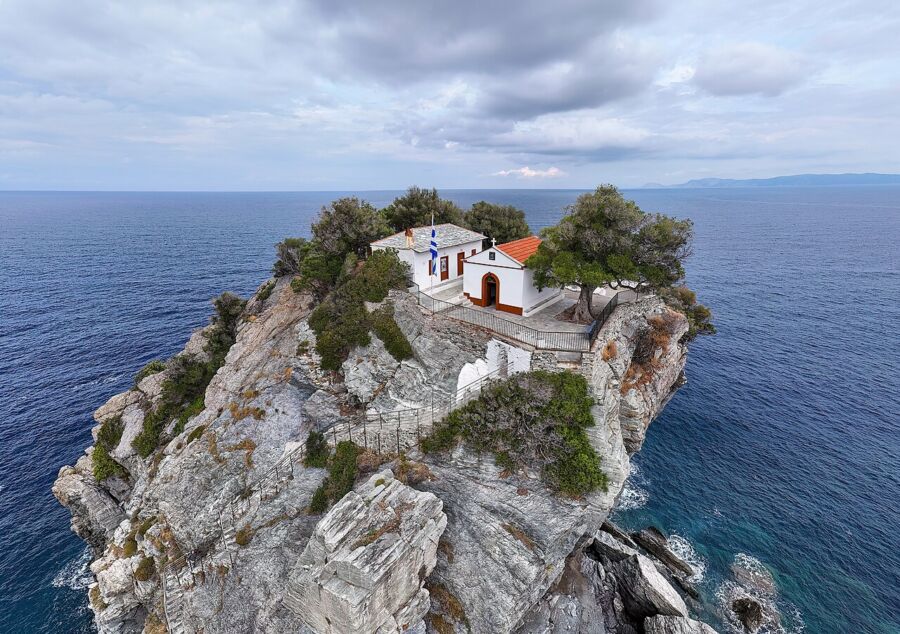
Jutting from the Aegean like a finger pointing skyward, the rocky pinnacle of Agios Ioannis Kastri achieved worldwide fame as the wedding venue in Mamma Mia! Reality surpasses Hollywood: climbing the 199 carved steps (actually 198, but who’s counting?) to this tiny chapel 100 meters above the waves delivers views that leave visitors breathless – beyond the physical exertion.
This 18th-century chapel dedicated to St. John the Baptist perches atop its sea stack with just enough room for perhaps a dozen worshippers and a tiny courtyard clinging to the cliff. Inside, simple icons and candlelight create an intimate sanctuary.
The 360-degree panorama encompasses Skopelos’ pine-clad hills, neighboring islands, and endless blue sea. Since the film, it’s become a pilgrimage site for romantics and ABBA fans alike – many couples now exchange vows here, though logistics require dedication matching the climb.
2026 Travel Tip: Located near Glossa village in north Skopelos. Drive (parking available) or join a “Mamma Mia!” tour. Sturdy shoes essential; bring water.
Visit early morning or late afternoon to avoid crowds and harsh sun. The beach below offers refreshing swimming after your descent. While touristy, the raw beauty transcends the hype – you’ll understand why they filmed here.
14. Chapel of the Seven Martyrs, Sifnos – Aegean Poetry in Stone

Below the medieval walls of Kastro, Sifnos, a stone path descends to one of the Cyclades’ most photographed sanctuaries. The Chapel of Seven Martyrs (Eftamartyres) occupies a rocky outcrop barely larger than itself, surrounded by sea on three sides. When waves crash, salt spray kisses its whitewashed walls – a perpetual blessing from the Aegean.
Built in the 17th or 18th century, this tiny chapel honors seven early Christian martyrs. Its interior barely accommodates a handful of people, with an ornate wooden iconostasis and time-darkened icons.
But visitors come for the exterior experience: the interplay of white church, blue dome, and bluer sea creates a composition of almost painful beauty. Couples choose it for intimate weddings; artists set up easels at every angle; photographers wait hours for perfect light.
2026 Travel Tip: Park at Kastro village entrance and walk through the photogenic medieval settlement. The path to Seven Martyrs is marked in Greek (Επτά Μάρτυρες). Sunrise or sunset transforms the scene into pure magic.
No facilities – bring water. Afterwards, dine in Kastro’s tavernas while gazing back at “your” chapel. Local legend says the chapel bells once warned of pirates; now they ring for more peaceful occasions.
15. Hosios Loukas Monastery, Boeotia – Golden Byzantine Splendor
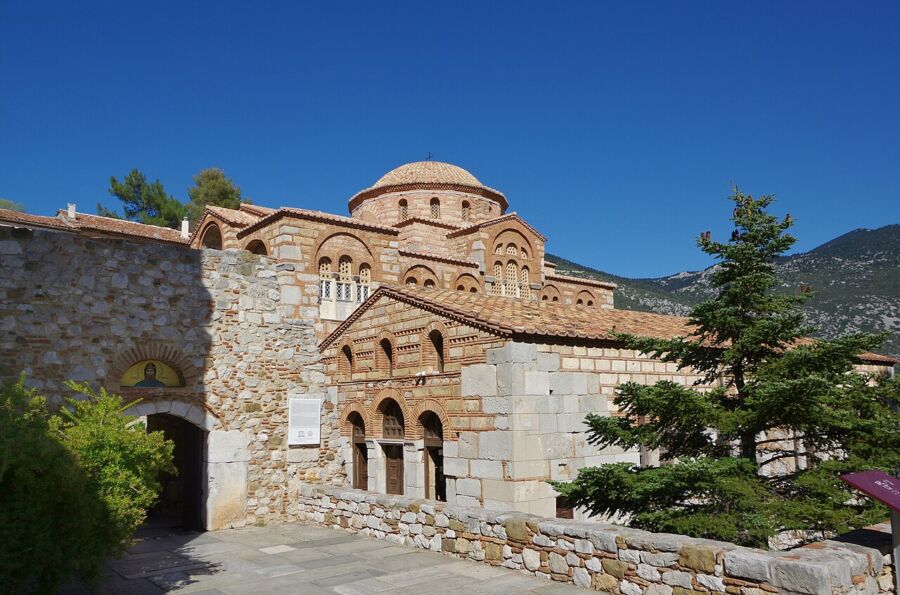
Hidden in the hills between Delphi and Athens, Hosios Loukas ranks among the supreme achievements of Middle Byzantine art. This UNESCO World Heritage monastery, founded by the hermit St. Luke of Steiris in the early 10th century, reached its artistic zenith under imperial patronage. The complex preserves the finest surviving ensemble of 11th-century mosaics in Greece.
Entering the katholikon (completed 1011 AD), visitors gasp at the golden cosmos overhead: Christ Pantocrator gazes from the central dome while saints and biblical scenes shimmer on every surface in countless tiny tesserae. The mosaics here, with those at Daphni and Nea Moni, define the “second golden age” of Byzantine art.
Below, the crypt where St. Luke’s myrrh-streaming relics once lay maintains its mysterious atmosphere. The smaller 10th-century Theotokos church showcases Greece’s earliest cross-in-square design.
2026 Travel Tip: Located 37 km from Delphi, ideal for combining both UNESCO sites in one day. Entry €4. Shoulders and knees must be covered. No flash photography to protect the mosaics.
The valley setting with Mount Helicon views adds natural grandeur to artistic splendor. Check for occasional Byzantine music concerts – the acoustics under these ancient domes create transcendent experiences.
16. Panagia Megalochari, Tinos – Greece’s Lourdes and National Shrine

Tinos island hosts Greece’s most important pilgrimage site: the Church of Panagia Evangelistria (Megalochari), home to a miraculous icon of the Virgin Mary. This massive church complex, built 1823-1830, crowns the hill above Tinos town. The icon’s discovery in 1823 – revealed through visions to nun Pelagia – coincided with the Greek War of Independence and was seen as divine approval for freedom.
Today the icon, almost completely encased in gold, silver, and jewels, is believed to work miracles of healing. On August 15 (Dormition of the Virgin), thousands of pilgrims crawl on hands and knees from the port up the marble street to the church – a red carpet now protects their path.
The church also celebrates on January 30 (discovery of the icon) and March 25 (Annunciation). Inside, votive offerings from the grateful cover every surface: golden ships from saved sailors, silver body parts from the healed, jewels from answered prayers.
2026 Travel Tip: If visiting during major feasts, book accommodation months ahead. The church provides free lodging for pilgrims up to three days.
Outside feast days, the church treasury museum displays extraordinary offerings including a golden orange tree crafted by a man whose sight was miraculously restored. Tinos Town offers excellent seafood after your pilgrimage. Even non-believers find the devotion here profoundly moving.
17. Agia Sophia Church, Monemvasia – Byzantine Beauty on the Rock

High atop the Gibraltar-like fortress rock of Monemvasia, where medieval Greeks made their last stand against invaders, Agia Sophia church commands the most dramatic setting of any Byzantine church in Greece. Built around 1150 during Monemvasia’s golden age, this domed octagonal church originally honored the Virgin Hodegetria before being rededicated to Holy Wisdom.
Perched literally on the cliff edge with views sweeping to the horizon, Agia Sophia survived centuries as Venetian Catholic church and Ottoman mosque before returning to Orthodoxy. Despite neglect, 12th-century frescoes survive in fragments – look for the partly preserved scenes from St. Nicholas’s life.
The architecture showcases sophisticated Byzantine design: eight pillars support the high dome in miniature echo of Constantinople’s great churches. Inscribed marbles and relief carvings on the exterior reward close examination.
2026 Travel Tip: Reaching Agia Sophia requires a steep 20-30 minute hike through Monemvasia’s upper town ruins. Wear sturdy shoes; bring water. The church may be closed off-season, but the exterior and clifftop setting justify the climb.
Best light for photography comes late afternoon. Reward yourself afterward in the atmospheric lower town’s tavernas and boutique hotels. Summer 2025 may bring occasional concerts under the stars.
18. Cathedral of Saint Andrew, Patras – Greece’s Largest Church

Patras’ modern Cathedral of Agios Andreas ranks as Greece’s largest church, accommodating over 8,000 worshippers. Completed in 1974 after decades of construction, this neo-Byzantine basilica features a massive 46-meter central dome topped by a 5-meter gilded cross, with 12 smaller crosses representing Christ and the Apostles.
The cathedral’s significance transcends size: Patras witnessed St. Andrew’s martyrdom on an X-shaped cross, and this church enshrines Christianity’s most precious relics of the Apostle.
The skull of St. Andrew and a piece of his death-cross, returned from Italy in the 1960s, rest in a special chapel where pilgrims venerate them with profound emotion. The vast interior showcases modern Byzantine-style murals and icons still being completed, while the marble iconostasis impresses with its scale.
2026 Travel Tip: Located 2.5 hours from Athens by car or train. The November 30 feast of St. Andrew brings massive celebrations. Visit the adjacent 19th-century church built over the traditional martyrdom site.
Patras’ famous Carnival (February/March 2025) creates an interesting sacred/festive contrast. Try local tentura liqueur in nearby cafés after your visit. Weekend visits often coincide with weddings or baptisms – glimpses into living Greek traditions.
See Related: Hidden Boutique Hotels in Europe That Redefine Luxury
19. Panagia Church, Folegandros – Clifftop Sunset Sanctuary

The white zigzag path ascending from Folegandros’s Chora to Panagia church has become one of the Cyclades’ most Instagram-famous sights. Yet this 15-minute climb (best at sunset) leads to something far more profound than social media likes. The Church of the Assumption, likely pre-1800 but renovated in 1821, crowns the island’s highest point with 360-degree views that humble human ambition.
Built partially from ancient marble fragments – note the pagan inscriptions recycled in its walls – Panagia shelters a silver-encased icon of the Virgin considered miraculous. Legend tells how in 1790, as pirates approached, desperate islanders carried the icon out in prayer.
A sudden storm wrecked the pirate ships, saving Folegandros. Each Easter, this same icon processes through every village in a moving display of communal faith.
2026 Travel Tip: Start from Pounta Square in late afternoon to reach the church by sunset. Bring a light jacket (wind!), water, and flashlight for descent. The August 15 feast transforms quiet Folegandros with processions and all-night festivities.
Even on ordinary evenings, you might find the church open – step inside to light a candle. From Panagia’s terrace, the sunset view encompasses the entire southern Cyclades, often in complete silence save for distant goat bells.
20. Nea Moni Monastery, Chios – Mosaic Masterpieces Born from Tragedy
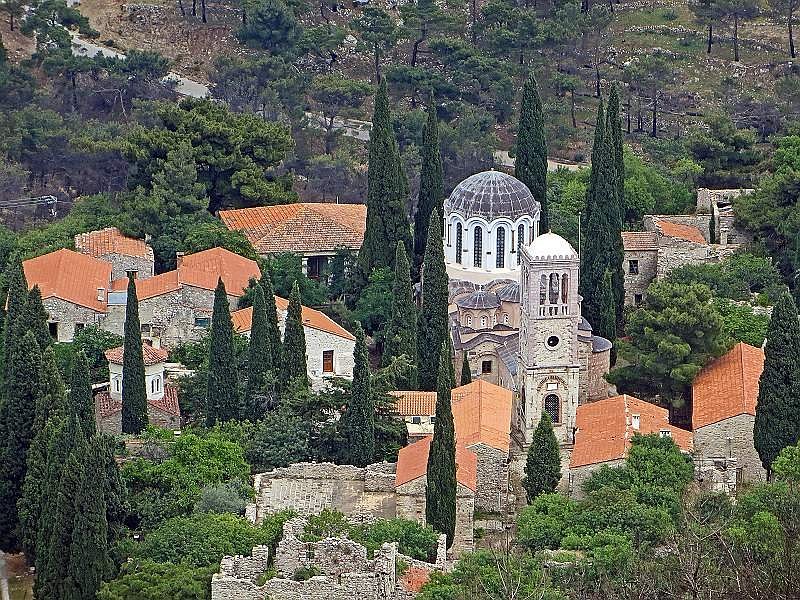
On Chios island, Nea Moni (“New Monastery”) preserves some of Orthodoxy’s finest 11th-century mosaics. Founded around 1042 by Emperor Constantine IX Monomachos after monks discovered a miraculous icon, the monastery once housed 600 monks and wielded enormous influence.
Today’s UNESCO World Heritage site bears scars of history: Ottoman troops massacred the monks in 1822, and an 1881 earthquake collapsed the original dome. Yet the surviving mosaics still dazzle with their golden backgrounds and expressive faces – Christ’s Passion, the Theotokos, Old Testament scenes rendered with extraordinary skill.
These mosaics, created at Byzantine art’s zenith, rank among the world’s finest. The monastery grounds include peaceful courtyards, a museum of icons and manuscripts, and that ancient myrtle tree where tradition says the miraculous icon appeared.
2026 Travel Tip: Located 15 km from Chios Town, requiring a car or tour. Combine with nearby Anavatos ghost village or the medieval mastic villages for a full inland day.
Generally open mornings, closing mid-afternoon. The few remaining nuns maintain this treasure with touching devotion. Before leaving, pause under the legendary myrtle – in Nea Moni’s silence, Byzantine glory feels remarkably present, even in 2026.
Planning Your 2025 Greek Church Pilgrimage
When to Visit: Greek Easter 2025 falls on April 20 (coinciding with Western Easter), offering unique opportunities to experience these churches during their most important celebrations. Spring (April-May) and fall (September-October) provide ideal weather for church-hopping without summer crowds.
What to Wear: Modest dress required in all churches and monasteries – covered shoulders and knees. Many provide wraps at entrance. Remove hats; photography often restricted or forbidden inside.
Getting Around: Renting a car offers maximum flexibility for reaching remote churches. Greek ferries connect all major islands. Many monasteries close in early afternoon and on certain weekdays – research specific schedules.
Cultural Sensitivity: These remain active places of worship. Observe silence, don’t touch icons or frescoes, and respect photography rules. Small donations are always appreciated for church maintenance.
Whether seeking Instagram-worthy blue domes, Byzantine artistic treasures, or profound spiritual experiences, Greece’s churches offer journeys through faith, history, and breathtaking beauty. Each stone tells stories of devotion spanning millennia – stories that continue being written by pilgrims and wonder-seekers in 2026.
Καλό ταξίδι! (Safe travels!)


