
Last modified August 17, 2026
Picking between Trogir in Croatia and Cefalù in Sicily? It’s honestly tough—they’re both small coastal towns, but their personalities are huge. If you’re chasing history, nightlife, and easy connections, Trogir’s your best bet. But if you’re all about beaches, scenery, and a slower pace, Cefalù just might steal your heart. I’ve spent time in both, and honestly, each has a vibe you won’t quite find anywhere else.
In Trogir, you’ll get lost in medieval streets, stumble onto UNESCO landmarks, and tuck into fresh seafood at local taverns. Cefalù, though, lures you in with golden sand, Sicilian flavors, and that climb up La Rocca—those views are unreal. Pack light, but don’t forget to grab the right travel gear to make wandering easier.
Key Takeaways
- Trogir leans toward history, food, and nightlife
- Cefalù shines with beaches, scenery, and romance
- Your best pick really depends on your travel style
Trogir vs Cefalù: Key Differences and Similarities
Trogir and Cefalù both deliver that small-town charm, rich history, coastal beauty, and laid-back vibes. But when you’re actually wandering their streets, you’ll notice their settings, cultural roots, and daily rhythms make them feel worlds apart.
Geographic Location and Setting

Trogir perches on a little island along Croatia’s Dalmatian coast, connected to the mainland by a couple of bridges. It’s super easy to pair with Split or hop over to Hvar and Brač. The town’s so compact you can walk from the marina to the old town in just a few minutes.
Cefalù, meanwhile, nestles on Sicily’s northern shore, framed by the dramatic La Rocca cliff and the Tyrrhenian Sea. The town spreads out more than Trogir, and you’ve got a long sandy beach right in front of the old town.
If you’re dreaming of island-hopping and want a base for Dalmatian adventures, Trogir makes sense. But if you’re after a beach holiday with a mountain backdrop, Cefalù is the obvious pick.
Historical Backgrounds

Trogir’s roots stretch back to the Greeks and Romans, but what you’ll actually see is mostly medieval. The old town’s a UNESCO World Heritage Site, full of stone alleys, Romanesque churches, and Venetian touches. The Cathedral of St. Lawrence stands out, especially with its detailed portal and bell tower.
Cefalù’s history is just as deep, though it feels unmistakably Sicilian. The Norman Cathedral towers over everything, built in the 12th century by Roger II. You’ll spot traces of ancient Greeks and Romans, plus medieval streets that locals still call home.
Trogir wears its history almost like a museum, while Cefalù lets history and daily life blend together in the best way.
Cultural Atmosphere

Trogir pulses with a mix of old-world charm and Croatian coastal energy. You’ll find lively cafés, seafood spots, and a nightlife scene that’s modest but livelier than Cefalù’s. Backpackers swing through in summer, and you’ll hear a jumble of languages echoing through the squares.
Cefalù, in contrast, moves at a slower, more relaxed Sicilian pace. Life here revolves around the beach, evening passeggiata, and those long, lazy meals of pasta and seafood. Couples and families flock here, but if you’re looking for parties, you’ll probably be disappointed.
Trogir Highlights: What Makes It Unique
Trogir’s got this compact old town, Venetian-era fortifications, and super easy access to the islands nearby. You’ll wander through layers of history, stroll along a lively waterfront, and reach quiet beaches just by crossing a bridge.
UNESCO World Heritage Old Town
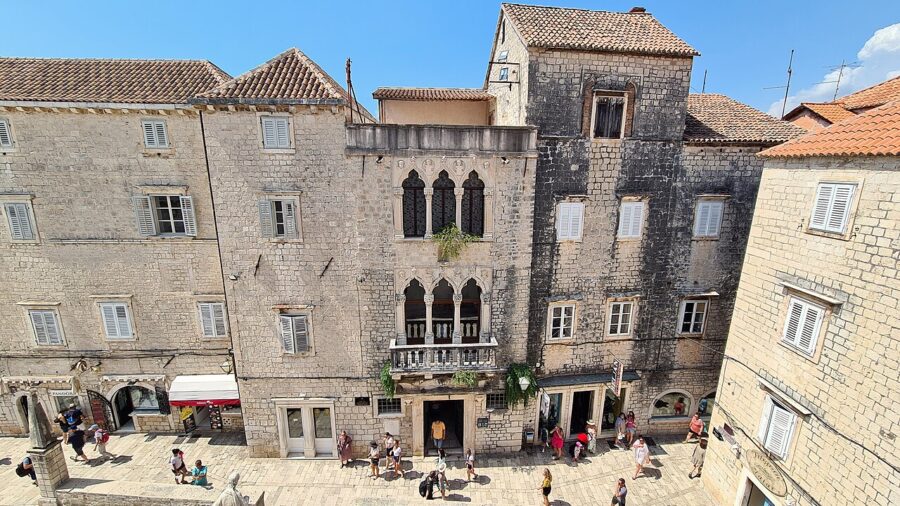
Walking into Trogir’s old town feels like you’re stepping straight into a living museum. Founded by the Greeks in the 3rd century BC and shaped by Romans, Venetians, and Hungarians, the town’s history overlaps in the alleys, Roman ruins, and stone palaces that earned it UNESCO status.
St. Lawrence’s Cathedral anchors the old town, with its intricate Radovan’s Portal and a bell tower that rewards you with panoramic views after a steep climb. Right across the square, the Ćipiko Palace flaunts its Gothic windows and Renaissance details.
What really gets me is how daily life just keeps rolling here—kids kicking a soccer ball, laundry strung above ancient arches. It’s not just about the monuments; it’s about seeing history and daily life collide.
Kamerlengo Fortress and Waterfront

At the end of the promenade, Kamerlengo Fortress stands guard—a 15th-century fort built against Ottoman threats. Climb the walls (it’s not a long trek), and you’ll get wide-open views over the marina, Ciovo Island, and those iconic red rooftops.
If you can, go late in the afternoon. From the top, you’ll catch the sun dipping behind the Adriatic while boats drift into the harbor. Simple, but it sticks with you.
The Riva Promenade is just as much a highlight. Cafés line the waterfront, and you’ll probably find yourself lingering over coffee or gelato, just watching life go by. Street markets pop up here too—think lavender sachets and bottles of local olive oil.
Island Connections: Čiovo and Beyond

One of Trogir’s best features? You can escape to nature in minutes. Cross the bridge and you’re on Čiovo Island, where pine forests, pebble beaches, and quiet coves wait for you. It’s perfect for a swim if you’re not up for a big excursion.
If you’re feeling adventurous, hop a ferry to Drvenik Veli and check out the Blue Lagoon—those turquoise waters are unreal. It’s quieter than Čiovo, but bring snacks since there aren’t many facilities.
I’ve taken the ferry out on sweltering days, and the contrast is wild—you’ll go from Trogir’s busy squares to total calm in under an hour. The town manages to be both a cultural hub and a gateway to the Adriatic’s peaceful corners.
For such a small place, Trogir really packs it in: history, fortresses, and quick island escapes. That mix is what makes it stick in your memory.
Cefalù Highlights: Sicilian Charm on the Coast
Cefalù brings together medieval history, seaside beauty, and authentic Sicilian flavors in this laid-back, unforgettable package. One moment you’re winding through narrow lanes; the next, you’re sitting by the sea, devouring fresh seafood.
Medieval Old Town and Landmarks

Cefalù’s old town is compact but bursting with character. Cobblestone streets twist past stone houses, laundry hangs from balconies, and little piazzas fill with locals. It doesn’t feel staged for tourists; it feels lived-in.
The Duomo di Cefalù, a Norman cathedral from the 12th century, dominates the skyline. Its mosaics—gold backgrounds, expressive faces, and a Christ Pantocrator—are just stunning. I remember standing there, just staring up, longer than I’d planned.
Up for a climb? La Rocca looms over everything. The hike’s steep, but the views over the rooftops and Tyrrhenian Sea are some of Sicily’s best. You’ll pass ruins like the Temple of Diana on the way, which adds a cool historical twist to your walk.
Beaches and Coastal Scenery
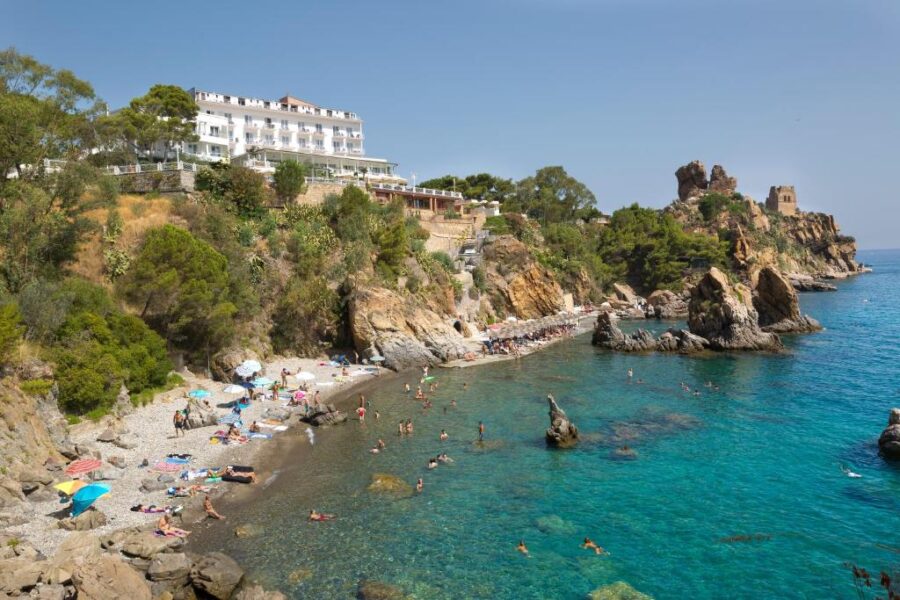
Cefalù’s coastline is what draws so many travelers, and honestly, it’s hard not to be wowed. The main stretch, Lungomare Beach, is sandy, family-friendly, and the water’s perfect for swimming. Sure, it gets crowded in summer, but that’s half the fun.
Want something quieter? Head for Caldura Beach or Kalura Beach. They’re smaller, rockier, and the water’s even clearer. I once spent a whole afternoon at Kalura, just swimming and sipping espresso from a little kiosk.
What makes Cefalù’s waterfront special is the way medieval buildings hug the shoreline. You can step out of the old town and be in the water in minutes. Sunset here? The golden light on those stone buildings is something you won’t forget.
Local Cuisine and Markets

Cefalù’s food is classic Sicilian, with a seaside twist. Fresh seafood rules—think grilled swordfish, sardines, and pasta con le sarde. Many restaurants perch right above the waves, so you eat with the sea practically at your feet.
Don’t miss the street food. Arancini—those fried rice balls stuffed with meat or cheese—are everywhere. I still dream about the one I grabbed near the train station. Simple, cheap, and so good.
Markets are a highlight, too. Daily stalls sell fruit, cheeses, and olives, often straight from local farmers. Grab supplies for a picnic on the beach. And if you’ve got a sweet tooth, try cannoli or almond pastries—both are local favorites.
Need more ideas? This Cefalù travel guide goes deep on attractions, beaches, and where to eat.
Accessibility and Getting There
Trogir and Cefalù are both pretty easy to reach, but the routes are totally different. One relies on Split Airport and a quick transfer, while the other connects you to Sicily’s rail and road networks.
Traveling to Trogir: Split Airport and Transfers

If you’re flying in, Split Airport is just about 6 km from Trogir. That’s rare in Europe—an airport practically next door to a UNESCO old town. You can grab a taxi, shuttle, or even a local bus, and you’ll be in Trogir in under 15 minutes.
I’ve done this trip a couple times, and honestly, it’s one of the least stressful airport transfers I’ve had. No train changes, no long drives—just a quick hop. If you’re booking flights, it’s worth checking flexible search tools like KAYAK to compare routes into Split.
Once you’re in Trogir, Split’s only about 30 minutes away by bus or ferry. You can easily plan a day trip from Split or even stay in one city and visit the other. The Riva promenade in Split is especially nice in the evenings, and you can still get back to Trogir before midnight.
Reaching Cefalù: Transport Options

Cefalù doesn’t have its own airport, so you’ll end up flying into Palermo or Catania. Palermo sits much closer—just about an hour away by train or car.
I always catch the train from Palermo Centrale. It drops you right near Cefalù’s old town, which is super convenient. Plus, it’s cheap and you won’t have to wrestle with parking in those narrow medieval streets.
If you’re driving, the A20 motorway links Palermo and Messina, and there’s an exit for Cefalù. I’ve driven it before; the road’s smooth, but honestly, parking in Cefalù during high season will test your patience. That’s why I usually nudge folks toward the train—unless you’re itching to explore those tiny coastal villages off the beaten path.
When it comes to flights, I always check both airports and compare fares. Sometimes I’ve scored shockingly cheap tickets through cheap flights, especially if you’re flexible with your travel dates.
Day Trips and Regional Connections
Both towns make awesome bases for day trips, but the vibe is different. From Trogir, you can hop on ferries to islands like Hvar and Korčula. Or just grab a quick bus into Split and catch a catamaran heading south.
Croatia’s coastal ferry network is solid. You can string together island visits with barely any planning.
Cefalù is more about inland adventures or exploring the northern Sicilian coast. Palermo is under an hour away, and you can get to towns like Castelbuono or Santo Stefano di Camastra by bus or car.
If you’re feeling a bit wild, you can even connect your trip with Taormina or Agrigento, but those journeys take a bit more time.
Honestly, travel in Croatia feels more water-based, while Sicily leans into trains and highways. I guess it boils down to whether you’re in the mood for ferry-hopping or cruising through the countryside by rail.
Best Experiences and Activities
Trogir and Cefalù both deliver a fantastic mix of history, seaside chill, and local flavor. One day you’ll be wandering old stone streets, and the next, you’re parked by the water with gelato or a plate of fresh seafood.
If you time your visit right, you might catch a festival that’s every bit as memorable as the sights themselves.
Exploring Historic Sites
Trogir really feels like a living museum. The Old Town’s a UNESCO site, and as you weave through those narrow alleys, you’ll stumble on Romanesque churches, Venetian palaces, and a fortress that once guarded the harbor.
Don’t rush the Cathedral of St. Lawrence—the carved portal alone will stop you in your tracks.
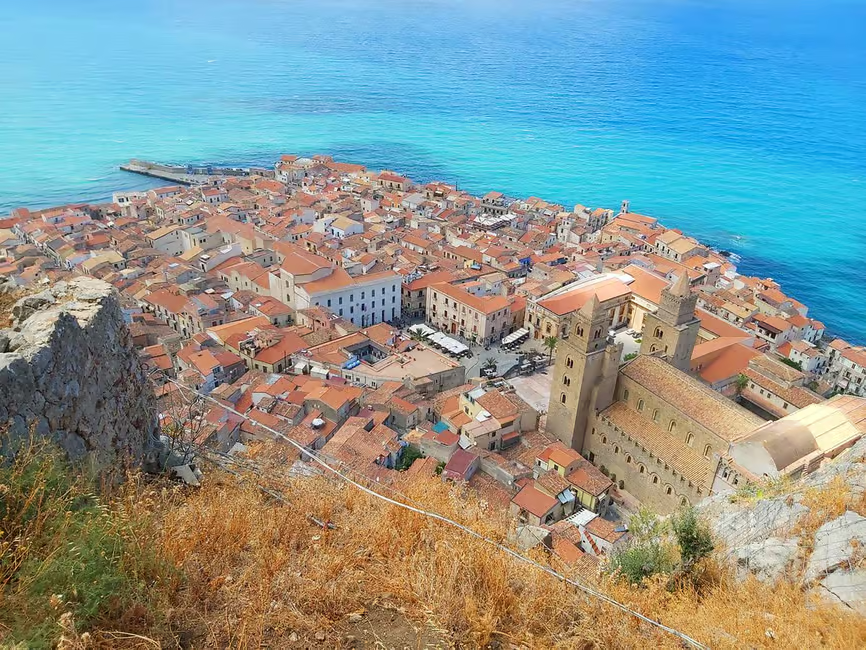
Cefalù’s history has a different flavor. The Norman Cathedral towers over the skyline, and those mosaics inside? Some of the best in Sicily.
If you hike up La Rocca, you’ll find ancient fortification ruins and a jaw-dropping view of the coast. That climb always leaves me a little breathless, but it’s worth every step.
I love joining sightseeing tours that mix history with food tastings. It’s a fun way to break up the walking and hear stories you’d never discover on your own.
Waterfront Promenades and Beaches

Cefalù’s beach sits right at the edge of town. You can go from wandering a church to swimming in minutes. The sand is soft, the water’s calm, and in summer, the promenade buzzes with families every evening.
I’ve spent entire evenings just sitting there with a cold drink, watching the sun dip into the Tyrrhenian Sea. It’s one of those simple pleasures that sticks with you.
Trogir doesn’t have a beach smack in the middle of the old town, but you can hop on a boat or take a short walk to quieter stretches of coast. The Riva promenade is where everyone seems to gather—locals, travelers, families—cafés spilling out onto the waterfront.
If you’re craving something more active, you can book day trips with boat rides, snorkeling, or island hopping. It’s a stress-free way to see more of the Adriatic.
Local Events and Festivals

Trogir in summer is a blast—open-air concerts, food fairs, and the Moondance electronic music festival inside the Kamerlengo Fortress. Dancing in a medieval castle? It’s surreal, even if electronic music isn’t usually your thing.
Cefalù takes a different approach. The Festa di San Salvatore in early September fills the streets with parades, fireworks, and food stalls. You’ll catch smaller cultural festivals too—folk music, puppet shows, and Sicilian crafts.
These events aren’t just tourist traps. You’ll be shoulder to shoulder with locals, and that’s what makes it feel real. Sometimes you just stumble into a festival, and honestly, those surprises end up being the best memories.
Who Should Choose Trogir or Cefalù?

Both towns draw different crowds. Your pick really depends on what you’re after—history and nightlife, or beaches and relaxation.
Think about what matters most to you: food, vibe, activities. Each spot has its own personality.
Couples and Romantic Getaways
Traveling as a couple? Cefalù nails that dreamy seaside vibe you probably imagine when you think of Sicily. Beaches are right in town, so you can go from a lazy swim to a candlelit dinner in minutes.
The old town’s narrow lanes and the view from La Rocca set the stage for a pretty romantic trip.
Trogir, though smaller, serves up a different kind of romance. Its medieval old town is UNESCO-listed, and wandering those stone streets at night feels like you’ve stepped into another era.
You’ll find plenty of cozy restaurants tucked into courtyards—perfect for lingering over wine. Couples who love history and culture more than just beach time often fall for Trogir.
If you’re lugging bags before check-in, stash them at a nearby luggage storage so you can explore hands-free. That’s a lifesaver in pedestrian-only old towns like Trogir.
Families and Group Travelers
Cefalù is a win for families, thanks to its wide sandy beach and gentle water. Kids can splash around safely, and there’s plenty of space to sprawl out for the day.
The Lungomare promenade is perfect for evening strolls with gelato in hand. If your crew likes to stay active, the hike up La Rocca is doable with older kids and the view is a real treat.
Trogir is smaller but still family-friendly. The town’s walkable, and kids usually love exploring the castle and city gates.
If your group is up for short hops, you can grab a boat to nearby islands for a day of swimming or kayaking. Multi-generational groups seem to appreciate Trogir’s mix of history and water activities—everyone stays entertained, and there’s not much travel time.
Solo Adventurers
Traveling solo? Trogir often feels like the easier fit. There’s a social hostel scene, affordable guesthouses, and nightlife that makes it easy to meet fellow travelers.
Buses run everywhere, so you can explore the Dalmatian coast without a car. Spend your days diving, island hopping, or just chilling in the old town.
Cefalù is more laid-back and, honestly, quieter if you’re on your own. But if you want time to yourself—reading on the beach, hiking La Rocca, or savoring Sicilian food at your own pace—it’s a peaceful spot to recharge.
You won’t find many hostels, but there are plenty of small hotels and B&Bs that welcome solo travelers.
Frequently Asked Questions
Visiting Trogir and Cefalù gives you two very different vibes. One leans into medieval history and Adriatic island charm, while the other offers up Sicilian coastal beauty, rustic food, and a slower pace.
Both have tons of character if you know where to look.
What unique cultural experiences can visitors expect in Trogir compared to Cefalù?
In Trogir, you’ll wander a UNESCO-listed old town where every corner feels like a step back in time. The Cathedral of St. Lawrence and Kamerlengo Fortress are must-sees, but honestly, just getting lost in the cobblestone alleys is half the fun.u003cbru003eu003cbru003eCefalù has its own rhythm. You’ll spot fishermen mending nets by the harbor, families gathering on the promenade at sunset, and religious festivals that have been around for centuries. It feels less curated for tourists and more like a living Sicilian town.
How does the culinary scene in Cefalù differ from that of Trogir, and what are the must-try dishes?
Cefalù is all about u003ca href=u0022https://www.realjourneytravels.com/tours/wine-and-food-private-tour-from-dubrovnik/u0022u003eSicilian flavorsu003c/au003e. Think pasta alla Norma, fresh seafood, and cannoli from tiny pastry shops tucked away in the old town.u003cbru003eu003cbru003eI still remember sitting at a seaside trattoria with a plate of swordfish and a glass of local white wine—one of those meals that sticks with you.u003cbru003eu003cbru003eTrogir’s food scene leans into Dalmatian classics: grilled fish, octopus salad, and peka (that’s slow-cooked meat or seafood). It’s more Mediterranean, lighter, but just as satisfying.
In Trogir, small family-run guesthouses just outside the old town give you peace and quiet without losing any charm. Some even have little courtyards where you can sip coffee in the morning before heading into the bustle.u003cbru003eu003cbru003eCefalù has tucked-away villas and boutique Bu0026amp;Bs in the hills above town. They’re perfect if you want quiet evenings with sweeping sea views.u003cbru003eu003cbru003eYou can find unique stays by browsing u003ca href=u0022https://www.booking.com/index.html?aid=2427303u0022 target=u0022_blanku0022 rel=u0022noreferrer noopeneru0022u003eaccommodation optionsu003c/au003e that go beyond the usual tourist hotels.
Can you highlight the differences in historical architecture between Trogir and Cefalù?
Trogir’s architecture is pure medieval, with Romanesque and Gothic touches everywhere. The old town feels like a museum without walls, and the stonework is beautifully preserved.u003cbru003eu003cbru003eCefalù’s best known for its Norman cathedral, with jaw-dropping mosaics that date back to the 12th century. The old town’s winding streets and weathered facades give it a rustic, lived-in feel—definitely less polished than Trogir.
What are the best times of year to visit Trogir and Cefalù for weather and local events?
Trogir shines in late spring and early fall. The weather is warm but not too hot, and you’ll catch local festivals like the Trogir Summer Festival, with music and performances in the squares.u003cbru003eu003cbru003eCefalù is at its best in September, when the sea’s still warm but the crowds have thinned. August can get a bit wild with holidaymakers, but if you want to see the Feast of the Holy Savior, that’s when you’ll need to be there.
How do the coastal landscapes and beach experiences contrast between Trogir and Cefalù?
Cefalù’s beaches? Honestly, they’re a dream for anyone who loves soft sand and a bit of drama from those rugged cliffs. The main town beach draws quite a crowd, especially on sunny days—sometimes it feels like everyone in Sicily had the same idea.u003cbru003eu003cbru003eIf you wander a little, though, you’ll stumble onto spots like Kalura Beach, where the water’s so clear you’ll want to dive right in. It’s quieter there, and you can actually hear the waves instead of your neighbor’s radio.u003cbru003eu003cbru003eTrogir, on the other hand, plays a different tune. The beaches tend to be pebbly, and you’ll usually find the best ones scattered across nearby islands like Čiovo.u003cbru003eu003cbru003ePeople come here not so much for sunbathing, but for swimming and snorkeling. The sea’s calm, almost inviting you in.u003cbru003eu003cbru003eIt’s less about sprawling out on the sand and more about just losing yourself in the water. Isn’t that what some of us crave, anyway?