Private Morning History Walking Tour of Zadar’s Old Town vs Croatian Islands Private Speedboat Tour from Zadar: Which Tour Is Better?
Updated June 8, 2026
You stand in Zadar with a free day ahead and a choice to make. Do you explore the ancient Roman streets and medieval churches of the Old Town on foot, or do you head out to sea to discover the scattered islands of the Adriatic? Both the Private Morning History Walking Tour and the Croatian Islands Private Speedboat Tour offer distinct ways to experience this part of Croatia.
One connects you with two millennia of history confined within stone walls. The other delivers you to remote beaches and secluded coves only accessible by boat. This comparison breaks down the details of each tour to help you decide which adventure fits your travel style.
Table of Contents
- What the Private Morning History Walking Tour of Zadar’s Old Town Covers
- What the Croatian Islands Private Speedboat Tour From Zadar Involves
- Comparing the Duration and Physical Demand
- What You Will Learn: History vs. Nature
- Group Size and Personalization
- Cost and Value Analysis
- How to Choose the Right Tour for Your Trip
- Book Your Dream Experience
- More Travel Guides
- Explore These Destinations
What the Private Morning History Walking Tour of Zadar’s Old Town Covers
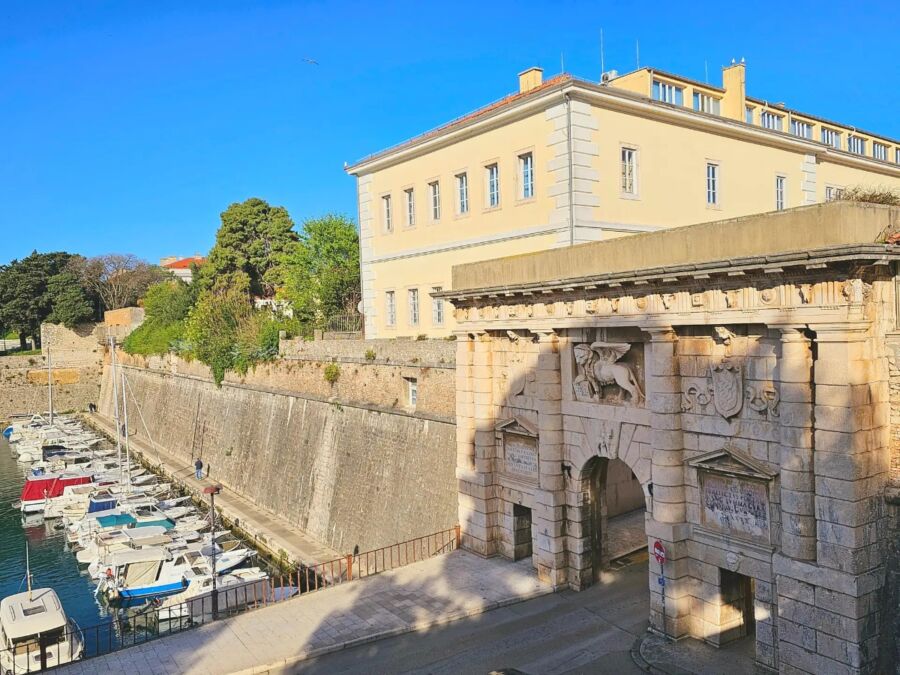
This tour is a deep exploration on foot through the compact, pedestrian-only core of Zadar. You meet your private guide, typically a local historian or licensed expert, at a predetermined location like the Land Gate or the Five Wells Square.
The tour operates year-round, with morning start times between 9 AM and 10 AM to avoid the strongest afternoon sun and largest cruise-ship crowds. The duration is usually 2 to 2.5 hours, covering less than 2 kilometers of walking on mostly flat, but often uneven, limestone paving stones.
Your guide will lead you through a chronological journey, explaining how the city evolved from a Roman municipium to a Byzantine stronghold, a Venetian outpost, and a modern Croatian city. You will see the remains of the Roman Forum, dating from the 1st century BC, and learn how its stones were reused in later buildings.
You will visit the 9th-century Church of St. Donatus, a monumental round building that is the city’s most famous symbol. The tour also includes the 13th-century Romanesque Zadar Cathedral and its bell tower, which you can climb for a panoramic view. A key stop is the Sea Organ, a modern architectural installation that creates music using wave energy.
The value of this tour lies in the guided access to context. You learn the stories behind the facades.
Your guide can point out specific carvings, explain defensive strategies behind the city walls, and recount tales from Zadar’s complex past that you would likely miss on your own. The pace is yours to set, allowing you to ask questions and take photos.
What the Croatian Islands Private Speedboat Tour From Zadar Involves

This tour is an active day trip exploring the archipelago that stretches along Zadar’s coastline. Your day begins at the Zadar waterfront, where you board a private speedboat with a licensed skipper.
Boats typically accommodate up to 8-10 passengers. Departure times are flexible but usually start between 9 AM and 10 AM, with the entire excursion lasting 6 to 8 hours. The experience is highly weather-dependent; tours run from April through October and are frequently canceled if winds are too strong or sea conditions are poor.
The itinerary is often customizable but generally includes stops at several islands. A common route heads south towards the Kornati National Park or the island of Ugljan.
Your skipper will navigate to specific spots known for clear water and sheltered swimming. You might stop at a secluded cove only reachable by boat for a swim break.
A longer stop is usually made at a larger island, like Ošljak or Preko, where you can disembark to explore a village, have lunch at a konoba (tavern), or rent a bike. The boat itself is a key part of the experience, offering sunbathing areas and easy access to the water for a refreshing dip.
The skipper acts as your guide to the coastline, pointing out landmarks and sharing knowledge about the islands’ geography and way of life. They know the best spots for snorkeling and the quietest places to anchor away from the crowds. The tour is less about historical monuments and more about natural beauty, relaxation, and the freedom of the open sea.
Comparing the Duration and Physical Demand

The two tours demand different commitments of your time and energy. The walking tour is a concise half-day activity.
At 2 to 2.5 hours, it leaves your afternoon completely free for lunch, further independent exploration, or another activity. The physical demand is moderate. It involves steady walking and standing on old stone surfaces.
While the distance is short, the terrain can be uneven. It is accessible for most people with average mobility, though it may not be suitable for those with significant walking difficulties.
The speedboat tour is a full-day commitment. Plan for a minimum of 6 hours from meet-up to return. The physical demand is generally low, consisting mainly of getting on and off the boat.
However, it requires a degree of agility to board from the dock and navigate the boat’s steps into the water. The sun and potential for sea motion are factors to consider; if you are prone to seasickness, this tour requires preparation. You will also be more exposed to the elements throughout the day.
Your choice here hinges on your schedule and physical comfort. The walking tour is efficient and easily fits into a packed itinerary. The speedboat tour is an entire day’s centerpiece activity that requires you to block out the time.
See Related: Split vs Zagreb: Which Croatian City Offers the Better Cultural Experience
What You Will Learn: History vs. Nature

The core focus of each tour could not be more different. The walking tour is an educational deep dive into human history and culture. The curriculum is the city itself.
You will learn about architectural styles from different eras, from Romanesque to Renaissance. You will hear stories of saints, soldiers, and merchants who shaped Zadar’s identity.
The guide provides context for everything you see, turning a simple wall into a story of siege and resilience. You come away with a detailed understanding of Dalmatian and Croatian history.
The speedboat tour’s education is centered on natural science and geography. Your skipper will explain the unique karst landscape of the islands, the marine ecology of the Adriatic Sea, and the specific regulations that protect Kornati National Park.
You learn about the traditional fishing and olive-growing practices that sustain the island communities. The lessons are about the environment, the sea, and a slower, island way of life that contrasts with the mainland.
One tour feeds the mind with stories of the past. The other connects you with the natural present. Your interest in art history versus marine biology may be the deciding factor.
Group Size and Personalization

Both tours are private, meaning your party will not be combined with other groups. This is their greatest shared advantage. For the walking tour, this means you have the guide’s undivided attention.
You can ask as many questions as you like, request to spend more time at a site that interests you, or even slightly alter the route based on your interests. If you are fascinated by Roman history, the guide can focus on the Forum. If your passion is medieval architecture, the cathedrals can become the highlight.
The private speedboat tour offers a different kind of customization. While the skipper will have a suggested route based on weather and sea conditions, you often have significant input.
You can express a preference for more swimming and snorkeling time, request a specific island for a long lunch, or ask to seek out completely secluded spots. The day’s rhythm can be tailored to your group’s desire for adventure or relaxation. The boat is your own private transport for the day.
In both cases, booking a private tour guarantees an experience shaped around your preferences, not a fixed itinerary designed for a large crowd.
Cost and Value Analysis

The pricing structures for these tours reflect their different scales. The private walking tour is typically priced per group, with a cost for a guide for 2-3 hours. Rates generally start around 150 EUR for a small group.
This makes it a cost-effective option, especially if split between 2-4 people. The only additional costs you might incur are any entrance fees to attractions like the bell tower or museum, which are often optional and paid separately.
The private speedboat tour is a larger investment. Pricing is usually based on the boat rental and skipper for a full day (6-8 hours), with rates often starting around 400-600 EUR for a small group. This price is for the entire boat, not per person.
Therefore, its value increases dramatically with group size; splitting the cost between 8 people is far more economical than going as a couple. Beyond the base fee, you must budget for additional expenses: fuel surcharges, national park entrance fees (if going to Kornati), and your lunch at a restaurant on one of the islands.
The walking tour offers high historical value for a lower, more predictable cost. The speedboat tour is a premium experience with a higher base cost that becomes more reasonable with a larger party, but with extra costs to factor in.
See Related: Best Cities in Europe to Enjoy Winter Without the Crowds
How to Choose the Right Tour for Your Trip

Your decision should be based on your interests, travel companions, and itinerary. Choose the Private Morning History Walking Tour if your priority is understanding Croatian culture and history.
It is ideal for history enthusiasts, first-time visitors to Zadar, and travelers who prefer to stay on land. It is also the better choice if you have limited time, mobility concerns, or a tighter budget.
Select the Croatian Islands Private Speedboat Tour if you want to experience the famous Adriatic coastline and escape the city.
It is perfect for groups of friends or families with older children, swimmers and snorkelers, and travelers who have already seen the Old Town or are spending multiple days in Zadar. This tour requires good weather, a full day, and a more flexible budget.
Ultimately, the best choice is a matter of preference. For a deep cultural immersion, the stones of the Old Town have stories to tell. For a day of sun, sea, and freedom, the islands are calling.