Description
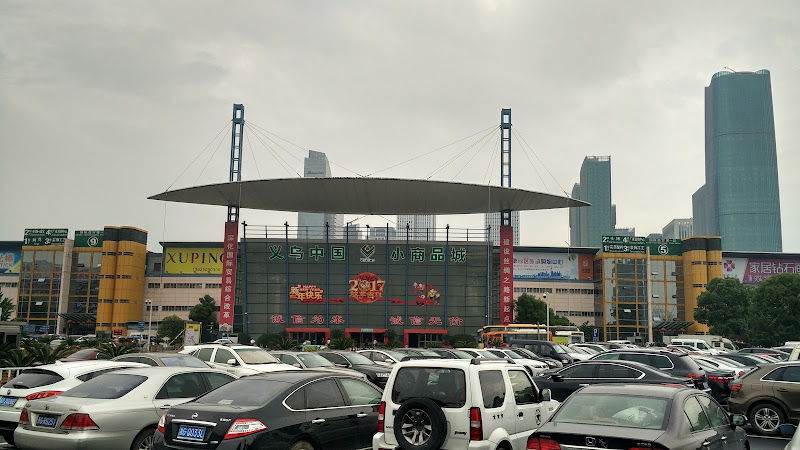
When most travelers think about shopping destinations in China, their minds probably wander to Beijing’s silk markets or Shanghai’s glitzy malls. But let me tell you, the Yiwu International Trade Mart Shopping and Touring Area is something entirely different – and honestly, way more impressive in its sheer scale and scope. This massive commercial complex in Yiwu, Zhejiang Province, isn’t just a shopping center. It’s basically the wholesale capital of the world packed into one mind-boggling location.
I remember hearing about this place from a friend who imports goods for her business, and I thought she was exaggerating when she said you could literally spend weeks wandering through its halls without seeing everything. Turns out, she wasn’t kidding even a little bit. The Trade Mart spans over 5.5 million square meters – that’s roughly equivalent to 1,360 acres or about 780 football fields if you want to wrap your head around it. The complex is divided into five main districts, each specializing in different product categories, and houses more than 75,000 booths operated by suppliers from around the globe.
What makes this place fascinating for travelers isn’t just the shopping itself, though that’s certainly a big draw. It’s witnessing global commerce in action on such an unprecedented scale. You’ll see business people from literally every continent negotiating deals, examining products with magnifying glasses, and loading up containers bound for every corner of the earth. The energy here is unlike anywhere else – it’s purposeful, fast-paced, and gives you a real sense of how the world’s supply chain actually works at ground level.
The Yiwu market specializes in small commodities, which is kind of a modest way of saying they sell absolutely everything you can imagine. We’re talking about jewelry, toys, hardware, electronics, textiles, crafts, cosmetics, stationery, and so much more. And I mean EVERYTHING within those categories. Want Christmas decorations in July? They’ve got an entire district for that. Looking for obscure sewing supplies or specialized tools you can’t find anywhere else? Yep, there’s a whole section dedicated to it.
For regular tourists who aren’t necessarily there to purchase wholesale quantities, the experience is still incredibly worthwhile. Many vendors are happy to sell smaller quantities, especially if you’re polite and genuinely interested in their products. Plus, watching the negotiation process between seasoned buyers and sellers is practically entertainment in itself – it’s like seeing a well-choreographed dance where both parties know their roles perfectly.
Key Features
The Yiwu International Trade Mart offers distinctive characteristics that set it apart from typical tourist shopping destinations:
- Five massive district buildings covering different product categories, each requiring hours to properly explore on its own
- Over 75,000 individual supplier booths representing manufacturers and wholesalers from China and beyond
- District 1 focuses on artificial flowers, toys, and accessories with seemingly endless variety in each category
- District 2 specializes in hardware tools, electrical equipment, and vehicle accessories for the mechanically inclined
- District 3 houses textiles, luggage, and cosmetics across multiple floors of organized chaos
- District 4 centers on socks, zippers, buttons, and other garment accessories that most people never realize come in such variety
- District 5 deals with outdoor products, sporting goods, and automotive supplies for adventure enthusiasts
- Professional translation services available throughout the complex to help bridge language barriers
- Banking services, ATMs, and currency exchange facilities positioned conveniently across all districts
- Shipping and logistics companies with offices on-site to help arrange international delivery
- Food courts serving both local Chinese cuisine and international options when you need a break
- Hotels located within or adjacent to the complex for multi-day shopping marathons
- Free shuttle buses connecting the different districts since walking between them isn’t practical
- Samples available at most booths allowing you to examine quality before committing to purchases
- Operating hours typically from 9 AM to 5 PM daily, though individual vendors may vary
Best Time to Visit
Timing your visit to the Yiwu International Trade Mart really depends on what kind of experience you’re after. The market operates year-round, but the atmosphere and crowd levels shift dramatically depending on the season.
If you want to see the place at its absolute busiest and most energetic, aim for the period from September through December. This is peak buying season when international purchasers flood in to stock up for the holiday shopping rush and the following year’s inventory. The trade shows and exhibitions also cluster during these months, bringing even more international visitors. But be warned – “busy” here means absolutely packed. You’ll be fighting crowds, competing for vendors’ attention, and probably feeling overwhelmed by the sheer number of people.
Spring months from March to May offer a sweet spot that I personally prefer. The weather in Yiwu is pleasant, not too hot or cold, and while there’s still plenty of business activity, it’s not quite as insane as the fall rush. Vendors have more time to chat, you can actually move through the aisles without constantly bumping into people, and you’ll have better success negotiating since they’re not distracted by ten other potential buyers.
Summer, particularly July and August, sees a noticeable dip in international buyers because, frankly, it gets hot and humid in Zhejiang Province. But this can actually work in your favor as a tourist-shopper. Vendors are generally more relaxed, willing to negotiate on smaller quantities, and appreciative of any business that comes through. Just prepare yourself for the weather and dress accordingly.
Chinese New Year, typically falling in late January or February, essentially shuts everything down for about two weeks. Many vendors return to their hometowns, and even those who stay open operate on reduced schedules. Unless you specifically want to experience the holiday atmosphere in China, avoid this period for market shopping.
Weekdays consistently beat weekends for a more manageable experience. Tuesday through Thursday tend to be the quietest days, giving you maximum access to vendors and their attention.
How to Get There
Getting to Yiwu is easier than you might expect for a city that many international travelers haven’t heard of before planning their China trip. The city has invested heavily in transportation infrastructure specifically to support its role as a commercial hub.
By air, Yiwu Airport serves domestic flights from major Chinese cities including Beijing, Shanghai, Guangzhou, and Shenzhen. International flights also connect to several Southeast Asian destinations. From the airport, it’s about a 20-minute taxi ride to the Trade Mart area. The taxi situation at Yiwu Airport is generally straightforward – just join the queue and make sure the driver uses the meter. Having your destination written in Chinese characters helps immensely.
The high-speed rail option is honestly my preferred method if you’re already elsewhere in China. Yiwu Railway Station connects to the national high-speed rail network, putting you just two hours from Shanghai and about three hours from Beijing. The station is modern, efficient, and fairly easy to navigate even if your Mandarin is limited. From there, taxis or the local bus system can get you to the Trade Mart in about fifteen minutes.
Regular trains also serve Yiwu on conventional rail lines if you’re on a tighter budget or enjoy slower-paced travel with more local flavor.
Once you’re in Yiwu city, the Trade Mart is hard to miss – it’s essentially the main attraction. Local buses have multiple routes serving the complex, and they’re incredibly cheap though sometimes crowded. Bus numbers 805, 806, and several others stop at different districts of the market.
Taxis are abundant and relatively inexpensive by international standards. Most drivers know the Trade Mart well since it’s basically the reason Yiwu exists as a commercial center. However, language barriers can be real, so having your destination written in Chinese or using a translation app proves invaluable.
Ride-sharing apps like Didi work excellently in Yiwu and often provide an easier experience than hailing traditional taxis. The app handles payment, navigation, and communication, removing several pain points for foreign visitors.
If you’re staying at one of the hotels near or within the Trade Mart complex, many offer shuttle services or are within walking distance of at least one district.
Tips for Visiting
Walking into the Yiwu International Trade Mart for the first time can feel overwhelming – like standing at the base of Mount Everest and being told to start climbing. Here’s what I wish someone had told me before my first visit.
Wear comfortable shoes. I cannot stress this enough. You’re going to walk miles, even if you’re only exploring a fraction of one district. Those polished dress shoes or cute sandals will become instruments of torture after hour two. Go with broken-in sneakers or walking shoes with good support.
Download a translation app before you arrive. While many vendors speak basic English, plenty don’t, and trying to negotiate or ask specific questions becomes much easier when you can type into your phone and show them the translation. Google Translate’s camera feature that translates text in real-time is practically magic here.
Bring business cards if you have them, even if you’re not actually in business. The commercial culture here revolves around card exchanges, and having something to hand vendors makes you seem more serious and can lead to better prices. If you don’t have business cards, at least have your contact information written clearly in English and Chinese if possible.
Start with a reconnaissance mission. Seriously, don’t commit to purchases in the first district you enter. Spend the first hour or two just walking around, getting a feel for layout, noting which booths have what you’re interested in, and understanding the general price ranges. I made the mistake of buying decorative items in the first shop I entered, only to find similar items for half the price three aisles over.
Negotiation is expected and honestly part of the fun. The initial price quoted is almost never the final price. A good rule of thumb is to counter at about 40-50% of their first offer and work your way up to somewhere around 60-70% of the original price. But read the room – if a vendor seems firm or annoyed, they might be closer to their bottom line than you think.
Minimum order quantities can be negotiable. Many booths post MOQ requirements, but especially during slower periods, vendors may agree to smaller quantities if you’re pleasant and express genuine interest. Doesn’t hurt to ask politely.
Check quality carefully before committing. Most vendors welcome you examining samples closely. Look for stitching quality on textiles, test zippers, check for scratches or imperfections. Remember, these are wholesale goods destined for retail markets worldwide, so quality varies tremendously.
Take photos of booth numbers and products you’re interested in. The districts are so massive that you’ll absolutely forget where you saw that perfect item two hours ago unless you document it. Most vendors don’t mind photos, but it’s polite to ask first.
Arrange shipping carefully if you’re buying in quantity. Multiple logistics companies operate within the complex, but do your research on costs and reliability beforehand. Some vendors have preferred shipping partners they work with regularly, which can sometimes be more reliable than random services.
Eat regularly and stay hydrated. There are food courts scattered throughout the complex, and while the food might not win culinary awards, it’s generally decent and reasonably priced. Skipping meals because you’re excited about shopping leads to exhaustion and poor decision-making.
Know when to take breaks. The fluorescent lighting, crowds, and sensory overload of seeing thousands upon thousands of products can be genuinely exhausting. When you feel your attention wandering or irritation building, find a cafe or seating area and just rest for twenty minutes.
Cash still matters here despite China’s mobile payment revolution. While WeChat Pay and Alipay dominate, having RMB cash for smaller purchases or vendors who prefer it remains useful. Some vendors offer better prices for cash transactions since it avoids payment processing fees.
And finally, keep an open mind about what you’ll discover. Half the joy of visiting the Yiwu Trade Mart isn’t finding what you came for – it’s stumbling across products you never knew existed and suddenly needing them in your life. That’s where the real magic happens in this remarkable place.