
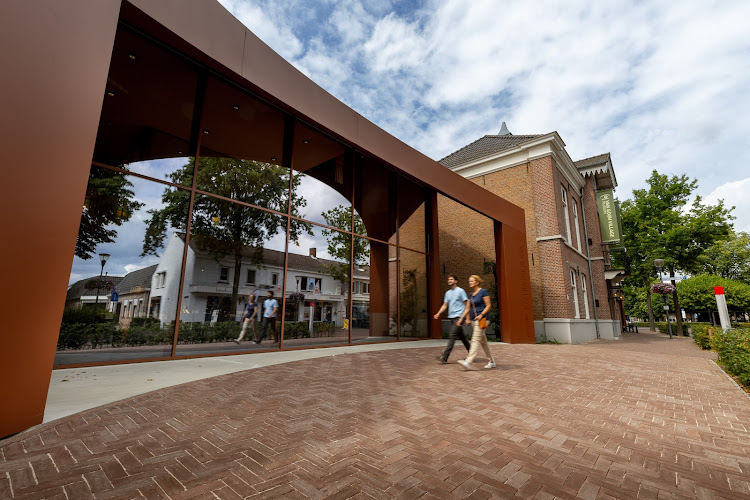
Van Gogh Village Museum
About Van Gogh Village Museum
Description
The Van Gogh Village Museum, also known as Vincentre, sits in the small town of Nuenen and focuses on a particular, formative chapter in Vincent van Gogh’s life. Rather than competing with the large Van Gogh Museum in Amsterdam, this museum chooses a quieter, more intimate path: it maps the artist’s footsteps in North Brabant, tells the story of the Brabant period, and connects paintings to the real streets, farms and church towers that inspired them. It is part museum, part local tourist information center, and part a living scrapbook of an artist whose work was shaped by a rural world that still exists here.
Inside, the exhibits combine archival materials, letters, period photographs, scale models and multimedia displays to reconstruct scenes from van Gogh’s life while he lived and worked in the area. There are reproductions of key works from the period, carefully explained, as well as contextual pieces that highlight the social and agricultural life that appears in paintings like The Potato Eaters and the studies of peasant figures. Outside, marked trails, signposts and reproductions stand where Vincent once painted, letting visitors move from the gallery to the landscape and see how light, weather and architecture informed his choices. That indoor-outdoor interplay is what many visitors remark makes the place memorable.
The tone of the museum leans educational and friendly. It provides story-driven displays about why van Gogh painted the subjects he did here, how his palette and brushwork changed as he confronted gloomy skies and honest peasant interiors, and what everyday life in a 19th-century Brabant village looked like. There is a focus on life rather than myth: the museum explains Vincent’s relationships with local people, his brother Theo’s support in letters, and how his time in Nuenen was both productive and turbulent. The visitor experience is designed to be layered: casual guests can appreciate the visuals and atmosphere, while anyone with curiosity about art history will find detailed timelines, primary source excerpts and guided context.
Vincentre doubles as a tourist information point for the surrounding town, which is handy. Visitors who want to follow a walking route to the sites Vincent painted can pick up maps on site, rent audio guides, or join themed walks that run periodically. These guided walks are often led by local guides who know the small but revealing details — like the house whose façade appears in a certain sketch, or the lane that became part of a composition. That local knowledge matters, and it makes the museum feel rooted in community and not just a shrine to a distant genius.
Accessibility is handled reasonably well. The museum offers a wheelchair accessible entrance, adapted restrooms and seating for those who need to take a slower pace, which many visitors appreciate. Conversely, the parking situation is more village-style than big-city convenient: free street parking is available, but accessible parking directly adjacent is limited. People with mobility concerns will want to plan ahead, because walking between outdoor points of interest can sometimes involve uneven paths and short stretches without curb ramps.
Families tend to enjoy the place. There are kid-friendly activities and changing tables, and discounted options for children make it a realistic day-trip destination for parents who want to introduce younger visitors to art and local history without forcing them into a long, formal museum crawl. The exhibits include interactive components that help small hands and curious minds connect with the material — for example, tactile elements or short, story-style videos that tell Vincent’s Brabant years in a way kids can follow. It’s not Disneyland, but it is thoughtful and craftily done.
For travelers who care about food and comfort, the museum has basic amenities, including a small restaurant where visitors can pause between the inside exhibits and the outdoor trails. The cafe serves simple regional fare and is a good spot to sit and digest both soup and a gallery visit. Restrooms are provided inside for convenience. In short, the site functions like a well-run regional museum — modest in scale but complete in services.
One important quality is the museum’s sense of place. When visitors step out from the exhibition rooms and walk even a few hundred meters, the rural vistas that once caught Vincent’s eye are often right there: a church spire, a farmyard, a canal, a lane framed by trees. That continuity between exhibit and reality helps explain why so many art lovers choose to come here rather than only seeing reproductions in a book. The experience of seeing a painting and then locating its subject in real life creates little moments of recognition that linger. People often report a kind of small thrill when they realize a view in front of them is the same motif Vincent sketched a century and more ago.
In terms of interpretation and scholarship, the museum balances accessibility with solid research. Explanatory labels are clear and not overly academic; deeper reading options and curated content are available for those who want the full archival layers — letters, dated sketches and notes about specific works. The museum does not pretend every visitor wants an hour-long lecture. Instead, it offers pathways: a quick 30–45 minute overview for casual visitors, and a richer three-part exploration for the more invested art history buffs. This multiple-speed approach suits the mixed crowd the museum attracts: families, students, regional day-trippers and international travelers who have a special interest in Vincent van Gogh’s early career.
What sometimes surprises people is how much the museum acts as a place for discovery rather than display. Originals, when present, are handled carefully and often supplemented with facsimiles and multimedia that explain working methods and material conditions. The museum invests in storytelling: anecdotes about the people Vincent knew locally, about the work habits that produced his early masterpieces, and about the material life of the region. Those small narrative threads help visitors see van Gogh as a maker who was influenced by his environment and neighbors, not just a solitary genius.
Because Nuenen is a relatively small town, visiting the museum tends to be part of a larger slow-day plan. Many visitors pair the museum with a relaxed village stroll, lunch at a local café, and a walk along the marked van Gogh routes. For photographers and painters, the chance to work on site is an unexpected bonus; the landscapes and light here reward patient observation. If the weather cooperates, the outdoor parts of the experience can be especially evocative, but even in grey weather the museum’s interior exhibits provide warmth and context.
There are a few pragmatic cautions worth noting. During peak tourist months the site can feel busy in short bursts, because the museum’s footprint is compact and groups tend to coalesce around key exhibits. Also, while most accessibility features are in place, the outdoor terrain is not uniformly flat and some paths are better suited to those with confident mobility. Finally, for visitors expecting a blockbuster collection of internationally famous originals, this is not that kind of institution; it is instead an interpretive space focused on place, process and Vincent’s lived experience in Brabant.
In sum, the Van Gogh Village Museum (Vincentre) is a thoughtful, locally anchored museum that invites visitors to trace the artist’s early life and works where they were made. It blends documentary material with on-site exploration, offers sensible amenities for families and guests with mobility needs, and provides a gentle but rich narrative of an essential period in Vincent van Gogh’s development. For those who enjoy connecting artworks to landscapes and stories, it offers a particularly satisfying and surprisingly personal kind of visit.
Key Features
More Details
Updated August 30, 2025
Table of Contents
Description
The Van Gogh Village Museum, also known as Vincentre, sits in the small town of Nuenen and focuses on a particular, formative chapter in Vincent van Gogh’s life. Rather than competing with the large Van Gogh Museum in Amsterdam, this museum chooses a quieter, more intimate path: it maps the artist’s footsteps in North Brabant, tells the story of the Brabant period, and connects paintings to the real streets, farms and church towers that inspired them. It is part museum, part local tourist information center, and part a living scrapbook of an artist whose work was shaped by a rural world that still exists here.
Inside, the exhibits combine archival materials, letters, period photographs, scale models and multimedia displays to reconstruct scenes from van Gogh’s life while he lived and worked in the area. There are reproductions of key works from the period, carefully explained, as well as contextual pieces that highlight the social and agricultural life that appears in paintings like The Potato Eaters and the studies of peasant figures. Outside, marked trails, signposts and reproductions stand where Vincent once painted, letting visitors move from the gallery to the landscape and see how light, weather and architecture informed his choices. That indoor-outdoor interplay is what many visitors remark makes the place memorable.
The tone of the museum leans educational and friendly. It provides story-driven displays about why van Gogh painted the subjects he did here, how his palette and brushwork changed as he confronted gloomy skies and honest peasant interiors, and what everyday life in a 19th-century Brabant village looked like. There is a focus on life rather than myth: the museum explains Vincent’s relationships with local people, his brother Theo’s support in letters, and how his time in Nuenen was both productive and turbulent. The visitor experience is designed to be layered: casual guests can appreciate the visuals and atmosphere, while anyone with curiosity about art history will find detailed timelines, primary source excerpts and guided context.
Vincentre doubles as a tourist information point for the surrounding town, which is handy. Visitors who want to follow a walking route to the sites Vincent painted can pick up maps on site, rent audio guides, or join themed walks that run periodically. These guided walks are often led by local guides who know the small but revealing details — like the house whose façade appears in a certain sketch, or the lane that became part of a composition. That local knowledge matters, and it makes the museum feel rooted in community and not just a shrine to a distant genius.
Accessibility is handled reasonably well. The museum offers a wheelchair accessible entrance, adapted restrooms and seating for those who need to take a slower pace, which many visitors appreciate. Conversely, the parking situation is more village-style than big-city convenient: free street parking is available, but accessible parking directly adjacent is limited. People with mobility concerns will want to plan ahead, because walking between outdoor points of interest can sometimes involve uneven paths and short stretches without curb ramps.
Families tend to enjoy the place. There are kid-friendly activities and changing tables, and discounted options for children make it a realistic day-trip destination for parents who want to introduce younger visitors to art and local history without forcing them into a long, formal museum crawl. The exhibits include interactive components that help small hands and curious minds connect with the material — for example, tactile elements or short, story-style videos that tell Vincent’s Brabant years in a way kids can follow. It’s not Disneyland, but it is thoughtful and craftily done.
For travelers who care about food and comfort, the museum has basic amenities, including a small restaurant where visitors can pause between the inside exhibits and the outdoor trails. The cafe serves simple regional fare and is a good spot to sit and digest both soup and a gallery visit. Restrooms are provided inside for convenience. In short, the site functions like a well-run regional museum — modest in scale but complete in services.
One important quality is the museum’s sense of place. When visitors step out from the exhibition rooms and walk even a few hundred meters, the rural vistas that once caught Vincent’s eye are often right there: a church spire, a farmyard, a canal, a lane framed by trees. That continuity between exhibit and reality helps explain why so many art lovers choose to come here rather than only seeing reproductions in a book. The experience of seeing a painting and then locating its subject in real life creates little moments of recognition that linger. People often report a kind of small thrill when they realize a view in front of them is the same motif Vincent sketched a century and more ago.
In terms of interpretation and scholarship, the museum balances accessibility with solid research. Explanatory labels are clear and not overly academic; deeper reading options and curated content are available for those who want the full archival layers — letters, dated sketches and notes about specific works. The museum does not pretend every visitor wants an hour-long lecture. Instead, it offers pathways: a quick 30–45 minute overview for casual visitors, and a richer three-part exploration for the more invested art history buffs. This multiple-speed approach suits the mixed crowd the museum attracts: families, students, regional day-trippers and international travelers who have a special interest in Vincent van Gogh’s early career.
What sometimes surprises people is how much the museum acts as a place for discovery rather than display. Originals, when present, are handled carefully and often supplemented with facsimiles and multimedia that explain working methods and material conditions. The museum invests in storytelling: anecdotes about the people Vincent knew locally, about the work habits that produced his early masterpieces, and about the material life of the region. Those small narrative threads help visitors see van Gogh as a maker who was influenced by his environment and neighbors, not just a solitary genius.
Because Nuenen is a relatively small town, visiting the museum tends to be part of a larger slow-day plan. Many visitors pair the museum with a relaxed village stroll, lunch at a local café, and a walk along the marked van Gogh routes. For photographers and painters, the chance to work on site is an unexpected bonus; the landscapes and light here reward patient observation. If the weather cooperates, the outdoor parts of the experience can be especially evocative, but even in grey weather the museum’s interior exhibits provide warmth and context.
There are a few pragmatic cautions worth noting. During peak tourist months the site can feel busy in short bursts, because the museum’s footprint is compact and groups tend to coalesce around key exhibits. Also, while most accessibility features are in place, the outdoor terrain is not uniformly flat and some paths are better suited to those with confident mobility. Finally, for visitors expecting a blockbuster collection of internationally famous originals, this is not that kind of institution; it is instead an interpretive space focused on place, process and Vincent’s lived experience in Brabant.
In sum, the Van Gogh Village Museum (Vincentre) is a thoughtful, locally anchored museum that invites visitors to trace the artist’s early life and works where they were made. It blends documentary material with on-site exploration, offers sensible amenities for families and guests with mobility needs, and provides a gentle but rich narrative of an essential period in Vincent van Gogh’s development. For those who enjoy connecting artworks to landscapes and stories, it offers a particularly satisfying and surprisingly personal kind of visit.
Key Highlights
Van Gogh Village Museum
Location
Places to Stay Near Van Gogh Village Museum
Find and Book a Tour
Explore More Travel Guides
No reviews found! Be the first to review!
Traveler Reviews for Van Gogh Village Museum
There are no reviews yet. Be the first one to write one.
Have you visited Van Gogh Village Museum? Help other travelers by sharing your review.
You Might Also Like

Perenlaantje

Brasserie Zomaar
Fietsknooppunt 7
Find Accommodations Nearby
Recommended Tours & Activities
Visitor Reviews
There are no reviews yet. Be the first one to write one.
Share Your Experience
Have you visited Van Gogh Village Museum? Help other travelers by leaving a review.