
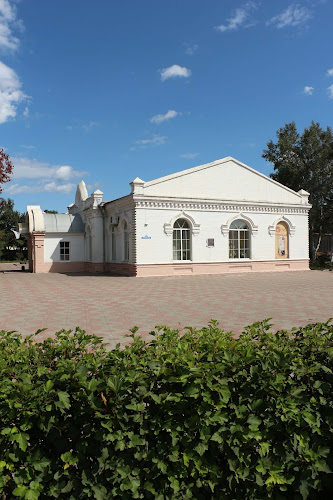
Ussuri Museum
About Ussuri Museum
Description
The Ussuri Museum in Ussuriysk, Primorsky Krai, Russia, stands as one of the region's most compelling small museums: intimate, well-curated, and quietly proud of its local stories. It focuses on the natural and cultural history of the Ussuri region, mixing ethnography, local archaeology, and natural science exhibits in a way that rewards curious travelers who stay for more than a quick photo. The layout is unpretentious; the building feels like a neighbor telling local lore — sometimes formal, sometimes conversational — and that honest tone is part of the museum's charm.
Visitors often arrive with modest expectations and leave surprised by the depth of material on display. The collection includes animal taxidermy that illustrates the Ussuri fauna, archaeological finds that trace human activity in the area for millennia, and exhibits dedicated to indigenous cultures and early settlers. There are maps and dioramas that make spatial sense of the region, and label texts that usually strike a good balance between scientific accuracy and plain language. This is not a blockbuster museum where shiny new tech drowns out content; instead, it's a place where objects and stories do the heavy lifting, and that will appeal to travelers who like to feel they actually learned something useful by the end of the visit.
Practicalities matter here. The museum provides restrooms on site, which is appreciated by families and longer-stay visitors. There is no on-site restaurant, so the museum tends to be an anchor stop in a day's itinerary rather than the day's entire plan. Families with children will find it friendly: many displays are accessible and the content includes clear, kid-appropriate explanations. School groups are a common sight during weekdays, which creates a lively, engaged atmosphere. But for those seeking quiet reflection or photography, earlier or later hours can be quieter and more contemplative.
One of the things that makes the Ussuri Museum stand out is its local focus. The curators clearly care about place-specific stories — not just the grand sweep but the small, human-scale details. Old photographs in the ethnography section capture everyday life in ways that feel immediate; handwritten labels or donor names sometimes pop up, giving a sense of community involvement. That regional intimacy is the museum's competitive edge. For travelers used to large national museums, it might feel like stepping into a town memory box: familiar objects gain new meaning through context and storytelling.
And yes, some exhibits are modest in scale and the lighting can be uneven in places. That is raw, human, and actually kind of refreshing. The museum is not polished to the same degree as major metropolitan institutions, but this allows a more authentic encounter. Interpretive panels are often bilingual or at least include essential terms in Russian and English, though visitors should not expect full multilingual audio guides. For independent travelers who read a little Russian or bring a phrasebook, the experience deepens. Guided tours are offered occasionally; they tend to provide excellent local color and often reveal anecdotes not found on the labels.
For photographers, many of the displays are photogenic in their own unpretentious way: handcrafted models, textured textiles, and close-up natural-history specimens. Flash photography policies vary, and staff generally appreciate when visitors ask. The museum's staff are known to be helpful and genuinely interested in sharing context — if a traveler mentions an interest in local birdlife or regional pottery, staff often point to lesser-known cases in the collection and sometimes will pull additional materials for closer inspection. Expect friendly, practical assistance rather than scripted lines.
Accessibility is decent for a smaller museum. There are clear paths through most galleries and effort has been made to place informative signage at readable heights. Wheelchair users should verify specific gallery access ahead of time, because older buildings sometimes present surprises — uneven thresholds or narrow doorways. But staff will usually help as much as possible. Families: strollers are commonly seen inside; the floor plan accommodates them in many areas but not everywhere. Travelers with limited mobility will appreciate planning, and a short phone call or email in advance can smooth the visit.
One of the lesser-known highlights is the museum's rotating small-exhibit program. While the permanent collection tells the long arc of the region's natural and cultural history, temporary displays often spotlight local artists, conservation projects, or surprising archival discoveries. On a recent visit, the author noticed a short exhibit on traditional fishing gear and seasonal calendars that was both beautifully presented and unexpectedly moving: crafted lines, hand-painted floats, and a handwritten fisherman's diary that made time feel tangible. These rotating displays are a reminder that the museum is a living institution, responsive to community voices and scholarship.
Visitors who like context will appreciate the museum's use of comparative material. For example, specimens and artifacts are frequently shown alongside explanatory panels that place the Ussuri region in a wider Eurasian context. This helps travelers understand not only what is unique to the area, but also how local developments relate to broader patterns — migration, trade, and environmental change. The natural-history section touches on conservation concerns in the region, and those panels often include current research points and local initiatives. It's not preachy. Rather, it gives travelers a readable, informed snapshot of pressing regional issues.
Pricing is reasonable and the museum is well-suited to budget-conscious travelers who prefer depth over spectacle. The visit length typically ranges from 45 minutes to two hours depending on interest level and whether one reads every label or joins a tour. A useful rule of thumb observed by the author: allot 90 minutes for a relaxed visit with time for photos and a slow read of the most compelling displays.
For practical trip-planning, the museum functions well as part of a half-day or full-day exploration of Ussuriysk. Nearby attractions and local eateries make it easy to combine the museum with other stops, though travelers should remember there is no restaurant inside the museum. It makes a fine morning or late-afternoon stop — times when natural light through windows can make the displays glow, and when the flow of visitors is often lower. Weekends can be busier, especially in summer and during school holidays, when families and local visitors contribute to a bustling, friendly crowd.
Finally, the emotional core of the Ussuri Museum is its storytelling. Objects are rooted in community histories — not merely collected specimens but parts of lives. That focus creates an experience that can be surprisingly intimate. The author remembers standing in front of an old field journal, written in cramped, careful script, and feeling a real connection across time to a local naturalist who counted birds in colder, stranger years. Moments like that stick with travelers — small human connections that make the museum more than the sum of its cases.
In short, the Ussuri Museum in Ussuriysk, Primorsky Krai is a worthwhile stop for travelers who value local depth, accessible science and culture exhibits, and a warm, community-minded museum environment. It rewards patience, curiosity, and a willingness to look closely at small things. For anyone mapping out a visit to the Russian Far East, it makes a memorable, grounding stop that illuminates the people, wildlife, and history of the region.
Key Features
More Details
Updated August 30, 2025
Table of Contents
Description
The Ussuri Museum in Ussuriysk, Primorsky Krai, Russia, stands as one of the region’s most compelling small museums: intimate, well-curated, and quietly proud of its local stories. It focuses on the natural and cultural history of the Ussuri region, mixing ethnography, local archaeology, and natural science exhibits in a way that rewards curious travelers who stay for more than a quick photo. The layout is unpretentious; the building feels like a neighbor telling local lore — sometimes formal, sometimes conversational — and that honest tone is part of the museum’s charm.
Visitors often arrive with modest expectations and leave surprised by the depth of material on display. The collection includes animal taxidermy that illustrates the Ussuri fauna, archaeological finds that trace human activity in the area for millennia, and exhibits dedicated to indigenous cultures and early settlers. There are maps and dioramas that make spatial sense of the region, and label texts that usually strike a good balance between scientific accuracy and plain language. This is not a blockbuster museum where shiny new tech drowns out content; instead, it’s a place where objects and stories do the heavy lifting, and that will appeal to travelers who like to feel they actually learned something useful by the end of the visit.
Practicalities matter here. The museum provides restrooms on site, which is appreciated by families and longer-stay visitors. There is no on-site restaurant, so the museum tends to be an anchor stop in a day’s itinerary rather than the day’s entire plan. Families with children will find it friendly: many displays are accessible and the content includes clear, kid-appropriate explanations. School groups are a common sight during weekdays, which creates a lively, engaged atmosphere. But for those seeking quiet reflection or photography, earlier or later hours can be quieter and more contemplative.
One of the things that makes the Ussuri Museum stand out is its local focus. The curators clearly care about place-specific stories — not just the grand sweep but the small, human-scale details. Old photographs in the ethnography section capture everyday life in ways that feel immediate; handwritten labels or donor names sometimes pop up, giving a sense of community involvement. That regional intimacy is the museum’s competitive edge. For travelers used to large national museums, it might feel like stepping into a town memory box: familiar objects gain new meaning through context and storytelling.
And yes, some exhibits are modest in scale and the lighting can be uneven in places. That is raw, human, and actually kind of refreshing. The museum is not polished to the same degree as major metropolitan institutions, but this allows a more authentic encounter. Interpretive panels are often bilingual or at least include essential terms in Russian and English, though visitors should not expect full multilingual audio guides. For independent travelers who read a little Russian or bring a phrasebook, the experience deepens. Guided tours are offered occasionally; they tend to provide excellent local color and often reveal anecdotes not found on the labels.
For photographers, many of the displays are photogenic in their own unpretentious way: handcrafted models, textured textiles, and close-up natural-history specimens. Flash photography policies vary, and staff generally appreciate when visitors ask. The museum’s staff are known to be helpful and genuinely interested in sharing context — if a traveler mentions an interest in local birdlife or regional pottery, staff often point to lesser-known cases in the collection and sometimes will pull additional materials for closer inspection. Expect friendly, practical assistance rather than scripted lines.
Accessibility is decent for a smaller museum. There are clear paths through most galleries and effort has been made to place informative signage at readable heights. Wheelchair users should verify specific gallery access ahead of time, because older buildings sometimes present surprises — uneven thresholds or narrow doorways. But staff will usually help as much as possible. Families: strollers are commonly seen inside; the floor plan accommodates them in many areas but not everywhere. Travelers with limited mobility will appreciate planning, and a short phone call or email in advance can smooth the visit.
One of the lesser-known highlights is the museum’s rotating small-exhibit program. While the permanent collection tells the long arc of the region’s natural and cultural history, temporary displays often spotlight local artists, conservation projects, or surprising archival discoveries. On a recent visit, the author noticed a short exhibit on traditional fishing gear and seasonal calendars that was both beautifully presented and unexpectedly moving: crafted lines, hand-painted floats, and a handwritten fisherman’s diary that made time feel tangible. These rotating displays are a reminder that the museum is a living institution, responsive to community voices and scholarship.
Visitors who like context will appreciate the museum’s use of comparative material. For example, specimens and artifacts are frequently shown alongside explanatory panels that place the Ussuri region in a wider Eurasian context. This helps travelers understand not only what is unique to the area, but also how local developments relate to broader patterns — migration, trade, and environmental change. The natural-history section touches on conservation concerns in the region, and those panels often include current research points and local initiatives. It’s not preachy. Rather, it gives travelers a readable, informed snapshot of pressing regional issues.
Pricing is reasonable and the museum is well-suited to budget-conscious travelers who prefer depth over spectacle. The visit length typically ranges from 45 minutes to two hours depending on interest level and whether one reads every label or joins a tour. A useful rule of thumb observed by the author: allot 90 minutes for a relaxed visit with time for photos and a slow read of the most compelling displays.
For practical trip-planning, the museum functions well as part of a half-day or full-day exploration of Ussuriysk. Nearby attractions and local eateries make it easy to combine the museum with other stops, though travelers should remember there is no restaurant inside the museum. It makes a fine morning or late-afternoon stop — times when natural light through windows can make the displays glow, and when the flow of visitors is often lower. Weekends can be busier, especially in summer and during school holidays, when families and local visitors contribute to a bustling, friendly crowd.
Finally, the emotional core of the Ussuri Museum is its storytelling. Objects are rooted in community histories — not merely collected specimens but parts of lives. That focus creates an experience that can be surprisingly intimate. The author remembers standing in front of an old field journal, written in cramped, careful script, and feeling a real connection across time to a local naturalist who counted birds in colder, stranger years. Moments like that stick with travelers — small human connections that make the museum more than the sum of its cases.
In short, the Ussuri Museum in Ussuriysk, Primorsky Krai is a worthwhile stop for travelers who value local depth, accessible science and culture exhibits, and a warm, community-minded museum environment. It rewards patience, curiosity, and a willingness to look closely at small things. For anyone mapping out a visit to the Russian Far East, it makes a memorable, grounding stop that illuminates the people, wildlife, and history of the region.
Key Highlights
Ussuri Museum
Location
Places to Stay Near Ussuri Museum
Find and Book a Tour
Explore More Travel Guides
No reviews found! Be the first to review!
Traveler Reviews for Ussuri Museum
There are no reviews yet. Be the first one to write one.
Have you visited Ussuri Museum? Help other travelers by sharing your review.
You Might Also Like
Baza Landshafta (Семейный парк ландшафтного дизайна
Dvorets Kul’tury
Park Dora
Find Accommodations Nearby
Recommended Tours & Activities
Visitor Reviews
There are no reviews yet. Be the first one to write one.
Share Your Experience
Have you visited Ussuri Museum? Help other travelers by leaving a review.