About Tunel Grič

Description

Tucked quietly beneath the old streets of Zagreb’s Upper Town, Tunel Grič (or Grič Tunnel) feels like walking straight into a time capsule. It’s not one of those overly polished tourist spots that tries too hard—this place has grit, history, and a kind of underground charm that’s hard to fake. Originally built during World War II as a shelter, the tunnel has since reinvented itself more times than most of us change hairstyles. It’s gone from a wartime refuge to a forgotten relic, then to a rave venue in the 1990s, and now a cultural walkway connecting parts of the city.

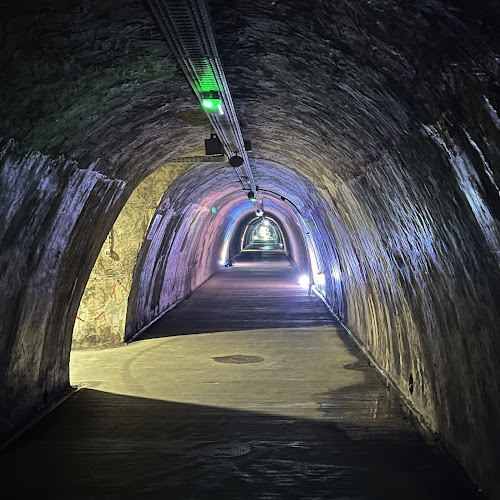
The tunnel stretches just over 350 meters, linking Mesnička Street on one end and Radićeva Street on the other, with a few side exits leading to other points in the city center. Walking through it, you can feel the cool, damp air wrap around you, and there’s this faint echo that makes every footstep sound dramatic—like you’re in your own indie film. The lighting is soft but moody, and depending on when you visit, you might stumble upon an art installation or an immersive exhibit. It’s part history lesson, part urban adventure.

What’s really interesting is how locals treat it. Some see it as a shortcut, others as a piece of living history. And honestly, both are right. The tunnel manages to blend practicality with nostalgia in a way that feels very Zagreb—unpretentious, a little quirky, and deeply layered. It’s also wheelchair accessible, which is a huge plus, though you won’t find restrooms down there. Families often walk through with kids, and it’s surprisingly good for them too—safe, easy to navigate, and just mysterious enough to keep them curious.

Of course, not everyone falls in love with it instantly. A few visitors find it plain or too short, expecting something flashier. But that’s kind of missing the point. Tunel Grič isn’t about spectacle—it’s about the story it tells beneath the surface. If you’re someone who enjoys peeling back the layers of a city, this tunnel will speak to you in quiet, echoing whispers.

Key Features

  • Historic World War II tunnel repurposed as a pedestrian passage and cultural space
  • Roughly 350 meters long, connecting key parts of Zagreb’s city center
  • Hosts art exhibitions, multimedia installations, and seasonal events
  • Wheelchair accessible and suitable for children
  • Cool year-round temperature—great escape on hot summer days
  • Free entry for all visitors

I remember the first time I walked through it—one of those sticky summer afternoons when Zagreb felt like an oven. The moment I stepped inside, it was like walking into another world. The temperature dropped instantly, and the faint scent of stone and history hit me. A group of teenagers were taking photos against the tunnel lights, and an elderly couple was quietly strolling hand in hand. It struck me then—this isn’t just a tunnel. It’s a shared space that connects generations, both literally and emotionally.

Best Time to Visit

Honestly, there’s no bad time to visit Tunel Grič, but your experience changes with the season. In summer, it’s a cool retreat from the heat, and in winter, it’s a surprisingly cozy walk sheltered from the wind. If you’re into photography, early morning or late evening is perfect—the lighting inside feels cinematic, especially when fewer people are around.

During the holiday season, the tunnel often transforms with lights and themed installations, giving it a festive twist. I once visited in December when the city was buzzing with Christmas markets, and the tunnel was decorated with glowing art pieces—it felt like stepping into an underground fairytale. If you prefer quiet exploration, weekdays are your best bet. Weekends can get a bit busier, especially when there’s an exhibition happening.

How to Get There

Getting to Tunel Grič is straightforward, even if you’re new to Zagreb. The tunnel runs beneath the Upper Town, connecting two major pedestrian areas. You can easily reach it on foot from Ban Jelačić Square—it’s just a short walk uphill. If you’re using public transport, trams stop nearby, and from there, it’s a few minutes' stroll through charming cobbled streets that already set the mood for what’s to come.

Look for the entrance near Mesnička Street—it’s the most recognizable one, with a simple stone façade that doesn’t scream for attention. In fact, if you weren’t looking for it, you might just walk past. And that’s part of its allure—it’s a hidden piece of the city waiting for curious travelers to discover it. The other exits lead toward Radićeva Street and Ilica, so it’s also a handy shortcut if you’re exploring downtown.

If you’re driving, parking can be tricky in this part of the city (trust me, I’ve circled around more than once). It’s better to park a bit farther out and enjoy the walk—it’s all part of the Zagreb experience anyway. And if you’re staying in the city center, you can easily include the tunnel in your walking itinerary along with the Lotrščak Tower, St. Mark’s Church, and the Museum of Broken Relationships—all within walking distance.

Tips for Visiting

Here’s where a few insider tips can make your visit smoother—and a bit more memorable. First off, wear comfortable shoes. The floor is even, but you’ll likely be walking quite a bit before and after your tunnel visit. The air inside is cool and slightly humid, so bringing a light jacket isn’t a bad idea, especially if you’re sensitive to temperature changes.

Photography is allowed, and honestly, you’ll want to take a few shots. The lighting creates this eerie yet beautiful atmosphere, perfect for creative photos. Just be respectful if there’s an exhibition going on—some installations have restrictions on flash photography. If you’re traveling with kids, they’ll love the sense of adventure, but keep them close since the tunnel can echo loudly when groups pass through.

And here’s a small suggestion from experience—walk through slowly. Don’t rush it. Let your eyes adjust to the dim light, listen to the echoes, and imagine what it must’ve felt like decades ago when people used it for safety instead of sightseeing. There’s a strange comfort in knowing that the same walls that once offered refuge now welcome curiosity and creativity.

If you’re planning to explore multiple attractions in Zagreb, use the tunnel as your mid-route break. It’s peaceful, shaded, and offers a nice contrast to the bustling streets above. And while there aren’t restrooms inside, you’ll find plenty of cafés nearby where you can grab a coffee afterward—because no Zagreb experience is complete without one.

In the end, Tunel Grič isn’t just a passageway—it’s a story carved into the city’s bones. It’s the kind of place that doesn’t shout for attention but stays with you long after you’ve left. Whether you’re a history buff, an art lover, or just someone curious about the hidden corners of a city, this tunnel has a quiet way of making you feel connected—to the past, to the present, and maybe even a little to yourself.

Key Features

  • Historic World War II tunnel repurposed as a pedestrian passage and cultural space
  • Roughly 350 meters long, connecting key parts of Zagreb’s city center
  • Hosts art exhibitions, multimedia installations, and seasonal events
  • Wheelchair accessible and suitable for children
  • Cool year-round temperature—great escape on hot summer days
  • Free entry for all visitors

More Details

Updated October 8, 2025


Description

Tucked quietly beneath the old streets of Zagreb’s Upper Town, Tunel Grič (or Grič Tunnel) feels like walking straight into a time capsule. It’s not one of those overly polished tourist spots that tries too hard—this place has grit, history, and a kind of underground charm that’s hard to fake. Originally built during World War II as a shelter, the tunnel has since reinvented itself more times than most of us change hairstyles. It’s gone from a wartime refuge to a forgotten relic, then to a rave venue in the 1990s, and now a cultural walkway connecting parts of the city.

The tunnel stretches just over 350 meters, linking Mesnička Street on one end and Radićeva Street on the other, with a few side exits leading to other points in the city center. Walking through it, you can feel the cool, damp air wrap around you, and there’s this faint echo that makes every footstep sound dramatic—like you’re in your own indie film. The lighting is soft but moody, and depending on when you visit, you might stumble upon an art installation or an immersive exhibit. It’s part history lesson, part urban adventure.

What’s really interesting is how locals treat it. Some see it as a shortcut, others as a piece of living history. And honestly, both are right. The tunnel manages to blend practicality with nostalgia in a way that feels very Zagreb—unpretentious, a little quirky, and deeply layered. It’s also wheelchair accessible, which is a huge plus, though you won’t find restrooms down there. Families often walk through with kids, and it’s surprisingly good for them too—safe, easy to navigate, and just mysterious enough to keep them curious.

Of course, not everyone falls in love with it instantly. A few visitors find it plain or too short, expecting something flashier. But that’s kind of missing the point. Tunel Grič isn’t about spectacle—it’s about the story it tells beneath the surface. If you’re someone who enjoys peeling back the layers of a city, this tunnel will speak to you in quiet, echoing whispers.

Key Features

  • Historic World War II tunnel repurposed as a pedestrian passage and cultural space
  • Roughly 350 meters long, connecting key parts of Zagreb’s city center
  • Hosts art exhibitions, multimedia installations, and seasonal events
  • Wheelchair accessible and suitable for children
  • Cool year-round temperature—great escape on hot summer days
  • Free entry for all visitors

I remember the first time I walked through it—one of those sticky summer afternoons when Zagreb felt like an oven. The moment I stepped inside, it was like walking into another world. The temperature dropped instantly, and the faint scent of stone and history hit me. A group of teenagers were taking photos against the tunnel lights, and an elderly couple was quietly strolling hand in hand. It struck me then—this isn’t just a tunnel. It’s a shared space that connects generations, both literally and emotionally.

Best Time to Visit

Honestly, there’s no bad time to visit Tunel Grič, but your experience changes with the season. In summer, it’s a cool retreat from the heat, and in winter, it’s a surprisingly cozy walk sheltered from the wind. If you’re into photography, early morning or late evening is perfect—the lighting inside feels cinematic, especially when fewer people are around.

During the holiday season, the tunnel often transforms with lights and themed installations, giving it a festive twist. I once visited in December when the city was buzzing with Christmas markets, and the tunnel was decorated with glowing art pieces—it felt like stepping into an underground fairytale. If you prefer quiet exploration, weekdays are your best bet. Weekends can get a bit busier, especially when there’s an exhibition happening.

How to Get There

Getting to Tunel Grič is straightforward, even if you’re new to Zagreb. The tunnel runs beneath the Upper Town, connecting two major pedestrian areas. You can easily reach it on foot from Ban Jelačić Square—it’s just a short walk uphill. If you’re using public transport, trams stop nearby, and from there, it’s a few minutes’ stroll through charming cobbled streets that already set the mood for what’s to come.

Look for the entrance near Mesnička Street—it’s the most recognizable one, with a simple stone façade that doesn’t scream for attention. In fact, if you weren’t looking for it, you might just walk past. And that’s part of its allure—it’s a hidden piece of the city waiting for curious travelers to discover it. The other exits lead toward Radićeva Street and Ilica, so it’s also a handy shortcut if you’re exploring downtown.

If you’re driving, parking can be tricky in this part of the city (trust me, I’ve circled around more than once). It’s better to park a bit farther out and enjoy the walk—it’s all part of the Zagreb experience anyway. And if you’re staying in the city center, you can easily include the tunnel in your walking itinerary along with the Lotrščak Tower, St. Mark’s Church, and the Museum of Broken Relationships—all within walking distance.

Tips for Visiting

Here’s where a few insider tips can make your visit smoother—and a bit more memorable. First off, wear comfortable shoes. The floor is even, but you’ll likely be walking quite a bit before and after your tunnel visit. The air inside is cool and slightly humid, so bringing a light jacket isn’t a bad idea, especially if you’re sensitive to temperature changes.

Photography is allowed, and honestly, you’ll want to take a few shots. The lighting creates this eerie yet beautiful atmosphere, perfect for creative photos. Just be respectful if there’s an exhibition going on—some installations have restrictions on flash photography. If you’re traveling with kids, they’ll love the sense of adventure, but keep them close since the tunnel can echo loudly when groups pass through.

And here’s a small suggestion from experience—walk through slowly. Don’t rush it. Let your eyes adjust to the dim light, listen to the echoes, and imagine what it must’ve felt like decades ago when people used it for safety instead of sightseeing. There’s a strange comfort in knowing that the same walls that once offered refuge now welcome curiosity and creativity.

If you’re planning to explore multiple attractions in Zagreb, use the tunnel as your mid-route break. It’s peaceful, shaded, and offers a nice contrast to the bustling streets above. And while there aren’t restrooms inside, you’ll find plenty of cafés nearby where you can grab a coffee afterward—because no Zagreb experience is complete without one.

In the end, Tunel Grič isn’t just a passageway—it’s a story carved into the city’s bones. It’s the kind of place that doesn’t shout for attention but stays with you long after you’ve left. Whether you’re a history buff, an art lover, or just someone curious about the hidden corners of a city, this tunnel has a quiet way of making you feel connected—to the past, to the present, and maybe even a little to yourself.

Key Highlights

  • Historic World War II tunnel repurposed as a pedestrian passage and cultural space
  • Roughly 350 meters long, connecting key parts of Zagreb’s city center
  • Hosts art exhibitions, multimedia installations, and seasonal events
  • Wheelchair accessible and suitable for children
  • Cool year-round temperature—great escape on hot summer days
  • Free entry for all visitors

Location

Places to Stay Near Tunel Grič

Find and Book a Tour

Explore More Travel Guides

No reviews found! Be the first to review!

Traveler Reviews for Tunel Grič

There are no reviews yet. Be the first one to write one.

Share Your Experience

Have you visited Tunel Grič? Help other travelers by sharing your review.

Find Accommodations Nearby

Recommended Tours & Activities

Visitor Reviews

There are no reviews yet. Be the first one to write one.

Share Your Experience

Have you visited Tunel Grič? Help other travelers by leaving a review.