
Trevi Fountain
About Trevi Fountain
Description
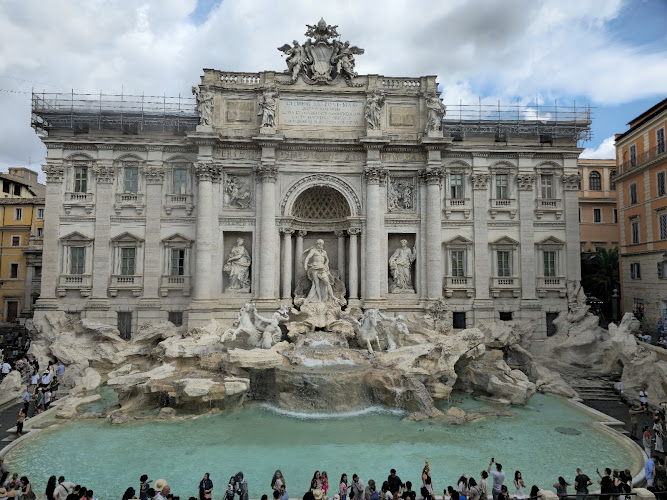
The Trevi Fountain is one of those places that feels larger than life, even when you’ve seen it in a thousand photos before arriving in Rome. Designed by Nicola Salvi and completed in 1762, this rococo masterpiece is fed by an ancient aqueduct that has been supplying water to the city for centuries. The fountain is a theatrical stage of stone and water, with Oceanus, the god of the sea, commanding the central figure, flanked by tritons and horses that seem to leap out of the marble itself. It’s dramatic, over-the-top, and honestly, that’s part of its charm. Some people adore it at first sight, while others find the constant crowds overwhelming. But even if you’re in the latter camp, it’s hard to deny the artistry and scale of the place.
What makes the Trevi Fountain special is not just its size or detail, but the way it pulls you in emotionally. The sound of rushing water echoes through the piazza, and there’s this odd mix of serenity and chaos—serenity from the fountain itself, chaos from the throngs of people who gather around it. It’s one of those rare landmarks that manages to be both a work of art and a living, breathing social space. Families bring their kids, couples sneak in a kiss, solo travelers linger longer than they planned. And yes, the coin toss tradition is alive and well. Tossing one coin is said to guarantee a return to Rome, two coins for love, and three for marriage. Whether you believe in it or not, the ritual feels like a rite of passage.
It’s worth saying that the fountain isn’t universally loved. Some visitors feel it’s too crowded, too noisy, or too “touristy.” And that’s fair—standing shoulder to shoulder with hundreds of strangers while trying to snap a photo can test anyone’s patience. But if you can look past the bustle, or better yet, find a quieter moment to see it, you’ll understand why so many people fall under its spell. It’s not just another fountain; it’s a slice of Roman history, culture, and storytelling carved into stone and set to the soundtrack of splashing water.
Key Features
- Designed by Nicola Salvi and completed in 1762, showcasing rococo artistry at its peak
- Fed by the Aqua Virgo aqueduct, one of Rome’s ancient water sources still in use
- Central figure of Oceanus, symbolizing the power and abundance of water
- Detailed sculptures of tritons, seahorses, and allegorical figures
- Coin tossing tradition promising a return to Rome or even romance
- Illuminated beautifully at night, creating a completely different atmosphere
- Accessible to children and pet-friendly (dogs are welcome in the piazza)
- Onsite services available, with modern payment options like cards and mobile pay
Best Time to Visit
Timing makes all the difference at the Trevi Fountain. Visit in the middle of the day, and you’ll find yourself elbow-to-elbow with hundreds of people, all jostling for the perfect photo. Early mornings, especially before 8 a.m., are magical. The piazza is quieter, the light is soft, and you can actually hear the water without the background chatter. Late at night is another sweet spot. The fountain is lit up, casting a golden glow on the marble, and while there are still visitors, the vibe is calmer and more intimate. Personally, I prefer the evening—it feels like stepping into a movie scene, and you can linger without feeling rushed.
Seasonally, spring and autumn are the most comfortable times. Summer in Rome can be brutally hot, and the piazza becomes packed with tour groups. Winter has its charm too, with fewer crowds and a crispness in the air that makes the fountain’s water look even more striking. If you’re the type who doesn’t mind a little chill, you might find winter the most rewarding time to go.
How to Get There
The Trevi Fountain is tucked into the historic center of Rome, just a short walk from other major landmarks like the Spanish Steps and the Pantheon. The closest metro stop is Barberini on Line A, from which it’s about a 10-minute walk. If you’re already exploring the city on foot, you’ll likely stumble upon it while weaving through the narrow streets. That’s part of the magic—the fountain suddenly appears as you turn a corner, and it’s a breathtaking surprise even if you know it’s coming.
Buses also stop nearby, but honestly, walking is the best way to get there. The streets around the fountain are pedestrian-heavy, and wandering through them gives you a sense of Rome’s layered history. Just keep in mind that the area can be uneven with cobblestones, so wear comfortable shoes. Wheelchair accessibility is limited around the piazza, as there’s no dedicated accessible parking directly at the site, but the flat surfaces near the fountain make it possible with some planning.
Tips for Visiting
First and foremost: expect crowds. The Trevi Fountain is one of the most visited attractions in Rome, so patience is key. If you want a photo without a sea of heads in the background, go early or late. And don’t be shy about waiting for your turn at the edge of the fountain—it’s worth it to get that classic shot.
Bring coins, but not too many. The tradition is fun, but tossing handfuls of change isn’t necessary. One or two coins are enough to take part in the ritual. And here’s a fun fact: the money collected from the fountain goes to charity, helping fund food programs for people in need. So your coin toss isn’t just symbolic—it actually does some good.
Keep an eye on your belongings. Like any busy tourist spot, pickpockets can be an issue. A crossbody bag or backpack worn in the front is a smart move. Also, don’t expect to sit on the fountain’s edge or dip your hands in the water—there are strict rules against that, and the police do enforce them.
If you’re traveling with kids, the fountain is a hit. The sculptures are almost like a storybook come to life, and the sound of rushing water keeps little ones entertained. Dogs are welcome too, which adds to the lively, family-friendly vibe of the piazza. Just be mindful of the crowds so your pup doesn’t get overwhelmed.
Finally, linger. So many visitors snap a photo, toss a coin, and rush off to the next site. But the Trevi Fountain rewards those who stay a little longer. Watch how the light changes on the marble, listen to the rhythm of the water, and notice the small details in the carvings. It’s these moments that transform a quick stop into a lasting memory.
In the end, the Trevi Fountain is more than just a tourist attraction—it’s a living piece of Rome’s story. Whether you fall in love with it instantly or need a little time to warm up, it’s an experience that stays with you long after you’ve left the piazza. And if the legend holds true, you’ll be back again someday, coin or no coin.
Key Features
- Designed by Nicola Salvi and completed in 1762, showcasing rococo artistry at its peak
- Fed by the Aqua Virgo aqueduct, one of Rome’s ancient water sources still in use
- Central figure of Oceanus, symbolizing the power and abundance of water
- Detailed sculptures of tritons, seahorses, and allegorical figures
- Coin tossing tradition promising a return to Rome or even romance
- Illuminated beautifully at night, creating a completely different atmosphere
- Accessible to children and pet-friendly (dogs are welcome in the piazza)
- Onsite services available, with modern payment options like cards and mobile pay
More Details
Updated October 2, 2025
Table of Contents
Description
The Trevi Fountain is one of those places that feels larger than life, even when you’ve seen it in a thousand photos before arriving in Rome. Designed by Nicola Salvi and completed in 1762, this rococo masterpiece is fed by an ancient aqueduct that has been supplying water to the city for centuries. The fountain is a theatrical stage of stone and water, with Oceanus, the god of the sea, commanding the central figure, flanked by tritons and horses that seem to leap out of the marble itself. It’s dramatic, over-the-top, and honestly, that’s part of its charm. Some people adore it at first sight, while others find the constant crowds overwhelming. But even if you’re in the latter camp, it’s hard to deny the artistry and scale of the place.
What makes the Trevi Fountain special is not just its size or detail, but the way it pulls you in emotionally. The sound of rushing water echoes through the piazza, and there’s this odd mix of serenity and chaos—serenity from the fountain itself, chaos from the throngs of people who gather around it. It’s one of those rare landmarks that manages to be both a work of art and a living, breathing social space. Families bring their kids, couples sneak in a kiss, solo travelers linger longer than they planned. And yes, the coin toss tradition is alive and well. Tossing one coin is said to guarantee a return to Rome, two coins for love, and three for marriage. Whether you believe in it or not, the ritual feels like a rite of passage.
It’s worth saying that the fountain isn’t universally loved. Some visitors feel it’s too crowded, too noisy, or too “touristy.” And that’s fair—standing shoulder to shoulder with hundreds of strangers while trying to snap a photo can test anyone’s patience. But if you can look past the bustle, or better yet, find a quieter moment to see it, you’ll understand why so many people fall under its spell. It’s not just another fountain; it’s a slice of Roman history, culture, and storytelling carved into stone and set to the soundtrack of splashing water.
Key Features
- Designed by Nicola Salvi and completed in 1762, showcasing rococo artistry at its peak
- Fed by the Aqua Virgo aqueduct, one of Rome’s ancient water sources still in use
- Central figure of Oceanus, symbolizing the power and abundance of water
- Detailed sculptures of tritons, seahorses, and allegorical figures
- Coin tossing tradition promising a return to Rome or even romance
- Illuminated beautifully at night, creating a completely different atmosphere
- Accessible to children and pet-friendly (dogs are welcome in the piazza)
- Onsite services available, with modern payment options like cards and mobile pay
Best Time to Visit
Timing makes all the difference at the Trevi Fountain. Visit in the middle of the day, and you’ll find yourself elbow-to-elbow with hundreds of people, all jostling for the perfect photo. Early mornings, especially before 8 a.m., are magical. The piazza is quieter, the light is soft, and you can actually hear the water without the background chatter. Late at night is another sweet spot. The fountain is lit up, casting a golden glow on the marble, and while there are still visitors, the vibe is calmer and more intimate. Personally, I prefer the evening—it feels like stepping into a movie scene, and you can linger without feeling rushed.
Seasonally, spring and autumn are the most comfortable times. Summer in Rome can be brutally hot, and the piazza becomes packed with tour groups. Winter has its charm too, with fewer crowds and a crispness in the air that makes the fountain’s water look even more striking. If you’re the type who doesn’t mind a little chill, you might find winter the most rewarding time to go.
How to Get There
The Trevi Fountain is tucked into the historic center of Rome, just a short walk from other major landmarks like the Spanish Steps and the Pantheon. The closest metro stop is Barberini on Line A, from which it’s about a 10-minute walk. If you’re already exploring the city on foot, you’ll likely stumble upon it while weaving through the narrow streets. That’s part of the magic—the fountain suddenly appears as you turn a corner, and it’s a breathtaking surprise even if you know it’s coming.
Buses also stop nearby, but honestly, walking is the best way to get there. The streets around the fountain are pedestrian-heavy, and wandering through them gives you a sense of Rome’s layered history. Just keep in mind that the area can be uneven with cobblestones, so wear comfortable shoes. Wheelchair accessibility is limited around the piazza, as there’s no dedicated accessible parking directly at the site, but the flat surfaces near the fountain make it possible with some planning.
Tips for Visiting
First and foremost: expect crowds. The Trevi Fountain is one of the most visited attractions in Rome, so patience is key. If you want a photo without a sea of heads in the background, go early or late. And don’t be shy about waiting for your turn at the edge of the fountain—it’s worth it to get that classic shot.
Bring coins, but not too many. The tradition is fun, but tossing handfuls of change isn’t necessary. One or two coins are enough to take part in the ritual. And here’s a fun fact: the money collected from the fountain goes to charity, helping fund food programs for people in need. So your coin toss isn’t just symbolic—it actually does some good.
Keep an eye on your belongings. Like any busy tourist spot, pickpockets can be an issue. A crossbody bag or backpack worn in the front is a smart move. Also, don’t expect to sit on the fountain’s edge or dip your hands in the water—there are strict rules against that, and the police do enforce them.
If you’re traveling with kids, the fountain is a hit. The sculptures are almost like a storybook come to life, and the sound of rushing water keeps little ones entertained. Dogs are welcome too, which adds to the lively, family-friendly vibe of the piazza. Just be mindful of the crowds so your pup doesn’t get overwhelmed.
Finally, linger. So many visitors snap a photo, toss a coin, and rush off to the next site. But the Trevi Fountain rewards those who stay a little longer. Watch how the light changes on the marble, listen to the rhythm of the water, and notice the small details in the carvings. It’s these moments that transform a quick stop into a lasting memory.
In the end, the Trevi Fountain is more than just a tourist attraction—it’s a living piece of Rome’s story. Whether you fall in love with it instantly or need a little time to warm up, it’s an experience that stays with you long after you’ve left the piazza. And if the legend holds true, you’ll be back again someday, coin or no coin.
Key Highlights
- Designed by Nicola Salvi and completed in 1762, showcasing rococo artistry at its peak
- Fed by the Aqua Virgo aqueduct, one of Rome’s ancient water sources still in use
- Central figure of Oceanus, symbolizing the power and abundance of water
- Detailed sculptures of tritons, seahorses, and allegorical figures
- Coin tossing tradition promising a return to Rome or even romance
- Illuminated beautifully at night, creating a completely different atmosphere
- Accessible to children and pet-friendly (dogs are welcome in the piazza)
- Onsite services available, with modern payment options like cards and mobile pay
Location
Places to Stay Near Trevi Fountain
Find and Book a Tour
Explore More Travel Guides
No reviews found! Be the first to review!
Traveler Reviews for Trevi Fountain
There are no reviews yet. Be the first one to write one.
Have you visited Trevi Fountain? Help other travelers by sharing your review.
You Might Also Like
Catacombs of Domitilla

Fontana dei Quattro Fiumi

Capitoline Museums
Find Accommodations Nearby
Recommended Tours & Activities
Visitor Reviews
There are no reviews yet. Be the first one to write one.
Share Your Experience
Have you visited Trevi Fountain? Help other travelers by leaving a review.