
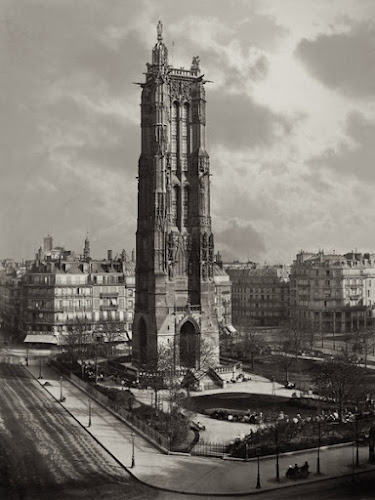
Tour Saint-Jacques
About Tour Saint-Jacques
Description
The Tour Saint-Jacques stands quietly yet proudly in the heart of Paris, a reminder of the city’s layered history and its flair for preserving beauty even through destruction. Once the bell tower of the Church of Saint-Jacques-de-la-Boucherie, this 16th-century Gothic masterpiece is all that survived after the church was demolished during the French Revolution. Today, it rises 54 meters above the Square de la Tour Saint-Jacques, a serene green space that feels like a small sanctuary amid the city’s constant hum.
What’s fascinating about this tower is that it’s both a relic and a living part of Paris. You can feel the centuries in its stonework—the ornate carvings, the saints and gargoyles that seem to watch over modern-day visitors, and the slightly weathered elegance that only time can create. I remember the first time I walked past it by accident, on my way to the Hôtel de Ville. I stopped mid-stride because the tower just looked so out of place, like a piece of a cathedral that had wandered off and decided to stay put. And that’s exactly what it is.
Climbing to the top (which you can do on guided tours during certain months) rewards you with one of the most underrated panoramas in Paris. The Eiffel Tower may steal the spotlight, but from the top of Tour Saint-Jacques, you get a raw, 360-degree view of the city’s rooftops, Notre-Dame, and the Seine curling through it all. There’s something almost secretive about it—like you’ve stumbled upon a view that locals would rather keep to themselves.
Despite its beauty, the tower doesn’t overwhelm you. It’s not crowded with souvenir shops or flashy signs. Instead, it offers a quiet kind of magic, the kind that makes you slow down and imagine the pilgrims who once began their journey to Santiago de Compostela right here. It’s a place that whispers rather than shouts, and that’s part of its charm.
Key Features
- Stands 54 meters tall, offering panoramic views of Paris from its summit.
- The only remaining part of the 16th-century Church of Saint-Jacques-de-la-Boucherie.
- Built in flamboyant Gothic style with intricate sculptures and stone carvings.
- Designated as a UNESCO World Heritage Site as part of the Routes of Santiago de Compostela in France.
- Surrounded by a small public garden, perfect for a peaceful break from sightseeing.
- Guided tours available during spring and summer months, providing access to the top platform.
- Features a statue of Blaise Pascal at its base, honoring the mathematician who conducted experiments here.
- Offers a less crowded alternative to other Paris viewpoints.
Best Time to Visit
If you want to climb the tower, plan your visit between April and October. That’s when the guided tours are usually available, and trust me, you’ll want to catch the city under that golden Parisian light that seems to make everything look like a painting. Early mornings are ideal if you prefer fewer people and softer light for photos.
Summer afternoons can get warm, but the breeze that greets you at the top makes it worth every step. In autumn, the surrounding square turns shades of amber and rust, and the tower looks particularly striking against that backdrop. Even in winter, when it’s closed to climbs, it’s still worth stopping by. The garden is quiet, and the tower’s silhouette against a gray sky feels almost poetic.
Avoid weekends if you can—locals and tourists alike tend to gather here, especially when the weather is nice. Weekdays are calmer, and you might find yourself sharing the view with just a handful of other curious souls.
How to Get There
The Tour Saint-Jacques is located right in central Paris, making it easy to reach no matter where you’re staying. It’s only a short walk from major landmarks like Notre-Dame Cathedral and the Hôtel de Ville. Several metro lines stop nearby, and if you’re the type who likes to wander, it’s a lovely stroll from the Marais or the Latin Quarter.
If you’re driving, there’s a paid parking lot nearby, but honestly, walking is the best way to experience this part of the city. You’ll pass bookshops, cafés, and those little cobbled streets that make Paris so irresistible. And if you’re cycling, there are plenty of Vélib’ stations around—just be ready for the occasional uphill push!
Tips for Visiting
First and foremost, check the opening schedule before you go. The tower isn’t open year-round, and tickets for the climb tend to sell out quickly during peak season. Booking ahead saves you the heartbreak of showing up and finding the gates closed.
Wear comfortable shoes—there are about 300 narrow steps to the top, and while it’s not exactly Everest, it’s definitely a workout. Take your time, though. The climb itself is part of the experience, with small windows that let you peek out and catch glimpses of the city as you ascend.
Photography lovers should bring a wide-angle lens; the view from the top is breathtaking, and you’ll want to capture as much as you can. And if you’re afraid of heights, don’t let that stop you—the railing at the top feels secure, and the sense of accomplishment when you reach it is worth every shaky knee.
Personally, I like to visit in the late afternoon, just before sunset. The light hits the tower in such a way that it glows softly, and the city below begins to sparkle as the evening lights come on. Grab a pastry from a nearby bakery (there’s always one within a block in Paris) and sit on a bench in the square afterward. It’s one of those small, perfect Paris moments that linger in your memory.
For those who love history, take a moment to read about the tower’s past before you go—it adds so much depth to the visit. Knowing that pilgrims once started their sacred journeys here, or that Blaise Pascal once used the tower for his experiments on atmospheric pressure, gives the place a whole new dimension. It’s not just a pretty monument; it’s a piece of human ambition and endurance carved in stone.
And here’s a small tip that most visitors overlook: look up when you’re standing at the base. The details are extraordinary—angels, apostles, animals, all sculpted with such precision that you can almost imagine the hands that shaped them centuries ago. It’s easy to miss when you’re focused on the height, but those carvings tell the real story of the tower’s artistry.
In short, the Tour Saint-Jacques isn’t just another stop on a sightseeing list. It’s a quiet encounter with the soul of Paris—a mix of history, faith, and craftsmanship that somehow survived revolution and time. Whether you climb it or simply admire it from below, it leaves an impression that lasts far beyond your trip. And that, I think, is what great travel is all about.
Key Features
- Stands 54 meters tall, offering panoramic views of Paris from its summit.
- The only remaining part of the 16th-century Church of Saint-Jacques-de-la-Boucherie.
- Built in flamboyant Gothic style with intricate sculptures and stone carvings.
- Designated as a UNESCO World Heritage Site as part of the Routes of Santiago de Compostela in France.
- Surrounded by a small public garden, perfect for a peaceful break from sightseeing.
- Guided tours available during spring and summer months, providing access to the top platform.
- Features a statue of Blaise Pascal at its base, honoring the mathematician who conducted experiments here.
- Offers a less crowded alternative to other Paris viewpoints.
More Details
Updated October 8, 2025
Table of Contents
Description
The Tour Saint-Jacques stands quietly yet proudly in the heart of Paris, a reminder of the city’s layered history and its flair for preserving beauty even through destruction. Once the bell tower of the Church of Saint-Jacques-de-la-Boucherie, this 16th-century Gothic masterpiece is all that survived after the church was demolished during the French Revolution. Today, it rises 54 meters above the Square de la Tour Saint-Jacques, a serene green space that feels like a small sanctuary amid the city’s constant hum.
What’s fascinating about this tower is that it’s both a relic and a living part of Paris. You can feel the centuries in its stonework—the ornate carvings, the saints and gargoyles that seem to watch over modern-day visitors, and the slightly weathered elegance that only time can create. I remember the first time I walked past it by accident, on my way to the Hôtel de Ville. I stopped mid-stride because the tower just looked so out of place, like a piece of a cathedral that had wandered off and decided to stay put. And that’s exactly what it is.
Climbing to the top (which you can do on guided tours during certain months) rewards you with one of the most underrated panoramas in Paris. The Eiffel Tower may steal the spotlight, but from the top of Tour Saint-Jacques, you get a raw, 360-degree view of the city’s rooftops, Notre-Dame, and the Seine curling through it all. There’s something almost secretive about it—like you’ve stumbled upon a view that locals would rather keep to themselves.
Despite its beauty, the tower doesn’t overwhelm you. It’s not crowded with souvenir shops or flashy signs. Instead, it offers a quiet kind of magic, the kind that makes you slow down and imagine the pilgrims who once began their journey to Santiago de Compostela right here. It’s a place that whispers rather than shouts, and that’s part of its charm.
Key Features
- Stands 54 meters tall, offering panoramic views of Paris from its summit.
- The only remaining part of the 16th-century Church of Saint-Jacques-de-la-Boucherie.
- Built in flamboyant Gothic style with intricate sculptures and stone carvings.
- Designated as a UNESCO World Heritage Site as part of the Routes of Santiago de Compostela in France.
- Surrounded by a small public garden, perfect for a peaceful break from sightseeing.
- Guided tours available during spring and summer months, providing access to the top platform.
- Features a statue of Blaise Pascal at its base, honoring the mathematician who conducted experiments here.
- Offers a less crowded alternative to other Paris viewpoints.
Best Time to Visit
If you want to climb the tower, plan your visit between April and October. That’s when the guided tours are usually available, and trust me, you’ll want to catch the city under that golden Parisian light that seems to make everything look like a painting. Early mornings are ideal if you prefer fewer people and softer light for photos.
Summer afternoons can get warm, but the breeze that greets you at the top makes it worth every step. In autumn, the surrounding square turns shades of amber and rust, and the tower looks particularly striking against that backdrop. Even in winter, when it’s closed to climbs, it’s still worth stopping by. The garden is quiet, and the tower’s silhouette against a gray sky feels almost poetic.
Avoid weekends if you can—locals and tourists alike tend to gather here, especially when the weather is nice. Weekdays are calmer, and you might find yourself sharing the view with just a handful of other curious souls.
How to Get There
The Tour Saint-Jacques is located right in central Paris, making it easy to reach no matter where you’re staying. It’s only a short walk from major landmarks like Notre-Dame Cathedral and the Hôtel de Ville. Several metro lines stop nearby, and if you’re the type who likes to wander, it’s a lovely stroll from the Marais or the Latin Quarter.
If you’re driving, there’s a paid parking lot nearby, but honestly, walking is the best way to experience this part of the city. You’ll pass bookshops, cafés, and those little cobbled streets that make Paris so irresistible. And if you’re cycling, there are plenty of Vélib’ stations around—just be ready for the occasional uphill push!
Tips for Visiting
First and foremost, check the opening schedule before you go. The tower isn’t open year-round, and tickets for the climb tend to sell out quickly during peak season. Booking ahead saves you the heartbreak of showing up and finding the gates closed.
Wear comfortable shoes—there are about 300 narrow steps to the top, and while it’s not exactly Everest, it’s definitely a workout. Take your time, though. The climb itself is part of the experience, with small windows that let you peek out and catch glimpses of the city as you ascend.
Photography lovers should bring a wide-angle lens; the view from the top is breathtaking, and you’ll want to capture as much as you can. And if you’re afraid of heights, don’t let that stop you—the railing at the top feels secure, and the sense of accomplishment when you reach it is worth every shaky knee.
Personally, I like to visit in the late afternoon, just before sunset. The light hits the tower in such a way that it glows softly, and the city below begins to sparkle as the evening lights come on. Grab a pastry from a nearby bakery (there’s always one within a block in Paris) and sit on a bench in the square afterward. It’s one of those small, perfect Paris moments that linger in your memory.
For those who love history, take a moment to read about the tower’s past before you go—it adds so much depth to the visit. Knowing that pilgrims once started their sacred journeys here, or that Blaise Pascal once used the tower for his experiments on atmospheric pressure, gives the place a whole new dimension. It’s not just a pretty monument; it’s a piece of human ambition and endurance carved in stone.
And here’s a small tip that most visitors overlook: look up when you’re standing at the base. The details are extraordinary—angels, apostles, animals, all sculpted with such precision that you can almost imagine the hands that shaped them centuries ago. It’s easy to miss when you’re focused on the height, but those carvings tell the real story of the tower’s artistry.
In short, the Tour Saint-Jacques isn’t just another stop on a sightseeing list. It’s a quiet encounter with the soul of Paris—a mix of history, faith, and craftsmanship that somehow survived revolution and time. Whether you climb it or simply admire it from below, it leaves an impression that lasts far beyond your trip. And that, I think, is what great travel is all about.
Key Highlights
- Stands 54 meters tall, offering panoramic views of Paris from its summit.
- The only remaining part of the 16th-century Church of Saint-Jacques-de-la-Boucherie.
- Built in flamboyant Gothic style with intricate sculptures and stone carvings.
- Designated as a UNESCO World Heritage Site as part of the Routes of Santiago de Compostela in France.
- Surrounded by a small public garden, perfect for a peaceful break from sightseeing.
- Guided tours available during spring and summer months, providing access to the top platform.
- Features a statue of Blaise Pascal at its base, honoring the mathematician who conducted experiments here.
- Offers a less crowded alternative to other Paris viewpoints.
Location
Places to Stay Near Tour Saint-Jacques
Find and Book a Tour
Explore More Travel Guides
No reviews found! Be the first to review!
Traveler Reviews for Tour Saint-Jacques
There are no reviews yet. Be the first one to write one.
Have you visited Tour Saint-Jacques? Help other travelers by sharing your review.
You Might Also Like

Musée National Picasso-Paris
Palais Garnier

Sq. du Trocadéro
Find Accommodations Nearby
Recommended Tours & Activities
Visitor Reviews
There are no reviews yet. Be the first one to write one.
Share Your Experience
Have you visited Tour Saint-Jacques? Help other travelers by leaving a review.