
The Museum of Modern Japanese Literature
About The Museum of Modern Japanese Literature
Description
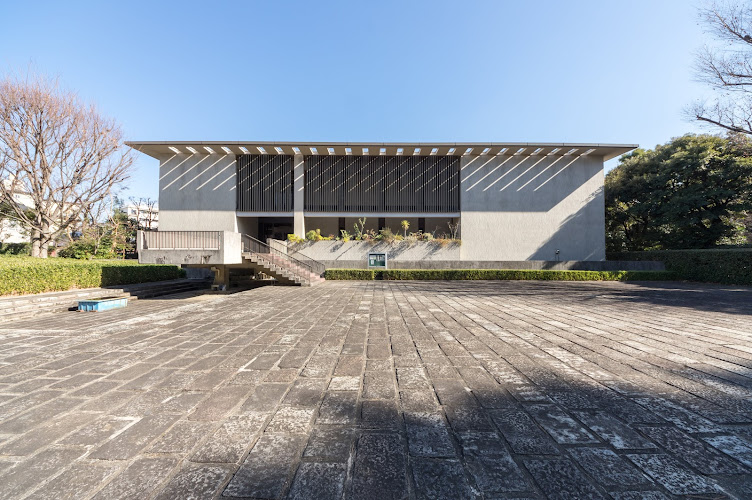
The Museum of Modern Japanese Literature stands as a focused, quietly proud institution in Komaba, Meguro City, Tokyo dedicated to the development of Japanese literary culture from the late 19th century to the present. It is not a sprawling palace of artifacts; rather, it is a carefully curated space where manuscripts, first editions, letters and rare periodicals are presented with an attention to context that rewards curious readers, students, and travelers who care about stories — both the ones on the page and the stories behind the pages.
Architecturally unshowy from the outside, the museum's interior immediately signals its priorities: legibility, light, and room to breathe. Exhibition rooms are arranged to trace movements in modern Japanese literature — Meiji-era translations and the influence of Western forms, the flowering of Taisho experimentalism, wartime writings, postwar existential voices, and the lively diversity of contemporary fiction and criticism. Displays rotate with care; special exhibitions often spotlight a single author, an influential magazine, or thematic threads such as urban life, nature writing, or translation. For travelers who enjoy digging beneath surface impressions, these rotating shows frequently reveal surprises: marginal authors who shaped entire movements, forgotten magazines with astonishing illustrations, or archival letters that make historical figures suddenly more human.
One of the museum's quieter strengths is its archival sensibility. The collection includes manuscripts and annotated drafts that show the messy, incremental process of literary creation. Seeing an author's handwritten revisions — crossings-out, marginal notes, alternate endings — creates an intimate, oddly thrilling connection to the work. Scholars come for the primary materials and the reading spaces; casual visitors come for the immediacy. Either way, the museum treats literature as living material, not locked-up relics. The reading room and library—modest but well-stocked—invite slower interaction. People who value tactile research, who like to spend an hour with a single book, will feel at home.
Practical amenities are straightforward and traveler-friendly. There is an on-site restaurant where visitors can pause for a light meal or coffee; it's a welcome place to sort impressions after a dense exhibition. Public restrooms are available, and notably the facility includes a wheelchair accessible restroom, which helps travelers with mobility needs plan their visit more comfortably. That said, the surrounding site has limited vehicular convenience: wheelchair accessible parking is not available in the museum's lot, so visitors arriving by car should plan ahead, or better still, use public transit. A visitor once joked that they appreciated the walk from the nearest station — a little urban stroll that felt like a gentle transition from city noise into a slower, reading-friendly mindset.
Location-wise, the museum sits near green pockets and academic neighborhoods in Meguro, close enough to Komaba's parkland for a post-museum walk. It makes an excellent half-day stop for literary tourists or a rewarding diversion mid-city exploration. Many travelers pair it with university precincts or local cafés. The immediate area feels residential and studious rather than tourist-saturated; that low-traffic vibe contributes to a contemplative atmosphere inside the galleries.
Expect a balanced visitor experience. The museum earns praise for its focused collection and clear exhibitions, yet some visitors note that the scale is intimate — not an encyclopedic national museum — which can be a pleasant change if one is after depth over breadth. The layout is compact enough that a first-time visitor can comfortably explore the main exhibitions and the library within two hours, though a researcher or a dedicated literature fan might happily linger for half a day. Interpretive signage is generally clear and helpful, though those without some background in modern Japanese literary history may sometimes wish for more introductory context; audio guides or brief orientation panels help, but the museum's curatorial choices sometimes lean toward nuance rather than broad brush explanations.
Language accessibility is practical but not exhaustive: many labels and exhibition notes are in Japanese, and translations appear for main themes and key items. International visitors who read some Japanese will find more to savor; those who don't might still gain a lot from the visual presentation and the careful timelines that editors have set up. The staff are known to be courteous and helpful; on quieter days, curators sometimes engage with visitors and field questions about specific items in the collection. Casual conversations with staff can turn into unexpectedly rich mini-lectures — not the formal kind, but the human sort that sparks curiosity.
Special exhibitions deserve particular mention. They often highlight little-known magazines, the material culture of book-making, and the networks of writers and translators that shaped modern Japanese letters. A memorable show might reconstruct a writer's study or lay out a year-by-year publication history of a literary magazine, complete with original covers and hand-corrected proofs. Those exhibitions are where the museum's archival strengths meet public storytelling; the result is both instructive and emotionally resonant. For travelers interested in literary genealogy — who influenced whom, how genres migrated, which magazines launched careers — these curated narratives are gold.
Visitors who favor interactive experiences should note the museum's restrained approach. It is not high on flashy technology or immersive gimmicks; instead, it invites slow looking and slow reading. That aesthetic will delight many literary-minded travelers but may surprise those expecting multimedia theater. The reading room compensates with quiet comfort and useful reference materials. Researchers can request access to specific materials within procedures that are reasonable for non-specialist visitors as well.
Practical travel considerations: because the museum's collection includes fragile materials, photography rules are enforced in certain galleries. Some rooms allow photography for personal use but not for publication; others prohibit it entirely to protect rare pages. Ticketing is straightforward; tickets cover main exhibitions with separate charges for some special shows. The museum occasionally hosts lectures, readings and small events that align well with the exhibitions. Those event days bring a livelier crowd and sometimes opportunities to hear contemporary authors or scholars speak — a neat complement to the static displays.
For the traveler who loves books and ideas, the Museum of Modern Japanese Literature is a quietly rewarding stop in Meguro. It offers a focused, well-curated window into Japan's literary transformations, with a friendly on-site restaurant, essential accessibility for restrooms, and a compact, walkable layout that makes scheduling easy. It won't overwhelm with size, but it will invite attention, and often, a deeper curiosity about the writers whose drafts, scrawled notes, and early editions are on display. In short: an ideal place to slow down, read the margins, and come away with a better sense of how modern Japanese literature was made and how it continues to be discussed today.
Key Features
More Details
Updated August 29, 2025
Table of Contents
Description
The Museum of Modern Japanese Literature stands as a focused, quietly proud institution in Komaba, Meguro City, Tokyo dedicated to the development of Japanese literary culture from the late 19th century to the present. It is not a sprawling palace of artifacts; rather, it is a carefully curated space where manuscripts, first editions, letters and rare periodicals are presented with an attention to context that rewards curious readers, students, and travelers who care about stories — both the ones on the page and the stories behind the pages.
Architecturally unshowy from the outside, the museum’s interior immediately signals its priorities: legibility, light, and room to breathe. Exhibition rooms are arranged to trace movements in modern Japanese literature — Meiji-era translations and the influence of Western forms, the flowering of Taisho experimentalism, wartime writings, postwar existential voices, and the lively diversity of contemporary fiction and criticism. Displays rotate with care; special exhibitions often spotlight a single author, an influential magazine, or thematic threads such as urban life, nature writing, or translation. For travelers who enjoy digging beneath surface impressions, these rotating shows frequently reveal surprises: marginal authors who shaped entire movements, forgotten magazines with astonishing illustrations, or archival letters that make historical figures suddenly more human.
One of the museum’s quieter strengths is its archival sensibility. The collection includes manuscripts and annotated drafts that show the messy, incremental process of literary creation. Seeing an author’s handwritten revisions — crossings-out, marginal notes, alternate endings — creates an intimate, oddly thrilling connection to the work. Scholars come for the primary materials and the reading spaces; casual visitors come for the immediacy. Either way, the museum treats literature as living material, not locked-up relics. The reading room and library—modest but well-stocked—invite slower interaction. People who value tactile research, who like to spend an hour with a single book, will feel at home.
Practical amenities are straightforward and traveler-friendly. There is an on-site restaurant where visitors can pause for a light meal or coffee; it’s a welcome place to sort impressions after a dense exhibition. Public restrooms are available, and notably the facility includes a wheelchair accessible restroom, which helps travelers with mobility needs plan their visit more comfortably. That said, the surrounding site has limited vehicular convenience: wheelchair accessible parking is not available in the museum’s lot, so visitors arriving by car should plan ahead, or better still, use public transit. A visitor once joked that they appreciated the walk from the nearest station — a little urban stroll that felt like a gentle transition from city noise into a slower, reading-friendly mindset.
Location-wise, the museum sits near green pockets and academic neighborhoods in Meguro, close enough to Komaba’s parkland for a post-museum walk. It makes an excellent half-day stop for literary tourists or a rewarding diversion mid-city exploration. Many travelers pair it with university precincts or local cafés. The immediate area feels residential and studious rather than tourist-saturated; that low-traffic vibe contributes to a contemplative atmosphere inside the galleries.
Expect a balanced visitor experience. The museum earns praise for its focused collection and clear exhibitions, yet some visitors note that the scale is intimate — not an encyclopedic national museum — which can be a pleasant change if one is after depth over breadth. The layout is compact enough that a first-time visitor can comfortably explore the main exhibitions and the library within two hours, though a researcher or a dedicated literature fan might happily linger for half a day. Interpretive signage is generally clear and helpful, though those without some background in modern Japanese literary history may sometimes wish for more introductory context; audio guides or brief orientation panels help, but the museum’s curatorial choices sometimes lean toward nuance rather than broad brush explanations.
Language accessibility is practical but not exhaustive: many labels and exhibition notes are in Japanese, and translations appear for main themes and key items. International visitors who read some Japanese will find more to savor; those who don’t might still gain a lot from the visual presentation and the careful timelines that editors have set up. The staff are known to be courteous and helpful; on quieter days, curators sometimes engage with visitors and field questions about specific items in the collection. Casual conversations with staff can turn into unexpectedly rich mini-lectures — not the formal kind, but the human sort that sparks curiosity.
Special exhibitions deserve particular mention. They often highlight little-known magazines, the material culture of book-making, and the networks of writers and translators that shaped modern Japanese letters. A memorable show might reconstruct a writer’s study or lay out a year-by-year publication history of a literary magazine, complete with original covers and hand-corrected proofs. Those exhibitions are where the museum’s archival strengths meet public storytelling; the result is both instructive and emotionally resonant. For travelers interested in literary genealogy — who influenced whom, how genres migrated, which magazines launched careers — these curated narratives are gold.
Visitors who favor interactive experiences should note the museum’s restrained approach. It is not high on flashy technology or immersive gimmicks; instead, it invites slow looking and slow reading. That aesthetic will delight many literary-minded travelers but may surprise those expecting multimedia theater. The reading room compensates with quiet comfort and useful reference materials. Researchers can request access to specific materials within procedures that are reasonable for non-specialist visitors as well.
Practical travel considerations: because the museum’s collection includes fragile materials, photography rules are enforced in certain galleries. Some rooms allow photography for personal use but not for publication; others prohibit it entirely to protect rare pages. Ticketing is straightforward; tickets cover main exhibitions with separate charges for some special shows. The museum occasionally hosts lectures, readings and small events that align well with the exhibitions. Those event days bring a livelier crowd and sometimes opportunities to hear contemporary authors or scholars speak — a neat complement to the static displays.
For the traveler who loves books and ideas, the Museum of Modern Japanese Literature is a quietly rewarding stop in Meguro. It offers a focused, well-curated window into Japan’s literary transformations, with a friendly on-site restaurant, essential accessibility for restrooms, and a compact, walkable layout that makes scheduling easy. It won’t overwhelm with size, but it will invite attention, and often, a deeper curiosity about the writers whose drafts, scrawled notes, and early editions are on display. In short: an ideal place to slow down, read the margins, and come away with a better sense of how modern Japanese literature was made and how it continues to be discussed today.
Key Highlights
The Museum of Modern Japanese Literature
Location
Places to Stay Near The Museum of Modern Japanese Literature
Find and Book a Tour
Explore More Travel Guides
No reviews found! Be the first to review!
Traveler Reviews for The Museum of Modern Japanese Literature
There are no reviews yet. Be the first one to write one.
Have you visited The Museum of Modern Japanese Literature? Help other travelers by sharing your review.
You Might Also Like
Nakame Park Bridge
Himon-ya Park

Jiyūgaoka Kumano-jinja Shrine
Find Accommodations Nearby
Recommended Tours & Activities
Visitor Reviews
There are no reviews yet. Be the first one to write one.
Share Your Experience
Have you visited The Museum of Modern Japanese Literature? Help other travelers by leaving a review.