
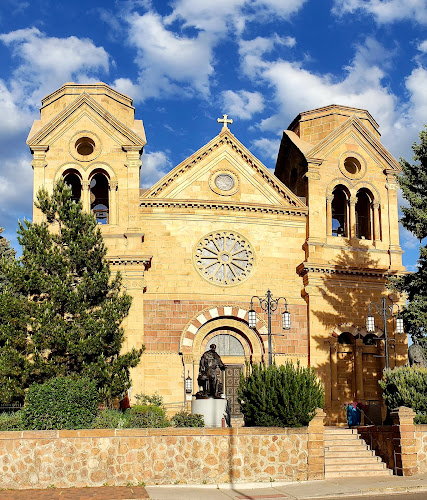
The Cathedral Basilica of St. Francis of Assisi
About The Cathedral Basilica of St. Francis of Assisi
Description
The Cathedral Basilica of St. Francis of Assisi isn’t the kind of place you rush through between lunch and shopping. It slows you down whether you want it to or not. The moment you step inside, the temperature drops a few degrees, the noise fades, and your eyes go straight up. I remember my first visit clearly because I walked in thinking I’d give it ten minutes. Forty-five minutes later, I was still sitting in a pew staring at the ceiling, slightly embarrassed at how hard it had hit me.
Built in the late 1800s, this Catholic cathedral carries itself with a kind of quiet confidence. It doesn’t shout for attention. The stone exterior feels solid, almost stubborn, like it’s seen generations come and go and plans to outlast a few more. Inside, the stained-glass windows are the real showstopper. They cast color across the walls and floors in a way that changes throughout the day. Morning light is soft and almost shy. Afternoon light? Bold, dramatic, and honestly a bit theatrical.
For travelers, this cathedral offers more than religious significance. It’s a living piece of history, still actively used, still loved, still evolving. You’ll notice locals stopping in for prayer while tourists quietly take photos. And that mix matters. It keeps the place from feeling like a museum. There’s reverence here, yes, but also life. Babies cry. Doors creak. Someone always coughs at the worst possible moment. It’s human, and I like that.
The Cathedral Basilica of St. Francis of Assisi is also deeply tied to the cultural identity of its city. The architecture reflects European influences adapted to local materials and craftsmanship. And if you’re someone who enjoys reading between the lines, you’ll sense stories everywhere: in the worn stone steps, in the polished wood pews, in the small plaques that most people walk past without noticing. I’m guilty of that too, until one plaque caught my eye and sent me down a mini research rabbit hole later that night.
While most visitors leave impressed, not everyone walks away transformed. Some find it too quiet. Others wish for more interpretive signage. Fair points. But for travelers who enjoy places that reward patience and curiosity, this cathedral delivers in a big way.
Key Features
- Stunning 19th-century architecture that blends European design with regional character
- Colorful stained-glass windows that shift mood depending on time of day
- Active Catholic cathedral with regular services and ceremonies
- Wheelchair-accessible entrance, restrooms, and parking options
- Onsite restrooms, which sounds boring but is actually a traveler win
- Free and paid parking options nearby for flexibility
- Peaceful interior that encourages reflection, even if you’re not religious
- Historic artwork and religious iconography throughout the space
Best Time to Visit
If you want my honest opinion, mid-morning on a weekday is the sweet spot. The light is beautiful, the crowds are light, and there’s a calm that feels earned, not staged. Weekends can be busier, especially around Mass times, which is great if you want to experience the cathedral as a living place of worship. But if you’re more into quiet exploration, weekdays win.
Seasonally, this cathedral holds up year-round. Summer brings more tourists, sure, but it also brings brighter light through the stained glass. Winter is quieter and a little more solemn, which I personally love. There’s something about sitting inside a stone cathedral while it’s cold outside that feels right, like the building is doing exactly what it was designed to do.
One small tip: check the schedule for services before you go. Visiting outside of service times allows you to explore freely, take photos, and sit as long as you want without feeling like you’re in the way. During services, visitors are usually still welcome, but discretion matters. And yes, silence your phone. Everyone notices when you don’t.
How to Get There
Getting to the Cathedral Basilica of St. Francis of Assisi is straightforward, whether you’re driving or walking from nearby attractions. If you’re driving, you’ll find a mix of free and paid parking options close by. I’ve used both, depending on my mood and patience level that day. Paid street parking tends to be easier if you’re short on time.
For those exploring the area on foot, the cathedral is well-positioned within walking distance of other points of interest. I actually recommend walking if you can. Approaching the cathedral on foot gives you a better sense of its scale. It kind of sneaks up on you, and then suddenly it’s there, solid and imposing, like it’s been waiting.
Public transportation users will find nearby stops that make access manageable, though walking the final stretch is usually required. And honestly, that last bit of walking is part of the experience. It gives you time to shift gears mentally before stepping inside.
Tips for Visiting
First tip, and this one matters: dress respectfully. You don’t need to be fancy, but super short shorts or tank tops might feel out of place. Plus, the interior is cooler, so you’ll probably appreciate a light layer anyway.
Second, give yourself more time than you think you’ll need. Even if you’re not religious, there’s something about this place that encourages lingering. Sit down. Look up. Let your thoughts wander. I once overheard a couple debating whether the blue in one window was cobalt or something else entirely. They never reached a conclusion, but they seemed happy trying.
Photography is usually allowed, but be mindful. Avoid flash. Avoid blocking walkways. And please, don’t climb on anything. That should be obvious, but I’ve seen things.
If accessibility is a concern, you’ll be glad to know the cathedral is thoughtfully equipped with wheelchair-accessible entrances, restrooms, and parking. That’s not always the case with historic buildings, so it’s worth appreciating.
Traveling with kids? It can work, but set expectations. This isn’t a hands-on attraction. Whisper games and scavenger hunts for colors in the stained glass can help. Or, you know, embrace a little chaos and apologize quietly like the rest of us.
Lastly, take a moment outside after your visit. Don’t rush off. Sit on a nearby bench or just stand and watch people come and go. The Cathedral Basilica of St. Francis of Assisi has a way of sticking with you. You might not notice it immediately. But later that day, or even weeks after your trip, you’ll remember the light, the quiet, the feeling of being part of something much older than your travel itinerary. And that, to me, is the mark of a place worth visiting.
Key Features
- Stunning 19th-century architecture that blends European design with regional character
- Colorful stained-glass windows that shift mood depending on time of day
- Active Catholic cathedral with regular services and ceremonies
- Wheelchair-accessible entrance, restrooms, and parking options
- Onsite restrooms, which sounds boring but is actually a traveler win
- Free and paid parking options nearby for flexibility
- Peaceful interior that encourages reflection, even if you’re not religious
- Historic artwork and religious iconography throughout the space
More Details
Updated December 31, 2025
Table of Contents
- Description
- Key Features
- Best Time to Visit
- How to Get There
- Tips for Visiting
- Key Highlights
- Location
- Places to Stay Near The Cathedral Basilica of St. Francis of Assisi
- Find and Book a Tour
- Explore More Travel Guides
- Nearby Places You Might Like
- Traveler Reviews for The Cathedral Basilica of St. Francis of Assisi
- Share Your Experience
Description
The Cathedral Basilica of St. Francis of Assisi isn’t the kind of place you rush through between lunch and shopping. It slows you down whether you want it to or not. The moment you step inside, the temperature drops a few degrees, the noise fades, and your eyes go straight up. I remember my first visit clearly because I walked in thinking I’d give it ten minutes. Forty-five minutes later, I was still sitting in a pew staring at the ceiling, slightly embarrassed at how hard it had hit me.
Built in the late 1800s, this Catholic cathedral carries itself with a kind of quiet confidence. It doesn’t shout for attention. The stone exterior feels solid, almost stubborn, like it’s seen generations come and go and plans to outlast a few more. Inside, the stained-glass windows are the real showstopper. They cast color across the walls and floors in a way that changes throughout the day. Morning light is soft and almost shy. Afternoon light? Bold, dramatic, and honestly a bit theatrical.
For travelers, this cathedral offers more than religious significance. It’s a living piece of history, still actively used, still loved, still evolving. You’ll notice locals stopping in for prayer while tourists quietly take photos. And that mix matters. It keeps the place from feeling like a museum. There’s reverence here, yes, but also life. Babies cry. Doors creak. Someone always coughs at the worst possible moment. It’s human, and I like that.
The Cathedral Basilica of St. Francis of Assisi is also deeply tied to the cultural identity of its city. The architecture reflects European influences adapted to local materials and craftsmanship. And if you’re someone who enjoys reading between the lines, you’ll sense stories everywhere: in the worn stone steps, in the polished wood pews, in the small plaques that most people walk past without noticing. I’m guilty of that too, until one plaque caught my eye and sent me down a mini research rabbit hole later that night.
While most visitors leave impressed, not everyone walks away transformed. Some find it too quiet. Others wish for more interpretive signage. Fair points. But for travelers who enjoy places that reward patience and curiosity, this cathedral delivers in a big way.
Key Features
- Stunning 19th-century architecture that blends European design with regional character
- Colorful stained-glass windows that shift mood depending on time of day
- Active Catholic cathedral with regular services and ceremonies
- Wheelchair-accessible entrance, restrooms, and parking options
- Onsite restrooms, which sounds boring but is actually a traveler win
- Free and paid parking options nearby for flexibility
- Peaceful interior that encourages reflection, even if you’re not religious
- Historic artwork and religious iconography throughout the space
Best Time to Visit
If you want my honest opinion, mid-morning on a weekday is the sweet spot. The light is beautiful, the crowds are light, and there’s a calm that feels earned, not staged. Weekends can be busier, especially around Mass times, which is great if you want to experience the cathedral as a living place of worship. But if you’re more into quiet exploration, weekdays win.
Seasonally, this cathedral holds up year-round. Summer brings more tourists, sure, but it also brings brighter light through the stained glass. Winter is quieter and a little more solemn, which I personally love. There’s something about sitting inside a stone cathedral while it’s cold outside that feels right, like the building is doing exactly what it was designed to do.
One small tip: check the schedule for services before you go. Visiting outside of service times allows you to explore freely, take photos, and sit as long as you want without feeling like you’re in the way. During services, visitors are usually still welcome, but discretion matters. And yes, silence your phone. Everyone notices when you don’t.
How to Get There
Getting to the Cathedral Basilica of St. Francis of Assisi is straightforward, whether you’re driving or walking from nearby attractions. If you’re driving, you’ll find a mix of free and paid parking options close by. I’ve used both, depending on my mood and patience level that day. Paid street parking tends to be easier if you’re short on time.
For those exploring the area on foot, the cathedral is well-positioned within walking distance of other points of interest. I actually recommend walking if you can. Approaching the cathedral on foot gives you a better sense of its scale. It kind of sneaks up on you, and then suddenly it’s there, solid and imposing, like it’s been waiting.
Public transportation users will find nearby stops that make access manageable, though walking the final stretch is usually required. And honestly, that last bit of walking is part of the experience. It gives you time to shift gears mentally before stepping inside.
Tips for Visiting
First tip, and this one matters: dress respectfully. You don’t need to be fancy, but super short shorts or tank tops might feel out of place. Plus, the interior is cooler, so you’ll probably appreciate a light layer anyway.
Second, give yourself more time than you think you’ll need. Even if you’re not religious, there’s something about this place that encourages lingering. Sit down. Look up. Let your thoughts wander. I once overheard a couple debating whether the blue in one window was cobalt or something else entirely. They never reached a conclusion, but they seemed happy trying.
Photography is usually allowed, but be mindful. Avoid flash. Avoid blocking walkways. And please, don’t climb on anything. That should be obvious, but I’ve seen things.
If accessibility is a concern, you’ll be glad to know the cathedral is thoughtfully equipped with wheelchair-accessible entrances, restrooms, and parking. That’s not always the case with historic buildings, so it’s worth appreciating.
Traveling with kids? It can work, but set expectations. This isn’t a hands-on attraction. Whisper games and scavenger hunts for colors in the stained glass can help. Or, you know, embrace a little chaos and apologize quietly like the rest of us.
Lastly, take a moment outside after your visit. Don’t rush off. Sit on a nearby bench or just stand and watch people come and go. The Cathedral Basilica of St. Francis of Assisi has a way of sticking with you. You might not notice it immediately. But later that day, or even weeks after your trip, you’ll remember the light, the quiet, the feeling of being part of something much older than your travel itinerary. And that, to me, is the mark of a place worth visiting.
Key Highlights
- Stunning 19th-century architecture that blends European design with regional character
- Colorful stained-glass windows that shift mood depending on time of day
- Active Catholic cathedral with regular services and ceremonies
- Wheelchair-accessible entrance, restrooms, and parking options
- Onsite restrooms, which sounds boring but is actually a traveler win
- Free and paid parking options nearby for flexibility
- Peaceful interior that encourages reflection, even if you’re not religious
- Historic artwork and religious iconography throughout the space
Location
Places to Stay Near The Cathedral Basilica of St. Francis of Assisi
Find and Book a Tour
Explore More Travel Guides
No reviews found! Be the first to review!
Traveler Reviews for The Cathedral Basilica of St. Francis of Assisi
There are no reviews yet. Be the first one to write one.
Have you visited The Cathedral Basilica of St. Francis of Assisi? Help other travelers by sharing your review.
You Might Also Like

New Mexico State Capitol
Amelia White Park

Santa Fe Reptile and Bug Museum
Find Accommodations Nearby
Recommended Tours & Activities
Visitor Reviews
There are no reviews yet. Be the first one to write one.
Share Your Experience
Have you visited The Cathedral Basilica of St. Francis of Assisi? Help other travelers by leaving a review.