
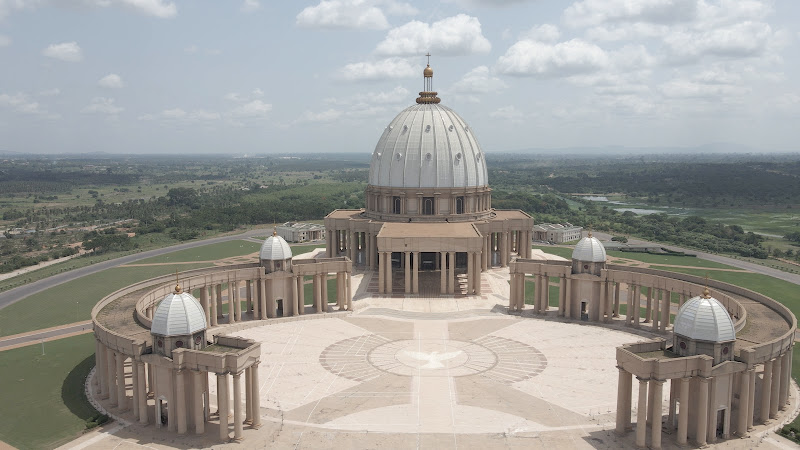
The Basilica of Our Lady of Peace of Yamoussoukro
About The Basilica of Our Lady of Peace of Yamoussoukro
Description
The Basilica of Our Lady of Peace of Yamoussoukro is one of those places that makes you stop and just stare for a moment—partly in awe, partly in disbelief. Rising from the heart of Côte d’Ivoire’s capital city, this massive Catholic basilica has a way of humbling you with its sheer scale and serene beauty. Completed in 1990 under the vision of Félix Houphouët-Boigny, the nation’s first president, it’s widely recognized as the largest church building in the world. And honestly, when you stand before it, that title feels completely justified. The dome alone stretches high into the sky, rivaling even St. Peter’s Basilica in Rome, which actually inspired much of its design.
What’s particularly fascinating is how the basilica blends grandeur with peace. Despite its monumental presence, it doesn’t feel cold or intimidating. The marble floors, imported from Italy, gleam under the Ivorian sun, while the stained-glass windows wash the interior with soft, colorful light. There’s a kind of stillness inside that makes you forget the bustle of Yamoussoukro outside. Whether you’re religious or not, it’s hard not to feel something—maybe awe, maybe curiosity—when you walk through those doors.
I remember the first time I visited, I couldn’t help but think about the contrast between the basilica’s opulence and the quiet simplicity of the surrounding city. Some travelers see that as a contradiction, but I think it’s part of the story. It reflects the ambitions of a young nation, a leader’s dream to put Côte d’Ivoire on the world stage, and the enduring power of faith as a unifying force. The basilica isn’t just a building—it’s a statement carved in marble and glass.
Key Features
- World’s Largest Church: The basilica covers about 30,000 square meters and can accommodate up to 18,000 worshippers inside, with room for thousands more in the surrounding esplanade.
- Architectural Design: Designed by Lebanese architect Pierre Fakhoury, it draws heavy inspiration from St. Peter’s Basilica in Vatican City but with distinct African touches that make it unique.
- Imported Italian Marble: Every inch of the structure gleams with high-quality marble imported from Italy, giving it a timeless, elegant look.
- Stained Glass Windows: The basilica features 24 massive stained-glass windows, including one depicting Christ with African features—a beautiful nod to local identity and inclusivity.
- Accessibility: The site is wheelchair accessible, with ramps, restrooms, and parking designed for visitors with mobility needs.
- Peaceful Gardens: Surrounding the basilica are manicured lawns and palm-lined paths, perfect for quiet reflection or photography.
- Guided Tours: Visitors can join guided tours (often available in French and English) to learn about the history, architecture, and symbolism behind each design element.
One thing I found particularly striking is how the basilica’s dome seems to change color throughout the day. In the morning, it glows a soft golden hue, while in the late afternoon, it takes on a deep amber tone. If you’re into photography, plan your visit around sunrise or sunset—you’ll thank yourself later.
Best Time to Visit
Timing is everything when it comes to visiting the Basilica of Our Lady of Peace. The best months are during Côte d’Ivoire’s dry season, roughly from November to March. The skies are clear, the light is crisp, and you won’t have to worry about sudden tropical downpours interrupting your plans. During this period, the basilica’s white marble practically glows under the sun, making it perfect for sightseeing and photos.
If you’re more interested in experiencing the basilica as a living place of worship rather than just a monument, consider visiting during major Catholic celebrations like Christmas or Easter. The atmosphere is electric—filled with music, prayer, and a sense of community that transcends language. Just be prepared for crowds. I once attended a Palm Sunday service there, and the energy was unforgettable. Even if you’re not religious, it’s worth witnessing at least once.
For those who prefer quieter moments, weekdays are ideal. You’ll have more space to explore, reflect, and maybe even chat with one of the local guides who always seem eager to share stories about the basilica’s construction and significance.
How to Get There
Getting to the basilica is relatively straightforward. Yamoussoukro is well-connected by road from Abidjan, the country’s economic capital, and the drive takes about 2.5 to 3 hours depending on traffic. The route is scenic in parts, with glimpses of rural villages and lush landscapes that make the journey itself an experience. If you’re not up for driving, you can easily hire a private car or take a bus from Abidjan’s main transport terminals.
Once in Yamoussoukro, the basilica is one of the city’s most recognizable landmarks—you really can’t miss it. Taxis and moto-taxis are readily available, and most drivers know exactly where to take you if you simply say “La Basilique.” Parking is spacious and well-organized, which makes it convenient for travelers arriving by car.
For those flying in, Yamoussoukro does have a small airport, though flights can be limited. Most visitors still prefer the drive, especially since it offers a chance to see more of the Ivorian countryside along the way.
Tips for Visiting
Here’s the thing about visiting the Basilica of Our Lady of Peace—it’s not just about checking off another landmark. It’s about slowing down and letting the place speak to you. That said, a few practical tips can make your visit smoother and more meaningful.
- Dress Modestly: It’s a place of worship, so make sure your attire is respectful. Shoulders and knees covered is usually a safe bet.
- Bring Water: The Ivorian sun can be unforgiving, especially if you’re walking around the grounds. There are restrooms and shaded areas, but staying hydrated is key.
- Photography: Photos are allowed, but avoid using flash inside during services. The natural light filtering through the stained glass is all you need anyway.
- Take a Guided Tour: Even if you’re not a “tour person,” this one’s worth it. The guides share fascinating details—like how the dome was engineered to withstand tropical storms and how each stained-glass panel tells a different story.
- Visit the Gift Shop: There’s a small shop near the entrance where you can buy souvenirs, postcards, and even locally made rosaries. The proceeds help maintain the basilica and support local community projects.
- Combine with a City Tour: Yamoussoukro has other interesting sites, including the Presidential Palace (with its famous crocodile moat). Pairing the basilica visit with a city tour gives you a fuller sense of the city’s character.
And here’s a personal tip: linger a bit after sunset. When the lights come on and the dome glows softly against the night sky, it’s pure magic. The crowds thin out, the air cools, and you get this rare moment of peace that feels almost sacred. I once sat on the steps for nearly an hour just watching the lights flicker across the marble—it’s one of those travel memories that sticks with you.
All in all, the Basilica of Our Lady of Peace isn’t just an architectural marvel; it’s a symbol of aspiration, faith, and artistry. Whether you’re drawn by its size, its story, or simply its beauty, it’s a destination that leaves a lasting impression. And who knows—you might just find a little peace of your own there too.
Key Features
- Key Features
- Best Time to Visit
- How to Get There
- Tips for Visiting
More Details
Updated October 8, 2025
Table of Contents
- Description
- Key Features
- Best Time to Visit
- How to Get There
- Tips for Visiting
- Key Highlights
- Location
- Places to Stay Near The Basilica of Our Lady of Peace of Yamoussoukro
- Find and Book a Tour
- Explore More Travel Guides
- Nearby Places You Might Like
- Traveler Reviews for The Basilica of Our Lady of Peace of Yamoussoukro
- Share Your Experience
Description
The Basilica of Our Lady of Peace of Yamoussoukro is one of those places that makes you stop and just stare for a moment—partly in awe, partly in disbelief. Rising from the heart of Côte d’Ivoire’s capital city, this massive Catholic basilica has a way of humbling you with its sheer scale and serene beauty. Completed in 1990 under the vision of Félix Houphouët-Boigny, the nation’s first president, it’s widely recognized as the largest church building in the world. And honestly, when you stand before it, that title feels completely justified. The dome alone stretches high into the sky, rivaling even St. Peter’s Basilica in Rome, which actually inspired much of its design.
What’s particularly fascinating is how the basilica blends grandeur with peace. Despite its monumental presence, it doesn’t feel cold or intimidating. The marble floors, imported from Italy, gleam under the Ivorian sun, while the stained-glass windows wash the interior with soft, colorful light. There’s a kind of stillness inside that makes you forget the bustle of Yamoussoukro outside. Whether you’re religious or not, it’s hard not to feel something—maybe awe, maybe curiosity—when you walk through those doors.
I remember the first time I visited, I couldn’t help but think about the contrast between the basilica’s opulence and the quiet simplicity of the surrounding city. Some travelers see that as a contradiction, but I think it’s part of the story. It reflects the ambitions of a young nation, a leader’s dream to put Côte d’Ivoire on the world stage, and the enduring power of faith as a unifying force. The basilica isn’t just a building—it’s a statement carved in marble and glass.
Key Features
- World’s Largest Church: The basilica covers about 30,000 square meters and can accommodate up to 18,000 worshippers inside, with room for thousands more in the surrounding esplanade.
- Architectural Design: Designed by Lebanese architect Pierre Fakhoury, it draws heavy inspiration from St. Peter’s Basilica in Vatican City but with distinct African touches that make it unique.
- Imported Italian Marble: Every inch of the structure gleams with high-quality marble imported from Italy, giving it a timeless, elegant look.
- Stained Glass Windows: The basilica features 24 massive stained-glass windows, including one depicting Christ with African features—a beautiful nod to local identity and inclusivity.
- Accessibility: The site is wheelchair accessible, with ramps, restrooms, and parking designed for visitors with mobility needs.
- Peaceful Gardens: Surrounding the basilica are manicured lawns and palm-lined paths, perfect for quiet reflection or photography.
- Guided Tours: Visitors can join guided tours (often available in French and English) to learn about the history, architecture, and symbolism behind each design element.
One thing I found particularly striking is how the basilica’s dome seems to change color throughout the day. In the morning, it glows a soft golden hue, while in the late afternoon, it takes on a deep amber tone. If you’re into photography, plan your visit around sunrise or sunset—you’ll thank yourself later.
Best Time to Visit
Timing is everything when it comes to visiting the Basilica of Our Lady of Peace. The best months are during Côte d’Ivoire’s dry season, roughly from November to March. The skies are clear, the light is crisp, and you won’t have to worry about sudden tropical downpours interrupting your plans. During this period, the basilica’s white marble practically glows under the sun, making it perfect for sightseeing and photos.
If you’re more interested in experiencing the basilica as a living place of worship rather than just a monument, consider visiting during major Catholic celebrations like Christmas or Easter. The atmosphere is electric—filled with music, prayer, and a sense of community that transcends language. Just be prepared for crowds. I once attended a Palm Sunday service there, and the energy was unforgettable. Even if you’re not religious, it’s worth witnessing at least once.
For those who prefer quieter moments, weekdays are ideal. You’ll have more space to explore, reflect, and maybe even chat with one of the local guides who always seem eager to share stories about the basilica’s construction and significance.
How to Get There
Getting to the basilica is relatively straightforward. Yamoussoukro is well-connected by road from Abidjan, the country’s economic capital, and the drive takes about 2.5 to 3 hours depending on traffic. The route is scenic in parts, with glimpses of rural villages and lush landscapes that make the journey itself an experience. If you’re not up for driving, you can easily hire a private car or take a bus from Abidjan’s main transport terminals.
Once in Yamoussoukro, the basilica is one of the city’s most recognizable landmarks—you really can’t miss it. Taxis and moto-taxis are readily available, and most drivers know exactly where to take you if you simply say “La Basilique.” Parking is spacious and well-organized, which makes it convenient for travelers arriving by car.
For those flying in, Yamoussoukro does have a small airport, though flights can be limited. Most visitors still prefer the drive, especially since it offers a chance to see more of the Ivorian countryside along the way.
Tips for Visiting
Here’s the thing about visiting the Basilica of Our Lady of Peace—it’s not just about checking off another landmark. It’s about slowing down and letting the place speak to you. That said, a few practical tips can make your visit smoother and more meaningful.
- Dress Modestly: It’s a place of worship, so make sure your attire is respectful. Shoulders and knees covered is usually a safe bet.
- Bring Water: The Ivorian sun can be unforgiving, especially if you’re walking around the grounds. There are restrooms and shaded areas, but staying hydrated is key.
- Photography: Photos are allowed, but avoid using flash inside during services. The natural light filtering through the stained glass is all you need anyway.
- Take a Guided Tour: Even if you’re not a “tour person,” this one’s worth it. The guides share fascinating details—like how the dome was engineered to withstand tropical storms and how each stained-glass panel tells a different story.
- Visit the Gift Shop: There’s a small shop near the entrance where you can buy souvenirs, postcards, and even locally made rosaries. The proceeds help maintain the basilica and support local community projects.
- Combine with a City Tour: Yamoussoukro has other interesting sites, including the Presidential Palace (with its famous crocodile moat). Pairing the basilica visit with a city tour gives you a fuller sense of the city’s character.
And here’s a personal tip: linger a bit after sunset. When the lights come on and the dome glows softly against the night sky, it’s pure magic. The crowds thin out, the air cools, and you get this rare moment of peace that feels almost sacred. I once sat on the steps for nearly an hour just watching the lights flicker across the marble—it’s one of those travel memories that sticks with you.
All in all, the Basilica of Our Lady of Peace isn’t just an architectural marvel; it’s a symbol of aspiration, faith, and artistry. Whether you’re drawn by its size, its story, or simply its beauty, it’s a destination that leaves a lasting impression. And who knows—you might just find a little peace of your own there too.
Key Highlights
- Key Features
- Best Time to Visit
- How to Get There
- Tips for Visiting
Location
Places to Stay Near The Basilica of Our Lady of Peace of Yamoussoukro
Find and Book a Tour
Explore More Travel Guides
No reviews found! Be the first to review!
Traveler Reviews for The Basilica of Our Lady of Peace of Yamoussoukro
There are no reviews yet. Be the first one to write one.
Have you visited The Basilica of Our Lady of Peace of Yamoussoukro? Help other travelers by sharing your review.
You Might Also Like
YAKRO PARC

Assabou

Yamoussoukro Municipal Stadium
Find Accommodations Nearby
Recommended Tours & Activities
Visitor Reviews
There are no reviews yet. Be the first one to write one.
Share Your Experience
Have you visited The Basilica of Our Lady of Peace of Yamoussoukro? Help other travelers by leaving a review.