
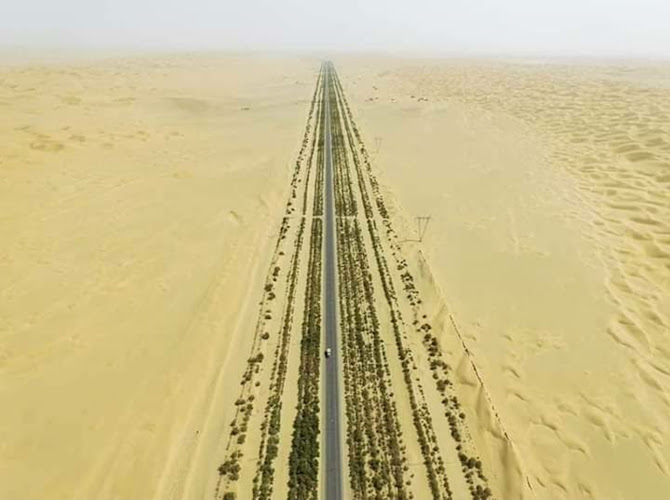
Taklamakan Desert
About Taklamakan Desert
Description
The Taklamakan Desert feels like a place from another planet—one that humbles you the moment you set foot on it. Spread across Xinjiang in western China, this vast sea of golden dunes stretches endlessly, shimmering under the harsh desert sun. It’s often called the “Sea of Death,” which sounds a bit dramatic until you realize just how unforgiving it can be. But don’t let that scare you off. There’s something magnetic about its silence and immensity, something that pulls you in and makes you feel small in the best possible way.
I remember the first time I saw the Taklamakan from a distance—it looked like the earth was breathing, waves of sand shifting and rolling as the wind whispered across them. The desert’s name comes from a Uyghur phrase that roughly means “you can get in, but you can’t get out,” which says a lot about its wild nature. Yet, despite its intimidating reputation, travelers who venture here often describe it as hauntingly beautiful. The shifting dunes, some rising over 300 meters high, create hypnotic patterns that change daily. And when the sun sets, the sand glows with shades of copper and rose, like an artist’s brush gone wild.
Of course, not every traveler falls in love with it. Some find it too harsh, too remote, too much of a challenge. But that’s the thing about the Taklamakan—it doesn’t try to please anyone. It just exists, vast and ancient, indifferent to whether you adore or fear it. And maybe that’s what makes it so unforgettable.
Key Features
- Massive Shifting Dunes: The Taklamakan is the world’s second-largest shifting sand desert, with dunes that move constantly under the force of strong winds.
- Extreme Climate: Temperatures can soar above 40°C in summer and drop below freezing in winter, making it a land of extremes.
- Hidden Oases: Despite its arid nature, small oases like Niya and Khotan dot the edges, offering glimpses of green life amid the gold.
- Ancient Silk Road Routes: Several ancient trade routes once crossed this desert, linking China with Central Asia. You can still find remnants of those journeys buried beneath the sands.
- Wildlife Survivors: Surprisingly, the desert supports animals like gazelles, foxes, and even wild camels that have adapted to its harshness.
- Archaeological Mystique: Archaeologists have uncovered ancient mummies and lost cities beneath the dunes, revealing stories from thousands of years ago.
Best Time to Visit
If you’re thinking of exploring the Taklamakan, timing is everything. The best seasons are spring (April to June) and autumn (September to early November). During these months, the temperatures are more forgiving, and the air feels clearer, making the dunes glow under softer sunlight. Summer, on the other hand, can be brutal—imagine standing in a hairdryer set to full blast. Winter, while quieter, can be bone-chilling, especially at night. I once camped out there in late October, and even then, the desert cold crept into my bones despite three layers of blankets. Still, waking up to sunrise over the dunes was worth every shiver.
For photographers, autumn is pure magic. The light hits differently, and the sand takes on deeper hues. If you’re lucky, you might even catch a rare desert rainstorm—short, intense, and gone before you can blink, leaving behind a scent that’s oddly sweet and earthy.
How to Get There
Getting to the Taklamakan Desert isn’t exactly a quick weekend trip. Most travelers start from cities like Hotan, Korla, or Kuqa in Xinjiang. These towns act as gateways, with roads leading straight into the desert’s edge. There’s even a highway—the Taklamakan Desert Highway—that cuts right through its heart. It’s one of the world’s longest desert roads, stretching over 500 kilometers. Driving it feels surreal, like gliding over a golden ocean with no shore in sight.
Public transportation options are limited, so most people hire local drivers or join guided tours. I’d suggest going with a local guide, not just for safety but because they know the desert’s moods better than anyone. They’ll tell you when the wind’s about to shift or where to find that hidden oasis where the sand meets a patch of green. If you’re more adventurous, you can rent a 4x4 and do it yourself—but make sure you’re well-prepared. Out here, a flat tire or a wrong turn can turn into a real problem fast.
Tips for Visiting
Visiting the Taklamakan isn’t like strolling through a city park—it demands respect. Here are some things I’ve learned (sometimes the hard way) that might help you make the most of your trip:
- Pack Smart: Bring more water than you think you’ll need. Dehydration sneaks up on you in this dry air. Also, sunscreen, sunglasses, and a scarf to protect your face from blowing sand are must-haves.
- Dress in Layers: The desert’s temperature swings wildly between day and night. Light clothes for the day, warm ones for the night. Trust me, you’ll thank yourself later.
- Travel with a Guide: Even if you’re an experienced traveler, the Taklamakan’s vastness can disorient anyone. Local guides not only keep you safe but also share fascinating stories about the desert’s history and culture.
- Respect the Environment: The desert might look empty, but it’s alive in its own quiet way. Don’t leave trash, and avoid disturbing wildlife or fragile dune formations.
- Plan for Connectivity Gaps: Don’t count on mobile signals. Once you’re deep in the desert, it’s just you, the sand, and the wind. Kind of freeing, actually.
- Bring a Good Camera: The Taklamakan is a photographer’s dream. Sunrise and sunset shots are especially stunning, with the dunes casting long shadows that seem to stretch forever.
And one more thing—don’t rush it. The desert reveals itself slowly. Spend a night under the stars if you can. There’s something unforgettable about lying on the cool sand, staring up at a sky so full of stars it almost feels heavy. I remember hearing nothing but my own heartbeat and the faint whisper of the wind. It’s the kind of silence that stays with you long after you leave.
The Taklamakan Desert isn’t for everyone. It’s raw, remote, and sometimes downright uncomfortable. But for those who crave adventure, solitude, and a glimpse into one of Earth’s last great wildernesses, it’s an experience like no other. You won’t just visit it—you’ll feel it, deep down, in that part of your soul that still longs for the unknown.
Key Features
- Key Features
- Best Time to Visit
- How to Get There
- Tips for Visiting
More Details
Updated December 1, 2025
Table of Contents
Description
The Taklamakan Desert feels like a place from another planet—one that humbles you the moment you set foot on it. Spread across Xinjiang in western China, this vast sea of golden dunes stretches endlessly, shimmering under the harsh desert sun. It’s often called the “Sea of Death,” which sounds a bit dramatic until you realize just how unforgiving it can be. But don’t let that scare you off. There’s something magnetic about its silence and immensity, something that pulls you in and makes you feel small in the best possible way.
I remember the first time I saw the Taklamakan from a distance—it looked like the earth was breathing, waves of sand shifting and rolling as the wind whispered across them. The desert’s name comes from a Uyghur phrase that roughly means “you can get in, but you can’t get out,” which says a lot about its wild nature. Yet, despite its intimidating reputation, travelers who venture here often describe it as hauntingly beautiful. The shifting dunes, some rising over 300 meters high, create hypnotic patterns that change daily. And when the sun sets, the sand glows with shades of copper and rose, like an artist’s brush gone wild.
Of course, not every traveler falls in love with it. Some find it too harsh, too remote, too much of a challenge. But that’s the thing about the Taklamakan—it doesn’t try to please anyone. It just exists, vast and ancient, indifferent to whether you adore or fear it. And maybe that’s what makes it so unforgettable.
Key Features
- Massive Shifting Dunes: The Taklamakan is the world’s second-largest shifting sand desert, with dunes that move constantly under the force of strong winds.
- Extreme Climate: Temperatures can soar above 40°C in summer and drop below freezing in winter, making it a land of extremes.
- Hidden Oases: Despite its arid nature, small oases like Niya and Khotan dot the edges, offering glimpses of green life amid the gold.
- Ancient Silk Road Routes: Several ancient trade routes once crossed this desert, linking China with Central Asia. You can still find remnants of those journeys buried beneath the sands.
- Wildlife Survivors: Surprisingly, the desert supports animals like gazelles, foxes, and even wild camels that have adapted to its harshness.
- Archaeological Mystique: Archaeologists have uncovered ancient mummies and lost cities beneath the dunes, revealing stories from thousands of years ago.
Best Time to Visit
If you’re thinking of exploring the Taklamakan, timing is everything. The best seasons are spring (April to June) and autumn (September to early November). During these months, the temperatures are more forgiving, and the air feels clearer, making the dunes glow under softer sunlight. Summer, on the other hand, can be brutal—imagine standing in a hairdryer set to full blast. Winter, while quieter, can be bone-chilling, especially at night. I once camped out there in late October, and even then, the desert cold crept into my bones despite three layers of blankets. Still, waking up to sunrise over the dunes was worth every shiver.
For photographers, autumn is pure magic. The light hits differently, and the sand takes on deeper hues. If you’re lucky, you might even catch a rare desert rainstorm—short, intense, and gone before you can blink, leaving behind a scent that’s oddly sweet and earthy.
How to Get There
Getting to the Taklamakan Desert isn’t exactly a quick weekend trip. Most travelers start from cities like Hotan, Korla, or Kuqa in Xinjiang. These towns act as gateways, with roads leading straight into the desert’s edge. There’s even a highway—the Taklamakan Desert Highway—that cuts right through its heart. It’s one of the world’s longest desert roads, stretching over 500 kilometers. Driving it feels surreal, like gliding over a golden ocean with no shore in sight.
Public transportation options are limited, so most people hire local drivers or join guided tours. I’d suggest going with a local guide, not just for safety but because they know the desert’s moods better than anyone. They’ll tell you when the wind’s about to shift or where to find that hidden oasis where the sand meets a patch of green. If you’re more adventurous, you can rent a 4×4 and do it yourself—but make sure you’re well-prepared. Out here, a flat tire or a wrong turn can turn into a real problem fast.
Tips for Visiting
Visiting the Taklamakan isn’t like strolling through a city park—it demands respect. Here are some things I’ve learned (sometimes the hard way) that might help you make the most of your trip:
- Pack Smart: Bring more water than you think you’ll need. Dehydration sneaks up on you in this dry air. Also, sunscreen, sunglasses, and a scarf to protect your face from blowing sand are must-haves.
- Dress in Layers: The desert’s temperature swings wildly between day and night. Light clothes for the day, warm ones for the night. Trust me, you’ll thank yourself later.
- Travel with a Guide: Even if you’re an experienced traveler, the Taklamakan’s vastness can disorient anyone. Local guides not only keep you safe but also share fascinating stories about the desert’s history and culture.
- Respect the Environment: The desert might look empty, but it’s alive in its own quiet way. Don’t leave trash, and avoid disturbing wildlife or fragile dune formations.
- Plan for Connectivity Gaps: Don’t count on mobile signals. Once you’re deep in the desert, it’s just you, the sand, and the wind. Kind of freeing, actually.
- Bring a Good Camera: The Taklamakan is a photographer’s dream. Sunrise and sunset shots are especially stunning, with the dunes casting long shadows that seem to stretch forever.
And one more thing—don’t rush it. The desert reveals itself slowly. Spend a night under the stars if you can. There’s something unforgettable about lying on the cool sand, staring up at a sky so full of stars it almost feels heavy. I remember hearing nothing but my own heartbeat and the faint whisper of the wind. It’s the kind of silence that stays with you long after you leave.
The Taklamakan Desert isn’t for everyone. It’s raw, remote, and sometimes downright uncomfortable. But for those who crave adventure, solitude, and a glimpse into one of Earth’s last great wildernesses, it’s an experience like no other. You won’t just visit it—you’ll feel it, deep down, in that part of your soul that still longs for the unknown.
Key Highlights
- Key Features
- Best Time to Visit
- How to Get There
- Tips for Visiting
Location
Places to Stay Near Taklamakan Desert
Find and Book a Tour
Explore More Travel Guides
No reviews found! Be the first to review!
Traveler Reviews for Taklamakan Desert
There are no reviews yet. Be the first one to write one.
Have you visited Taklamakan Desert? Help other travelers by sharing your review.
You Might Also Like

Tuanjie Square

Karakax County

Hotan Cultural Museum
Find Accommodations Nearby
Recommended Tours & Activities
Visitor Reviews
There are no reviews yet. Be the first one to write one.
Share Your Experience
Have you visited Taklamakan Desert? Help other travelers by leaving a review.