
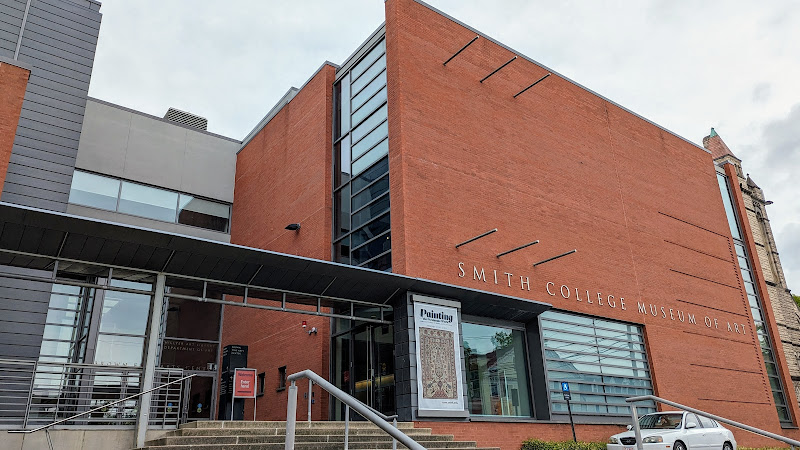
Smith College Museum of Art
About Smith College Museum of Art
Description
The Smith College Museum of Art is a compact but richly layered cultural stop in Northampton, offering four floors of galleries that balance an established permanent collection with changing special exhibitions. Visitors find paintings, sculpture, prints, drawings and photographs displayed alongside contemporary installations and curated thematic shows. The museum sits as part of an academic campus and often feels like a living gallery—students, faculty and community members drift through in equal measure, which gives the place a quietly energetic, intellectual hum.
The permanent collection spans historical and modern works, with particularly strong shows of American and European pieces, as well as thoughtfully chosen contemporary art. But it is not only the canonical work that draws attention: smaller, intimate galleries let lesser-known pieces breathe. There is a theater for lectures and film programs, a museum shop with smartly chosen gifts and publications, and a small café on site—handy for those who like to decompress after a long walk through galleries. Accessibility is clearly taken seriously: a wheelchair-accessible entrance, parking lot and restrooms make the museum welcoming for mobility-impaired visitors. Guided tours are available, and families with children will find kid-friendly programming and exhibits that reward curious little hands and eyes.
One useful thing for travelers: the building is easy to navigate across its four floors, with each level offering its own character. The lower level often hosts rotating shows, while upper galleries allow for more contemplative viewing and have quieter vantage points. It’s the sort of museum where an afternoon can feel substantial but never exhausting. The staff tends to be approachable and helpful—ask them about a particular painting or the current curator talk; most are happy to share context and favorite works. And, yes, the museum manages to feel both academic and welcoming, which is not a small feat.
Key Features
- Four floors of galleries showcasing a distinguished permanent collection plus rotating special exhibitions.
- Broad holdings including paintings, sculpture, prints, drawings and photographs from American, European and contemporary artists.
- Onsite café for light meals and coffee—perfect for pausing between galleries.
- Gift shop with art books, prints and thoughtful souvenirs.
- Theater space for lectures, screenings and artist talks enhancing the museum experience.
- Guided tours available to provide deeper insight into the collection and exhibitions.
- Wheelchair accessible entrance, parking and restrooms to assist visitors with mobility needs.
- Family-friendly programs and exhibits suitable for children and teens.
- Campus location that pairs well with a stroll around nearby college architecture and grounds.
Best Time to Visit
The best time to visit depends on what the traveler hopes to get from the experience. For quieter gallery time, weekday mornings—shortly after opening—work well. Crowds are typically lighter then and the lighting in many of the galleries feels fresher in the morning. Weekends bring more local traffic, particularly when the college is in session, so expect a livelier atmosphere: sometimes that’s pleasant, sometimes less ideal if one seeks solitude.
Seasonally, spring and fall are delightful for pairing the museum visit with outdoor exploration of the campus and nearby downtown Northampton. Summer sees more tourists and families, which can be fun if someone likes the buzz. Winter visits have their own charm—less foot traffic, introspective viewing, and the café becomes a tiny haven. Whenever possible, check the museum’s exhibition schedule before going; special shows rotate frequently and often reveal surprising material not on permanent display.
How to Get There
Travelers coming from regional hubs will find Northampton reachable by car, bus or a combination of air and ground travel. From Boston, driving typically takes around two and a half hours depending on traffic; from New York City, plan for a longer trip—roughly three and a half to four hours by car. Bradley International Airport near Hartford and the Albany area provide alternate air travel options and are often about an hour to an hour and a half away by car, depending on where the visitor lands.
Public transit options exist but may require transfers. Regional bus services connect Northampton with neighboring towns and cities; once in town, taxis or rideshare services handle short hops to campus. Some visitors choose to arrive via nearby college towns by shuttle or local transit; others rent a car for the convenience of exploring the region. The museum has a wheelchair-accessible parking area and nearby campus parking, but visitors should allow a little extra time for campus navigation—especially during busy academic periods.
For those relying on walking, the museum sits within comfortable reach of downtown Northampton, making it simple to combine a gallery visit with lunch at local eateries, coffee shops, or a stroll through nearby streets lined with shops and bookstores. The museum’s location on campus makes it a sensible stop in a day that includes bookstores, local bakeries and small galleries—great for travelers who enjoy a mixed itinerary.
Tips for Visiting
Plan ahead: check exhibition schedules and guided tour times. Some special exhibitions have timed entry or require reservations—particularly popular talks or film screenings—so a quick phone call or a glance at the museum’s calendar before leaving the hotel can save a lot of hassle.
Wear comfortable shoes. The four floors are not overwhelming, but a museum stroll tends to expand into an afternoon. Also, bring a light layer—gallery temperatures can feel cool, especially in rooms designed to preserve sensitive works on paper and photographs.
Take advantage of guided tours. They are worth the time. A knowledgeable guide will point out details and context that materially change how a piece is perceived. And if the guide mentions a tiny, off-the-beaten-path work that tends to be overlooked—trust them. That little discovery might become the highlight of the trip.
Allow time for the café and shop. The café is a pleasant spot to reflect, sketch, or write a note home. The shop often carries exhibition catalogs and prints that make unique souvenirs—better than a magnet, frankly. Budget a few extra dollars if one likes coffee-table books.
Accessibility note: the museum is committed to accessible experiences, with a wheelchair-accessible entrance, parking and restrooms. Visitors with mobility concerns should feel reassured. Contact the museum ahead of time if special accommodations or sensory considerations are needed; staff have been accommodating in many reported instances and can offer suggestions for quieter hours or accessible routes.
Bring children and teens—yes, really. The museum has programming and exhibits that appeal to young minds. One memorable idea: give kids a small sketchbook and ask them to choose a favorite detail rather than an entire painting. It occupies them and, surprisingly, makes grown-ups look at works differently.
Look beyond the big names. While there are standout paintings and sculptures, some of the museum’s most rewarding moments are in the modest prints, drawings and photographs tucked into smaller galleries. These can be deeply personal and often reveal unexpected stories about artists and the region’s collecting history.
Photography rules vary—respect signage. Non-flash photography is often allowed in certain galleries but not others. When in doubt, ask a staff member. It’s an easy way to avoid awkward exchanges and to keep the focus on the art.
Combine the visit with other local cultural spots. Northampton is a compact cultural hub: bookstores, independent shops, and eateries are all close enough to make an art-fueled day into a broader discovery of the area. If time allows, walk the campus for its architecture—or simply sit on a bench and watch college life move past. It’s a simple pleasure.
Finally, indulge curiosity. The Smith College Museum of Art rewards lingering. Pause in front of things that puzzle, take notes or sketch, and, if inclined, attend a lecture or screening. The building and collection are shaped by both rigorous scholarship and community use. Leave room for serendipity—sometimes the best finds are the ones that were not on the checklist.
Visitors who come with an open mind usually leave with a handful of favorites and a better sense of how the museum connects the local academic community with broader threads of art history. It’s not the largest museum one might ever visit, but it offers depth, thoughtfulness and moments that linger—good reasons to include it on a cultural route through western Massachusetts.
Key Features
- Four floors of galleries showcasing a distinguished permanent collection plus rotating special exhibitions.
- Broad holdings including paintings, sculpture, prints, drawings and photographs from American, European and contemporary artists.
- Onsite café for light meals and coffee—perfect for pausing between galleries.
- Gift shop with art books, prints and thoughtful souvenirs.
- Theater space for lectures, screenings and artist talks enhancing the museum experience.
- Guided tours available to provide deeper insight into the collection and exhibitions.
- Wheelchair accessible entrance, parking and restrooms to assist visitors with mobility needs.
- Family-friendly programs and exhibits suitable for children and teens.
More Details
Updated August 30, 2025
Table of Contents
Description
The Smith College Museum of Art is a compact but richly layered cultural stop in Northampton, offering four floors of galleries that balance an established permanent collection with changing special exhibitions. Visitors find paintings, sculpture, prints, drawings and photographs displayed alongside contemporary installations and curated thematic shows. The museum sits as part of an academic campus and often feels like a living gallery—students, faculty and community members drift through in equal measure, which gives the place a quietly energetic, intellectual hum.
The permanent collection spans historical and modern works, with particularly strong shows of American and European pieces, as well as thoughtfully chosen contemporary art. But it is not only the canonical work that draws attention: smaller, intimate galleries let lesser-known pieces breathe. There is a theater for lectures and film programs, a museum shop with smartly chosen gifts and publications, and a small café on site—handy for those who like to decompress after a long walk through galleries. Accessibility is clearly taken seriously: a wheelchair-accessible entrance, parking lot and restrooms make the museum welcoming for mobility-impaired visitors. Guided tours are available, and families with children will find kid-friendly programming and exhibits that reward curious little hands and eyes.
One useful thing for travelers: the building is easy to navigate across its four floors, with each level offering its own character. The lower level often hosts rotating shows, while upper galleries allow for more contemplative viewing and have quieter vantage points. It’s the sort of museum where an afternoon can feel substantial but never exhausting. The staff tends to be approachable and helpful—ask them about a particular painting or the current curator talk; most are happy to share context and favorite works. And, yes, the museum manages to feel both academic and welcoming, which is not a small feat.
Key Features
- Four floors of galleries showcasing a distinguished permanent collection plus rotating special exhibitions.
- Broad holdings including paintings, sculpture, prints, drawings and photographs from American, European and contemporary artists.
- Onsite café for light meals and coffee—perfect for pausing between galleries.
- Gift shop with art books, prints and thoughtful souvenirs.
- Theater space for lectures, screenings and artist talks enhancing the museum experience.
- Guided tours available to provide deeper insight into the collection and exhibitions.
- Wheelchair accessible entrance, parking and restrooms to assist visitors with mobility needs.
- Family-friendly programs and exhibits suitable for children and teens.
- Campus location that pairs well with a stroll around nearby college architecture and grounds.
Best Time to Visit
The best time to visit depends on what the traveler hopes to get from the experience. For quieter gallery time, weekday mornings—shortly after opening—work well. Crowds are typically lighter then and the lighting in many of the galleries feels fresher in the morning. Weekends bring more local traffic, particularly when the college is in session, so expect a livelier atmosphere: sometimes that’s pleasant, sometimes less ideal if one seeks solitude.
Seasonally, spring and fall are delightful for pairing the museum visit with outdoor exploration of the campus and nearby downtown Northampton. Summer sees more tourists and families, which can be fun if someone likes the buzz. Winter visits have their own charm—less foot traffic, introspective viewing, and the café becomes a tiny haven. Whenever possible, check the museum’s exhibition schedule before going; special shows rotate frequently and often reveal surprising material not on permanent display.
How to Get There
Travelers coming from regional hubs will find Northampton reachable by car, bus or a combination of air and ground travel. From Boston, driving typically takes around two and a half hours depending on traffic; from New York City, plan for a longer trip—roughly three and a half to four hours by car. Bradley International Airport near Hartford and the Albany area provide alternate air travel options and are often about an hour to an hour and a half away by car, depending on where the visitor lands.
Public transit options exist but may require transfers. Regional bus services connect Northampton with neighboring towns and cities; once in town, taxis or rideshare services handle short hops to campus. Some visitors choose to arrive via nearby college towns by shuttle or local transit; others rent a car for the convenience of exploring the region. The museum has a wheelchair-accessible parking area and nearby campus parking, but visitors should allow a little extra time for campus navigation—especially during busy academic periods.
For those relying on walking, the museum sits within comfortable reach of downtown Northampton, making it simple to combine a gallery visit with lunch at local eateries, coffee shops, or a stroll through nearby streets lined with shops and bookstores. The museum’s location on campus makes it a sensible stop in a day that includes bookstores, local bakeries and small galleries—great for travelers who enjoy a mixed itinerary.
Tips for Visiting
Plan ahead: check exhibition schedules and guided tour times. Some special exhibitions have timed entry or require reservations—particularly popular talks or film screenings—so a quick phone call or a glance at the museum’s calendar before leaving the hotel can save a lot of hassle.
Wear comfortable shoes. The four floors are not overwhelming, but a museum stroll tends to expand into an afternoon. Also, bring a light layer—gallery temperatures can feel cool, especially in rooms designed to preserve sensitive works on paper and photographs.
Take advantage of guided tours. They are worth the time. A knowledgeable guide will point out details and context that materially change how a piece is perceived. And if the guide mentions a tiny, off-the-beaten-path work that tends to be overlooked—trust them. That little discovery might become the highlight of the trip.
Allow time for the café and shop. The café is a pleasant spot to reflect, sketch, or write a note home. The shop often carries exhibition catalogs and prints that make unique souvenirs—better than a magnet, frankly. Budget a few extra dollars if one likes coffee-table books.
Accessibility note: the museum is committed to accessible experiences, with a wheelchair-accessible entrance, parking and restrooms. Visitors with mobility concerns should feel reassured. Contact the museum ahead of time if special accommodations or sensory considerations are needed; staff have been accommodating in many reported instances and can offer suggestions for quieter hours or accessible routes.
Bring children and teens—yes, really. The museum has programming and exhibits that appeal to young minds. One memorable idea: give kids a small sketchbook and ask them to choose a favorite detail rather than an entire painting. It occupies them and, surprisingly, makes grown-ups look at works differently.
Look beyond the big names. While there are standout paintings and sculptures, some of the museum’s most rewarding moments are in the modest prints, drawings and photographs tucked into smaller galleries. These can be deeply personal and often reveal unexpected stories about artists and the region’s collecting history.
Photography rules vary—respect signage. Non-flash photography is often allowed in certain galleries but not others. When in doubt, ask a staff member. It’s an easy way to avoid awkward exchanges and to keep the focus on the art.
Combine the visit with other local cultural spots. Northampton is a compact cultural hub: bookstores, independent shops, and eateries are all close enough to make an art-fueled day into a broader discovery of the area. If time allows, walk the campus for its architecture—or simply sit on a bench and watch college life move past. It’s a simple pleasure.
Finally, indulge curiosity. The Smith College Museum of Art rewards lingering. Pause in front of things that puzzle, take notes or sketch, and, if inclined, attend a lecture or screening. The building and collection are shaped by both rigorous scholarship and community use. Leave room for serendipity—sometimes the best finds are the ones that were not on the checklist.
Visitors who come with an open mind usually leave with a handful of favorites and a better sense of how the museum connects the local academic community with broader threads of art history. It’s not the largest museum one might ever visit, but it offers depth, thoughtfulness and moments that linger—good reasons to include it on a cultural route through western Massachusetts.
Key Highlights
- Four floors of galleries showcasing a distinguished permanent collection plus rotating special exhibitions.
- Broad holdings including paintings, sculpture, prints, drawings and photographs from American, European and contemporary artists.
- Onsite café for light meals and coffee—perfect for pausing between galleries.
- Gift shop with art books, prints and thoughtful souvenirs.
- Theater space for lectures, screenings and artist talks enhancing the museum experience.
- Guided tours available to provide deeper insight into the collection and exhibitions.
- Wheelchair accessible entrance, parking and restrooms to assist visitors with mobility needs.
- Family-friendly programs and exhibits suitable for children and teens.
Location
Places to Stay Near Smith College Museum of Art
Find and Book a Tour
Explore More Travel Guides
No reviews found! Be the first to review!
Traveler Reviews for Smith College Museum of Art
There are no reviews yet. Be the first one to write one.
Have you visited Smith College Museum of Art? Help other travelers by sharing your review.
You Might Also Like
Academy of Music

Lampron Park
Arcanum Field
Find Accommodations Nearby
Recommended Tours & Activities
Visitor Reviews
There are no reviews yet. Be the first one to write one.
Share Your Experience
Have you visited Smith College Museum of Art? Help other travelers by leaving a review.