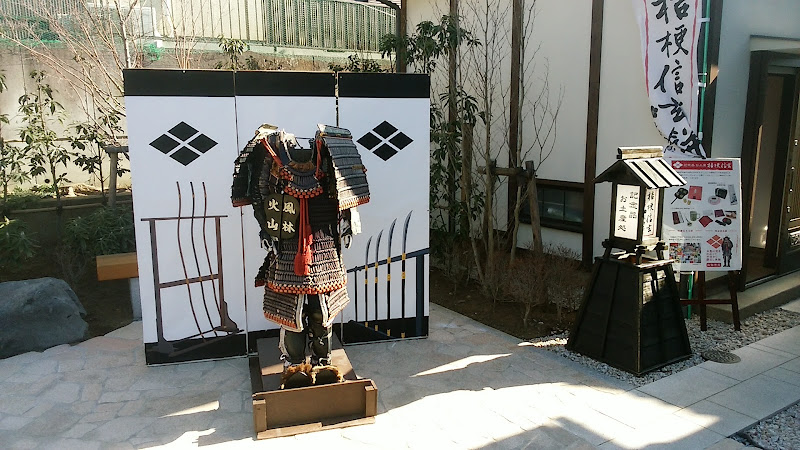
The museum presents military artifacts, period documents, and carefully crafted reconstructions that help stitch together what life and warfare looked like in 16th-century Japan. Visitors will find more than just armor and swords; the exhibits aim to situate Takeda Shingen within his landscape — the surrounding mountains, the rice fields, the politics of the time — so the story feels grounded and alive.
Unlike a megamuseum that overwhelms, Shingen Museum rewards curiosity. People who arrive expecting rows of glass cases might be surprised by the scale models, diorama scenes, and explanatory panels that lean into storytelling. The treatment is educational yet approachable — the labels avoid heavy academic jargon and the space moves at a human pace. And yes, kids do tend to leave excited (many parents report the helmets and big banners do the trick).
Accessibility is taken seriously here. The building includes a wheelchair accessible entrance, accessible parking facilities, and an accessible restroom, which makes it straightforward for visitors with mobility needs to enjoy the exhibitions. Basic amenities are available on site, making it a comfortable stop for families and older travelers. Overall impressions from visitors are largely positive: people praise the atmosphere and presentation, while a few comment that the collection feels modest compared to national museums. That’s fair — this is a place about focus rather than scale, and for that reason it can be unexpectedly rewarding.
There’s a local, slightly intimate vibe to the place. The staff often come across as knowledgeable and pleased to answer questions, especially if someone shows a genuine interest in Takeda Shingen or regional history. One museum-goer noted that a volunteer spent fifteen minutes explaining the meaning behind a battle banner pattern; moments like that turn a routine museum visit into something memorable. The overall experience works best for visitors who appreciate context and storytelling, rather than those looking for a blockbuster, blockbuster-level collection.
Key Features
- Seasonal exhibitions and special displays that rotate, offering fresh reasons to return.
Best Time to Visit
If the aim is to enjoy the museum with fewer crowds and a relaxed pace, weekday mornings are ideal. The first hour after opening tends to be quieter, giving visitors time to linger over the armor displays and read the contextual panels without being nudged along. Late afternoons can feel rushed as school groups or tour buses sometimes arrive, especially during peak tourist seasons.
Seasonally, spring and autumn add extra value to a visit. In spring the surrounding city parks show cherry blossoms which makes the whole trip feel more scenic; in autumn the hills wear warm colors that complement the historical mood. And, if one times a visit to coincide with the local Takeda Shingen festival or historical re-enactments, the museum visit becomes a richer part of a cultural day — parades, period-costumed processions, and community events put a living frame around the artifacts. But a gentle warning: festivals draw crowds, so plan ahead if crowd-tolerance is low.
For travelers on a tight schedule, allow roughly 60 to 90 minutes for a thorough visit. That’s enough time to see the core exhibits, snap photos where permitted, and follow up with questions at the information desk. If someone is a serious military history fan or wants to absorb every detail, allocating two hours won’t feel excessive.
How to Get There
The Shingen Museum sits in central Kofu, making it an uncomplicated detour for most travelers exploring Yamanashi Prefecture. From the city’s main transport hubs, access is straightforward — buses and short taxi rides connect the station area to the museum district, and walking routes are easily navigable for those who enjoy a short urban stroll. Many visitors simply walk from Kofu Station if they enjoy a 15–25 minute walk through town; others prefer the convenience of a local bus or taxi to save time and energy.
For road-trippers, there is accessible parking available for visitors who prefer to drive. The parking setup is designed with ease-of-access in mind, and the short approach to the museum entrance is manageable for most travelers. The combination of car and public transport options makes the museum a flexible stop whether someone is based in Kofu for a few nights or passing through on a day trip from nearby cities like Tokyo or Matsumoto.
A practical tip: when using public transportation, the local bus networks are user-friendly but sometimes run less frequently outside of peak hours. So if scheduling is tight, consider allowing extra time or choosing a taxi for the last leg. And for those relying on navigation apps, search for the museum by name — signage around the town is reasonably clear, but small streets can be a little confusing the first time around.
Tips for Visiting
Plan ahead. The museum is well-run but small enough that special exhibitions and guided tours can fill up. Check opening hours before you go — they change seasonally and for holidays. Also, ticketing policies for special exhibits sometimes differ from general admission, so budget a little extra time and cash for on-the-spot decisions.
Photography is usually allowed in many parts of the museum, but flash and tripods are often restricted. If a photo matters to you, ask staff about the rules for specific galleries. It helps avoid awkward conversations mid-shot, and staff generally appreciate that kind of heads-up. The writer remembers one attempt at a wide-angle shot spoiled by a sudden sign about flash restrictions — lesson learned: just ask.
Bring children if they’re inquisitive. The museum is good for kids who like stories about samurai, banners, and battles. There are tactile or visual features that capture attention, and kids tend to enjoy the larger-than-life armor. But if a family’s patience runs thin, there are nearby parks and cafes where parents can take a breather while younger ones burn off energy.
Accessibility matters and the museum delivers on that. Travelers with mobility concerns will find a wheelchair accessible entrance and restroom, plus parking designed to be easy to use. If mobility aids are needed, check with the museum in advance about the availability of loaner equipment or staff assistance — many smaller museums are happy to help but appreciate a heads-up.
Budget time to read the labels and do the small side exhibits. The real nuance of the Shingen Museum is in the context: maps, campaign routes, and local geography are what transform armor into narrative. People who skip the panels may enjoy the visuals, but they’ll miss the connective tissue that makes the displays meaningful.
Don’t rush the museum shop. It’s modest but often stocked with well-curated local books, reproductions, and small souvenirs that reflect the museum’s focus. For history lovers, a guidebook or booklet purchased there can make the visit linger long after they’ve left the building. And yes, souvenirs make nice gifts — or a small souvenir to remind oneself that history was touched that day.
If language is a concern, good news: many of the main displays include English explanations, and staff can usually help with basic questions. But if someone is an English speaker hoping for a detailed lecture in English, it’s smart to arrange a guided tour or bring along a phrasebook; sometimes that extra planning turns a good visit into a great one.
Finally, temper expectations. This is a focused local history museum rather than a sprawling national institution. People who come ready to learn about Takeda Shingen and the regional context leave satisfied. Those who expect blockbuster galleries may feel differently. The writer will admit — the first time here he underestimated how much a few well-executed dioramas could convey; he left thinking, I learned more in an hour here than in several larger museums combined.
In short, the Shingen Museum offers a clear, thoughtful glimpse into one of Japan’s dramatic historical chapters. It’s accessible, kid-friendly, and rewarding for travelers who want insight rather than spectacle. If someone is passing through Kofu with an interest in samurai-era history or regional culture, this place is worth an intentional stop — the kind of small museum that rewards curiosity and leaves one with a better sense of how history shaped the landscape around them.
 Real Journey Travels