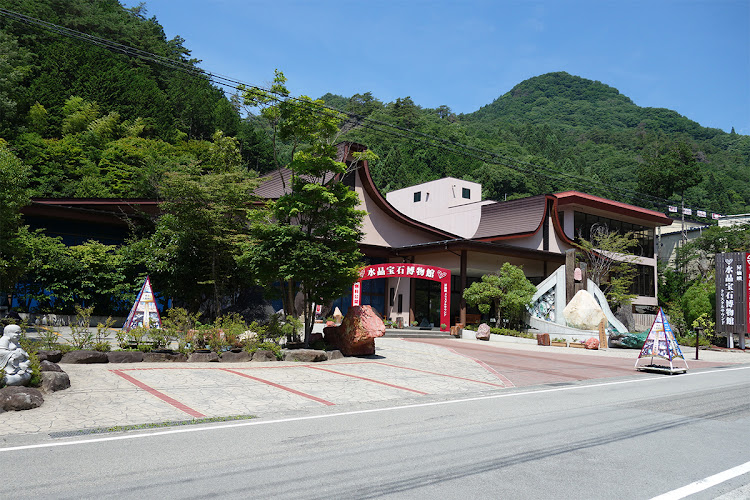
The museum presents one of the largest collections of crystals and gemstones in the region, showcasing everything from rough quartz specimens to polished diamonds, emeralds, sapphires and rubies arranged with a curator’s eye for drama. The displays move beyond simple cabinets and labels; large-scale gemstone paintings and sculptural works demonstrate the polishing and gem-cutting heritage that grew here because Yamanashi once produced many of Japan’s finest crystals.
Visitors who know a little about the region will appreciate a little context: the local industry developed out of crystal discoveries in Yamanashi, and polishing techniques were refined here for generations. Today, roughly a third of Japan’s jewelry companies have roots in the area, which partly explains why so many rare and exotic stones find their way to this museum. That historical thread is visible in the exhibits — not just as static facts, but in the very objects on display, many of which owe their finish and presence to local artisans.
But the museum is more than a dry repository. It intentionally leans into storytelling. Large, three-dimensional gemstone likenesses of historical figures — notably warriors modeled after regional samurai leaders — make the museum feel theatrical in the best possible way. There is also a crystal mikoshi, a portable shrine formed around a massive crystal orb and weighing roughly half a ton, that functions as an unusual spiritual or power spot for visitors who are inclined toward crystal healing or ritual. The atmosphere is generally calm; people often lose track of time while studying the clarity of a crystal face or tracing the facets of a cut sapphire.
Exhibits include raw quartz clusters and amethyst geodes big enough to step into with care, polished jewels set into artful displays, and educational panels explaining both mineralogy and the art of gemstone cutting. For travelers, the museum is a rare chance to see both scientific information and an artisanal tradition under one roof. On-site services are available for those who want guided explanations or to purchase jewelry and souvenir pieces made by local craftspeople. Practical amenities like restrooms and credit card payments are in place, though visitors with mobility concerns should note that the entrance is not wheelchair accessible.
Best Time to Visit
Timing the visit depends on what the traveler wants. For those who want fewer crowds and a slower pace, weekday mornings are ideal; the museum opens early enough that the first hour or two tend to be peaceful. Tourists eager for clearer weather to photograph glinting facets should aim for spring through autumn — late April to early November often provides the most consistent conditions for clear skies around the Shosenkyo gorge area, which complements a museum visit. Autumn, in particular, brings a lovely bonus: the surrounding landscapes take on warm tones that make a day of combining outdoor vistas and indoor mineral marvels especially satisfying.
That said, if a visitor is drawn to the idea of ritual or spiritual aspects — crystal healing sessions, or simply feeling the thrill of the mikoshi — certain festival days and museum-hosted events can amplify that experience. Those days are generally busier, of course, so expect a livelier, less solitary atmosphere. Winters are quieter and can be atmospheric for those who like stark contrasts between a snow-dusted exterior and the warm glow of display cases. But do note: colder months can mean some facilities operate on reduced hours, so checking ahead is wise.
How to Get There
The museum is reachable by a combination of public transport and local roads. Travelers typically approach from Kofu city or via regional rail lines that connect Yamanashi to Tokyo and other prefectures. From major transit hubs, a local bus or taxi is the usual final leg; the area is well signposted for visitors following route numbers toward Shosenkyo and known attractions. Those driving will find scenic roads and parking nearby, though the region can become busy during peak tourist seasons so arriving early helps avoid the parking scramble.
A practical tip often passed along by repeat visitors: allow extra time for the road to Shosenkyo. It winds through gorge scenery where drivers tend to slow down to admire the views — and who can blame them. Another slightly nerdy but useful note: GPS can sometimes favor the main tourist road and miss smaller, faster access routes used by locals. When time matters, asking for local directions at a train station or convenience store will usually yield the fastest route. Local staff at hotels in Kofu are also typically helpful and will recommend whether bus or taxi makes more sense for the day’s schedule.
Tips for Visiting
Practical planning makes this museum much more enjoyable. Here are a set of tips based on what actual visitors tend to wish they’d known, mixed with a few personal observations from people who linger over gemstones for longer than usual.
- Allow at least 90 minutes. The museum is not enormous, but the displays reward slow looking. People who rush through often miss the subtle craftsmanship in the gem paintings and the stories behind the samurai-inspired sculptures. If a traveler loves photography or wants to sit and sketch a piece, two hours is safer.
- Bring cash and card. While credit and debit cards are accepted, small purchases from local vendors or a spontaneous snack from a nearby stall may be cash-only. It’s always less stressful to have both on hand.
- Mind the accessibility. The entrance is not wheelchair accessible. Visitors with mobility needs should contact the museum ahead of time to inquire about assistance options or alternative entrances, if any are available on the day.
- Ask about guided tours. Onsite services include guided explanations, and those short tours often illuminate the polishing techniques and cultural backstory in ways that labels cannot. If the museum staff offers a short talk or demo, it’s worth attending.
- Photography etiquette. Photography is tempting — those crystals sparkle — but flash photography can damage sensitive exhibits or create reflections that obscure them for other visitors. Most museums in the region allow non-flash photography for personal use; still, checking signage and following staff guidance shows respect and keeps the experience pleasant for everyone.
- Consider combining with outdoor time. The museum sits in a region known for striking natural scenery. Planning a half-day that includes a walk by the gorge or a short hike makes for a balanced itinerary. Pro tip: pack a light jacket even on warm days — museums and gorge breezes can be cooler than expected.
- Shop mindfully. The onsite jewelry store sells items polished by local craftsmen. Prices vary widely; some pieces are affordable souvenirs, others are investment-grade. If shopping for a high-value item, ask about certificates of authenticity and return policies. Haggling is not common; transparent pricing is the norm.
- Watch for seasonal events and closures. Special exhibits, workshops, or holiday closures can change schedules. If a traveler is making a day trip specifically for a workshop or event, calling ahead or checking updated hours is recommended.
- Bring curiosity, not just cameras. One of the museum’s quieter pleasures is learning the story behind a stone: where it came from, how it was cut, why a specific facet matters. Those small details turn a viewing into an education, and it’s the kind of thing that lingers longer than a snapshot.
Finally, one small, slightly personal aside: the writer remembers lingering in front of an amethyst geode that was big enough to almost step into. It was quiet, save for the soft hum of climate controls and the muffled footsteps of other visitors, and for a few minutes the world outside — the rush of trains, the banalities of schedules — felt distant. That little moment of dislocation is, in many ways, what the museum offers. Not just gems to admire, but a place that briefly lets people step into another sort of time: one polished by patient hands and slow light.
For travelers planning a trip, the Shosenkyo Crystal Sound Suishohoseki Museum can be an unexpectedly contemplative stop on a wider Yamanashi itinerary. It pairs well with outdoor exploration, a meal of local food in Kofu, or a relaxed afternoon in nearby craft shops. Whether the visitor is a gem enthusiast, a jewelry shopper, or someone simply curious about local culture and craft, the museum delivers a distinct, memorable experience that stays with people long after they leave the hushed glow of the display cases.
 Real Journey Travels