
Santa Barbara Carriage and Western Art Museum
About Santa Barbara Carriage and Western Art Museum
Description
The Santa Barbara Carriage and Western Art Museum is a hands-on, quietly charismatic museum that has been run as a nonprofit since 1972. Its focus is straightforward and rare: historic horse-drawn vehicles, saddles, tack, and Western memorabilia arranged to tell the layered story of California transportation, ranch life, and leisure across the 19th and early 20th centuries. Unlike larger, impersonal institutions, this place prefers intimacy — small rooms, close-up views, and a kind of slow, old-fashioned storytelling that invites lingering.
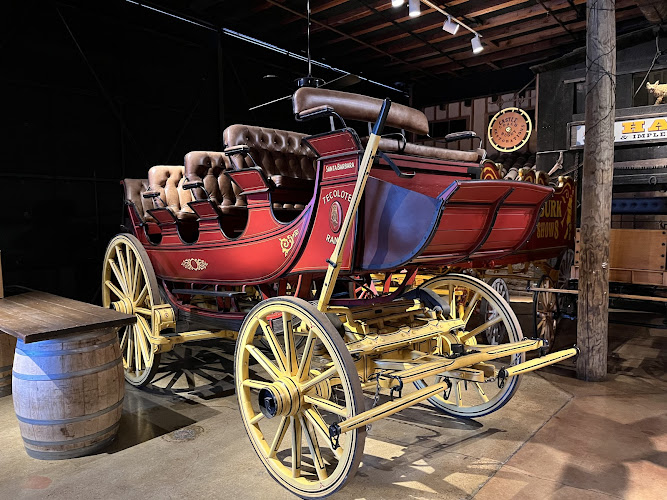
At its core, the collection highlights restored carriages, buggies, carts, and phaetons — from elegant town carriages that once ferried society figures to rugged wagons that hauled supplies across dusty trails. The saddle collection is equally absorbing: it spans functional ranch saddles to ornate parade pieces trimmed with silver. Western art and related memorabilia—photographs, posters, and personal items from ranching families—frame the vehicles and saddles, creating context rather than just display. Together, they map social history: who traveled, how they earned a living, and how New World practicality met Old World style.
Accessibility is taken seriously here. The site offers a wheelchair accessible entrance, accessible parking, and restroom facilities. That level of thoughtfulness matters more than people often realize; it makes the museum truly usable for families and older visitors who want to experience physical artifacts rather than view everything from a distance. On-site parking is another practical bonus—no circling blocks hunting for a spot, which is always appreciated when carrying a stroller or a small group of curious kids.
Interpretive tours are offered by volunteers and staff who know the stories behind the hardware — and they will happily linger over a detail like the hand-carved wagon wheel or the odd repair patch on a saddle skirt. A longtime docent once recalled a gentleman who kept returning just to sit near a particular phaeton; it had belonged to his grandmother and looking at it made him remember childhood summers. Those human connections are what transform this museum from a static collection into a living archive.
For travelers the museum functions on several levels. First, it's a focused cultural stop for anyone interested in transportation history or Western Americana. Second, it provides insight into Santa Barbara's own relationship to the ranching and equestrian traditions of California. Third, it's genuinely family-friendly; kids tend to love the visual drama of enormous wheels, leatherwork, and shiny harnesses. The place does not pretend to be vast; its charm comes from being compact and well-curated. Expect to spend an hour to ninety minutes exploring, depending on whether the visitor joins a guided tour or prefers to meander.
What might surprise even seasoned museum-goers is how much technology and craft intersect in these objects. The construction of a carriage wheel or the tooling on a saddle reflects engineering and artistry. This is not just about horses; it’s about makers. Labels and exhibit notes point out skills like leatherworking, blacksmithing, and wood joinery, and the museum occasionally hosts demonstrations or talks focused on those crafts. So yes, it can be an unexpectedly hands-on learning experience, especially for travelers who enjoy seeing process as well as product.
There’s an air of modesty to the museum that many visitors find refreshing. It doesn’t rely on flashy multimedia. Instead, it trusts the artifacts to do the speaking, and the human voices — volunteers, docents, visiting scholars — to supply the anecdotes and context. That format works: the historical objects feel honest and immediate. For photographers and writers, the museum is a treasure trove of detail shots and story prompts; for historians and horse-people, it’s a concentrated reference collection. In short, it rewards slow attention.
Practical amenities are limited but sensible. There isn’t an on-site restaurant, so visitors often plan a snack or meal in downtown Santa Barbara afterward. Restroom facilities are available, which, frankly, is always a relief. The staff encourages family visits and designs programming with kids in mind, so children’s curiosity is welcomed rather than shushed. The overall atmosphere is welcoming without being overbearing — a balance that’s rare and worth noting.
Finally, the museum’s status as a nonprofit since 1972 is more than a line on a sign. It reflects decades of community support, volunteer stewardship, and a mission to preserve specialized local heritage. That continuity shows in the quality of the restorations and in the warmth of the staff. People who care about place and craft keep this museum alive, and that energy is evident when walking through the exhibits. Travelers interested in small-scale, sincere cultural institutions will find the Santa Barbara Carriage and Western Art Museum both informative and oddly moving. It’s a compact time machine — practical, detailed, and quietly memorable.
Key Features
More Details
Updated August 30, 2025
Table of Contents
Description
The Santa Barbara Carriage and Western Art Museum is a hands-on, quietly charismatic museum that has been run as a nonprofit since 1972. Its focus is straightforward and rare: historic horse-drawn vehicles, saddles, tack, and Western memorabilia arranged to tell the layered story of California transportation, ranch life, and leisure across the 19th and early 20th centuries. Unlike larger, impersonal institutions, this place prefers intimacy — small rooms, close-up views, and a kind of slow, old-fashioned storytelling that invites lingering.
At its core, the collection highlights restored carriages, buggies, carts, and phaetons — from elegant town carriages that once ferried society figures to rugged wagons that hauled supplies across dusty trails. The saddle collection is equally absorbing: it spans functional ranch saddles to ornate parade pieces trimmed with silver. Western art and related memorabilia—photographs, posters, and personal items from ranching families—frame the vehicles and saddles, creating context rather than just display. Together, they map social history: who traveled, how they earned a living, and how New World practicality met Old World style.
Accessibility is taken seriously here. The site offers a wheelchair accessible entrance, accessible parking, and restroom facilities. That level of thoughtfulness matters more than people often realize; it makes the museum truly usable for families and older visitors who want to experience physical artifacts rather than view everything from a distance. On-site parking is another practical bonus—no circling blocks hunting for a spot, which is always appreciated when carrying a stroller or a small group of curious kids.
Interpretive tours are offered by volunteers and staff who know the stories behind the hardware — and they will happily linger over a detail like the hand-carved wagon wheel or the odd repair patch on a saddle skirt. A longtime docent once recalled a gentleman who kept returning just to sit near a particular phaeton; it had belonged to his grandmother and looking at it made him remember childhood summers. Those human connections are what transform this museum from a static collection into a living archive.
For travelers the museum functions on several levels. First, it’s a focused cultural stop for anyone interested in transportation history or Western Americana. Second, it provides insight into Santa Barbara’s own relationship to the ranching and equestrian traditions of California. Third, it’s genuinely family-friendly; kids tend to love the visual drama of enormous wheels, leatherwork, and shiny harnesses. The place does not pretend to be vast; its charm comes from being compact and well-curated. Expect to spend an hour to ninety minutes exploring, depending on whether the visitor joins a guided tour or prefers to meander.
What might surprise even seasoned museum-goers is how much technology and craft intersect in these objects. The construction of a carriage wheel or the tooling on a saddle reflects engineering and artistry. This is not just about horses; it’s about makers. Labels and exhibit notes point out skills like leatherworking, blacksmithing, and wood joinery, and the museum occasionally hosts demonstrations or talks focused on those crafts. So yes, it can be an unexpectedly hands-on learning experience, especially for travelers who enjoy seeing process as well as product.
There’s an air of modesty to the museum that many visitors find refreshing. It doesn’t rely on flashy multimedia. Instead, it trusts the artifacts to do the speaking, and the human voices — volunteers, docents, visiting scholars — to supply the anecdotes and context. That format works: the historical objects feel honest and immediate. For photographers and writers, the museum is a treasure trove of detail shots and story prompts; for historians and horse-people, it’s a concentrated reference collection. In short, it rewards slow attention.
Practical amenities are limited but sensible. There isn’t an on-site restaurant, so visitors often plan a snack or meal in downtown Santa Barbara afterward. Restroom facilities are available, which, frankly, is always a relief. The staff encourages family visits and designs programming with kids in mind, so children’s curiosity is welcomed rather than shushed. The overall atmosphere is welcoming without being overbearing — a balance that’s rare and worth noting.
Finally, the museum’s status as a nonprofit since 1972 is more than a line on a sign. It reflects decades of community support, volunteer stewardship, and a mission to preserve specialized local heritage. That continuity shows in the quality of the restorations and in the warmth of the staff. People who care about place and craft keep this museum alive, and that energy is evident when walking through the exhibits. Travelers interested in small-scale, sincere cultural institutions will find the Santa Barbara Carriage and Western Art Museum both informative and oddly moving. It’s a compact time machine — practical, detailed, and quietly memorable.
Key Highlights
Santa Barbara Carriage and Western Art Museum
Location
Places to Stay Near Santa Barbara Carriage and Western Art Museum
Find and Book a Tour
Explore More Travel Guides
No reviews found! Be the first to review!
Traveler Reviews for Santa Barbara Carriage and Western Art Museum
There are no reviews yet. Be the first one to write one.
Have you visited Santa Barbara Carriage and Western Art Museum? Help other travelers by sharing your review.
You Might Also Like

Santa Barbara Historical Museum

Old Mission Santa Barbara
Susan Quinlan Doll & Teddy Bear Museum & Library
Find Accommodations Nearby
Recommended Tours & Activities
Visitor Reviews
There are no reviews yet. Be the first one to write one.
Share Your Experience
Have you visited Santa Barbara Carriage and Western Art Museum? Help other travelers by leaving a review.