About Ruplal House

Ruplal House is a 19th-century mansion and tourist attraction in Old Dhaka, Bangladesh. It stands on the northern bank of the Buriganga River in the Farashganj area.

What to Expect

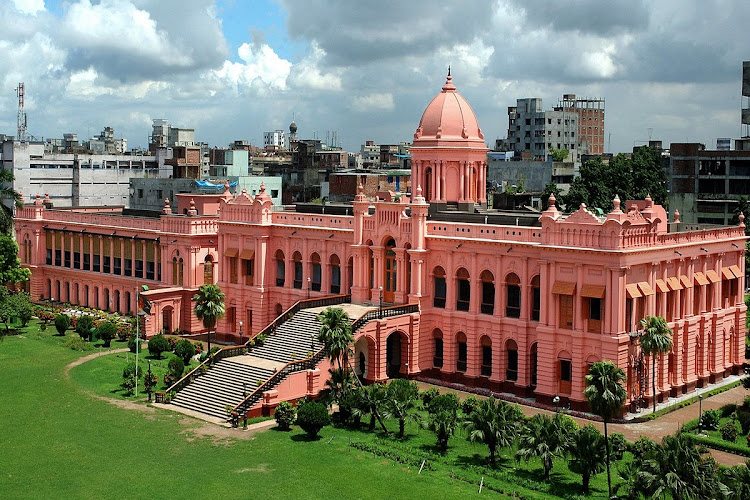
You will find a historic building showcasing a blend of Indo-European architecture. The mansion's facade features intricate designs from its 19th-century construction. Its location offers views of the Buriganga River from its grounds. The structure shows signs of age, giving it a faded grandeur. Visitors often explore the exterior and take photographs, particularly in the afternoon when the light enhances the architectural details.

History & Significance

An Armenian businessman named Stephen Aratoon originally built this house in 1825. It was known as Aratoon House. Two affluent merchants, Ruplal Das and his brother Raghunath Das, bought the property in 1840. The Calcutta-based Martin Company firm later reconstructed the building, giving it its current architectural style.

Practical Information

The address is PC37+F99, Ahsanullah Rd, Dhaka, Bangladesh. The site is accessible 24 hours a day. With a 4.3 out of 5 rating from over 700 reviews, it ranks among the most historic buildings in Dhaka City. The area is generally less crowded. The best time for a visit is in the afternoon for optimal lighting.

More Details

Updated April 5, 2026

Ruplal House is a 19th-century mansion and tourist attraction in Old Dhaka, Bangladesh. It stands on the northern bank of the Buriganga River in the Farashganj area.

What to Expect

You will find a historic building showcasing a blend of Indo-European architecture. The mansion’s facade features intricate designs from its 19th-century construction. Its location offers views of the Buriganga River from its grounds. The structure shows signs of age, giving it a faded grandeur. Visitors often explore the exterior and take photographs, particularly in the afternoon when the light enhances the architectural details.

History & Significance

An Armenian businessman named Stephen Aratoon originally built this house in 1825. It was known as Aratoon House. Two affluent merchants, Ruplal Das and his brother Raghunath Das, bought the property in 1840. The Calcutta-based Martin Company firm later reconstructed the building, giving it its current architectural style.

Practical Information

The address is PC37+F99, Ahsanullah Rd, Dhaka, Bangladesh. The site is accessible 24 hours a day. With a 4.3 out of 5 rating from over 700 reviews, it ranks among the most historic buildings in Dhaka City. The area is generally less crowded. The best time for a visit is in the afternoon for optimal lighting.

Location

Places to Stay Near Ruplal House

Find and Book a Tour

Explore More Travel Guides

No reviews found! Be the first to review!

Tucked away in Farashganj, right in the heart of Old Dhaka, Ruplal House is one of those places you almost stumble upon by accident. It’s a 19th-century mansion with a kind of faded drama that’s hard to find anywhere else in the city.

This grand riverside estate once threw a ball for British India’s Viceroy back in 1888—a night that probably outshone every other party in Dhaka at the time. These days, what’s left of its colonial-era opulence is still visible, even if you have to squint a little past the peeling paint.

Built in 1825, and later renovated by the Das brothers, the mansion sits right on the Buriganga River. Its neo-classical columns and battered facade are still hanging on, even after decades of neglect.

Most tourists never make it here. They stick to the big names, but Ruplal House is for those who want something real—something a little rough around the edges. Getting in isn’t straightforward; the ground floor is home to military families and spice traders.

Honestly, that’s part of its charm. It’s not a museum, but a mashup of history and daily life, which you don’t see every day in Old Dhaka.

Bring your camera. The mansion’s faded grandeur—peeling wallpaper, crumbling columns, vines taking over what used to be a ballroom—makes for photos that feel alive, not staged.

About Ruplal House

This mansion on the Buriganga tells a story you won’t find in most guidebooks. It’s the legacy of Dhaka’s merchant class—people who helped shape the city’s colonial era.

Built in 1825, Ruplal House was the scene of legendary gatherings that once put Dhaka on the map for British India’s elite.

History and Significance

The original building came from Stephen Aratoon, an Armenian businessman, who set it up in 1825 right beside the Buckland Bund. In 1840, brothers Ruplal Das and Raghunath Das bought it, and that’s when things really got interesting.

Ruplal Das wasn’t just rich—he was the first in his family to get a formal education. He and his brother hired Martin Company, an architectural firm from Calcutta, to give the place a neo-classical makeover.

The result? Something that could go toe-to-toe with Ahsan Manzil.

The house hit its peak when it hosted Lord Dufferin, the Viceroy of India, in 1888. The Das brothers reportedly spent 45,000 rupees (which was an insane amount back then) just on the party decorations.

What Makes It Special

Ruplal House marks a shift in Dhaka’s story—a time when merchants started competing with the old aristocrats. British journals raved about the lavish balls here, so you get a sense of just how important this mansion was, even beyond Bangladesh.

The Department of Archaeology declared it a protected monument in 1989. But honestly, the building’s current state doesn’t do its history justice.

Wholesale spice shops and families live here now. The original walls are battered, and parts of the mansion are in rough shape.

When you visit, you’ll spot five big pillars—some barely holding on—and mossy walls. New shops and commercial structures are jammed right up against the mansion, which technically shouldn’t be happening under the Antiquities Act.

The old ballroom that once wowed a viceroy? These days, it’s surrounded by stalls selling betel leaves and spices.

What to See and Do

Ruplal House gives you a rare peek into 19th-century Dhaka’s architectural flair and the social life of its merchant class. The mansion has three blocks, each with its own personality.

You’ll have to look past the mess and the chaos, but underneath it all, the grandeur is still there if you’re willing to find it.

Main Attractions and Highlights

The Ruplal Block is the mansion’s showstopper. It’s the western wing—about 25,000 square feet—built around a square courtyard.

Right away, you’ll notice the northern portico, topped with a triangular pediment and fluted columns with Corinthian capitals. It’s dramatic, even now.

The central block holds the old ballroom, up on the second floor. This is where Ruplal Das hosted his legendary 1886 dance party for Lord Dufferin.

The Raghunath Block, on the eastern side, has its own vibe—Indian-style capitals instead of Corinthian ones. The river-facing facade stretches for about 300 feet, though parts are now home to squatters and vegetable vendors.

Still, the original brick arches and thick walls hint at how well-built this place was back in the 1840s.

Best Time to Visit

If you want to wander around without melting, come between November and February. Dhaka’s weather is actually bearable then, and you’ll have a better time poking around outside.

There aren’t any official visiting hours since the building’s partly private and partly commercial. Early mornings are your best bet for good light and fewer people.

Check locally before you go—access changes, and some parts are off-limits.

Visitor Information

Ruplal House sits in Farashganj, right along the Buriganga’s northern bank. Getting there is half the adventure, honestly.

Location and How to Get There

You’ll find Ruplal House on Farashganj Road, beside the Buckland Dam. It’s tucked into Old Dhaka’s heritage district, so expect narrow streets and a lot of honking.

The easiest way is by rickshaw from Sadarghat or the Old Dhaka markets. If you’re coming from the newer parts of the city, grab a taxi or a ride-share to Farashganj, then hop in a rickshaw for the last bit.

Most rickshaw pullers know “Ruplal House,” so you won’t have to explain much.

If you’re already exploring the Buckland Bund area, you can just walk over. Just be ready for crowds and the constant buzz of Old Dhaka.

Tips for Visitors

Check locally for current visiting hours—Ruplal House is still partially occupied by squatters, and some rooms are crammed with storage. The Department of Archaeology lists it as protected, but honestly, access feels a bit unpredictable.

If you can, swing by early in the morning. The crowds and heat in Old Dhaka get intense later, and the quiet gives you a better chance to soak up the atmosphere.

Inside, the building’s seen better days. Floors are uneven, and there’s debris in unexpected places, so tread carefully.

Don’t expect the polished interiors you might find at Ahsan Manzil. Ruplal House has a faded, slightly haunting charm.

Photography? Usually fine. The riverside facade, with its weathered columns and peeling paint, is especially photogenic.

Some parts of the mansion are still lived in, so it’s best to be discreet and respect people’s privacy.

If luck’s on your side, try to peek into the grand dance hall upstairs in the western wing. That space, with its battered elegance, is easily the highlight.

Traveler Reviews for Ruplal House

There are no reviews yet. Be the first one to write one.

Share Your Experience

Have you visited Ruplal House? Help other travelers by sharing your review.

Find Accommodations Nearby

Recommended Tours & Activities

Visitor Reviews

There are no reviews yet. Be the first one to write one.

Share Your Experience

Have you visited Ruplal House? Help other travelers by leaving a review.