
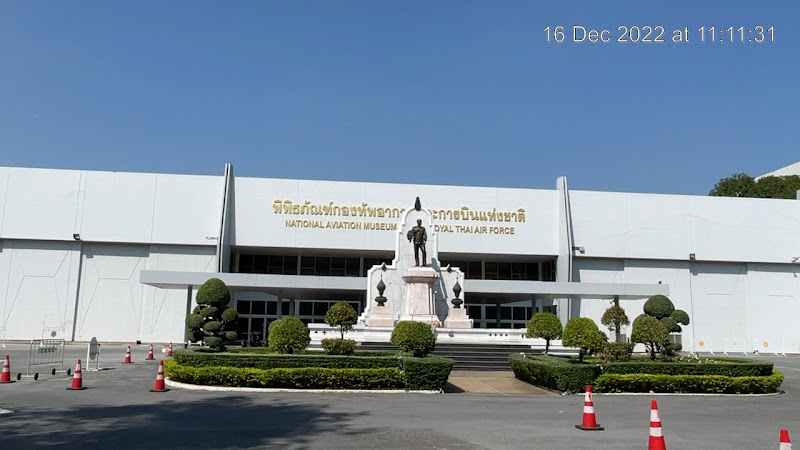
Royal Thai Air Force and National Aviation Museum
About Royal Thai Air Force and National Aviation Museum
Description
The Royal Thai Air Force National Aviation Museum offers a deep, textured look at Thailand's aviation history that goes beyond shiny metal and polished rivets. It is a place where aircraft of many eras sit side by side — trainers, fighters, transports and helicopters — each with stories that touch on technology, regional geopolitics, and the personal experiences of pilots and ground crews. The museum presents Thailand's role in World War II and the Cold War era through artifacts, photographs, and interpretive panels that do a decent job of bridging the gap between technical detail and human narrative. Visitors who come expecting only static displays may be surprised; this museum often feels like a living archive, with signs of ongoing restoration, engine parts laid out for study, and volunteers or staff who clearly care about keeping these machines speaking to the present.
Located in the Don Mueang area of Bangkok, the museum is frequently praised for the sheer scale of its outdoor and hangar-based exhibits. Outdoor display areas allow large aircraft to be seen from multiple angles — which, it must be said, is more satisfying than watching photos online. Inside, smaller galleries present avionics, uniforms, medals, and multimedia presentations that explain the development of the Royal Thai Air Force through decades. Importantly for families and casual travelers, many exhibits are accessible and straightforward, so you don't need to be an aviation geek to appreciate them. Still, enthusiasts will find little treasures: cockpit access for some models, close-up views of weapon bays, and explanatory placards that nod to technical specifications without drowning the reader in jargon.
What distinguishes this museum from a generic aviation collection is its emphasis on Thailand's strategic and cultural context. Exhibits on World War II are not just about planes — they explore alliances, airfields, and the impact of aerial campaigns on local communities. There are displays that highlight how aircraft facilitated rescue missions, disaster relief, and humanitarian operations in the region, a side of military aviation that is often underreported. And because the museum sits on land with genuine military heritage, walking among the planes has a slightly different feel than a sterile commercial display. It leans toward the authentic: tool marks here, faded paint there, a hand-written maintenance note tucked under glass. Those imperfections are part of the charm.
The museum supports practical visitor needs: onsite services, a small restaurant for a quick meal, restrooms, and free parking that makes it easy for families driving from elsewhere in Bangkok or neighboring provinces. Accessibility is not an afterthought — there are wheelchair-accessible entrances, parking spots, and restrooms — so those with limited mobility can still get close to many exhibits. Parents traveling with kids will appreciate the space to move around; children tend to be drawn to the scale of the aircraft, and the museum generally handles energetic little explorers well. It is genuinely kid-friendly without being gimmicky, which is a nice balance that some attractions fail to pull off.
For photographers and plane spotters, the vantage points available are a pleasant surprise. Light direction in the early morning and late afternoon flatters the broad surfaces of older aircraft, and because many planes are displayed outdoors, photographs can capture reflections, rivet detail, and context — hangars, taxiways, and the occasional maintenance cart. The museum's practical layout means visitors can plan a route that alternates indoor rest stops with outdoor runs, handy when Bangkok heat gets to be too much. There is also a quiet satisfaction in standing near a relic that once roared in the sky and imagining the people who kept it airborne; even cynical travelers might feel a touch of nostalgia.
Interpretation at the museum aims to be informative and fair. Panels highlight milestones in the Royal Thai Air Force's development and show how global events influenced local decisions. While some of the explanatory material assumes a smattering of aviation knowledge, overall the tone is welcoming. Museum staff and volunteers often fill gaps in the written text during guided visits or casual conversations. Visitors who seek context will find it: maps that trace wartime flight paths, diagrams that explain radar and navigation changes over time, and photo series documenting mission histories. There is an educational core here, useful for students, researchers, and anyone with a curiosity about military aviation or Thailand's place in 20th-century history.
Practical planning is straightforward. The museum's mix of indoor and outdoor exhibits means a couple of hours will cover the main highlights, while dedicated enthusiasts could easily spend a half-day digging into details. Because it sits near Don Mueang, a common arrival point for domestic and low-cost international flights, it’s a convenient add-on for travelers with a layover or a day free in Bangkok. It is worth noting that weather affects the experience: an overcast, rainy day can make outdoor displays less pleasant, whereas clear, breezy conditions make for prime viewing and photography.
On the organizational side, the museum engages in preservation and occasional restorations, which is visible if a visitor arrives at the right time. Seeing a restoration project in progress can be unexpectedly compelling — one can watch technicians revive parts, strip layers of paint, and work to bring a historic airframe a step closer to flight-ready or display-quality condition. That behind-the-scenes feeling gives the museum a workshop-meets-gallery atmosphere that brings a human dimension to the steel-and-aluminum skeletons on display. It also reinforces the idea that aviation history is an ongoing project, not just a static past.
For international visitors, the museum offers a chance to see aircraft types that rarely appear in Western museums — regional models, license-built variants, and locally modified airframes. This makes it a valuable stop for collectors, historians, and curious travelers who want to experience something distinct from the usual Western aviation narratives. The focus on local history and regional operations adds layers of meaning to familiar aircraft types, a reminder that every plane carries different meanings depending on where it served.
There are few pretenses here. The museum doesn't try to be a blockbuster entertainment complex. Instead, it opts for substance: carefully curated exhibits, practical visitor amenities, and an environment that favors learning and contemplation. That said, it keeps things approachable. Placards often use clear language, and the flow from one exhibit to the next is logical and easy to follow. Visitors will leave with specific takeaways — an understanding of Thailand's aerial strategies across decades, the technological evolution of its fleet, and the personal stories of pilots and ground crews that images and objects bring to life.
One subtle point that travelers appreciate is the museum's pace. It’s not rushed like some city attractions where crowds force you along. People tend to linger; they read, they ask questions, and sometimes they sit under the shade of a hangar to watch small groups of aircraft undergo checks. That kind of atmosphere feels more like a neighborhood institution than a tourist trap. It invites curiosity rather than demanding attention, which, for many visitors, leads to a more memorable experience.
Finally, the National Aviation Museum of the Royal Thai Air Force functions as both an educational facility and a kind of collective memory. It preserves equipment and stories that might otherwise be lost. For travelers who value authenticity and history — not the polished or the stage-managed, but the honest, sometimes messy reality of preservation — this museum is rewarding. It offers a balanced, grounded encounter with aviation history in Thailand, and it does so in a way that respects both the machines and the people who built, maintained, and flew them.
Key Features
More Details
Updated August 30, 2025
Table of Contents
Description
The Royal Thai Air Force National Aviation Museum offers a deep, textured look at Thailand’s aviation history that goes beyond shiny metal and polished rivets. It is a place where aircraft of many eras sit side by side — trainers, fighters, transports and helicopters — each with stories that touch on technology, regional geopolitics, and the personal experiences of pilots and ground crews. The museum presents Thailand’s role in World War II and the Cold War era through artifacts, photographs, and interpretive panels that do a decent job of bridging the gap between technical detail and human narrative. Visitors who come expecting only static displays may be surprised; this museum often feels like a living archive, with signs of ongoing restoration, engine parts laid out for study, and volunteers or staff who clearly care about keeping these machines speaking to the present.
Located in the Don Mueang area of Bangkok, the museum is frequently praised for the sheer scale of its outdoor and hangar-based exhibits. Outdoor display areas allow large aircraft to be seen from multiple angles — which, it must be said, is more satisfying than watching photos online. Inside, smaller galleries present avionics, uniforms, medals, and multimedia presentations that explain the development of the Royal Thai Air Force through decades. Importantly for families and casual travelers, many exhibits are accessible and straightforward, so you don’t need to be an aviation geek to appreciate them. Still, enthusiasts will find little treasures: cockpit access for some models, close-up views of weapon bays, and explanatory placards that nod to technical specifications without drowning the reader in jargon.
What distinguishes this museum from a generic aviation collection is its emphasis on Thailand’s strategic and cultural context. Exhibits on World War II are not just about planes — they explore alliances, airfields, and the impact of aerial campaigns on local communities. There are displays that highlight how aircraft facilitated rescue missions, disaster relief, and humanitarian operations in the region, a side of military aviation that is often underreported. And because the museum sits on land with genuine military heritage, walking among the planes has a slightly different feel than a sterile commercial display. It leans toward the authentic: tool marks here, faded paint there, a hand-written maintenance note tucked under glass. Those imperfections are part of the charm.
The museum supports practical visitor needs: onsite services, a small restaurant for a quick meal, restrooms, and free parking that makes it easy for families driving from elsewhere in Bangkok or neighboring provinces. Accessibility is not an afterthought — there are wheelchair-accessible entrances, parking spots, and restrooms — so those with limited mobility can still get close to many exhibits. Parents traveling with kids will appreciate the space to move around; children tend to be drawn to the scale of the aircraft, and the museum generally handles energetic little explorers well. It is genuinely kid-friendly without being gimmicky, which is a nice balance that some attractions fail to pull off.
For photographers and plane spotters, the vantage points available are a pleasant surprise. Light direction in the early morning and late afternoon flatters the broad surfaces of older aircraft, and because many planes are displayed outdoors, photographs can capture reflections, rivet detail, and context — hangars, taxiways, and the occasional maintenance cart. The museum’s practical layout means visitors can plan a route that alternates indoor rest stops with outdoor runs, handy when Bangkok heat gets to be too much. There is also a quiet satisfaction in standing near a relic that once roared in the sky and imagining the people who kept it airborne; even cynical travelers might feel a touch of nostalgia.
Interpretation at the museum aims to be informative and fair. Panels highlight milestones in the Royal Thai Air Force’s development and show how global events influenced local decisions. While some of the explanatory material assumes a smattering of aviation knowledge, overall the tone is welcoming. Museum staff and volunteers often fill gaps in the written text during guided visits or casual conversations. Visitors who seek context will find it: maps that trace wartime flight paths, diagrams that explain radar and navigation changes over time, and photo series documenting mission histories. There is an educational core here, useful for students, researchers, and anyone with a curiosity about military aviation or Thailand’s place in 20th-century history.
Practical planning is straightforward. The museum’s mix of indoor and outdoor exhibits means a couple of hours will cover the main highlights, while dedicated enthusiasts could easily spend a half-day digging into details. Because it sits near Don Mueang, a common arrival point for domestic and low-cost international flights, it’s a convenient add-on for travelers with a layover or a day free in Bangkok. It is worth noting that weather affects the experience: an overcast, rainy day can make outdoor displays less pleasant, whereas clear, breezy conditions make for prime viewing and photography.
On the organizational side, the museum engages in preservation and occasional restorations, which is visible if a visitor arrives at the right time. Seeing a restoration project in progress can be unexpectedly compelling — one can watch technicians revive parts, strip layers of paint, and work to bring a historic airframe a step closer to flight-ready or display-quality condition. That behind-the-scenes feeling gives the museum a workshop-meets-gallery atmosphere that brings a human dimension to the steel-and-aluminum skeletons on display. It also reinforces the idea that aviation history is an ongoing project, not just a static past.
For international visitors, the museum offers a chance to see aircraft types that rarely appear in Western museums — regional models, license-built variants, and locally modified airframes. This makes it a valuable stop for collectors, historians, and curious travelers who want to experience something distinct from the usual Western aviation narratives. The focus on local history and regional operations adds layers of meaning to familiar aircraft types, a reminder that every plane carries different meanings depending on where it served.
There are few pretenses here. The museum doesn’t try to be a blockbuster entertainment complex. Instead, it opts for substance: carefully curated exhibits, practical visitor amenities, and an environment that favors learning and contemplation. That said, it keeps things approachable. Placards often use clear language, and the flow from one exhibit to the next is logical and easy to follow. Visitors will leave with specific takeaways — an understanding of Thailand’s aerial strategies across decades, the technological evolution of its fleet, and the personal stories of pilots and ground crews that images and objects bring to life.
One subtle point that travelers appreciate is the museum’s pace. It’s not rushed like some city attractions where crowds force you along. People tend to linger; they read, they ask questions, and sometimes they sit under the shade of a hangar to watch small groups of aircraft undergo checks. That kind of atmosphere feels more like a neighborhood institution than a tourist trap. It invites curiosity rather than demanding attention, which, for many visitors, leads to a more memorable experience.
Finally, the National Aviation Museum of the Royal Thai Air Force functions as both an educational facility and a kind of collective memory. It preserves equipment and stories that might otherwise be lost. For travelers who value authenticity and history — not the polished or the stage-managed, but the honest, sometimes messy reality of preservation — this museum is rewarding. It offers a balanced, grounded encounter with aviation history in Thailand, and it does so in a way that respects both the machines and the people who built, maintained, and flew them.
Key Highlights
Royal Thai Air Force and National Aviation Museum
Location
Places to Stay Near Royal Thai Air Force and National Aviation Museum
Find and Book a Tour
Explore More Travel Guides
No reviews found! Be the first to review!
Traveler Reviews for Royal Thai Air Force and National Aviation Museum
There are no reviews yet. Be the first one to write one.
Have you visited Royal Thai Air Force and National Aviation Museum? Help other travelers by sharing your review.
You Might Also Like

Wat Chula Manee, Ancient Temple Ruins - Rebuilt
Huai Yang

สะพานปลาอ่าวน้อย
Find Accommodations Nearby
Recommended Tours & Activities
Visitor Reviews
There are no reviews yet. Be the first one to write one.
Share Your Experience
Have you visited Royal Thai Air Force and National Aviation Museum? Help other travelers by leaving a review.