Puertas Mágicas
About Puertas Mágicas
Description
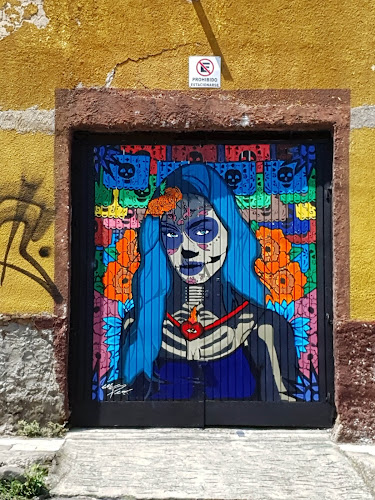
Puertas Mágicas is not a museum in the usual sense. There are no turnstiles, no coat checks, no echoing halls. Instead, the “galleries” are front doors—dozens of them—painted, imagined, and animated with augmented reality across the historic streets of San Pedro Tlaquepaque in Jalisco. This open-air project blends street art with digital overlays, turning everyday portals into story-rich canvases you can actually walk up to, photograph, and—when your phone cooperates—see come to life on screen. Think of it as a living, breathing, community-made collection where the neighborhoods themselves are the exhibition rooms.
What makes Puertas Mágicas stand out is how deliberately it invites travelers to wander beyond the well-known pedestrian strip of Independencia. The curators and artists have asked visitors to step into quieter streets—Carrillo Puerto, Constitución, Donato Guerra, Florida, and a web of nearby blocks—where families live behind those hand-painted doors. Many pieces are playful or heartfelt, often reflecting Tlaquepaque’s identity as a Pueblo Mágico: ceramics traditions, mariachi memories, Día de Muertos symbolism, and bright nods to indigenous Wixárika patterns. Some doors carry a punch of social purpose: a children’s shelter, for example, has received a powerful artwork that many consider a highlight of the walk.
This is a project of recovery and pride. If you speak with locals (and many visitors do, because neighbors are quick with directions), they’ll tell you Puertas Mágicas began as a way to “cure” the sad, plain metal doors dotting older streets, bringing color and attention back to the public realm. Over multiple festivals, muralists from Tlaquepaque, across Mexico, and even abroad have turned bland into brilliant. A crowd favorite is a jaguar design that nods to Wixárika yarn art; another honors a local orchestra musician, Nano González, with design choices that quietly sing. You might pass an artist still brushing details, or see a piece in mid-process—part of the charm of a project that keeps evolving.
Augmented reality adds a bonus layer. Several doors activate animations when scanned with a smartphone—often via filters or a dedicated effect. The result can be whimsical (hearts pulsing, characters winking, flowers swirling) or meaningful, especially around cultural themes. It should be said, not all doors include AR, and the tech can be finicky depending on signal strength. When it works, it’s delightful. When it doesn’t, the hand-painted craft still carries the moment. Travelers consistently report that children are captivated by the animations and the “scavenger hunt” feel of spotting the next door down the block.
Expect street-level authenticity. Sidewalks can be uneven, shade is patchy at midday, and signage varies. There is no central kiosk and no entry fee. And yet, the payoff is rich: an honest sense of place, real conversations with neighbors, and a creative lens on Tlaquepaque beyond the usual ceramic showrooms and famous plazas. This museum is the streets themselves—open 24/7, family-friendly, and refreshingly unpolished. Visitors tend to leave with a phone full of bright photos and a brain buzzing with the way a simple idea—painting a door—can ripple through community life.
Key Features
- Open-air gallery: An outdoor museum that uses the neighborhood’s doors as canvases—free, walkable, and always open.
- Augmented reality (AR): Several pieces animate via smartphone filters or effects, adding a digital layer to hand-painted art.
- Community-led project: Locals, homeowners, and artists collaborate; many doors are private homes generously sharing their façades with the public.
- Rotating additions: Festival editions typically bring 15–20 new doors at a time, so the route stays fresh with each visit.
- Authentic storytelling: Themes range from Día de Muertos to Wixárika-inspired motifs, music heritage, family histories, and neighborhood pride.
- Great for kids: A natural scavenger hunt with bright characters, animals, and AR surprises; strollers can manage most streets.
- No ticket needed: Free access; no formal entry point, which encourages slow travel and casual discovery.
- Photography paradise: Murals are designed to photograph well; morning and late afternoon light make colors pop.
- Local economic boost: Encourages foot traffic beyond the main tourist corridor, where small shops and artisans benefit.
- Respect-centric: Visitors are guests in residential areas—quiet voices, a step back from doorways, and simple courtesy go a long way.
Best Time to Visit
For comfort and color, early morning and late afternoon are excellent. The sun sits lower, shadows carve richer textures into the art, and the air is kinder. Golden hour in Tlaquepaque is particularly flattering—murals seem to glow, and cameras behave better without harsh glare. Midday in Jalisco can be hot, and some streets offer little shade. If traveling with children, plan water breaks and keep an eye on heat.
Weekdays feel calmer, which suits visitors who want to photograph doors without foot traffic. Weekends bring more neighborhood life—street vendors setting up, musicians drifting by, families chatting on doorsteps. If you like ambient buzz, aim for Saturday late afternoon and let the route dovetail with an early dinner in town.
For seasonal flair, late October and early November spark with Día de Muertos motifs; some doors lean deeply into the season’s iconography, and on the street you may stumble on altars and marigolds. December often delivers festive décor around town, and weather is generally pleasant for long walks.
From June to September, short rain bursts are common. Here’s a surprise: fresh rain can make colors feel newly varnished. Just carry a compact umbrella and a microfiber cloth for your lens. Average daytime temperatures in the metro area typically fall between the low 70s and mid-80s Fahrenheit (about 22–30°C), with evenings dropping comfortably—ideal for a twilight stroll.
How to Get There
Puertas Mágicas scatters across central Tlaquepaque, an easy hop from Guadalajara. Most travelers arrive via rideshare or taxi in 20–30 minutes from the historic center, depending on traffic. From the airport, the ride is often similar in time when roads are flowing. Public transport is also workable: the electric train (Line 3) stops in Tlaquepaque’s center, putting you within walking distance of the core routes.
Once on foot, a practical way to orient is to treat Carrillo Puerto as a spine and then branch north and south along nearby streets. Constitución and Donato Guerra offer a nice density of doors, and Florida is another reliable stretch. A simple loop along these blocks runs roughly 1.5–2 kilometers and fits comfortably into 60–90 minutes—longer if you linger for photos or chat with residents.
Parking can be tight on narrow streets, so many drivers opt to park near major plazas and walk in. There’s no dedicated meeting point; think of the experience as a flexible trail rather than a fixed tour. If in doubt, ask any shopkeeper or neighbor—locals tend to know where the newest doors are and will happily point down the right alley.
Tips for Visiting
Bring a fully charged phone, and consider a small power bank. For AR animations, some doors have on-site indications or intuitive triggers via social media filters; others are purely painted. Cell signal is generally fine, but it can wobble indoors or in tight corridors—step into open space if the animation hesitates. A quick refresh of your camera app can help.
Footwear matters. Sidewalks alternate between smooth and uneven, and curbs are high in spots. Comfortable shoes and sun protection are more useful than any fancy outfit—though if you’re planning a photo shoot, late-day light flatters both murals and portraits.
Because these are residential doors, practice good street etiquette. Keep a respectful distance from thresholds, avoid touching doorknobs, and lower the volume if children are napping inside. Many of the best interactions in Tlaquepaque come from short, friendly exchanges: a neighbor waving, an artist tidying brushes, a shop owner offering a quick story. Those moments are part of the museum experience.
Hydration is your best friend. There’s no on-site restaurant attached to the project, so plan to pick up drinks and snacks at corner shops or cafés along the route. Carry small bills and coins. Restrooms are available at cafés and restaurants in the surrounding area; consider ordering a coffee and taking a quick break when you need facilities.
For families, the route suits strollers and young walkers who like to “find the next door.” Turn it into a game: animal themes, flowers, hidden hearts—award points and let the kids choose the next turn. The AR effects, when available, are a kid-pleaser, but even without them the colors and shapes keep attention well. As always in busy urban areas, scan for traffic before stepping off curbs; some drivers move quickly on side streets.
Plan for weather. A lightweight umbrella doubles as shade and sudden-rain insurance. After showers, murals can look freshly washed—great for photos. Pack a small cloth for your lens, and if you’re serious about images, consider a polarizing filter to manage glare on brighter days.
If you’re keen to go deeper, ask a local guide or artisan about a short orientation. Many guides in Tlaquepaque fold Puertas Mágicas into larger walks that include ceramics studios, ateliers, or cultural centers. That context is gold: you’ll hear how specific doors came to be, the symbolism in certain motifs, and where artists draw inspiration in the neighborhood.
Small realities to note: some pieces show wear from sun and rain, and a few doors may be mid-restoration or awaiting their AR layer. Signage can feel sparse. Take this as part of the project’s honest, in-progress spirit rather than a flaw—it’s a living museum, with new chapters being painted in real time.
Finally, build your route around curiosity, not checklists. The distance between wow-moments is short here—one corner might hide a jaguar rendered in a way that echoes Wixárika yarn art; another may open to an homage to a local musician, or a door whose animation reveals a surprise that kids will replay twice. Travelers often arrive as street art fans and leave as Tlaquepaque advocates, convinced that the best way to understand this Pueblo Mágico is to simply walk its streets, door by painted door.
Key Features
- Outdoor gallery of painted doors and metal shutters
- Augmented reality animations accessible via smartphone
- Work by local and guest street artists celebrating regional culture
- Located in historic San Pedro Tlaquepaque — walkable route
- Free, community-driven project that revitalizes public space
More Details
Updated November 3, 2025
Table of Contents
Description
Puertas Mágicas is not a museum in the usual sense. There are no turnstiles, no coat checks, no echoing halls. Instead, the “galleries” are front doors—dozens of them—painted, imagined, and animated with augmented reality across the historic streets of San Pedro Tlaquepaque in Jalisco. This open-air project blends street art with digital overlays, turning everyday portals into story-rich canvases you can actually walk up to, photograph, and—when your phone cooperates—see come to life on screen. Think of it as a living, breathing, community-made collection where the neighborhoods themselves are the exhibition rooms.
What makes Puertas Mágicas stand out is how deliberately it invites travelers to wander beyond the well-known pedestrian strip of Independencia. The curators and artists have asked visitors to step into quieter streets—Carrillo Puerto, Constitución, Donato Guerra, Florida, and a web of nearby blocks—where families live behind those hand-painted doors. Many pieces are playful or heartfelt, often reflecting Tlaquepaque’s identity as a Pueblo Mágico: ceramics traditions, mariachi memories, Día de Muertos symbolism, and bright nods to indigenous Wixárika patterns. Some doors carry a punch of social purpose: a children’s shelter, for example, has received a powerful artwork that many consider a highlight of the walk.
This is a project of recovery and pride. If you speak with locals (and many visitors do, because neighbors are quick with directions), they’ll tell you Puertas Mágicas began as a way to “cure” the sad, plain metal doors dotting older streets, bringing color and attention back to the public realm. Over multiple festivals, muralists from Tlaquepaque, across Mexico, and even abroad have turned bland into brilliant. A crowd favorite is a jaguar design that nods to Wixárika yarn art; another honors a local orchestra musician, Nano González, with design choices that quietly sing. You might pass an artist still brushing details, or see a piece in mid-process—part of the charm of a project that keeps evolving.
Augmented reality adds a bonus layer. Several doors activate animations when scanned with a smartphone—often via filters or a dedicated effect. The result can be whimsical (hearts pulsing, characters winking, flowers swirling) or meaningful, especially around cultural themes. It should be said, not all doors include AR, and the tech can be finicky depending on signal strength. When it works, it’s delightful. When it doesn’t, the hand-painted craft still carries the moment. Travelers consistently report that children are captivated by the animations and the “scavenger hunt” feel of spotting the next door down the block.
Expect street-level authenticity. Sidewalks can be uneven, shade is patchy at midday, and signage varies. There is no central kiosk and no entry fee. And yet, the payoff is rich: an honest sense of place, real conversations with neighbors, and a creative lens on Tlaquepaque beyond the usual ceramic showrooms and famous plazas. This museum is the streets themselves—open 24/7, family-friendly, and refreshingly unpolished. Visitors tend to leave with a phone full of bright photos and a brain buzzing with the way a simple idea—painting a door—can ripple through community life.
Key Features
- Open-air gallery: An outdoor museum that uses the neighborhood’s doors as canvases—free, walkable, and always open.
- Augmented reality (AR): Several pieces animate via smartphone filters or effects, adding a digital layer to hand-painted art.
- Community-led project: Locals, homeowners, and artists collaborate; many doors are private homes generously sharing their façades with the public.
- Rotating additions: Festival editions typically bring 15–20 new doors at a time, so the route stays fresh with each visit.
- Authentic storytelling: Themes range from Día de Muertos to Wixárika-inspired motifs, music heritage, family histories, and neighborhood pride.
- Great for kids: A natural scavenger hunt with bright characters, animals, and AR surprises; strollers can manage most streets.
- No ticket needed: Free access; no formal entry point, which encourages slow travel and casual discovery.
- Photography paradise: Murals are designed to photograph well; morning and late afternoon light make colors pop.
- Local economic boost: Encourages foot traffic beyond the main tourist corridor, where small shops and artisans benefit.
- Respect-centric: Visitors are guests in residential areas—quiet voices, a step back from doorways, and simple courtesy go a long way.
Best Time to Visit
For comfort and color, early morning and late afternoon are excellent. The sun sits lower, shadows carve richer textures into the art, and the air is kinder. Golden hour in Tlaquepaque is particularly flattering—murals seem to glow, and cameras behave better without harsh glare. Midday in Jalisco can be hot, and some streets offer little shade. If traveling with children, plan water breaks and keep an eye on heat.
Weekdays feel calmer, which suits visitors who want to photograph doors without foot traffic. Weekends bring more neighborhood life—street vendors setting up, musicians drifting by, families chatting on doorsteps. If you like ambient buzz, aim for Saturday late afternoon and let the route dovetail with an early dinner in town.
For seasonal flair, late October and early November spark with Día de Muertos motifs; some doors lean deeply into the season’s iconography, and on the street you may stumble on altars and marigolds. December often delivers festive décor around town, and weather is generally pleasant for long walks.
From June to September, short rain bursts are common. Here’s a surprise: fresh rain can make colors feel newly varnished. Just carry a compact umbrella and a microfiber cloth for your lens. Average daytime temperatures in the metro area typically fall between the low 70s and mid-80s Fahrenheit (about 22–30°C), with evenings dropping comfortably—ideal for a twilight stroll.
How to Get There
Puertas Mágicas scatters across central Tlaquepaque, an easy hop from Guadalajara. Most travelers arrive via rideshare or taxi in 20–30 minutes from the historic center, depending on traffic. From the airport, the ride is often similar in time when roads are flowing. Public transport is also workable: the electric train (Line 3) stops in Tlaquepaque’s center, putting you within walking distance of the core routes.
Once on foot, a practical way to orient is to treat Carrillo Puerto as a spine and then branch north and south along nearby streets. Constitución and Donato Guerra offer a nice density of doors, and Florida is another reliable stretch. A simple loop along these blocks runs roughly 1.5–2 kilometers and fits comfortably into 60–90 minutes—longer if you linger for photos or chat with residents.
Parking can be tight on narrow streets, so many drivers opt to park near major plazas and walk in. There’s no dedicated meeting point; think of the experience as a flexible trail rather than a fixed tour. If in doubt, ask any shopkeeper or neighbor—locals tend to know where the newest doors are and will happily point down the right alley.
Tips for Visiting
Bring a fully charged phone, and consider a small power bank. For AR animations, some doors have on-site indications or intuitive triggers via social media filters; others are purely painted. Cell signal is generally fine, but it can wobble indoors or in tight corridors—step into open space if the animation hesitates. A quick refresh of your camera app can help.
Footwear matters. Sidewalks alternate between smooth and uneven, and curbs are high in spots. Comfortable shoes and sun protection are more useful than any fancy outfit—though if you’re planning a photo shoot, late-day light flatters both murals and portraits.
Because these are residential doors, practice good street etiquette. Keep a respectful distance from thresholds, avoid touching doorknobs, and lower the volume if children are napping inside. Many of the best interactions in Tlaquepaque come from short, friendly exchanges: a neighbor waving, an artist tidying brushes, a shop owner offering a quick story. Those moments are part of the museum experience.
Hydration is your best friend. There’s no on-site restaurant attached to the project, so plan to pick up drinks and snacks at corner shops or cafés along the route. Carry small bills and coins. Restrooms are available at cafés and restaurants in the surrounding area; consider ordering a coffee and taking a quick break when you need facilities.
For families, the route suits strollers and young walkers who like to “find the next door.” Turn it into a game: animal themes, flowers, hidden hearts—award points and let the kids choose the next turn. The AR effects, when available, are a kid-pleaser, but even without them the colors and shapes keep attention well. As always in busy urban areas, scan for traffic before stepping off curbs; some drivers move quickly on side streets.
Plan for weather. A lightweight umbrella doubles as shade and sudden-rain insurance. After showers, murals can look freshly washed—great for photos. Pack a small cloth for your lens, and if you’re serious about images, consider a polarizing filter to manage glare on brighter days.
If you’re keen to go deeper, ask a local guide or artisan about a short orientation. Many guides in Tlaquepaque fold Puertas Mágicas into larger walks that include ceramics studios, ateliers, or cultural centers. That context is gold: you’ll hear how specific doors came to be, the symbolism in certain motifs, and where artists draw inspiration in the neighborhood.
Small realities to note: some pieces show wear from sun and rain, and a few doors may be mid-restoration or awaiting their AR layer. Signage can feel sparse. Take this as part of the project’s honest, in-progress spirit rather than a flaw—it’s a living museum, with new chapters being painted in real time.
Finally, build your route around curiosity, not checklists. The distance between wow-moments is short here—one corner might hide a jaguar rendered in a way that echoes Wixárika yarn art; another may open to an homage to a local musician, or a door whose animation reveals a surprise that kids will replay twice. Travelers often arrive as street art fans and leave as Tlaquepaque advocates, convinced that the best way to understand this Pueblo Mágico is to simply walk its streets, door by painted door.

Key Highlights
- Outdoor gallery of painted doors and metal shutters
- Augmented reality animations accessible via smartphone
- Work by local and guest street artists celebrating regional culture
- Located in historic San Pedro Tlaquepaque — walkable route
- Free, community-driven project that revitalizes public space
Location
Places to Stay Near Puertas Mágicas
Find and Book a Tour
Explore More Travel Guides
No reviews found! Be the first to review!
Traveler Reviews for Puertas Mágicas
There are no reviews yet. Be the first one to write one.
Have you visited Puertas Mágicas? Help other travelers by sharing your review.
Nearby Attractions
Find Accommodations Nearby
Recommended Tours & Activities
Visitor Reviews
There are no reviews yet. Be the first one to write one.
Share Your Experience
Have you visited Puertas Mágicas? Help other travelers by leaving a review.