
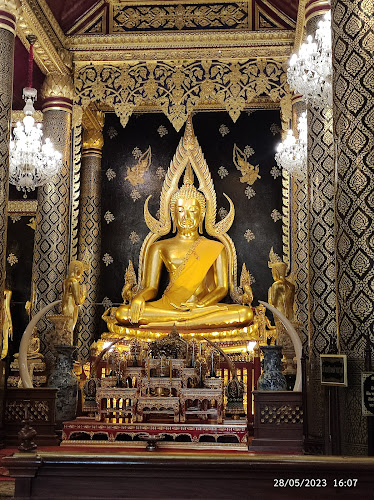
Phra Buddha Chinnarat
About Phra Buddha Chinnarat
Description
Let me tell you about one of Thailand's most magnificent Buddha images that has captured my heart during my travels through Phitsanulok. The Phra Buddha Chinnarat isn't just another Buddha statue - it's widely considered one of the most beautiful and spiritually significant Buddhist sculptures in all of Thailand. I still remember the first time I walked into Wat Phra Si Rattana Mahathat and saw this masterpiece - the way the golden surface caught the light literally took my breath away. The statue, crafted in the Sukhothai style, sits in perfect meditation pose (Bhumisparsha Mudra), with one hand touching the earth. But what really makes it special is that incredible flame-like halo behind the Buddha's head. Y'know how some art just speaks to your soul? This is exactly that kind of piece. The craftsmanship is so intricate that local legend says it must have been created by divine beings - and honestly, when you're standing there looking up at it, that doesn't seem so far-fetched.Key Features
• The Buddha image measures about 4.7 meters across at its widest point and sits atop an elaborately decorated base • Stunning flame-like aureole (that's the technical term for that gorgeous halo!) decorated with intricate Thai designs • Three-tiered base featuring traditional Thai motifs and decorative elements • Exceptional gold-bronze casting technique that creates an otherworldly glow when light hits the surface • Distinctive Sukhothai-style features including a flame-finial on the ushnisha (the Buddha's crown protuberance) • Perfectly proportioned face with serene expression characteristic of the finest Thai Buddhist art • Ornate decorative elements throughout the prayer hall that complement the main image • Historical murals adorning the temple walls depicting the Buddha's life journey • Traditional Thai architectural elements in the surrounding temple buildingBest Time to Visit
I've visited during different times of the year, and I gotta tell you - early morning is absolutely magical here. The temple opens around 6 AM, and that's when you'll catch the most serene atmosphere as local devotees come to make merit. The morning light filtering through the windows creates this ethereal effect on the golden surface of the Buddha image that's just... well, you have to see it to believe it. If you're looking to avoid crowds (and trust me, this place can get pretty busy), try planning your visit for weekday mornings. The temple gets particularly crowded during Buddhist holidays and weekends, especially between 9 AM and 4 PM. But honestly? Even with crowds, there's something special about experiencing the collective reverence of fellow visitors.How to Get There
Getting to the temple is pretty straightforward, especially if you're already in Phitsanulok's city center. You can easily grab a tuk-tuk or songthaew (those covered pickup trucks that serve as public transport) from anywhere in town. If you're driving yourself, there's plenty of free parking available - and yes, it's wheelchair accessible, which I think is pretty thoughtful. From Bangkok, you've got several options. I usually take the train - it's about a 5-hour journey and gives you amazing views of the Thai countryside. There are also regular buses from Bangkok's Mo Chit terminal, and if you're in a hurry, you can catch a quick hour-long flight to Phitsanulok Airport.Tips for Visiting
Okay, here's where I'll share some insider tips I've learned from my multiple visits. First off, dress respectfully - we're talking shoulders covered and knees-length bottoms. I once saw some tourists get turned away because they showed up in shorts, and trust me, you don't want that disappointment. Bring some cash for offerings if you'd like to participate in the local customs. They sell flowers, incense, and candles right at the temple. And don't forget to remove your shoes before entering the main hall - I always wear slip-ons to make this easier. Photography is allowed inside the temple, but be mindful and respectful. Flash photography isn't permitted, and you'll want to avoid standing directly in front of people who are praying. Pro tip: the best photos come from slightly off-center angles, especially in the morning light. Oh, and here's something most guidebooks won't tell you - there's usually a monk or temple guide who can explain the history and significance of the Buddha image in English. They don't advertise this service, but if you're respectful and show genuine interest, they're usually happy to share their knowledge. Just remember to speak softly and maintain appropriate body language - keep your head lower than the Buddha image when possible. Keep in mind that the temple can get pretty warm during midday, so bring water (though drink it outside the main hall). And if you're interested in the deeper spiritual aspects, try timing your visit during the morning chanting sessions - it's an experience that'll stay with you long after you've left Thailand.Key Features
- Key Features
- Best Time to Visit
- How to Get There
- Tips for Visiting
More Details
Updated June 12, 2025
Table of Contents
Description
Let me tell you about one of Thailand’s most magnificent Buddha images that has captured my heart during my travels through Phitsanulok. The Phra Buddha Chinnarat isn’t just another Buddha statue – it’s widely considered one of the most beautiful and spiritually significant Buddhist sculptures in all of Thailand. I still remember the first time I walked into Wat Phra Si Rattana Mahathat and saw this masterpiece – the way the golden surface caught the light literally took my breath away.
The statue, crafted in the Sukhothai style, sits in perfect meditation pose (Bhumisparsha Mudra), with one hand touching the earth. But what really makes it special is that incredible flame-like halo behind the Buddha’s head. Y’know how some art just speaks to your soul? This is exactly that kind of piece. The craftsmanship is so intricate that local legend says it must have been created by divine beings – and honestly, when you’re standing there looking up at it, that doesn’t seem so far-fetched.
Key Features
• The Buddha image measures about 4.7 meters across at its widest point and sits atop an elaborately decorated base
• Stunning flame-like aureole (that’s the technical term for that gorgeous halo!) decorated with intricate Thai designs
• Three-tiered base featuring traditional Thai motifs and decorative elements
• Exceptional gold-bronze casting technique that creates an otherworldly glow when light hits the surface
• Distinctive Sukhothai-style features including a flame-finial on the ushnisha (the Buddha’s crown protuberance)
• Perfectly proportioned face with serene expression characteristic of the finest Thai Buddhist art
• Ornate decorative elements throughout the prayer hall that complement the main image
• Historical murals adorning the temple walls depicting the Buddha’s life journey
• Traditional Thai architectural elements in the surrounding temple building
Best Time to Visit
I’ve visited during different times of the year, and I gotta tell you – early morning is absolutely magical here. The temple opens around 6 AM, and that’s when you’ll catch the most serene atmosphere as local devotees come to make merit. The morning light filtering through the windows creates this ethereal effect on the golden surface of the Buddha image that’s just… well, you have to see it to believe it.
If you’re looking to avoid crowds (and trust me, this place can get pretty busy), try planning your visit for weekday mornings. The temple gets particularly crowded during Buddhist holidays and weekends, especially between 9 AM and 4 PM. But honestly? Even with crowds, there’s something special about experiencing the collective reverence of fellow visitors.
How to Get There
Getting to the temple is pretty straightforward, especially if you’re already in Phitsanulok’s city center. You can easily grab a tuk-tuk or songthaew (those covered pickup trucks that serve as public transport) from anywhere in town. If you’re driving yourself, there’s plenty of free parking available – and yes, it’s wheelchair accessible, which I think is pretty thoughtful.
From Bangkok, you’ve got several options. I usually take the train – it’s about a 5-hour journey and gives you amazing views of the Thai countryside. There are also regular buses from Bangkok’s Mo Chit terminal, and if you’re in a hurry, you can catch a quick hour-long flight to Phitsanulok Airport.
Tips for Visiting
Okay, here’s where I’ll share some insider tips I’ve learned from my multiple visits. First off, dress respectfully – we’re talking shoulders covered and knees-length bottoms. I once saw some tourists get turned away because they showed up in shorts, and trust me, you don’t want that disappointment.
Bring some cash for offerings if you’d like to participate in the local customs. They sell flowers, incense, and candles right at the temple. And don’t forget to remove your shoes before entering the main hall – I always wear slip-ons to make this easier.
Photography is allowed inside the temple, but be mindful and respectful. Flash photography isn’t permitted, and you’ll want to avoid standing directly in front of people who are praying. Pro tip: the best photos come from slightly off-center angles, especially in the morning light.
Oh, and here’s something most guidebooks won’t tell you – there’s usually a monk or temple guide who can explain the history and significance of the Buddha image in English. They don’t advertise this service, but if you’re respectful and show genuine interest, they’re usually happy to share their knowledge. Just remember to speak softly and maintain appropriate body language – keep your head lower than the Buddha image when possible.
Keep in mind that the temple can get pretty warm during midday, so bring water (though drink it outside the main hall). And if you’re interested in the deeper spiritual aspects, try timing your visit during the morning chanting sessions – it’s an experience that’ll stay with you long after you’ve left Thailand.
Key Highlights
- Key Features
- Best Time to Visit
- How to Get There
- Tips for Visiting
Location
Places to Stay Near Phra Buddha Chinnarat
Find and Book a Tour
Explore More Travel Guides
No reviews found! Be the first to review!
Traveler Reviews for Phra Buddha Chinnarat
There are no reviews yet. Be the first one to write one.
Have you visited Phra Buddha Chinnarat? Help other travelers by sharing your review.
You Might Also Like

Wat Chula Manee, Ancient Temple Ruins - Rebuilt

Wat Wihan Thong Historical Site

Phitsanulok Railway Station Roundabout
Find Accommodations Nearby
Recommended Tours & Activities
Visitor Reviews
There are no reviews yet. Be the first one to write one.
Share Your Experience
Have you visited Phra Buddha Chinnarat? Help other travelers by leaving a review.