About New York Hall of Science

Description

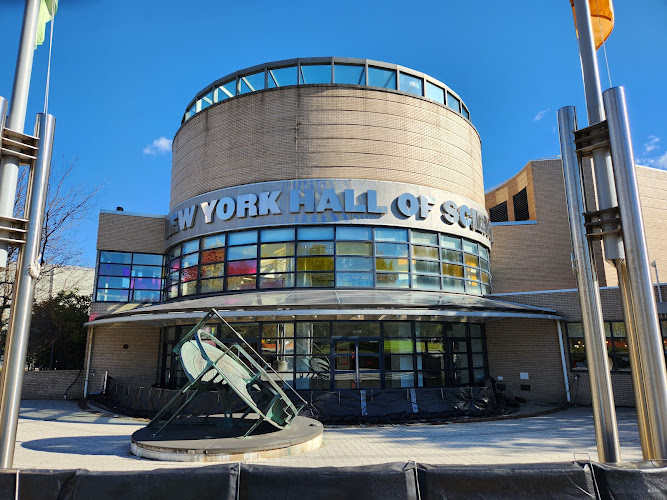
The New York Hall of Science is one of those places that quietly surprises you. It doesn’t scream for attention like some of Manhattan’s headline museums, but once inside, it sort of grabs your brain and refuses to let go. Housed in what used to be a pavilion from the 1964 World’s Fair, the building itself has this retro-futuristic feel. You can almost imagine families from the 60s walking through with wide eyes, thinking, wow, this is the future. And honestly? That spirit never really left.

Today, the museum holds more than 450 interactive science and technology exhibits. And when they say interactive, they actually mean it. Buttons to push, wheels to spin, experiments you can mess up (I definitely did), and explanations that don’t talk down to you. I remember visiting with a friend’s kid years ago and thinking I’d be bored within an hour. Nope. I was the one lingering at exhibits while the kid ran off to the next thing. Slightly embarrassing, but also kind of the point.

Travelers often overlook this spot because it’s not in the usual Midtown lineup. But that’s part of its charm. It feels local, lived-in, and refreshingly hands-on. Families love it, sure, but solo travelers, couples, and even science-curious adults find plenty to chew on. And yes, it can get busy, especially on weekends, but the space is big enough that you rarely feel trapped in a crowd.

The museum balances education and entertainment in a way that feels mostly honest. Some exhibits are a bit worn from years of enthusiastic hands (you’ll notice), but others feel genuinely cutting-edge. It’s not perfect. And that’s okay. In a city that sometimes feels too polished, the New York Hall of Science feels human.

Key Features

  • Over 450 hands-on science and technology exhibits that encourage learning by doing, not just reading signs.
  • Former 1964 World’s Fair structure, which gives the space historical weight and architectural character.
  • Dedicated areas focused on physics, space, biology, engineering, and everyday science you didn’t know you cared about.
  • Live science demonstrations and performances that change throughout the year and often surprise even repeat visitors.
  • Family-friendly layout with wide walkways, stroller access, and places to sit when legs (yours or your kid’s) give out.
  • Onsite theater showing educational films that are actually engaging, not nap-inducing.
  • Interactive outdoor science playground when weather cooperates, which is a lifesaver if kids have pent-up energy.
  • Gift shop stocked with smart toys and science kits that don’t feel like junk souvenirs.
  • Cafe and restaurant options, so you’re not forced to leave when hunger hits mid-experiment.
  • Accessible facilities throughout, including restrooms and entrances designed with mobility in mind.

Best Time to Visit

If you ask me, timing is everything here. Weekday mornings are gold, especially if you’re traveling without kids or with older ones who can move quickly. School groups tend to roll in late morning to early afternoon, and when that happens, the noise level jumps. Not unbearable, just… energetic. And if you’re sensitive to sensory overload, that’s worth knowing.

Weekends are busy. There’s no sugarcoating it. Families pack the place, and popular exhibits can develop short lines. But here’s the thing: the museum is designed for movement. People circulate. If one area feels too crowded, wander off and come back later. I’ve done that plenty of times and usually got a quieter moment.

Seasonally, fall and spring are the sweet spots. Summer can be hot, especially if you’re combining the visit with outdoor exploration, and winter weekends can turn into a refuge for cabin-fever families. If you’re traveling during school holidays, just mentally prepare and maybe arrive right when doors open. Early birds win here.

How to Get There

Getting to the New York Hall of Science is easier than it sounds, even if it’s not smack in the center of tourist territory. Public transportation is your friend. Subway lines and buses serve the surrounding area well, and from there it’s a manageable walk. The walk itself is kind of pleasant, actually, with open space and fewer skyscrapers looming over you.

If you’re driving, there are paid parking options nearby, and free street parking does exist if you’re lucky or patient. Just read signs carefully. This is New York, after all, and parking tickets have ruined many otherwise good days.

Rideshares are another solid option, especially if you’re traveling with kids or strollers and don’t feel like navigating transfers. Drop-off is straightforward, and you won’t have to worry about parking stress. I’ve done it both ways, and honestly, whichever fits your mood and budget that day is fine.

Tips for Visiting

First tip, and I say this from experience: buy tickets in advance. It saves time and mental energy, and on busy days it can mean the difference between walking right in or waiting around. Nobody likes waiting when there’s science to explore.

Second, dress comfortably. You’ll be walking, standing, bending over exhibits, and maybe even running after a kid who just discovered gravity. Layers help, since indoor temperatures can vary from room to room.

Third, don’t try to see everything. I know, it’s tempting. But 450 exhibits is a lot. Pick themes that interest you and let curiosity guide the rest. Some of my favorite moments came from accidentally stumbling into exhibits I hadn’t planned to see.

If you’re visiting with children, build in breaks. The cafe is useful, yes, but even just sitting and people-watching for ten minutes can reset everyone’s mood. And don’t rush the outdoor areas if weather allows. They’re underrated and give kids a chance to move freely.

Accessibility is solid here, but if you have specific needs, it’s smart to ask staff when you arrive. They’re generally helpful and not rushed, which is refreshing.

One last personal note: let yourself play. Adults sometimes feel silly engaging fully, but that’s missing the point. Touch the exhibits. Ask dumb questions. Laugh when something doesn’t work the first time. Science is messy and curious and imperfect. And honestly, that’s what makes the New York Hall of Science worth the trip. It reminds you that learning doesn’t stop just because you’re traveling, or grown up, or tired. And that reminder sticks with you longer than you’d expect.

Key Features

  • Over 450 hands-on science and technology exhibits that encourage learning by doing, not just reading signs.
  • Former 1964 World’s Fair structure, which gives the space historical weight and architectural character.
  • Dedicated areas focused on physics, space, biology, engineering, and everyday science you didn’t know you cared about.
  • Live science demonstrations and performances that change throughout the year and often surprise even repeat visitors.
  • Family-friendly layout with wide walkways, stroller access, and places to sit when legs (yours or your kid’s) give out.
  • Onsite theater showing educational films that are actually engaging, not nap-inducing.
  • Interactive outdoor science playground when weather cooperates, which is a lifesaver if kids have pent-up energy.
  • Gift shop stocked with smart toys and science kits that don’t feel like junk souvenirs.

More Details

Updated December 31, 2025

Description

The New York Hall of Science is one of those places that quietly surprises you. It doesn’t scream for attention like some of Manhattan’s headline museums, but once inside, it sort of grabs your brain and refuses to let go. Housed in what used to be a pavilion from the 1964 World’s Fair, the building itself has this retro-futuristic feel. You can almost imagine families from the 60s walking through with wide eyes, thinking, wow, this is the future. And honestly? That spirit never really left.

Today, the museum holds more than 450 interactive science and technology exhibits. And when they say interactive, they actually mean it. Buttons to push, wheels to spin, experiments you can mess up (I definitely did), and explanations that don’t talk down to you. I remember visiting with a friend’s kid years ago and thinking I’d be bored within an hour. Nope. I was the one lingering at exhibits while the kid ran off to the next thing. Slightly embarrassing, but also kind of the point.

Travelers often overlook this spot because it’s not in the usual Midtown lineup. But that’s part of its charm. It feels local, lived-in, and refreshingly hands-on. Families love it, sure, but solo travelers, couples, and even science-curious adults find plenty to chew on. And yes, it can get busy, especially on weekends, but the space is big enough that you rarely feel trapped in a crowd.

The museum balances education and entertainment in a way that feels mostly honest. Some exhibits are a bit worn from years of enthusiastic hands (you’ll notice), but others feel genuinely cutting-edge. It’s not perfect. And that’s okay. In a city that sometimes feels too polished, the New York Hall of Science feels human.

Key Features

  • Over 450 hands-on science and technology exhibits that encourage learning by doing, not just reading signs.
  • Former 1964 World’s Fair structure, which gives the space historical weight and architectural character.
  • Dedicated areas focused on physics, space, biology, engineering, and everyday science you didn’t know you cared about.
  • Live science demonstrations and performances that change throughout the year and often surprise even repeat visitors.
  • Family-friendly layout with wide walkways, stroller access, and places to sit when legs (yours or your kid’s) give out.
  • Onsite theater showing educational films that are actually engaging, not nap-inducing.
  • Interactive outdoor science playground when weather cooperates, which is a lifesaver if kids have pent-up energy.
  • Gift shop stocked with smart toys and science kits that don’t feel like junk souvenirs.
  • Cafe and restaurant options, so you’re not forced to leave when hunger hits mid-experiment.
  • Accessible facilities throughout, including restrooms and entrances designed with mobility in mind.

Best Time to Visit

If you ask me, timing is everything here. Weekday mornings are gold, especially if you’re traveling without kids or with older ones who can move quickly. School groups tend to roll in late morning to early afternoon, and when that happens, the noise level jumps. Not unbearable, just… energetic. And if you’re sensitive to sensory overload, that’s worth knowing.

Weekends are busy. There’s no sugarcoating it. Families pack the place, and popular exhibits can develop short lines. But here’s the thing: the museum is designed for movement. People circulate. If one area feels too crowded, wander off and come back later. I’ve done that plenty of times and usually got a quieter moment.

Seasonally, fall and spring are the sweet spots. Summer can be hot, especially if you’re combining the visit with outdoor exploration, and winter weekends can turn into a refuge for cabin-fever families. If you’re traveling during school holidays, just mentally prepare and maybe arrive right when doors open. Early birds win here.

How to Get There

Getting to the New York Hall of Science is easier than it sounds, even if it’s not smack in the center of tourist territory. Public transportation is your friend. Subway lines and buses serve the surrounding area well, and from there it’s a manageable walk. The walk itself is kind of pleasant, actually, with open space and fewer skyscrapers looming over you.

If you’re driving, there are paid parking options nearby, and free street parking does exist if you’re lucky or patient. Just read signs carefully. This is New York, after all, and parking tickets have ruined many otherwise good days.

Rideshares are another solid option, especially if you’re traveling with kids or strollers and don’t feel like navigating transfers. Drop-off is straightforward, and you won’t have to worry about parking stress. I’ve done it both ways, and honestly, whichever fits your mood and budget that day is fine.

Tips for Visiting

First tip, and I say this from experience: buy tickets in advance. It saves time and mental energy, and on busy days it can mean the difference between walking right in or waiting around. Nobody likes waiting when there’s science to explore.

Second, dress comfortably. You’ll be walking, standing, bending over exhibits, and maybe even running after a kid who just discovered gravity. Layers help, since indoor temperatures can vary from room to room.

Third, don’t try to see everything. I know, it’s tempting. But 450 exhibits is a lot. Pick themes that interest you and let curiosity guide the rest. Some of my favorite moments came from accidentally stumbling into exhibits I hadn’t planned to see.

If you’re visiting with children, build in breaks. The cafe is useful, yes, but even just sitting and people-watching for ten minutes can reset everyone’s mood. And don’t rush the outdoor areas if weather allows. They’re underrated and give kids a chance to move freely.

Accessibility is solid here, but if you have specific needs, it’s smart to ask staff when you arrive. They’re generally helpful and not rushed, which is refreshing.

One last personal note: let yourself play. Adults sometimes feel silly engaging fully, but that’s missing the point. Touch the exhibits. Ask dumb questions. Laugh when something doesn’t work the first time. Science is messy and curious and imperfect. And honestly, that’s what makes the New York Hall of Science worth the trip. It reminds you that learning doesn’t stop just because you’re traveling, or grown up, or tired. And that reminder sticks with you longer than you’d expect.

Key Highlights

  • Over 450 hands-on science and technology exhibits that encourage learning by doing, not just reading signs.
  • Former 1964 World’s Fair structure, which gives the space historical weight and architectural character.
  • Dedicated areas focused on physics, space, biology, engineering, and everyday science you didn’t know you cared about.
  • Live science demonstrations and performances that change throughout the year and often surprise even repeat visitors.
  • Family-friendly layout with wide walkways, stroller access, and places to sit when legs (yours or your kid’s) give out.
  • Onsite theater showing educational films that are actually engaging, not nap-inducing.
  • Interactive outdoor science playground when weather cooperates, which is a lifesaver if kids have pent-up energy.
  • Gift shop stocked with smart toys and science kits that don’t feel like junk souvenirs.

Location

Places to Stay Near New York Hall of Science

Find and Book a Tour

Explore More Travel Guides

No reviews found! Be the first to review!

Traveler Reviews for New York Hall of Science

There are no reviews yet. Be the first one to write one.

Share Your Experience

Have you visited New York Hall of Science? Help other travelers by sharing your review.

Find Accommodations Nearby

Recommended Tours & Activities

Visitor Reviews

There are no reviews yet. Be the first one to write one.

Share Your Experience

Have you visited New York Hall of Science? Help other travelers by leaving a review.