
Nationality Rooms at the Cathedral of Learning
About Nationality Rooms at the Cathedral of Learning
Description
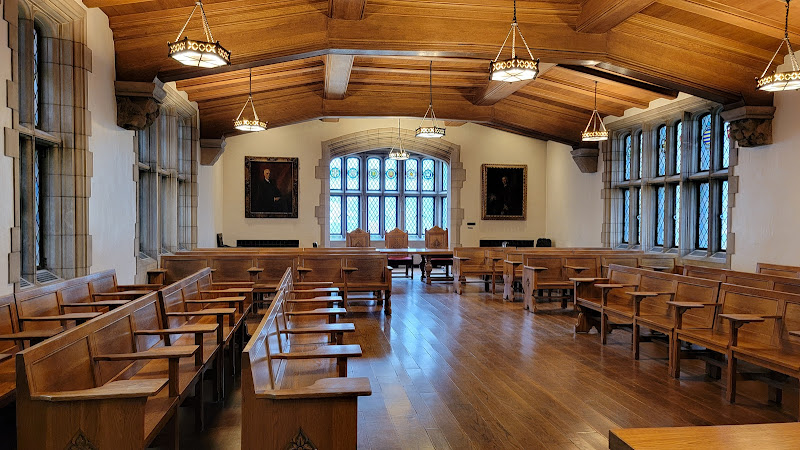
The Nationality Rooms at the Cathedral of Learning are a museum-like collection of working classrooms and display spaces that celebrate the cultures of the people who settled Pittsburgh. Housed within the University of Pittsburgh's iconic Cathedral of Learning, the program grew from a community effort to build classrooms that double as cultural monuments. Today, visitors encounter thirty-one nationality and heritage rooms that range in style from medieval Tudor to Ottoman to colonial American. Many rooms were crafted with materials imported from the original countries, and a number include authentic artifacts and artwork created by native artists. The result is not simply a set of pretty interiors — these are functioning teaching spaces used by Pitt students and scholars, and they still hold classes, talks, and community events.
The rooms are primarily located on the first and third floors of the Cathedral of Learning. While most rooms are open for public viewing when not in use for classes, some are display-only and accessible only by guided tour. Since 1944, student guides from the Quo Vadis organization have led guided tours, and those tours remain one of the best ways to appreciate the stories behind each room: who funded it, what historical period it references, and how everyday objects were chosen to convey cultural identity. The Nationality Rooms and Intercultural Exchange Programs office manages maintenance and programming, working closely with room committees representing local ethnic communities.
Visitors often remark that the rooms feel like a miniature world tour without leaving Oakland. The English Classroom, for instance, is the largest and contains fragments and relics tied to the British House of Commons; the Scottish Room was one of the first dedicated; the Early American Room and the Syria-Lebanon Room serve as display rooms with specially curated artifacts. The Swiss and Turkish rooms were among the most recent additions in the modern era. And yes, the sheer contrast from one doorway to the next keeps even repeat visitors delighted: each room depicts a different architecture and era, from classrooms inspired by ancient Greece to interiors modeled on Central European music halls.
Practically speaking, the Nationality Rooms are a museum, a cultural center, and a historical landmark all rolled into one. The Pittsburgh History and Landmarks Foundation recognizes the collection as a significant part of the city’s built heritage. For travelers who care about history, design, and local immigrant stories, these rooms provide a concentrated, accessible, and surprisingly moving look at how global influences shaped a specific American place.
Key Features
- Thirty-one nationality and heritage rooms depicting cultures from Europe, Asia, the Middle East, Africa, and the Americas.
- Functional classrooms used for teaching at the University of Pittsburgh, giving the rooms a living, active purpose.
- Guided tours led by trained student guides (Quo Vadis) that include historical context, construction details, and colorful anecdotes.
- Self-guided options available with taped and written materials at the Nationality Rooms information desk when tours are not running.
- Two display-only rooms (including the Early American Room and the Syria-Lebanon Room) viewable on guided tours.
- Imported materials and artifacts — from carved wood and stone to stained glass and textiles — many provided or crafted by communities and governments.
- Onsite services: gift shop, restrooms, Wi‑Fi, and wheelchair accessible entrances, parking, and restrooms.
- Family-friendly atmosphere and programming; a good place for kids to encounter world cultures up close.
- Paid parking garage and paid street parking nearby; transit-friendly location in the Oakland neighborhood of Pittsburgh.
- Admission fee required; tickets are recommended to purchase in advance, especially for guided tours and peak times.
Best Time to Visit
The Nationality Rooms are enjoyable year-round, but the best time to visit depends on what the traveler wants. For fewer crowds and easier access to self-guided touring, weekday mornings during the academic term are ideal; tours often run throughout the day but rooms may be closed if classes are in session. During the university academic year, guided tours are frequent and often filled with local students who bring youthful energy and interesting asides.
Summer months attract more tourists, and during that season the Nationality Rooms sometimes require guided tours only, so you’ll want to reserve ahead. Holidays can be unexpectedly charming: several room committees decorate for Christmas or other cultural holidays, so if the atmosphere of seasonal decor appeals to you, mid-December can be special — though busier. Conversely, if you like to poke around slowly with more elbow room, late autumn or early spring weekdays often offer a more contemplative visit.
One practical tip: if you’re visiting Pittsburgh as a day trip and plan to cram in more Oakland attractions, schedule the Cathedral of Learning visit for the morning. That often leaves time to explore nearby museums, university grounds, and a meal in the neighborhood afterward. Also, certain rooms are only accessible via guided tour (the Early American and Syria-Lebanon display rooms among them), so check the tour times and book early if those rooms top your must-see list.
How to Get There
The Nationality Rooms sit in the heart of Oakland, the University of Pittsburgh neighborhood, making them straightforward to reach whether you are driving, taking transit, or walking from nearby attractions. Public transportation in Pittsburgh serves Oakland well; several bus lines stop in the area and the university is a common destination for local transit routes. For many travelers staying downtown or in neighboring districts, a 10–20 minute drive into Oakland is normal.
Driving visitors should budget for paid parking. There is a paid parking garage and metered street parking nearby; rates vary by time and day. The Cathedral of Learning has a wheelchair accessible entrance and accessible restroom, and there is wheelchair accessible parking in proximity, but those spaces can fill fast, so arriving early helps. Ridesharing and taxis are also sensible options if parking seems like a hassle — Oakland is compact enough that a short drop-off followed by a brief walk usually works well.
From the University of Pittsburgh campus core, the Cathedral of Learning is easy to find — just look for the tall Gothic tower that dominates the skyline. Once inside, head to the Nationality Rooms information desk on the first floor near the Fifth Avenue entrance for self-guided materials or to check in for guided tours. If you’re visiting with children or require mobility accommodations, informing staff at arrival helps streamline entry and ensure the best route through the building.
Tips for Visiting
The following tips come from a mix of practical experience and the little things that make a visit more memorable. The author recalls a first visit when the student guide paused to point out a tiny carved detail that turned out to be the highlight of the whole tour — so take the time to listen to the stories behind the artifacts. And don’t rush: each room rewards slow looking.
- Buy or reserve tickets in advance. Guided tours can sell out, especially in summer and during special events. Purchasing ahead saves disappointment.
- Decide whether you want a guided tour. Guided tours deliver context, anecdotes, and access to display-only rooms; self-guided tours let you linger at your own pace. When the author traveled with family, a guided tour turned what might have been a quick walkthrough into a layered experience that kids and adults both enjoyed.
- Arrive early in the day. Mornings tend to be quieter and it’s easier to find accessible parking and quieter rooms for photography.
- Respect classroom use. Remember these are functioning classrooms; if a room is in session, it will be closed. Staff and guides are good at letting visitors know alternates and the best sequence to visit rooms that are open.
- Bring a camera. Photography is often allowed, but be mindful of posted rules and audio recordings if a class is happening. Close-up details capture the craftsmanship — carved wood, tilework, ceiling beams — so don’t only shoot wide angles.
- Check holiday schedules. Some rooms get special decorations for Christmas and other observances; those visits can be charming but busier. Also note that hours may vary on university holidays.
- Plan for a visit to nearby Oakland spots. Pair the Nationality Rooms with other University of Pittsburgh attractions, local museums, or a meal at one of the neighborhood restaurants. The author often plans a full morning here and then heads to a nearby café for a late lunch.
- Accessibility: if mobility is a concern, confirm accessibility details ahead of time. Wheelchair accessible entrances and restrooms exist, but staff can advise the smoothest route and nearest parking.
- Allow time for the gift shop. The onsite gift shop sells books, reproductions, and souvenirs tied to the rooms’ cultures — nice for travelers who want a meaningful memento beyond a typical magnet.
- Be ready for surprises. The Nationality Rooms are full of little, unexpected details: a hidden staircase story here, an imported tile pattern there. Keep an eye out for small plaques and donor acknowledgements that trace the immigrant histories which birthed each room.
In short, the Nationality Rooms at the Cathedral of Learning offer more than visually striking interiors; they provide a layered cultural narrative about Pittsburgh and the people who made the city. Whether a traveler is passionate about architecture, looking for family-friendly cultural learning, or simply after a uniquely Pittsburgh experience, the rooms reward curiosity and a little planning. The author still recommends a guided tour the first time — it frames the visit, surfaces the best stories, and usually introduces a delightful detail that nobody expects to find in a classroom.
Key Features
- 31 nation-themed classrooms reflecting global architectural styles and craftsmanship
- Rooms designed and donated by local immigrant communities with authentic materials and motifs
- Functioning classrooms that combine contemporary use with historic preservation
- Guided and self-guided tour options that include historical context and anecdotes
- Located within the iconic Cathedral of Learning—an architectural landmark on the University of Pittsburgh campus
More Details
Updated September 16, 2025
Table of Contents
- Description
- Key Features
- Best Time to Visit
- How to Get There
- Tips for Visiting
- Key Highlights
- Location
- Places to Stay Near Nationality Rooms at the Cathedral of Learning
- Find and Book a Tour
- Explore More Travel Guides
- Nearby Places You Might Like
- Traveler Reviews for Nationality Rooms at the Cathedral of Learning
- Share Your Experience
Description
The Nationality Rooms at the Cathedral of Learning are a museum-like collection of working classrooms and display spaces that celebrate the cultures of the people who settled Pittsburgh. Housed within the University of Pittsburgh’s iconic Cathedral of Learning, the program grew from a community effort to build classrooms that double as cultural monuments. Today, visitors encounter thirty-one nationality and heritage rooms that range in style from medieval Tudor to Ottoman to colonial American. Many rooms were crafted with materials imported from the original countries, and a number include authentic artifacts and artwork created by native artists. The result is not simply a set of pretty interiors — these are functioning teaching spaces used by Pitt students and scholars, and they still hold classes, talks, and community events.
The rooms are primarily located on the first and third floors of the Cathedral of Learning. While most rooms are open for public viewing when not in use for classes, some are display-only and accessible only by guided tour. Since 1944, student guides from the Quo Vadis organization have led guided tours, and those tours remain one of the best ways to appreciate the stories behind each room: who funded it, what historical period it references, and how everyday objects were chosen to convey cultural identity. The Nationality Rooms and Intercultural Exchange Programs office manages maintenance and programming, working closely with room committees representing local ethnic communities.
Visitors often remark that the rooms feel like a miniature world tour without leaving Oakland. The English Classroom, for instance, is the largest and contains fragments and relics tied to the British House of Commons; the Scottish Room was one of the first dedicated; the Early American Room and the Syria-Lebanon Room serve as display rooms with specially curated artifacts. The Swiss and Turkish rooms were among the most recent additions in the modern era. And yes, the sheer contrast from one doorway to the next keeps even repeat visitors delighted: each room depicts a different architecture and era, from classrooms inspired by ancient Greece to interiors modeled on Central European music halls.
Practically speaking, the Nationality Rooms are a museum, a cultural center, and a historical landmark all rolled into one. The Pittsburgh History and Landmarks Foundation recognizes the collection as a significant part of the city’s built heritage. For travelers who care about history, design, and local immigrant stories, these rooms provide a concentrated, accessible, and surprisingly moving look at how global influences shaped a specific American place.
Key Features
- Thirty-one nationality and heritage rooms depicting cultures from Europe, Asia, the Middle East, Africa, and the Americas.
- Functional classrooms used for teaching at the University of Pittsburgh, giving the rooms a living, active purpose.
- Guided tours led by trained student guides (Quo Vadis) that include historical context, construction details, and colorful anecdotes.
- Self-guided options available with taped and written materials at the Nationality Rooms information desk when tours are not running.
- Two display-only rooms (including the Early American Room and the Syria-Lebanon Room) viewable on guided tours.
- Imported materials and artifacts — from carved wood and stone to stained glass and textiles — many provided or crafted by communities and governments.
- Onsite services: gift shop, restrooms, Wi‑Fi, and wheelchair accessible entrances, parking, and restrooms.
- Family-friendly atmosphere and programming; a good place for kids to encounter world cultures up close.
- Paid parking garage and paid street parking nearby; transit-friendly location in the Oakland neighborhood of Pittsburgh.
- Admission fee required; tickets are recommended to purchase in advance, especially for guided tours and peak times.
Best Time to Visit
The Nationality Rooms are enjoyable year-round, but the best time to visit depends on what the traveler wants. For fewer crowds and easier access to self-guided touring, weekday mornings during the academic term are ideal; tours often run throughout the day but rooms may be closed if classes are in session. During the university academic year, guided tours are frequent and often filled with local students who bring youthful energy and interesting asides.
Summer months attract more tourists, and during that season the Nationality Rooms sometimes require guided tours only, so you’ll want to reserve ahead. Holidays can be unexpectedly charming: several room committees decorate for Christmas or other cultural holidays, so if the atmosphere of seasonal decor appeals to you, mid-December can be special — though busier. Conversely, if you like to poke around slowly with more elbow room, late autumn or early spring weekdays often offer a more contemplative visit.
One practical tip: if you’re visiting Pittsburgh as a day trip and plan to cram in more Oakland attractions, schedule the Cathedral of Learning visit for the morning. That often leaves time to explore nearby museums, university grounds, and a meal in the neighborhood afterward. Also, certain rooms are only accessible via guided tour (the Early American and Syria-Lebanon display rooms among them), so check the tour times and book early if those rooms top your must-see list.
How to Get There
The Nationality Rooms sit in the heart of Oakland, the University of Pittsburgh neighborhood, making them straightforward to reach whether you are driving, taking transit, or walking from nearby attractions. Public transportation in Pittsburgh serves Oakland well; several bus lines stop in the area and the university is a common destination for local transit routes. For many travelers staying downtown or in neighboring districts, a 10–20 minute drive into Oakland is normal.
Driving visitors should budget for paid parking. There is a paid parking garage and metered street parking nearby; rates vary by time and day. The Cathedral of Learning has a wheelchair accessible entrance and accessible restroom, and there is wheelchair accessible parking in proximity, but those spaces can fill fast, so arriving early helps. Ridesharing and taxis are also sensible options if parking seems like a hassle — Oakland is compact enough that a short drop-off followed by a brief walk usually works well.
From the University of Pittsburgh campus core, the Cathedral of Learning is easy to find — just look for the tall Gothic tower that dominates the skyline. Once inside, head to the Nationality Rooms information desk on the first floor near the Fifth Avenue entrance for self-guided materials or to check in for guided tours. If you’re visiting with children or require mobility accommodations, informing staff at arrival helps streamline entry and ensure the best route through the building.
Tips for Visiting
The following tips come from a mix of practical experience and the little things that make a visit more memorable. The author recalls a first visit when the student guide paused to point out a tiny carved detail that turned out to be the highlight of the whole tour — so take the time to listen to the stories behind the artifacts. And don’t rush: each room rewards slow looking.
- Buy or reserve tickets in advance. Guided tours can sell out, especially in summer and during special events. Purchasing ahead saves disappointment.
- Decide whether you want a guided tour. Guided tours deliver context, anecdotes, and access to display-only rooms; self-guided tours let you linger at your own pace. When the author traveled with family, a guided tour turned what might have been a quick walkthrough into a layered experience that kids and adults both enjoyed.
- Arrive early in the day. Mornings tend to be quieter and it’s easier to find accessible parking and quieter rooms for photography.
- Respect classroom use. Remember these are functioning classrooms; if a room is in session, it will be closed. Staff and guides are good at letting visitors know alternates and the best sequence to visit rooms that are open.
- Bring a camera. Photography is often allowed, but be mindful of posted rules and audio recordings if a class is happening. Close-up details capture the craftsmanship — carved wood, tilework, ceiling beams — so don’t only shoot wide angles.
- Check holiday schedules. Some rooms get special decorations for Christmas and other observances; those visits can be charming but busier. Also note that hours may vary on university holidays.
- Plan for a visit to nearby Oakland spots. Pair the Nationality Rooms with other University of Pittsburgh attractions, local museums, or a meal at one of the neighborhood restaurants. The author often plans a full morning here and then heads to a nearby café for a late lunch.
- Accessibility: if mobility is a concern, confirm accessibility details ahead of time. Wheelchair accessible entrances and restrooms exist, but staff can advise the smoothest route and nearest parking.
- Allow time for the gift shop. The onsite gift shop sells books, reproductions, and souvenirs tied to the rooms’ cultures — nice for travelers who want a meaningful memento beyond a typical magnet.
- Be ready for surprises. The Nationality Rooms are full of little, unexpected details: a hidden staircase story here, an imported tile pattern there. Keep an eye out for small plaques and donor acknowledgements that trace the immigrant histories which birthed each room.
In short, the Nationality Rooms at the Cathedral of Learning offer more than visually striking interiors; they provide a layered cultural narrative about Pittsburgh and the people who made the city. Whether a traveler is passionate about architecture, looking for family-friendly cultural learning, or simply after a uniquely Pittsburgh experience, the rooms reward curiosity and a little planning. The author still recommends a guided tour the first time — it frames the visit, surfaces the best stories, and usually introduces a delightful detail that nobody expects to find in a classroom.
Key Highlights
- 31 nation-themed classrooms reflecting global architectural styles and craftsmanship
- Rooms designed and donated by local immigrant communities with authentic materials and motifs
- Functioning classrooms that combine contemporary use with historic preservation
- Guided and self-guided tour options that include historical context and anecdotes
- Located within the iconic Cathedral of Learning—an architectural landmark on the University of Pittsburgh campus
Location
Places to Stay Near Nationality Rooms at the Cathedral of Learning
Find and Book a Tour
Explore More Travel Guides
No reviews found! Be the first to review!
Traveler Reviews for Nationality Rooms at the Cathedral of Learning
There are no reviews yet. Be the first one to write one.
Have you visited Nationality Rooms at the Cathedral of Learning? Help other travelers by sharing your review.
Nearby Attractions
You Might Also Like
Mt. Washington Park
Dormont Park
Beechview - Seldom Seen Greenway
Find Accommodations Nearby
Recommended Tours & Activities
Visitor Reviews
There are no reviews yet. Be the first one to write one.
Share Your Experience
Have you visited Nationality Rooms at the Cathedral of Learning? Help other travelers by leaving a review.