
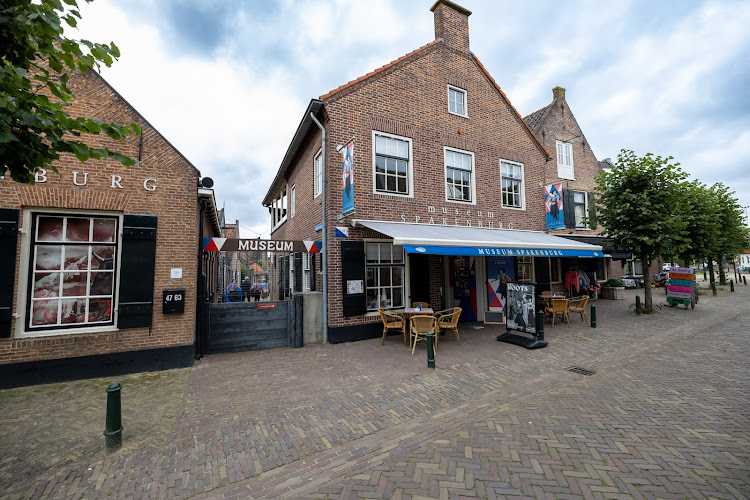
Museum Spakenburg
About Museum Spakenburg
Description
Museum Spakenburg tells the story of a community shaped by the sea, the land, and the traditions that still echo through daily life in this Dutch fishing village. It’s not one of those sterile museums where you just stare at objects behind glass. Instead, it feels like stepping into a living timeline. You wander past reconstructed fishermen’s homes, peek inside a smokehouse, and even walk through a small schoolroom that looks like the children just left for recess. There’s a farm complete with a haystack, a little shop stocked as if it were still open for business, and displays of shipbuilding and net-mending that remind you how hard life once was here. And then, just when you think you’re lost in the past, the museum surprises you with nods to modern life—like the local football rivalry between the “blue” and “red” clubs, which is practically a religion in Spakenburg.
What makes this place stand out is the way it balances tradition and innovation. The exhibitions are set up in a contemporary way, with over 1,500 square meters of space to explore. It’s immersive without being overwhelming, and it doesn’t shy away from showing the contrasts: old versus new, hardship versus celebration, work versus leisure. The traditional costumes are a highlight too—beautifully displayed in a finale that shows just how much pride the people here take in their heritage. Some visitors might find parts of the museum a bit old-fashioned, while others absolutely love the authenticity. But that’s the charm: it’s not polished to perfection, and it doesn’t need to be. It feels real.
Key Features
- Over 1,500 m² of exhibition space covering fishing, farming, shipbuilding, and local life
- Reconstructed fishermen’s houses, a farm, a shop, a schoolroom, and a smokehouse
- Permanent and rotating exhibitions, so there’s always something new to see
- Stunning collection of traditional Spakenburg costumes, displayed in a dramatic finale
- Exhibits dedicated to local football culture (blue vs. red)—a unique cultural touch
- Family-friendly with discounts for kids and family tickets available
- Accessibility features including wheelchair access, restrooms, and even wheelchair rental
- On-site café serving coffee and traditional Spakenburg cake
- Gift shop with locally inspired souvenirs
- Guided tours available for deeper insights into the history and traditions
Best Time to Visit
Honestly, there isn’t really a bad time to visit Museum Spakenburg, but the experience does shift with the seasons. In spring and summer, the harbor outside the museum comes alive with boats and open-air events, so combining a museum visit with a stroll along the water feels extra special. If you’re lucky, you might even catch a traditional costume day in the village, where locals still wear the clothing you’ve just seen inside the museum. Autumn has its own charm—fewer crowds, cozy vibes, and a slower pace that lets you take your time with the exhibits. Winter is quieter, but stepping into the warm interiors of the museum while the wind blows outside adds a certain coziness. Personally, I’d say late spring is the sweet spot: good weather, lively atmosphere, and plenty of daylight to explore both the museum and the town.
How to Get There
Getting to Museum Spakenburg is pretty straightforward, though it depends a bit on where you’re starting. If you’re coming from Amsterdam or Utrecht, public transport will get you there in just over an hour, with buses connecting from nearby train stations. Driving is also an easy option, and parking is available close to the museum. The town itself is compact, so once you’re there, everything is walkable. I actually enjoyed arriving by car the last time I went because the drive through the Dutch countryside—flat fields, cows, and windmills—already felt like part of the trip. But if you’re not a fan of driving, the bus ride is comfortable and drops you right in the heart of Spakenburg.
Tips for Visiting
If you’re planning a trip, here are a few things I’ve learned from experience (and from chatting with other visitors):
- Take your time. The museum isn’t enormous, but there’s a lot of detail in the exhibits. Rushing through means you’ll miss the little touches, like the way the interiors are decorated.
- Start with coffee and cake. The museum café serves traditional Spakenburg cake, and honestly, it’s worth arriving a bit early just to enjoy that moment before diving into history.
- Check for temporary exhibitions. They rotate regularly, and sometimes the themes are surprisingly modern, which makes a nice contrast with the permanent displays.
- Bring the kids. Children usually love the interactive parts, and there are family discounts that make it affordable. Plus, the reconstructed homes feel like stepping into a storybook.
- Accessibility is well thought out. If you or someone in your group needs wheelchair access, the museum has ramps, accessible restrooms, and even wheelchair rentals.
- Combine it with the harbor. The museum is right by the old harbor, and walking around after your visit makes the whole experience richer. You’ll see real fishing boats and maybe even catch sight of a traditional botter boat.
- Don’t skip the costumes. Save some energy for the end, because the costume exhibition is a real highlight and deserves your full attention.
Visiting Museum Spakenburg isn’t just about looking at old things—it’s about feeling the rhythm of a community that has balanced tradition and change for centuries. Some parts are polished, others a bit rough around the edges, but together they tell a story that feels authentic. And that’s what makes it worth the trip. Whether you’re a history buff, a family looking for an educational outing, or just someone curious about Dutch culture beyond the big cities, this museum offers a window into a way of life that still shapes Spakenburg today.
Key Features
- Over 1,500 m² of exhibition space covering fishing, farming, shipbuilding, and local life
- Reconstructed fishermen’s houses, a farm, a shop, a schoolroom, and a smokehouse
- Permanent and rotating exhibitions, so there’s always something new to see
- Stunning collection of traditional Spakenburg costumes, displayed in a dramatic finale
- Exhibits dedicated to local football culture (blue vs. red)—a unique cultural touch
- Family-friendly with discounts for kids and family tickets available
- Accessibility features including wheelchair access, restrooms, and even wheelchair rental
- On-site café serving coffee and traditional Spakenburg cake
More Details
Updated September 8, 2025
Table of Contents
Description
Museum Spakenburg tells the story of a community shaped by the sea, the land, and the traditions that still echo through daily life in this Dutch fishing village. It’s not one of those sterile museums where you just stare at objects behind glass. Instead, it feels like stepping into a living timeline. You wander past reconstructed fishermen’s homes, peek inside a smokehouse, and even walk through a small schoolroom that looks like the children just left for recess. There’s a farm complete with a haystack, a little shop stocked as if it were still open for business, and displays of shipbuilding and net-mending that remind you how hard life once was here. And then, just when you think you’re lost in the past, the museum surprises you with nods to modern life—like the local football rivalry between the “blue” and “red” clubs, which is practically a religion in Spakenburg.
What makes this place stand out is the way it balances tradition and innovation. The exhibitions are set up in a contemporary way, with over 1,500 square meters of space to explore. It’s immersive without being overwhelming, and it doesn’t shy away from showing the contrasts: old versus new, hardship versus celebration, work versus leisure. The traditional costumes are a highlight too—beautifully displayed in a finale that shows just how much pride the people here take in their heritage. Some visitors might find parts of the museum a bit old-fashioned, while others absolutely love the authenticity. But that’s the charm: it’s not polished to perfection, and it doesn’t need to be. It feels real.
Key Features
- Over 1,500 m² of exhibition space covering fishing, farming, shipbuilding, and local life
- Reconstructed fishermen’s houses, a farm, a shop, a schoolroom, and a smokehouse
- Permanent and rotating exhibitions, so there’s always something new to see
- Stunning collection of traditional Spakenburg costumes, displayed in a dramatic finale
- Exhibits dedicated to local football culture (blue vs. red)—a unique cultural touch
- Family-friendly with discounts for kids and family tickets available
- Accessibility features including wheelchair access, restrooms, and even wheelchair rental
- On-site café serving coffee and traditional Spakenburg cake
- Gift shop with locally inspired souvenirs
- Guided tours available for deeper insights into the history and traditions
Best Time to Visit
Honestly, there isn’t really a bad time to visit Museum Spakenburg, but the experience does shift with the seasons. In spring and summer, the harbor outside the museum comes alive with boats and open-air events, so combining a museum visit with a stroll along the water feels extra special. If you’re lucky, you might even catch a traditional costume day in the village, where locals still wear the clothing you’ve just seen inside the museum. Autumn has its own charm—fewer crowds, cozy vibes, and a slower pace that lets you take your time with the exhibits. Winter is quieter, but stepping into the warm interiors of the museum while the wind blows outside adds a certain coziness. Personally, I’d say late spring is the sweet spot: good weather, lively atmosphere, and plenty of daylight to explore both the museum and the town.
How to Get There
Getting to Museum Spakenburg is pretty straightforward, though it depends a bit on where you’re starting. If you’re coming from Amsterdam or Utrecht, public transport will get you there in just over an hour, with buses connecting from nearby train stations. Driving is also an easy option, and parking is available close to the museum. The town itself is compact, so once you’re there, everything is walkable. I actually enjoyed arriving by car the last time I went because the drive through the Dutch countryside—flat fields, cows, and windmills—already felt like part of the trip. But if you’re not a fan of driving, the bus ride is comfortable and drops you right in the heart of Spakenburg.
Tips for Visiting
If you’re planning a trip, here are a few things I’ve learned from experience (and from chatting with other visitors):
- Take your time. The museum isn’t enormous, but there’s a lot of detail in the exhibits. Rushing through means you’ll miss the little touches, like the way the interiors are decorated.
- Start with coffee and cake. The museum café serves traditional Spakenburg cake, and honestly, it’s worth arriving a bit early just to enjoy that moment before diving into history.
- Check for temporary exhibitions. They rotate regularly, and sometimes the themes are surprisingly modern, which makes a nice contrast with the permanent displays.
- Bring the kids. Children usually love the interactive parts, and there are family discounts that make it affordable. Plus, the reconstructed homes feel like stepping into a storybook.
- Accessibility is well thought out. If you or someone in your group needs wheelchair access, the museum has ramps, accessible restrooms, and even wheelchair rentals.
- Combine it with the harbor. The museum is right by the old harbor, and walking around after your visit makes the whole experience richer. You’ll see real fishing boats and maybe even catch sight of a traditional botter boat.
- Don’t skip the costumes. Save some energy for the end, because the costume exhibition is a real highlight and deserves your full attention.
Visiting Museum Spakenburg isn’t just about looking at old things—it’s about feeling the rhythm of a community that has balanced tradition and change for centuries. Some parts are polished, others a bit rough around the edges, but together they tell a story that feels authentic. And that’s what makes it worth the trip. Whether you’re a history buff, a family looking for an educational outing, or just someone curious about Dutch culture beyond the big cities, this museum offers a window into a way of life that still shapes Spakenburg today.
Key Highlights
- Over 1,500 m² of exhibition space covering fishing, farming, shipbuilding, and local life
- Reconstructed fishermen’s houses, a farm, a shop, a schoolroom, and a smokehouse
- Permanent and rotating exhibitions, so there’s always something new to see
- Stunning collection of traditional Spakenburg costumes, displayed in a dramatic finale
- Exhibits dedicated to local football culture (blue vs. red)—a unique cultural touch
- Family-friendly with discounts for kids and family tickets available
- Accessibility features including wheelchair access, restrooms, and even wheelchair rental
- On-site café serving coffee and traditional Spakenburg cake
Location
Places to Stay Near Museum Spakenburg
Find and Book a Tour
Explore More Travel Guides
No reviews found! Be the first to review!
Traveler Reviews for Museum Spakenburg
There are no reviews yet. Be the first one to write one.
Have you visited Museum Spakenburg? Help other travelers by sharing your review.
You Might Also Like
Zwembad De Vallei
Gashouder Westergasfabriek Reviews: Visitor Experiences and Highlights
Battlefield Tours
Find Accommodations Nearby
Recommended Tours & Activities
Visitor Reviews
There are no reviews yet. Be the first one to write one.
Share Your Experience
Have you visited Museum Spakenburg? Help other travelers by leaving a review.