
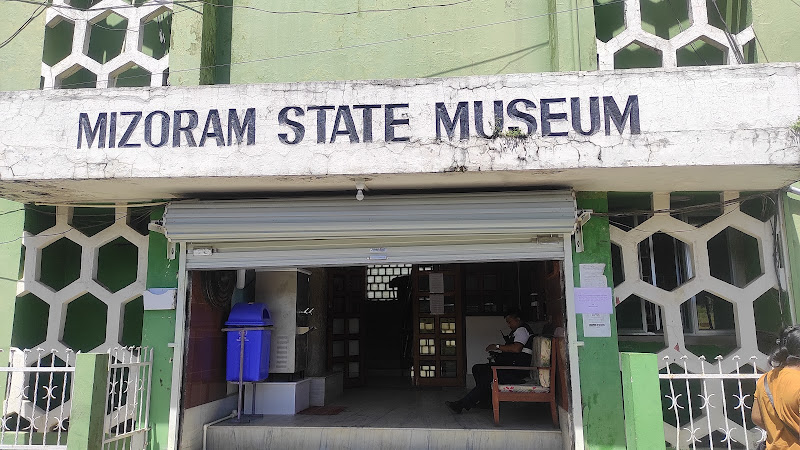
Mizoram State Museum
About Mizoram State Museum
Description
The Mizoram State Museum in Aizawl sits on MacDonald Hill in the Zarkawt neighborhood and serves as a clear window into Mizo life, history and the natural world of Mizoram. More than a display of objects, the museum acts as a kind of storyteller: rooms arranged as chapters that cover ethnology, textile traditions, natural history and the everyday tools that shaped life in the hills. A visitor who wants to understand the people of Mizoram will find this museum one of the most direct, well-curated introductions available in the state.
On approach, the building does not shout or pretend to be grander than it is. Instead it offers steady, purposeful exhibits that reward curiosity. The galleries are organized around themes—Mizo culture and traditional costumes, tools and domestic life, musical instruments, tribal customs, and a natural history gallery that includes regional flora and fauna. Together they form a coherent narrative about how geography, climate and social structures shaped local traditions. For travelers who tend to skim museum labels, this place resists that habit; the displays are concise and the context is given. It’s possible to leave with a real sense of the threads connecting past and present in Mizoram.
Practical matters matter here. The museum has restrooms and a wheelchair accessible restroom, making it friendlier for families and visitors with restricted mobility than some other regional attractions. There is no restaurant on site, so plan ahead for food. And it’s good for kids—interactive displays and vivid traditional costumes often keep younger attention spans engaged, though caregivers should know that some sections are quiet and contemplative.
What sets this museum apart from many state museums across India is the emphasis on local voice. The textile gallery, for instance, does more than show shawls and patterns; it explains weaving techniques, the social meaning of motifs, and why certain cloths are reserved for ceremonies. The ethnological sections present not only objects but short life stories and captions that hint at seasonal cycles, rites of passage and subsistence routines. And yes, the musical instruments collection is unexpectedly lovely for those who enjoy sound studies—several small instruments and rhythm pieces are displayed with explanations of their role in dances and festivals.
Visitors often note the calmness of the galleries—light is used to focus on objects, and the layout encourages a slow, considered stroll. The natural history corner provides context on the hill ecology and domesticates, with specimens and photographs that illustrate how communities adapted to hill farming and shifting cultivation patterns. For the traveler interested in anthropology, the museum’s combination of artifacts and context makes it useful as both primer and reference.
Insider tip: the museum allows a deeper appreciation when approached as the first stop in Aizawl. It helps orient newcomers to local customs, so when one later stumbles into markets or village homestays, details that might otherwise pass unnoticed suddenly make sense. A frequent traveler once pointed out that after visiting the museum, even a casual conversation with a Mizo artisan about weaving patterns felt richer. That kind of payoff is subtle, but real.
The tone of the exhibits tries to be respectful rather than museum-speak lofty. The captions avoid jargon and read like short field notes, which makes the museum accessible to non-academic travelers. This is not the place for large multimedia spectacles; it’s quieter, human-scaled. Those expecting flashy, interactive tech displays might be mildly surprised—but people who enjoy careful curation, tactile histories and readable panels will be pleased.
Because the museum focuses heavily on local heritage, travelers will encounter a lot of material that isn’t widely photographed or readily available online. Many of the textile patterns, lineage objects and ritual implements are particular to specific Mizo tribes and subgroups. This is great for photographers who love detail, and for travelers who prefer to bring home stories rather than souvenirs. On that note: photography policies vary and staff are generally helpful—ask first if uncertain, and they will usually point out what can be photographed and what’s better left undisturbed.
It’s fair to mention that opinions about the museum vary among visitors. Most praise the depth of the collections and the clear attempt to contextualize Mizo culture within the hill environment. But some people wish for expanded hours, more signage in additional languages, or a small on-site café. These are reasonable points; the museum is a public institution working within local budgets. Still, the core offering—well-selected objects, a readable narrative and accessible facilities—is strong.
For planning: the museum’s layout is compact enough to cover in an hour or two while leaving time to wander nearby streets of Aizawl. Because it sits on MacDonald Hill, the views in the surrounding area are good and the walkable neighborhood encourages exploring local markets afterward. Families often combine the museum visit with stops at cultural centers and small craft shops in the city.
Some less obvious advantages: the collection includes both historical and contemporary pieces, so the display does not treat Mizo culture as frozen in the past. Visitors will see how objects evolve—traditional tools repurposed, musical instruments maintained as living traditions, and textiles that continue to inspire modern designers. That perspective is refreshing; it invites travelers to notice continuity and adaptation, not just preservation of the past.
Another point worth highlighting is how the museum handles narrative balance. It does not romanticize or over-simplify tribal life; rather it presents challenges alongside achievements—the environmental constraints of hill farming, the pressures of modernization, and the ways communities negotiate identity today. For travelers who want an honest encounter with place and people, this makes the museum especially trustworthy.
Accessibility is not just physical. The exhibit design is friendly to non-specialists. Labels are relatively short and direct, and there are enough maps and timelines to situate visitors spatially and historically. Schools use the museum as a field trip destination, which means children’s engagement is part of the design rather than an afterthought. When planning a visit with kids, expect them to be drawn to costume displays and musical instruments; the museum does a decent job of translating complex cultural material into things children can relate to.
Finally, the visitor experience is enhanced by staff attitude. Many travelers recall helpful curators or attendants who answered questions without condescension, and that human touch matters. It makes the museum feel like a local institution rather than a faceless archive. That kind of friendly, grounded hospitality is often the difference between a so-so museum stop and a memorable cultural encounter.
In short, the Mizoram State Museum in Aizawl is recommended for travelers who want a thoughtful, well-contextualized introduction to Mizo culture and natural history. The place rewards attentiveness: move slowly, read the panels, and notice the everyday objects—those items contain the best small stories about how people lived and continue to live on Mizoram’s hills. It is not overloaded with gimmicks; instead it offers clarity, heart, and a practical layout that suits families and independent travelers alike.
Key Features
More Details
Updated August 29, 2025
Table of Contents
Description
The Mizoram State Museum in Aizawl sits on MacDonald Hill in the Zarkawt neighborhood and serves as a clear window into Mizo life, history and the natural world of Mizoram. More than a display of objects, the museum acts as a kind of storyteller: rooms arranged as chapters that cover ethnology, textile traditions, natural history and the everyday tools that shaped life in the hills. A visitor who wants to understand the people of Mizoram will find this museum one of the most direct, well-curated introductions available in the state.
On approach, the building does not shout or pretend to be grander than it is. Instead it offers steady, purposeful exhibits that reward curiosity. The galleries are organized around themes—Mizo culture and traditional costumes, tools and domestic life, musical instruments, tribal customs, and a natural history gallery that includes regional flora and fauna. Together they form a coherent narrative about how geography, climate and social structures shaped local traditions. For travelers who tend to skim museum labels, this place resists that habit; the displays are concise and the context is given. It’s possible to leave with a real sense of the threads connecting past and present in Mizoram.
Practical matters matter here. The museum has restrooms and a wheelchair accessible restroom, making it friendlier for families and visitors with restricted mobility than some other regional attractions. There is no restaurant on site, so plan ahead for food. And it’s good for kids—interactive displays and vivid traditional costumes often keep younger attention spans engaged, though caregivers should know that some sections are quiet and contemplative.
What sets this museum apart from many state museums across India is the emphasis on local voice. The textile gallery, for instance, does more than show shawls and patterns; it explains weaving techniques, the social meaning of motifs, and why certain cloths are reserved for ceremonies. The ethnological sections present not only objects but short life stories and captions that hint at seasonal cycles, rites of passage and subsistence routines. And yes, the musical instruments collection is unexpectedly lovely for those who enjoy sound studies—several small instruments and rhythm pieces are displayed with explanations of their role in dances and festivals.
Visitors often note the calmness of the galleries—light is used to focus on objects, and the layout encourages a slow, considered stroll. The natural history corner provides context on the hill ecology and domesticates, with specimens and photographs that illustrate how communities adapted to hill farming and shifting cultivation patterns. For the traveler interested in anthropology, the museum’s combination of artifacts and context makes it useful as both primer and reference.
Insider tip: the museum allows a deeper appreciation when approached as the first stop in Aizawl. It helps orient newcomers to local customs, so when one later stumbles into markets or village homestays, details that might otherwise pass unnoticed suddenly make sense. A frequent traveler once pointed out that after visiting the museum, even a casual conversation with a Mizo artisan about weaving patterns felt richer. That kind of payoff is subtle, but real.
The tone of the exhibits tries to be respectful rather than museum-speak lofty. The captions avoid jargon and read like short field notes, which makes the museum accessible to non-academic travelers. This is not the place for large multimedia spectacles; it’s quieter, human-scaled. Those expecting flashy, interactive tech displays might be mildly surprised—but people who enjoy careful curation, tactile histories and readable panels will be pleased.
Because the museum focuses heavily on local heritage, travelers will encounter a lot of material that isn’t widely photographed or readily available online. Many of the textile patterns, lineage objects and ritual implements are particular to specific Mizo tribes and subgroups. This is great for photographers who love detail, and for travelers who prefer to bring home stories rather than souvenirs. On that note: photography policies vary and staff are generally helpful—ask first if uncertain, and they will usually point out what can be photographed and what’s better left undisturbed.
It’s fair to mention that opinions about the museum vary among visitors. Most praise the depth of the collections and the clear attempt to contextualize Mizo culture within the hill environment. But some people wish for expanded hours, more signage in additional languages, or a small on-site café. These are reasonable points; the museum is a public institution working within local budgets. Still, the core offering—well-selected objects, a readable narrative and accessible facilities—is strong.
For planning: the museum’s layout is compact enough to cover in an hour or two while leaving time to wander nearby streets of Aizawl. Because it sits on MacDonald Hill, the views in the surrounding area are good and the walkable neighborhood encourages exploring local markets afterward. Families often combine the museum visit with stops at cultural centers and small craft shops in the city.
Some less obvious advantages: the collection includes both historical and contemporary pieces, so the display does not treat Mizo culture as frozen in the past. Visitors will see how objects evolve—traditional tools repurposed, musical instruments maintained as living traditions, and textiles that continue to inspire modern designers. That perspective is refreshing; it invites travelers to notice continuity and adaptation, not just preservation of the past.
Another point worth highlighting is how the museum handles narrative balance. It does not romanticize or over-simplify tribal life; rather it presents challenges alongside achievements—the environmental constraints of hill farming, the pressures of modernization, and the ways communities negotiate identity today. For travelers who want an honest encounter with place and people, this makes the museum especially trustworthy.
Accessibility is not just physical. The exhibit design is friendly to non-specialists. Labels are relatively short and direct, and there are enough maps and timelines to situate visitors spatially and historically. Schools use the museum as a field trip destination, which means children’s engagement is part of the design rather than an afterthought. When planning a visit with kids, expect them to be drawn to costume displays and musical instruments; the museum does a decent job of translating complex cultural material into things children can relate to.
Finally, the visitor experience is enhanced by staff attitude. Many travelers recall helpful curators or attendants who answered questions without condescension, and that human touch matters. It makes the museum feel like a local institution rather than a faceless archive. That kind of friendly, grounded hospitality is often the difference between a so-so museum stop and a memorable cultural encounter.
In short, the Mizoram State Museum in Aizawl is recommended for travelers who want a thoughtful, well-contextualized introduction to Mizo culture and natural history. The place rewards attentiveness: move slowly, read the panels, and notice the everyday objects—those items contain the best small stories about how people lived and continue to live on Mizoram’s hills. It is not overloaded with gimmicks; instead it offers clarity, heart, and a practical layout that suits families and independent travelers alike.
Key Highlights
Mizoram State Museum
Location
Places to Stay Near Mizoram State Museum
Find and Book a Tour
Explore More Travel Guides
No reviews found! Be the first to review!
Traveler Reviews for Mizoram State Museum
There are no reviews yet. Be the first one to write one.
Have you visited Mizoram State Museum? Help other travelers by sharing your review.
You Might Also Like

JF Viewing Gallery
KV Paradise

Folkland Park
Find Accommodations Nearby
Recommended Tours & Activities
Visitor Reviews
There are no reviews yet. Be the first one to write one.
Share Your Experience
Have you visited Mizoram State Museum? Help other travelers by leaving a review.