
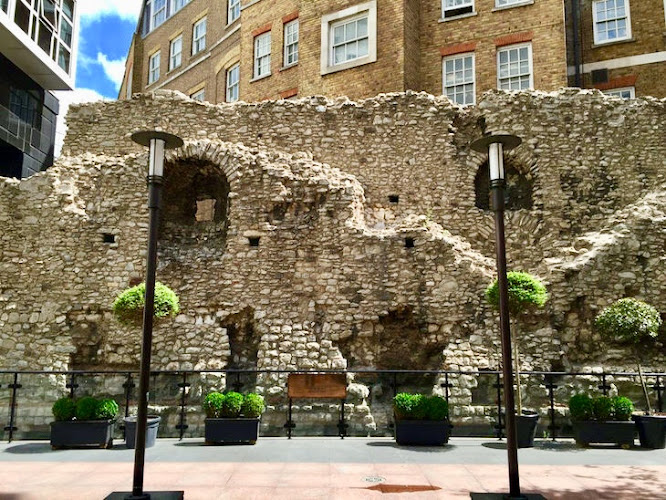
London Wall
About London Wall
Description
The London Wall isn’t one single spot you turn up to, snap a photo, and leave. It’s more like a stitched-together story running through the modern city, from the Tower of London area all the way toward where the Museum of London used to sit. And honestly, that’s what makes it special. You’re walking past glass towers, busy roads, office workers on lunch break… and then boom, there’s a chunk of Roman wall that’s been standing around for nearly 2,000 years, minding its own business.
This route follows the remains of the Roman defensive wall built around Londinium in the late 2nd or early 3rd century. Back then, it wrapped the city in about 3 kilometers of stone and brick, with gates, towers, and a deep ditch. Today, you only see fragments. But those fragments? They’re powerful. I remember the first time I noticed one near Tower Hill. I was late, mildly annoyed, and staring at my phone. Looked up, and there it was, wedged between buildings like it had every right to still be there. And it does.
For travelers, the London Wall walk works as a self-guided historical trail. You don’t need a ticket, a tour group, or even much planning. You can dip in and out. Some sections are beautifully preserved and signposted, others feel almost hidden, like secrets you’ve accidentally discovered. And yes, parts of it feel a bit scrappy. But that’s London history for you. Not polished, not precious, just real.
The path links major landmarks like the Tower of London with lesser-known spots around the City. It’s flat, mostly accessible, and surprisingly peaceful once you get used to the traffic noise. Kids tend to enjoy it too, especially when you frame it as a treasure hunt for Roman stones. I’ve seen more than one child dragging their parents toward the next chunk of wall.
Key Features
- Visible Roman wall remains dating back nearly 2,000 years
- Route connecting the Tower of London area with central City landmarks
- Interpretive signs explaining Roman Londinium and medieval expansions
- Sections integrated into modern buildings, which is oddly fascinating
- Free, open-air historical attraction with no set opening hours
- Wheelchair-accessible paths along most of the route
- Family-friendly and manageable for children with short attention spans
One thing I really appreciate is how the wall hasn’t been overly “museum-ified.” Sure, there are plaques and explanations, but it still feels like part of the city’s everyday fabric. Office workers eat lunch beside it. Cyclists whiz past. And the wall just… stays. It’s humbling in a quiet way.
Best Time to Visit
The London Wall can be visited any time of year, but timing does change the vibe. Spring and early autumn are my personal picks. The weather’s kinder, daylight lasts longer, and you’re less likely to be shivering while trying to read a plaque. Summer’s fine too, but some stretches feel busy, especially near the Tower of London where tour groups cluster like bees.
If you’re a morning person, go early. The City of London before 9am feels like a different place. Quieter, calmer, almost thoughtful. I once walked part of the route at around 7:30am with a coffee in hand, and it felt oddly intimate, like the city was letting me in on a secret before everyone else arrived.
Weekends are generally easier for a relaxed stroll since office crowds thin out, but weekdays have their own charm. You get to see how the wall fits into daily life. Rainy days? Surprisingly atmospheric. The stones darken, the colors deepen, and you can almost imagine Roman soldiers pacing the top. Just wear decent shoes, because wet paving stones can be slippery.
How to Get There
Getting to the London Wall is straightforward because it’s not one isolated destination. Most travelers start near the Tower of London, which is well connected by public transport. From there, you simply walk. And that’s the whole point, really.
Public transport is your friend here. Underground stations and bus stops are scattered all along the route, so you can join or leave whenever you want. If walking long distances isn’t your thing, you can break it into sections. No shame in that. I’ve done it myself on days when my feet were protesting.
If you’re already exploring central London, it’s easy to weave the wall into your plans. Pair it with the Tower of London in the morning, then follow the wall remnants north and west at your own pace. You don’t need a map if you keep an eye out for signs, but having a rough idea of the route helps avoid unnecessary backtracking.
Tips for Visiting
First tip: slow down. This isn’t a box-ticking attraction. The London Wall rewards curiosity more than speed. Take time to look closely at the stones. You’ll notice differences in color and texture where Roman work meets medieval repairs. That patchwork tells a story of reuse and survival.
Second, don’t expect perfection. Some people come away a bit underwhelmed because they’re picturing a continuous wall like you’d see in York. London’s version is fragmented, interrupted, and sometimes awkwardly placed behind railings or next to roads. But that’s also what makes it honest. It hasn’t been rearranged just to please tourists.
Third, bring kids into the narrative. Instead of dates and facts, talk about who might have walked here before. Soldiers, traders, messengers. When I walked this route with my niece, we invented ridiculous backstories for imaginary Romans. Educational? Maybe. Memorable? Definitely.
Photography-wise, early morning or late afternoon light works best, especially for sections near modern buildings where shadows add drama. And don’t just photograph the wall itself. Frame it against the city. Old stone versus new steel. That contrast is the whole point.
Accessibility is generally good, but not flawless. Most paths are wheelchair accessible, though a few viewing points may require slight detours. If mobility is a concern, planning ahead helps avoid frustration.
Finally, allow yourself a tangent. The London Wall naturally pulls you toward other historical layers: medieval churches, old street names, unexpected courtyards. Follow those little detours. Some of my favorite London moments happened because I ignored my original plan.
In the end, the London Wall isn’t flashy. It doesn’t shout for attention. But it stays with you. Long after you’ve moved on to shinier attractions, you might find yourself thinking about those stubborn stones that watched an empire rise, a city burn, and a modern metropolis grow around them. And that, to me, is worth the walk.
Key Features
- Visible Roman wall remains dating back nearly 2,000 years
- Route connecting the Tower of London area with central City landmarks
- Interpretive signs explaining Roman Londinium and medieval expansions
- Sections integrated into modern buildings, which is oddly fascinating
- Free, open-air historical attraction with no set opening hours
- Wheelchair-accessible paths along most of the route
- Family-friendly and manageable for children with short attention spans
More Details
Updated December 31, 2025
Table of Contents
Description
The London Wall isn’t one single spot you turn up to, snap a photo, and leave. It’s more like a stitched-together story running through the modern city, from the Tower of London area all the way toward where the Museum of London used to sit. And honestly, that’s what makes it special. You’re walking past glass towers, busy roads, office workers on lunch break… and then boom, there’s a chunk of Roman wall that’s been standing around for nearly 2,000 years, minding its own business.
This route follows the remains of the Roman defensive wall built around Londinium in the late 2nd or early 3rd century. Back then, it wrapped the city in about 3 kilometers of stone and brick, with gates, towers, and a deep ditch. Today, you only see fragments. But those fragments? They’re powerful. I remember the first time I noticed one near Tower Hill. I was late, mildly annoyed, and staring at my phone. Looked up, and there it was, wedged between buildings like it had every right to still be there. And it does.
For travelers, the London Wall walk works as a self-guided historical trail. You don’t need a ticket, a tour group, or even much planning. You can dip in and out. Some sections are beautifully preserved and signposted, others feel almost hidden, like secrets you’ve accidentally discovered. And yes, parts of it feel a bit scrappy. But that’s London history for you. Not polished, not precious, just real.
The path links major landmarks like the Tower of London with lesser-known spots around the City. It’s flat, mostly accessible, and surprisingly peaceful once you get used to the traffic noise. Kids tend to enjoy it too, especially when you frame it as a treasure hunt for Roman stones. I’ve seen more than one child dragging their parents toward the next chunk of wall.
Key Features
- Visible Roman wall remains dating back nearly 2,000 years
- Route connecting the Tower of London area with central City landmarks
- Interpretive signs explaining Roman Londinium and medieval expansions
- Sections integrated into modern buildings, which is oddly fascinating
- Free, open-air historical attraction with no set opening hours
- Wheelchair-accessible paths along most of the route
- Family-friendly and manageable for children with short attention spans
One thing I really appreciate is how the wall hasn’t been overly “museum-ified.” Sure, there are plaques and explanations, but it still feels like part of the city’s everyday fabric. Office workers eat lunch beside it. Cyclists whiz past. And the wall just… stays. It’s humbling in a quiet way.
Best Time to Visit
The London Wall can be visited any time of year, but timing does change the vibe. Spring and early autumn are my personal picks. The weather’s kinder, daylight lasts longer, and you’re less likely to be shivering while trying to read a plaque. Summer’s fine too, but some stretches feel busy, especially near the Tower of London where tour groups cluster like bees.
If you’re a morning person, go early. The City of London before 9am feels like a different place. Quieter, calmer, almost thoughtful. I once walked part of the route at around 7:30am with a coffee in hand, and it felt oddly intimate, like the city was letting me in on a secret before everyone else arrived.
Weekends are generally easier for a relaxed stroll since office crowds thin out, but weekdays have their own charm. You get to see how the wall fits into daily life. Rainy days? Surprisingly atmospheric. The stones darken, the colors deepen, and you can almost imagine Roman soldiers pacing the top. Just wear decent shoes, because wet paving stones can be slippery.
How to Get There
Getting to the London Wall is straightforward because it’s not one isolated destination. Most travelers start near the Tower of London, which is well connected by public transport. From there, you simply walk. And that’s the whole point, really.
Public transport is your friend here. Underground stations and bus stops are scattered all along the route, so you can join or leave whenever you want. If walking long distances isn’t your thing, you can break it into sections. No shame in that. I’ve done it myself on days when my feet were protesting.
If you’re already exploring central London, it’s easy to weave the wall into your plans. Pair it with the Tower of London in the morning, then follow the wall remnants north and west at your own pace. You don’t need a map if you keep an eye out for signs, but having a rough idea of the route helps avoid unnecessary backtracking.
Tips for Visiting
First tip: slow down. This isn’t a box-ticking attraction. The London Wall rewards curiosity more than speed. Take time to look closely at the stones. You’ll notice differences in color and texture where Roman work meets medieval repairs. That patchwork tells a story of reuse and survival.
Second, don’t expect perfection. Some people come away a bit underwhelmed because they’re picturing a continuous wall like you’d see in York. London’s version is fragmented, interrupted, and sometimes awkwardly placed behind railings or next to roads. But that’s also what makes it honest. It hasn’t been rearranged just to please tourists.
Third, bring kids into the narrative. Instead of dates and facts, talk about who might have walked here before. Soldiers, traders, messengers. When I walked this route with my niece, we invented ridiculous backstories for imaginary Romans. Educational? Maybe. Memorable? Definitely.
Photography-wise, early morning or late afternoon light works best, especially for sections near modern buildings where shadows add drama. And don’t just photograph the wall itself. Frame it against the city. Old stone versus new steel. That contrast is the whole point.
Accessibility is generally good, but not flawless. Most paths are wheelchair accessible, though a few viewing points may require slight detours. If mobility is a concern, planning ahead helps avoid frustration.
Finally, allow yourself a tangent. The London Wall naturally pulls you toward other historical layers: medieval churches, old street names, unexpected courtyards. Follow those little detours. Some of my favorite London moments happened because I ignored my original plan.
In the end, the London Wall isn’t flashy. It doesn’t shout for attention. But it stays with you. Long after you’ve moved on to shinier attractions, you might find yourself thinking about those stubborn stones that watched an empire rise, a city burn, and a modern metropolis grow around them. And that, to me, is worth the walk.
Key Highlights
- Visible Roman wall remains dating back nearly 2,000 years
- Route connecting the Tower of London area with central City landmarks
- Interpretive signs explaining Roman Londinium and medieval expansions
- Sections integrated into modern buildings, which is oddly fascinating
- Free, open-air historical attraction with no set opening hours
- Wheelchair-accessible paths along most of the route
- Family-friendly and manageable for children with short attention spans
Location
Places to Stay Near London Wall
Find and Book a Tour
Explore More Travel Guides
No reviews found! Be the first to review!
Traveler Reviews for London Wall
There are no reviews yet. Be the first one to write one.
Have you visited London Wall? Help other travelers by sharing your review.
You Might Also Like

Doll's House Museum

Queen Elizabeth Olympic Park

The Ghost Bus Tours
Find Accommodations Nearby
Recommended Tours & Activities
Visitor Reviews
There are no reviews yet. Be the first one to write one.
Share Your Experience
Have you visited London Wall? Help other travelers by leaving a review.