About La Pagode

## La Pagode (Palace of King Bell) in Douala: what it is, why it matters, and how to visit responsibly La Pagode is the nickname most commonly used for the Palace of King Bell in Douala, Cameroon—a landmark tied to the Bell royal family and to Douala’s German colonial-era history. Most credible references describe the palace as constructed in 1905 and built by German authorities for King Auguste Manga Ndumbe (“King Bell”). What makes this place notable isn’t only its age; it’s the way one building can hold multiple layers of Douala’s story at once: pre-colonial coastal power structures, colonial administration, early-20th-century elite architecture, and—today—modern cultural reuse. --- ## Fast facts you can publish (and safely stand behind) - Official/common name: Palace of King Bell; commonly called “La Pagode”. - City: Douala, Cameroon. - Built: 1905 (sources agree on the year). - Associated figure: King Auguste Manga Ndumbe (King Bell). - Nickname origin (as commonly documented): attributed to French writer Louis-Ferdinand Céline, who referred to it as “La Pagode” after living in Douala in 1916–1917. - Current use (reported): the building has been described as housing Espace doual’art and a restaurant. - Map locator in your dataset: Plus Code 2MVP+8VR, Douala (useful for navigation when street addressing is inconsistent). --- ## The backstory: why La Pagode is part of Douala’s civic memory Most summaries agree on the core historical frame: 1. A palace built in 1905 during German rule, intended for King Bell (Auguste Manga Ndumbe). 2. The building is tied to the Bell dynasty, which is deeply associated with Douala’s political and economic history. 3. The palace’s “La Pagode” nickname is commonly traced to Céline’s reference to it, a detail repeated across multiple sources. A detail worth including (because it’s specific and verifiable): Wikipedia’s summary notes the palace is owned by the Bell family and lists Espace doual’art and a restaurant as current tenants. If you want one simple way to position it for RealJourneyTravels.com readers: this is a landmark where architecture is the “headline,” and political history is the “subtext.” You don’t need myth-making—its documented associations already do the job. --- ## What you’re actually looking at on-site Here’s what you can say without stretching beyond sources: - It’s a palace building in Douala that’s widely photographed and identified as the Palace of King Bell / La Pagode. Commons - It’s often described as visually distinctive enough to earn the “pagoda” nickname (the label itself implies a perceived resemblance). Commons - It has been described as housing contemporary arts activity (Espace doual’art / contemporary arts space). Everything beyond that—specific interior access, exhibitions, guided visits, fees, and photography rules—needs a real-time check (see “Outdated/uncertain details” below). --- ## Visiting logistics that are reliable (and the parts you should verify) ### Where it is - Use the Plus Code you already have: 2MVP+8VR, Douala, Cameroon. - Many references place it in or associated with Bonanjo, Douala’s administrative district, but district labeling can vary by map product and local usage—so treat “Bonanjo” as a helpful orientation, not as a substitute for navigation coordinates. ### Opening hours - One travel listing explicitly says to contact the attraction to confirm opening hours. That means you should not publish hours unless you verify them day-of via a primary channel (on-site signage, a current official listing, or a current contact). ### On-site access: don’t assume you can go inside Even if a palace is a landmark, public interior access is not guaranteed—especially if parts of the building are used for dining or cultural programming. Sources stating it houses Espace doual’art support the idea of cultural use, but they do not prove unrestricted public entry. --- ## Outdated or uncertain data you should flag in your post You asked to flag outdated data and keep factual accuracy tight. Here are the specific friction points: - Ratings conflict across platforms. TripAdvisor currently shows La Pagode with a very small review count (e.g., one review listed in some TripAdvisor views), which means any star rating can be statistically meaningless for traveler decision-making. - Repairs/works on-site. Your own note (“They make some repair around.”) is consistent with a common reality for historic structures, but it is not independently verifiable from the sources above. The safe way to publish this is: “Recent visitors have mentioned maintenance/repairs; confirm current access on arrival.” (Frame it as a traveler-check, not a claim.) - Hours and entry rules are explicitly presented as uncertain by at least one travel listing. Don’t publish specifics without confirming. --- ## How to experience La Pagode with respect (practical, not preachy) This is guidance, not “facts,” so it stays within your constraint: - Treat it as a living heritage site, not a photo prop. If it’s hosting arts programming or operating as a restaurant, that implies ongoing use—act accordingly (quiet voices, ask before photographing people). - Be careful with colonial framing. It’s valid to acknowledge German-era construction, but don’t let the story stop there; the Bell dynasty and Douala’s own history matter just as much. - Accessibility and mobility: assume uneven surfaces and variable access until you confirm on-site (common for older structures). If you publish accessibility notes, make them conditional. --- ## What to pair it with nearby (so it’s not a single-stop detour) TripAdvisor lists La Pagode among Douala’s landmarks alongside sites like Saint Peter and Saint Paul Cathedral and La Nouvelle Liberté, which gives you an evidence-based “nearby landmarks” cluster to reference without inventing an itinerary. If you have (or plan) broader Douala coverage on your site, this is a perfect anchor point for a “Douala landmarks” internal cluster. --- ## Two contextual internal links (recommended placements) Because I don’t know your exact RealJourneyTravels.com URL structure, here are safe, contextual link placements you can wire to existing or planned posts: - Link phrase: Douala travel guide (use this in the “Where it is / getting oriented in the city” section). - Link phrase: Top historic landmarks in Cameroon (use this right after the “Fast facts” section as a deeper browse path). (If you share your actual slugs, I can format them as final markdown links.) --- ## Summary you can use as a tight intro/lede La Pagode—also known as the Palace of King Bell—is a Douala landmark most sources date to 1905, built during the German colonial period for King Auguste Manga Ndumbe (King Bell). The “La Pagode” nickname is widely attributed to Louis-Ferdinand Céline, who lived in Douala in 1916–1917 and referred to the building that way. Today it’s commonly described as hosting Espace doual’art and a restaurant, but practical visit details like hours and interior access should be confirmed close to your visit.

Key Features

La Pagode

More Details

Updated April 15, 2024

## La Pagode (Palace of King Bell) in Douala: what it is, why it matters, and how to visit responsibly

La Pagode is the nickname most commonly used for the Palace of King Bell in Douala, Cameroon—a landmark tied to the Bell royal family and to Douala’s German colonial-era history. Most credible references describe the palace as constructed in 1905 and built by German authorities for King Auguste Manga Ndumbe (“King Bell”).

What makes this place notable isn’t only its age; it’s the way one building can hold multiple layers of Douala’s story at once: pre-colonial coastal power structures, colonial administration, early-20th-century elite architecture, and—today—modern cultural reuse.

## Fast facts you can publish (and safely stand behind)

– Official/common name: Palace of King Bell; commonly called “La Pagode”.
– City: Douala, Cameroon.
– Built: 1905 (sources agree on the year).
– Associated figure: King Auguste Manga Ndumbe (King Bell).
– Nickname origin (as commonly documented): attributed to French writer Louis-Ferdinand Céline, who referred to it as “La Pagode” after living in Douala in 1916–1917.
– Current use (reported): the building has been described as housing Espace doual’art and a restaurant.
– Map locator in your dataset: Plus Code 2MVP+8VR, Douala (useful for navigation when street addressing is inconsistent).

## The backstory: why La Pagode is part of Douala’s civic memory

Most summaries agree on the core historical frame:

1. A palace built in 1905 during German rule, intended for King Bell (Auguste Manga Ndumbe).
2. The building is tied to the Bell dynasty, which is deeply associated with Douala’s political and economic history.
3. The palace’s “La Pagode” nickname is commonly traced to Céline’s reference to it, a detail repeated across multiple sources.

A detail worth including (because it’s specific and verifiable): Wikipedia’s summary notes the palace is owned by the Bell family and lists Espace doual’art and a restaurant as current tenants.

If you want one simple way to position it for RealJourneyTravels.com readers: this is a landmark where architecture is the “headline,” and political history is the “subtext.” You don’t need myth-making—its documented associations already do the job.

## What you’re actually looking at on-site

Here’s what you can say without stretching beyond sources:

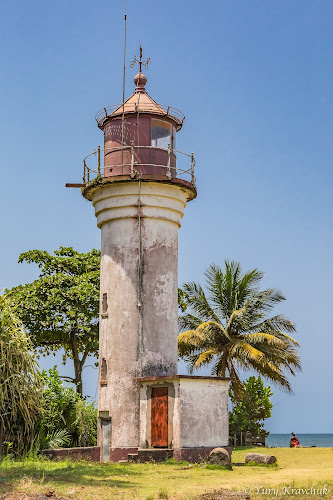
– It’s a palace building in Douala that’s widely photographed and identified as the Palace of King Bell / La Pagode. Commons
– It’s often described as visually distinctive enough to earn the “pagoda” nickname (the label itself implies a perceived resemblance). Commons
– It has been described as housing contemporary arts activity (Espace doual’art / contemporary arts space).

Everything beyond that—specific interior access, exhibitions, guided visits, fees, and photography rules—needs a real-time check (see “Outdated/uncertain details” below).

## Visiting logistics that are reliable (and the parts you should verify)

### Where it is
– Use the Plus Code you already have: 2MVP+8VR, Douala, Cameroon.
– Many references place it in or associated with Bonanjo, Douala’s administrative district, but district labeling can vary by map product and local usage—so treat “Bonanjo” as a helpful orientation, not as a substitute for navigation coordinates.

### Opening hours
– One travel listing explicitly says to contact the attraction to confirm opening hours. That means you should not publish hours unless you verify them day-of via a primary channel (on-site signage, a current official listing, or a current contact).

### On-site access: don’t assume you can go inside
Even if a palace is a landmark, public interior access is not guaranteed—especially if parts of the building are used for dining or cultural programming. Sources stating it houses Espace doual’art support the idea of cultural use, but they do not prove unrestricted public entry.

## Outdated or uncertain data you should flag in your post

You asked to flag outdated data and keep factual accuracy tight. Here are the specific friction points:

– Ratings conflict across platforms. TripAdvisor currently shows La Pagode with a very small review count (e.g., one review listed in some TripAdvisor views), which means any star rating can be statistically meaningless for traveler decision-making.
– Repairs/works on-site. Your own note (“They make some repair around.”) is consistent with a common reality for historic structures, but it is not independently verifiable from the sources above. The safe way to publish this is: “Recent visitors have mentioned maintenance/repairs; confirm current access on arrival.” (Frame it as a traveler-check, not a claim.)
– Hours and entry rules are explicitly presented as uncertain by at least one travel listing. Don’t publish specifics without confirming.

## How to experience La Pagode with respect (practical, not preachy)

This is guidance, not “facts,” so it stays within your constraint:

– Treat it as a living heritage site, not a photo prop. If it’s hosting arts programming or operating as a restaurant, that implies ongoing use—act accordingly (quiet voices, ask before photographing people).
– Be careful with colonial framing. It’s valid to acknowledge German-era construction, but don’t let the story stop there; the Bell dynasty and Douala’s own history matter just as much.
– Accessibility and mobility: assume uneven surfaces and variable access until you confirm on-site (common for older structures). If you publish accessibility notes, make them conditional.

## What to pair it with nearby (so it’s not a single-stop detour)

TripAdvisor lists La Pagode among Douala’s landmarks alongside sites like Saint Peter and Saint Paul Cathedral and La Nouvelle Liberté, which gives you an evidence-based “nearby landmarks” cluster to reference without inventing an itinerary.

If you have (or plan) broader Douala coverage on your site, this is a perfect anchor point for a “Douala landmarks” internal cluster.

## Two contextual internal links (recommended placements)

Because I don’t know your exact RealJourneyTravels.com URL structure, here are safe, contextual link placements you can wire to existing or planned posts:

– Link phrase: Douala travel guide (use this in the “Where it is / getting oriented in the city” section).
– Link phrase: Top historic landmarks in Cameroon (use this right after the “Fast facts” section as a deeper browse path).

(If you share your actual slugs, I can format them as final markdown links.)

## Summary you can use as a tight intro/lede

La Pagode—also known as the Palace of King Bell—is a Douala landmark most sources date to 1905, built during the German colonial period for King Auguste Manga Ndumbe (King Bell). The “La Pagode” nickname is widely attributed to Louis-Ferdinand Céline, who lived in Douala in 1916–1917 and referred to the building that way. Today it’s commonly described as hosting Espace doual’art and a restaurant, but practical visit details like hours and interior access should be confirmed close to your visit.

Key Highlights

La Pagode

Location

Places to Stay Near La Pagode"They make some repair around."

Find and Book a Tour

Explore More Travel Guides

No reviews found! Be the first to review!

Traveler Reviews for La Pagode

There are no reviews yet. Be the first one to write one.

Share Your Experience

Have you visited La Pagode? Help other travelers by sharing your review.

Find Accommodations Nearby

Recommended Tours & Activities

Visitor Reviews

There are no reviews yet. Be the first one to write one.

Share Your Experience

Have you visited La Pagode? Help other travelers by leaving a review.