
Kobuntei-House
About Kobuntei-House
Key Features
More Details
Updated April 15, 2024
## Kobuntei-House (Kōbuntei), Mito, Ibaraki: What to Know Before You Go
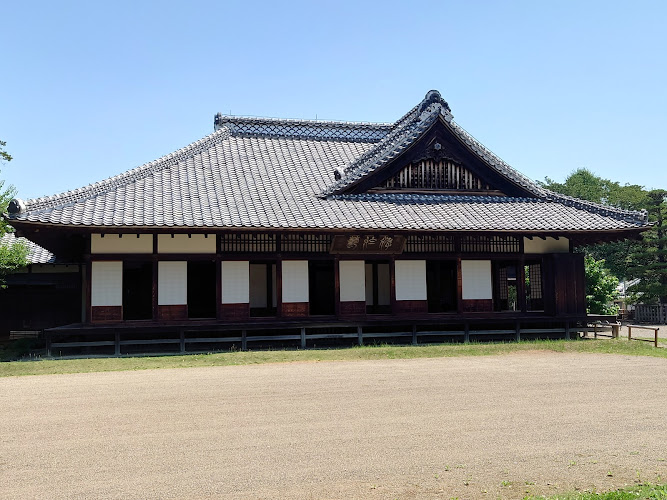
Kobuntei-House (often written Kōbuntei) is a historic villa inside Kairakuen Garden in Mito, Ibaraki Prefecture. It’s closely tied to the garden’s founder, Tokugawa Nariaki (the ninth lord of the Mito Domain), who is widely credited with directing not only Kairakuen’s creation but also Kobuntei’s placement and design choices. GUIDE
If you’re interested in Edo-period cultural history, Japanese villa architecture, fusuma (sliding-door) paintings, or simply want one of the best elevated viewpoints over Kairakuen and Lake Senba, this is the building in the garden that repays slow, attentive visiting. GUIDE
—
## Where it is (and why the address matters)
Address (as commonly listed for Kobuntei within Kairakuen):
1-3-3 Tokiwacho, Mito City, Ibaraki 310-0033, Japan MITO
Kobuntei is not a standalone “house museum” elsewhere in the city; it’s part of the Kairakuen complex. In practice, this means:
– Your visit logistics (gates, garden walking routes, seasonal crowding) are Kairakuen logistics. 偕楽園
– Fees and hours can be affected by Kairakuen events—especially during plum season. 偕楽園
—
## Historical context: Tokugawa Nariaki’s garden-and-villa concept
Kairakuen was established in 1842 by Tokugawa Nariaki, and it’s commonly grouped with Kenrokuen and Korakuen as one of Japan’s “Three Great Gardens.”
Multiple sources connect Kairakuen’s role to Nariaki’s broader educational and cultural program in Mito (including the Kodokan domain school founded in 1841), positioning Kairakuen as a place for mental reset and reflection alongside study and training. GUIDE
Kobuntei sits inside that bigger idea. The building’s name is explained locally as deriving from an alternate name for the plum tree (“Kobunki”), and it’s presented as a place where Nariaki hosted gatherings that included cultural activities such as composing poetry. MITO
—
## The building: what “Kobuntei” actually includes
Descriptions of the complex consistently emphasize two main components:
– A three-story main structure (often referred to in English-language guides as the main villa/study building) GUIDE
– A single-story inner section, described as an “Inner Palace” (Okugoten) with multiple rooms historically associated with the lord’s wife and attendants GUIDE
A standout detail, if you care about interior craft rather than just exterior photography: the Okugoten rooms are described as having sliding-door paintings (fusuma-e) that match each room’s theme/name. GUIDE
Another repeated point: the upper levels are valued for panoramic sightlines over the garden and toward Lake Senba. (This is not a vague “nice view” claim—guide text explicitly frames the three-story building as Nariaki’s study with views in multiple directions.) GUIDE
—
## Destruction and reconstruction (and what that means for “authenticity”)
It’s important to be precise here: the original Kobuntei building did not survive intact into the present day.
Local tourism sources state:
– The original was destroyed in an air raid in 1945. MITO
– The current Kōbuntei was reconstructed beginning in 1955, with reconstruction described as taking three years. MITO
So, what you’re visiting today is best understood as a postwar reconstruction on a historically significant site, not an untouched Edo-period original. That doesn’t make it “less worth it”—it just changes the lens: you’re seeing a rebuilt cultural landmark that remains central to how Kairakuen presents its history.
Separately, Kairakuen (including the Kobuntei area) suffered damage from the Great East Japan Earthquake (March 11, 2011), and credible reporting indicates Kobuntei reopened to the public on February 7, 2012 after restoration work.
Outdated-data flag: this reopening date is historical and stable, but current restoration/closure status can still vary year to year; it’s smart to check official Kairakuen updates before a long trip. 偕楽園
—
## Opening hours: the part that changes with the season
The official Kairakuen site publishes specific hours for Kobuntei that vary by season:
– Mid-February – September 30: 9:00–17:00
– October 1 – Mid-February: 9:00–16:30 偕楽園
It also notes that during the plum blossom festival period, the park is generally open until 17:00. 偕楽園
Outdated-data flag: hours are operational data and can change. The above reflects what’s published on the official site at the time of retrieval, but always re-check close to your visit. 偕楽園
—
## Tickets and fees: expect “Kobuntei + garden”
Visit Mito lists Kobuntei admission (separate from the garden) as:
– Adults: ¥230 (group rate listed)
– Children: ¥120 (group rate listed)
– Seniors (70+): ¥110
It also explicitly warns that an additional entrance fee for Kairakuen Park is required, and that prices may vary depending on the event. MITO
That “event variability” matters most during high-demand seasons—especially plum blossom season, which is widely described as late February through March.
—
## Best time to visit: plum season is famous, but not the only play
Kairakuen is especially noted for its plum blossoms, with sources commonly placing peak season in late February and March.
If your main goal is the classic “Mito plum” experience, that’s the window that drives festivals, crowding, and extended hours.
If your priority is architecture + interiors, timing is different:
– You’ll often get a calmer experience outside the plum peak.
– The villa visit is time-boxed by Kobuntei’s opening hours, so arriving earlier gives you more margin to move slowly through rooms and viewpoints. 偕楽園
—
## Practical visiting notes (grounded, not speculative)
– Plan for steps and indoor etiquette. Kobuntei is a traditional building; even when details vary, visitors should be prepared for customary museum-house rules (moving carefully, respecting interior spaces).
– Use the official Kairakuen site for day-of logistics. It provides opening-hour details and contact information for Kairakuen management. 偕楽園
– Accessibility and inclusion note: I don’t have authoritative, building-specific accessibility specs (e.g., elevator access, wheelchair routes) from the sources retrieved here. For inclusive trip planning, contacting the Kairakuen Garden Park Center directly is the most reliable approach. 偕楽園
—
## Quick facts (verified)
– Place: Kobuntei (Kōbuntei), within Kairakuen, Mito, Ibaraki MITO
– Address used in visitor info: 1-3-3 Tokiwacho, Mito City, Ibaraki 310-0033 MITO
– Founder association: strongly tied to Tokugawa Nariaki GUIDE
– Original destroyed: 1945 air raid; reconstructed starting 1955 over three years MITO
– Seasonal Kobuntei hours (official listing): 9:00–17:00 (mid-Feb–Sep), 9:00–16:30 (Oct–mid-Feb) 偕楽園
– Admission (Kobuntei only, per Visit Mito): adults ¥230; plus separate Kairakuen fee; event-dependent pricing possible MITO
—
Table of Contents
Key Highlights
Kobuntei-House
Location
Places to Stay Near Kobuntei-House
Find and Book a Tour
Explore More Travel Guides
No reviews found! Be the first to review!
Traveler Reviews for Kobuntei-House
There are no reviews yet. Be the first one to write one.
Have you visited Kobuntei-House? Help other travelers by sharing your review.
You Might Also Like
Kairakuen
Aiki Shrine Iwama
Kodokan Park
Find Accommodations Nearby
Recommended Tours & Activities
Visitor Reviews
There are no reviews yet. Be the first one to write one.
Share Your Experience
Have you visited Kobuntei-House? Help other travelers by leaving a review.