
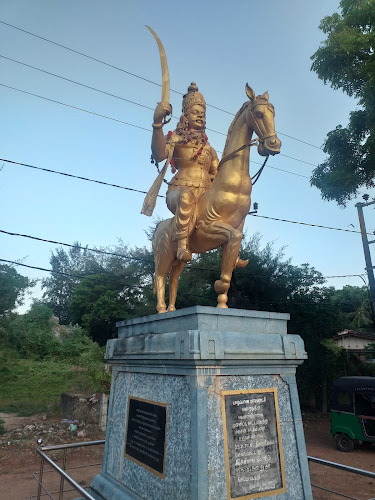
King Sangiliyan’s Statue
About King Sangiliyan’s Statue
Description
The King Sangiliyan's Statue stands tall as a striking tribute to Cankili II, the last king of the Jaffna Kingdom, who fiercely resisted Portuguese colonial forces in the 16th century. Erected originally in 1974, this monument has become more than just a statue; it’s a symbol of resilience and Tamil heritage in the heart of Jaffna city. You’ll find the statue depicting the king mounted on a horse, a posture that practically shouts defiance and courage. It’s not just a statue but a piece of living history that locals and visitors alike can connect with.
This landmark has seen its share of ups and downs—removed during the civil war and controversially restored in 2011, it remains a focal point for reflection on the region’s turbulent past. While some folks argue the newer version lacks a bit of the original’s heroic flair, it still commands attention and respect. If you’re into history, or just want a cool spot to snap some photos with a story behind it, this is a must-see. Plus, it’s surprisingly kid-friendly, so you can bring the little ones along without worry.
Key Features
- Monument dedicated to King Cankili II, a pivotal figure in Tamil resistance against colonial powers
- Statue depicts the king on horseback, symbolizing strength and leadership
- Originally built in 1974, restored in 2011 after removal during conflict
- Located at Muthirai junction in Nallur, a central and accessible spot in Jaffna
- Protected as a cultural and historical landmark, reflecting Jaffna’s rich heritage
- Suitable for visitors of all ages, including children
- Offers a glimpse into the region’s colonial history and local pride
Best Time to Visit
Jaffna’s weather can be a bit unpredictable, but generally, the best time to visit the King Sangiliyan's Statue is during the cooler months from November to February. The heat and humidity dial down a bit, making wandering around the city and soaking in the statue’s aura a lot more pleasant. If you’re like me, sweating buckets while trying to appreciate a statue isn’t exactly ideal, right?
Weekdays tend to be quieter, so if you want a more peaceful experience without crowds or noisy tours, aim for a weekday morning. Weekends and holidays can get bustling, especially with local visitors who come to pay respects or just hang out. Early mornings or late afternoons also offer softer lighting if you’re into photography — the golden hour really makes the statue pop against the sky.
How to Get There
Finding your way to the King Sangiliyan's Statue is pretty straightforward if you’re already in Jaffna. It’s situated at the well-known Muthirai junction in the Nallur area, which is easy to reach by tuk-tuk or local bus. If you’re coming from the city center, a quick tuk-tuk ride should get you there in less than 15 minutes.
If you’re feeling adventurous and want to explore on foot, the walk from central Jaffna offers a nice slice of local life — street vendors, colorful shops, and the buzz of everyday Jaffna. Just be prepared for the tropical sun and maybe bring some water. For those arriving from outside Jaffna, the city is accessible by train or bus from Colombo and other major hubs, and once you land, local transport options are plentiful.
Tips for Visiting
- Wear comfortable shoes — the area around the statue is best explored on foot.
- Bring sunscreen and a hat; Jaffna’s sun is no joke, especially midday.
- Visit early in the day or late afternoon for cooler temps and better photos.
- Take some time to chat with locals nearby; they often have fascinating stories about the statue and the king’s legacy.
- Respect the monument — it’s a symbol of cultural pride and historical significance.
- Combine your visit with nearby attractions in Nallur for a fuller cultural experience.
- Don’t rush — soak in the atmosphere and let yourself reflect on the rich history behind the statue.
Key Features
- Monument dedicated to King Cankili II, a pivotal figure in Tamil resistance against colonial powers
- Statue depicts the king on horseback, symbolizing strength and leadership
- Originally built in 1974, restored in 2011 after removal during conflict
- Located at Muthirai junction in Nallur, a central and accessible spot in Jaffna
- Protected as a cultural and historical landmark, reflecting Jaffna’s rich heritage
- Suitable for visitors of all ages, including children
- Offers a glimpse into the region’s colonial history and local pride
- Wear comfortable shoes — the area around the statue is best explored on foot.
More Details
Updated July 15, 2025
Table of Contents
Description
The King Sangiliyan’s Statue stands tall as a striking tribute to Cankili II, the last king of the Jaffna Kingdom, who fiercely resisted Portuguese colonial forces in the 16th century. Erected originally in 1974, this monument has become more than just a statue; it’s a symbol of resilience and Tamil heritage in the heart of Jaffna city. You’ll find the statue depicting the king mounted on a horse, a posture that practically shouts defiance and courage. It’s not just a statue but a piece of living history that locals and visitors alike can connect with.
This landmark has seen its share of ups and downs—removed during the civil war and controversially restored in 2011, it remains a focal point for reflection on the region’s turbulent past. While some folks argue the newer version lacks a bit of the original’s heroic flair, it still commands attention and respect. If you’re into history, or just want a cool spot to snap some photos with a story behind it, this is a must-see. Plus, it’s surprisingly kid-friendly, so you can bring the little ones along without worry.
Key Features
- Monument dedicated to King Cankili II, a pivotal figure in Tamil resistance against colonial powers
- Statue depicts the king on horseback, symbolizing strength and leadership
- Originally built in 1974, restored in 2011 after removal during conflict
- Located at Muthirai junction in Nallur, a central and accessible spot in Jaffna
- Protected as a cultural and historical landmark, reflecting Jaffna’s rich heritage
- Suitable for visitors of all ages, including children
- Offers a glimpse into the region’s colonial history and local pride
Best Time to Visit
Jaffna’s weather can be a bit unpredictable, but generally, the best time to visit the King Sangiliyan’s Statue is during the cooler months from November to February. The heat and humidity dial down a bit, making wandering around the city and soaking in the statue’s aura a lot more pleasant. If you’re like me, sweating buckets while trying to appreciate a statue isn’t exactly ideal, right?
Weekdays tend to be quieter, so if you want a more peaceful experience without crowds or noisy tours, aim for a weekday morning. Weekends and holidays can get bustling, especially with local visitors who come to pay respects or just hang out. Early mornings or late afternoons also offer softer lighting if you’re into photography — the golden hour really makes the statue pop against the sky.
How to Get There
Finding your way to the King Sangiliyan’s Statue is pretty straightforward if you’re already in Jaffna. It’s situated at the well-known Muthirai junction in the Nallur area, which is easy to reach by tuk-tuk or local bus. If you’re coming from the city center, a quick tuk-tuk ride should get you there in less than 15 minutes.
If you’re feeling adventurous and want to explore on foot, the walk from central Jaffna offers a nice slice of local life — street vendors, colorful shops, and the buzz of everyday Jaffna. Just be prepared for the tropical sun and maybe bring some water. For those arriving from outside Jaffna, the city is accessible by train or bus from Colombo and other major hubs, and once you land, local transport options are plentiful.
Tips for Visiting
- Wear comfortable shoes — the area around the statue is best explored on foot.
- Bring sunscreen and a hat; Jaffna’s sun is no joke, especially midday.
- Visit early in the day or late afternoon for cooler temps and better photos.
- Take some time to chat with locals nearby; they often have fascinating stories about the statue and the king’s legacy.
- Respect the monument — it’s a symbol of cultural pride and historical significance.
- Combine your visit with nearby attractions in Nallur for a fuller cultural experience.
- Don’t rush — soak in the atmosphere and let yourself reflect on the rich history behind the statue.
Key Highlights
- Monument dedicated to King Cankili II, a pivotal figure in Tamil resistance against colonial powers
- Statue depicts the king on horseback, symbolizing strength and leadership
- Originally built in 1974, restored in 2011 after removal during conflict
- Located at Muthirai junction in Nallur, a central and accessible spot in Jaffna
- Protected as a cultural and historical landmark, reflecting Jaffna’s rich heritage
- Suitable for visitors of all ages, including children
- Offers a glimpse into the region’s colonial history and local pride
- Wear comfortable shoes — the area around the statue is best explored on foot.
Location
Places to Stay Near King Sangiliyan's Statue
Find and Book a Tour
Explore More Travel Guides
No reviews found! Be the first to review!
Traveler Reviews for King Sangiliyan’s Statue
There are no reviews yet. Be the first one to write one.
Have you visited King Sangiliyan’s Statue? Help other travelers by sharing your review.
You Might Also Like

සංකිලි රාජ මාලිගය | சங்கிலியன் மந்திரிமனை
Old Park
Jaffna
Find Accommodations Nearby
Recommended Tours & Activities
Visitor Reviews
There are no reviews yet. Be the first one to write one.
Share Your Experience
Have you visited King Sangiliyan’s Statue? Help other travelers by leaving a review.