
King Abdullah I Mosque
About King Abdullah I Mosque
Key Features
More Details
Updated April 15, 2024
بالفيديو.. مسجد الملك عبدالله الأول.. صرح بقبة فيروزية في قلب عمّان
## King Abdullah I Mosque (Amman): what to know before you go
King Abdullah I Mosque is one of Amman’s most recognizable modern religious landmarks, best known for its large blue mosaic dome and twin minarets. It sits in the Abdali area of the capital and was commissioned as a memorial by the late King Hussein to his grandfather, King Abdullah I. Jordan
If you want a mosque experience in Amman that’s explicitly described as welcoming to visitors (including non-Muslims), this is the city’s clearest “yes.” Jordan
### Quick facts (verified)
– Name: King Abdullah I Mosque (Arabic: مسجد الملك عبد الله الأول)
– Where: Abdali district, Amman, Jordan (Plus Code often shown as XW67+F4H)
– Coordinates (from your dataset): 31.9611806, 35.9128528
– Built: 1982–1989 (completed 1989)
– Dome/minarets: One dome, two minarets
– Capacity (note the two figures below come from different sources):
– Wikipedia lists 10,000 worshippers
– Visit Jordan describes ~7,000 inside plus ~3,000 in the courtyard Jordan
## Why this mosque stands out in Amman
### 1) It’s a contemporary landmark with “state” visibility
Unlike older neighborhood mosques you’ll pass daily in Amman, this one was built as a national memorial and is administered under Jordan’s Ministry of Awqaf (Endowments). That matters for travelers because it helps explain two things: why it’s architecturally monumental, and why it’s structured to host public-facing cultural events.
### 2) It’s explicitly described as visitor-friendly
Visit Jordan and Wikipedia both state that tourists are allowed to visit. Jordan
That’s not a small detail in a region where access policies vary widely by country, city, and even by individual mosque.
### 3) The visual language is simple—then richly detailed up close
From a distance, you’ll read the mosque as clean geometry: white stone massing, a large turquoise-blue dome, and two tall minarets. Inside, the emphasis shifts to decorative arts (calligraphy, ornament) that reward slower looking. Jordan’s Awqaf site describes it as a place tourists visit specifically to admire decorative arts, calligraphy, and engravings.
## Architecture notes you’ll actually notice on-site
### The blue dome is the anchor
The dome is the feature you’ll remember after you leave, and it’s consistently highlighted across authoritative sources as the mosque’s defining visual element. Jordan
If you’re photographing, step far enough back that the dome reads as a full circle rather than a cropped arc—your brain registers the geometry immediately.
### Built as a memorial, not as an “old city” relic
This is not an Ottoman-era structure or a medieval mosque; it’s modern Jordan (1980s) expressing continuity with Islamic architectural forms while serving contemporary civic and cultural uses. Archnet frames it as built by King Hussein as a memorial to his grandfather and completed in 1989.
## Visitor etiquette and dress code (verified, practical)
Jordan is generally welcoming, but mosques are still active religious spaces. The most useful way to approach the visit: assume worship comes first, visiting comes second.
### Dress expectations
Wikipedia states:
– Men: long trousers
– Women: cover head, arms, and legs
– Robes/gowns: a hooded gown is provided free of charge to help visitors meet modesty requirements
This is a good inclusivity practice in real life: it reduces guesswork, prevents embarrassment at the door, and makes access easier for travelers who weren’t packing mosque-appropriate clothing that day.
### Behavior basics inside
I’m not going to invent “rules” that vary by moment, but these are safe, respectful norms in functioning mosques:
– Keep voices low; treat it as a place of prayer even when it’s open for visits.
– Ask before photographing people. (Architecture photos are usually fine; people are situational.)
## When to go (what I can and cannot claim)
I can’t truthfully give you current opening hours, prayer-time closures, or ticket pricing as “100% certain,” because those are operational details that change and the most visible numbers online are often repeated from travel listings rather than maintained official visitor pages.
What I can say with confidence:
– Tourist visits are allowed (stated by Visit Jordan and Wikipedia). Jordan
– Dress requirements and robe availability are described as above.
Outdated-data flag: If you see a blog or tour marketplace stating fixed hours/fees, treat them as potentially outdated unless they cite an official, recently updated source.
## How to fit it into an Amman day without backtracking
Because it’s in Abdali, the simplest flow is to treat it as part of a “modern Amman + classic Amman” split day:
– Morning: start with the mosque while you’re fresh and dressed appropriately.
– Then pivot to older layers of the city:
– Internal link: Continue to Amman Citadel (Jabal al-Qal’a) for the long historical timeline view (Roman/Byzantine/Umayyad layers).
– Internal link: Pair it with the Roman Theatre area to understand how Amman’s public spaces shifted from antiquity to the present.
(If those pages don’t exist yet on RealJourneyTravels.com, they’re high-leverage additions—Amman’s “first-time visitor” pathways are unusually structured around a small set of anchor sites.)
## What to look for inside (so it doesn’t blur into “another mosque”)
Even if you’ve visited mosques elsewhere, this one has a specific “Amman” signature: modern national memorial + public cultural venue. Use that framing and you’ll see more.
– Calligraphy and ornament as storytelling: Awqaf explicitly notes decorative arts and calligraphy as part of what visitors come to admire.
– Scale cues: look at how the prayer hall’s scale is designed for large gatherings—capacity estimates differ by source, but both imply a major metropolitan mosque (thousands, not hundreds). Jordan
## Practical logistics from your location data
Your coordinates (31.9611806, 35.9128528) place the mosque in central Amman’s Abdali zone, which is useful for:
– Navigation: drop the coordinates directly into a maps app if the Plus Code address pin is finicky.
– Planning: Abdali is a good base area if you’re staying central and want quick access to major neighborhoods.
## Final take
If you want one mosque in Amman that’s (a) architecturally memorable from the street, (b) explicitly described as welcoming visitors, and (c) tied to modern Jordanian state history, King Abdullah I Mosque is the cleanest choice. Jordan
Table of Contents
Key Highlights
King Abdullah I Mosque
Location
Places to Stay Near King Abdullah I Mosque
Find and Book a Tour
Explore More Travel Guides
No reviews found! Be the first to review!
Traveler Reviews for King Abdullah I Mosque
There are no reviews yet. Be the first one to write one.
Have you visited King Abdullah I Mosque? Help other travelers by sharing your review.
You Might Also Like

The Forest Park
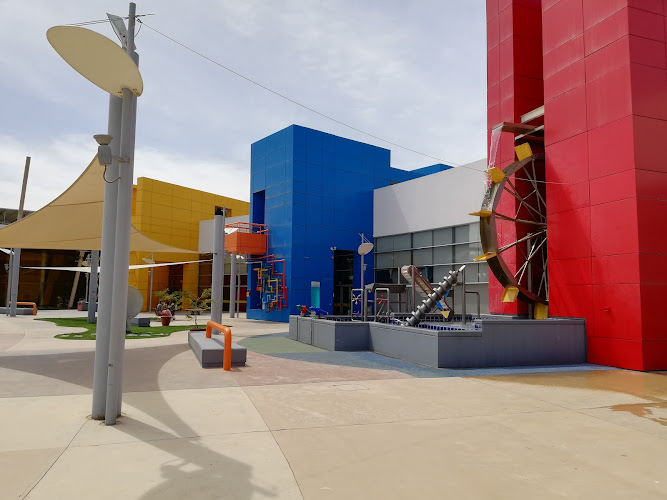
The Children's Museum Jordan
Hercules
Find Accommodations Nearby
Recommended Tours & Activities
Visitor Reviews
There are no reviews yet. Be the first one to write one.
Share Your Experience
Have you visited King Abdullah I Mosque? Help other travelers by leaving a review.