
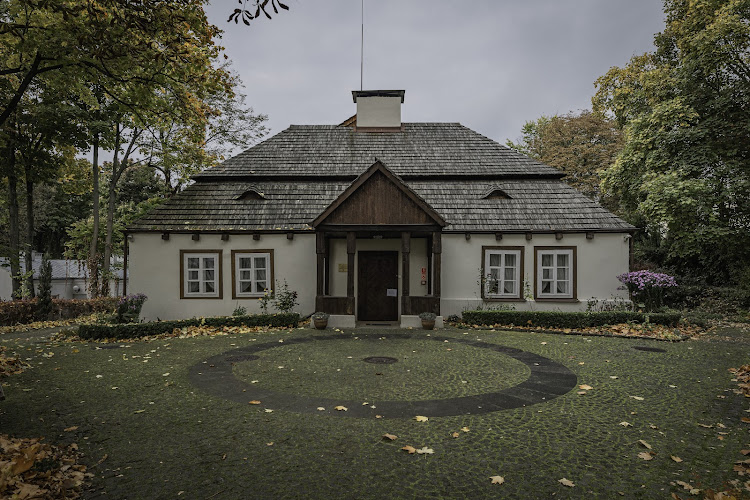
Kielce Region Countryside Museum
About Kielce Region Countryside Museum
Description
The Kielce Region Countryside Museum is an ethnographic museum that feels more like stepping into a series of well-preserved stories than simply walking through displays. It showcases rural life around Kielce, Poland, through reconstructed homesteads, farm buildings, and everyday objects that quietly insist on being noticed. The collection is particularly strong in wooden architecture and regional craft traditions — wooden cottages, granaries, a few mills — all arranged to recreate the rhythms of village life across seasons. It’s the kind of place where, if one listens, the creak of a door or the wind through a thatched roof seems to carry the same weight as any label on a case.
Visitors often remark on the attention to detail: peppers and onions strung from rafters, hand-carved ladles in the kitchen, and faded embroidery whose patterns whisper local histories. The museum doubles as an open-air classroom: there are workshops, live demonstrations, and occasional craft markets where artisans show how to work wool, beat tin, or carve wood. These demonstrations make the cultural material tangible. A visitor doesn’t just see a loom — they see how a dress was made, then repaired, then worn for decades. It’s tactile in a way that modern museums sometimes forget to be.
Accessibility is a practical strength here. The main entrances are wheelchair accessible and the site includes wheelchair-friendly restrooms — a detail that matters and is too often overlooked at open-air museums. Restrooms are available on site (which, yes, is a relief if someone has been sipping hot tea on a crisp day). There is no on-site restaurant; visitors should plan accordingly. Snacks, a picnic blanket, or a short detour to a local café in Kielce will solve that. Families with children will find it particularly rewarding: exhibits are good for kids, with plenty of space to run, tactile displays, and storytelling sessions that keep the little ones engaged.
Although the museum’s reputation is broadly positive, impressions do vary. Some visitors marvel at the immersive reconstructions and the friendly guides; others wish for more multilingual signage or extra interactive tech to complement the traditional displays. That’s not necessarily a failing — the museum intentionally prioritizes authenticity over flashy signage — but it’s worth noting for those used to highly interactive, touchscreen-heavy venues. In short: if someone is after slow, thoughtful, old-school ethnography, this place fits. If one expects AR overlays and constant Instagrammable installations, they might be disappointed.
There are also lesser-known delights that many visitors stumble upon by accident. For instance, a small orchard tucked behind one manor often has heirloom apple varieties that a local volunteer can identify by taste and story — and these volunteers love telling those stories. A retired carpenter who helps maintain one of the windmills is known to linger and chat about tools, and he sometimes demonstrates a hand-forged wooden peg or a mortise-and-tenon joint while visitors stand around, curious. These spontaneous moments are where the museum’s heart beats loudest: not in the labels, but in the people who care for the place.
The museum’s programming rhythm changes with the seasons. Spring brings planting demonstrations and sheep shearing demonstrations (yes, sheep), summer hosts craft fairs and folk music, and autumn often has harvest festivals where traditional food is prepared the old way. Winter quiets the outdoor spaces but reveals interior life — stoves, bedding, and winter clothing, all arranged to show how families kept warm. For those who love photography, there are stunning light conditions in late afternoon, especially during golden autumn — the wooden buildings take on a honeyed glow that makes for memorable pictures (and that’s coming from someone who’ll admit to taking far too many photos when traveling).
Practical visit length tends to be varied: a casual wander can take 60–90 minutes, while a more thorough, slow-paced exploration — with a workshop or guided demonstration thrown in — can easily stretch to three hours. Guided tours are available at certain times and are recommended for visitors who want context and stories rather than just visual impressions. Guides often share little local legends, explanations of household superstitions (some of which are charming, others a bit odd), and the social history that puts each building in perspective. These are the anecdotes that turn architecture into human lives.
Educational groups and families often find the museum especially valuable. School programs are designed to be hands-on: children may get to try a simple traditional craft or taste bread cooked in a communal oven. Parents appreciate that the site isn’t overly “museum-y” in a sterile sense; it feels lived-in. And — here’s a small, practical tip disguised as a story — one family found that bringing a small foldable stool was a lifesaver during a summer visit when demonstrations ran long and benches were full. It’s the little bits of real-world advice that improve a visit and are worth mentioning.
For those interested in regional material culture, the museum serves as a focal point for the Świętokrzyskie region’s rural heritage. Costume displays highlight regional dress, and agricultural tools point to crops and crafts that historically dominated local economies. There are also displays that explore the social structure of village life: seasonal labor rhythms, communal practices like shared threshing, and occasional glimpses into the harder aspects of rural existence (illness, migration, economic hardship). This balanced portrayal helps visitors to appreciate both the beauty and the resilience of traditional rural communities.
Visitors who treasure authenticity will enjoy the museum’s approach to interpretation. Rather than polishing everything into airtight narratives, the curators allow some rough edges — a faded curtain, a patched roof, a tool whose original function is only partially understood — to remain visible. Those rough edges spark curiosity. They invite a visitor to ask, to lean in, to question. And for a certain kind of traveler — the curious, slightly impatient type who loves to poke at things until they give up their secrets — this quality is pure gold.
One should also mention how the museum connects to the wider area around Kielce. It’s not isolated in a vacuum; it sits within a region of rolling hills, mineral-rich soils, and a network of small towns where markets still hum on certain days. A visit to the museum pairs well with a slow day exploring local bakeries, a nearby nature walk, or a trip to one of Kielce’s cultural sites. Travelers who combine indoor and outdoor experiences tend to come away with the most rounded sense of place.
Finally, a candid note — the museum is not flawless, and it doesn’t pretend to be. It’s a place of genuine artifacts and passionate stewardship, sometimes constrained by resources and occasionally uneven in signage or translation. But those imperfections often make the visit feel human, not sanitized. For those who come with a willingness to listen (and to sit through a slightly long demonstration about farming tools), the Kielce Region Countryside Museum rewards with atmosphere, insights, and a surprising number of small, memorable conversations. It’s a destination that invites slow curiosity, and in return, offers a deeper understanding of the rural heart of Kielce, Poland.
Key Features
More Details
Updated August 30, 2025
Table of Contents
Description
The Kielce Region Countryside Museum is an ethnographic museum that feels more like stepping into a series of well-preserved stories than simply walking through displays. It showcases rural life around Kielce, Poland, through reconstructed homesteads, farm buildings, and everyday objects that quietly insist on being noticed. The collection is particularly strong in wooden architecture and regional craft traditions — wooden cottages, granaries, a few mills — all arranged to recreate the rhythms of village life across seasons. It’s the kind of place where, if one listens, the creak of a door or the wind through a thatched roof seems to carry the same weight as any label on a case.
Visitors often remark on the attention to detail: peppers and onions strung from rafters, hand-carved ladles in the kitchen, and faded embroidery whose patterns whisper local histories. The museum doubles as an open-air classroom: there are workshops, live demonstrations, and occasional craft markets where artisans show how to work wool, beat tin, or carve wood. These demonstrations make the cultural material tangible. A visitor doesn’t just see a loom — they see how a dress was made, then repaired, then worn for decades. It’s tactile in a way that modern museums sometimes forget to be.
Accessibility is a practical strength here. The main entrances are wheelchair accessible and the site includes wheelchair-friendly restrooms — a detail that matters and is too often overlooked at open-air museums. Restrooms are available on site (which, yes, is a relief if someone has been sipping hot tea on a crisp day). There is no on-site restaurant; visitors should plan accordingly. Snacks, a picnic blanket, or a short detour to a local café in Kielce will solve that. Families with children will find it particularly rewarding: exhibits are good for kids, with plenty of space to run, tactile displays, and storytelling sessions that keep the little ones engaged.
Although the museum’s reputation is broadly positive, impressions do vary. Some visitors marvel at the immersive reconstructions and the friendly guides; others wish for more multilingual signage or extra interactive tech to complement the traditional displays. That’s not necessarily a failing — the museum intentionally prioritizes authenticity over flashy signage — but it’s worth noting for those used to highly interactive, touchscreen-heavy venues. In short: if someone is after slow, thoughtful, old-school ethnography, this place fits. If one expects AR overlays and constant Instagrammable installations, they might be disappointed.
There are also lesser-known delights that many visitors stumble upon by accident. For instance, a small orchard tucked behind one manor often has heirloom apple varieties that a local volunteer can identify by taste and story — and these volunteers love telling those stories. A retired carpenter who helps maintain one of the windmills is known to linger and chat about tools, and he sometimes demonstrates a hand-forged wooden peg or a mortise-and-tenon joint while visitors stand around, curious. These spontaneous moments are where the museum’s heart beats loudest: not in the labels, but in the people who care for the place.
The museum’s programming rhythm changes with the seasons. Spring brings planting demonstrations and sheep shearing demonstrations (yes, sheep), summer hosts craft fairs and folk music, and autumn often has harvest festivals where traditional food is prepared the old way. Winter quiets the outdoor spaces but reveals interior life — stoves, bedding, and winter clothing, all arranged to show how families kept warm. For those who love photography, there are stunning light conditions in late afternoon, especially during golden autumn — the wooden buildings take on a honeyed glow that makes for memorable pictures (and that’s coming from someone who’ll admit to taking far too many photos when traveling).
Practical visit length tends to be varied: a casual wander can take 60–90 minutes, while a more thorough, slow-paced exploration — with a workshop or guided demonstration thrown in — can easily stretch to three hours. Guided tours are available at certain times and are recommended for visitors who want context and stories rather than just visual impressions. Guides often share little local legends, explanations of household superstitions (some of which are charming, others a bit odd), and the social history that puts each building in perspective. These are the anecdotes that turn architecture into human lives.
Educational groups and families often find the museum especially valuable. School programs are designed to be hands-on: children may get to try a simple traditional craft or taste bread cooked in a communal oven. Parents appreciate that the site isn’t overly “museum-y” in a sterile sense; it feels lived-in. And — here’s a small, practical tip disguised as a story — one family found that bringing a small foldable stool was a lifesaver during a summer visit when demonstrations ran long and benches were full. It’s the little bits of real-world advice that improve a visit and are worth mentioning.
For those interested in regional material culture, the museum serves as a focal point for the Świętokrzyskie region’s rural heritage. Costume displays highlight regional dress, and agricultural tools point to crops and crafts that historically dominated local economies. There are also displays that explore the social structure of village life: seasonal labor rhythms, communal practices like shared threshing, and occasional glimpses into the harder aspects of rural existence (illness, migration, economic hardship). This balanced portrayal helps visitors to appreciate both the beauty and the resilience of traditional rural communities.
Visitors who treasure authenticity will enjoy the museum’s approach to interpretation. Rather than polishing everything into airtight narratives, the curators allow some rough edges — a faded curtain, a patched roof, a tool whose original function is only partially understood — to remain visible. Those rough edges spark curiosity. They invite a visitor to ask, to lean in, to question. And for a certain kind of traveler — the curious, slightly impatient type who loves to poke at things until they give up their secrets — this quality is pure gold.
One should also mention how the museum connects to the wider area around Kielce. It’s not isolated in a vacuum; it sits within a region of rolling hills, mineral-rich soils, and a network of small towns where markets still hum on certain days. A visit to the museum pairs well with a slow day exploring local bakeries, a nearby nature walk, or a trip to one of Kielce’s cultural sites. Travelers who combine indoor and outdoor experiences tend to come away with the most rounded sense of place.
Finally, a candid note — the museum is not flawless, and it doesn’t pretend to be. It’s a place of genuine artifacts and passionate stewardship, sometimes constrained by resources and occasionally uneven in signage or translation. But those imperfections often make the visit feel human, not sanitized. For those who come with a willingness to listen (and to sit through a slightly long demonstration about farming tools), the Kielce Region Countryside Museum rewards with atmosphere, insights, and a surprising number of small, memorable conversations. It’s a destination that invites slow curiosity, and in return, offers a deeper understanding of the rural heart of Kielce, Poland.
Key Highlights
Kielce Region Countryside Museum
Location
Places to Stay Near Kielce Region Countryside Museum
Find and Book a Tour
Explore More Travel Guides
No reviews found! Be the first to review!
Traveler Reviews for Kielce Region Countryside Museum
There are no reviews yet. Be the first one to write one.
Have you visited Kielce Region Countryside Museum? Help other travelers by sharing your review.
You Might Also Like

Geopark Kielce - Centre for Geo-Education
Karczówka Klasztor
Bazylika katedralna Wniebowzięcia NMP w Kielcach
Find Accommodations Nearby
Recommended Tours & Activities
Visitor Reviews
There are no reviews yet. Be the first one to write one.
Share Your Experience
Have you visited Kielce Region Countryside Museum? Help other travelers by leaving a review.