
Kecskemét csipogó kör
About Kecskemét csipogó kör
Key Features
More Details
Updated April 16, 2024
## Kecskemét Csipogó Kör (Csipogó tér): what you’re actually seeing on Deák Ferenc tér
If you pin “Kecskemét csipogó kör” to your map, you’ll land in Kecskemét’s historic center at Deák Ferenc tér 2 (6000, Hungary)—right beside the wider Kossuth tér main-square area. This is not a “big-ticket” attraction in the classic sense (museum, church, gallery). It’s a small, specific spot in the paving—a circular-paved node that the city itself documents as Csipogó tér, with a notable ground-mounted plaque integrated into the stonework.
What makes it worth a stop is exactly that: it’s a micro-landmark you’ll miss if you only scan façades. The center detail is literally under your feet.
—
## Quick orientation on the map
### Where it sits
The city’s own placement map shows the marker near the edge of Kossuth tér, close to the connection between Deák Ferenc tér and nearby streets (including Lechner Ödön utca and Plébánia köz on the map graphic).
### What to expect on arrival
You’ll recognize it as a circular pattern of paving stones with a round metal plaque set in the middle.
—
## The “Csipogó Kör” feature: a documented ground plaque
The official municipal attachment (a technical description) is explicit about what’s installed here:
– A hard limestone disk set into the center of a circular pavement area
– Diameter: 60 cm
– Thickness: 8 cm
– The lettering is carved (the text describes carving and finishing)
– The plaque shown in the photos reads “Hild János Díj” (Hild János Award), with additional surrounding text visible in the close-up images
So, if you’re wondering whether this is a statue, a fountain, or a viewpoint—no. It’s a designed paving “circle” with a commemorative/award plaque installed as a precise point in the square.
—
## How to experience it (so it doesn’t feel like “just a circle”)
### 1) Use it as a center-point for a 20-minute architecture loop
Kecskemét is widely known for Secessionist / Art Nouveau-era architecture in its center, and the main squares are where that density shows up.
One practical move: treat Csipogó tér as your reset point—you can branch out, then return without getting disoriented.
### 2) Look up immediately after you look down
This is the trick with micro-landmarks: they prime your attention. Once you’ve found the plaque, you’re already in the right mindset to notice building detail—tilework, ornament, and civic-scale planning—rather than only “top 10 sights.”
### 3) Photograph it like a cartographer, not a tourist
A simple shot straight down is fine, but the more useful photo is:
– one wide-angle that captures the circular paving context
– one close-up where the text “Hild János Díj” is readable
That gives you both proof-of-place and a record you’ll actually remember later.
—
## Pair it with nearby, high-signal Kecskemét sights
Because Csipogó Kör is a small stop, it works best as part of a center walk. Two nearby anchors that are frequently highlighted in Kecskemét’s core sightseeing zone:
### Cifrapalota and the Art Nouveau cluster
The ADAC overview specifically points out Cifrapalota as an Art Nouveau building (built in 1902) with a distinctive, decorated façade and notes its function today as a city gallery.
### A Kodály thread
Kecskemét is known as the birthplace of composer Zoltán Kodály, and that association is commonly included in general descriptions of the city.
If your goal is “high information density per minute,” this is the kind of cluster that delivers: ground-level micro marker → major architectural façade → cultural biography tie-in.
—
## Practical visit notes (and what I can’t verify)
### Time needed
Plan 5–10 minutes for the Csipogó Kör spot itself, unless you’re using it as a navigation anchor for a longer city-center walk.
### Cost / access
The municipal technical description focuses on installation details (dimensions, materials, placement) and does not mention ticketing or controlled access. Based on that, treat it as a public-space feature rather than a venue.
### Accessibility
Because this is flat paving in a public square, it’s likely to be relatively accessible compared to stair-heavy interiors—but I cannot verify current surface condition, construction, or any temporary barriers from the sources I used. If accessibility is critical for your trip, confirm current conditions locally.
### Outdated-data flag
I did not find reliable, source-backed information for:
– opening hours (likely irrelevant for an outdoor paving feature, but still unverified)
– current maintenance status
– whether the map pin label is consistent across platforms over time
If you’re publishing this, avoid hard claims like “open 24/7” or “best at sunset” unless you verify on the ground.
—
## On-page “internal links” to keep readers moving (jump links)
– Where it sits
– What the plaque is
– Pair it with nearby sights
These improve usability without inventing site URLs.
—
## Bottom line
Kecskemét Csipogó Kör is best understood as a precise, documented point in the city-center paving—a circular stone pattern at Csipogó tér with a 60 cm limestone plaque installed at its center, photographed and mapped by the city in connection with the Hild János Díj marker.
If you’re already in Kecskemét’s center, it’s a quick, satisfying “found it” stop—especially when you fold it into an Art Nouveau-heavy loop around the main squares.
Table of Contents
Key Highlights
Kecskemét csipogó kör
Location
Places to Stay Near Kecskemét csipogó kör
Find and Book a Tour
Explore More Travel Guides
No reviews found! Be the first to review!
Traveler Reviews for Kecskemét csipogó kör
There are no reviews yet. Be the first one to write one.
Have you visited Kecskemét csipogó kör? Help other travelers by sharing your review.
You Might Also Like
Elhagyatott fegyverraktár
Benkó Hill
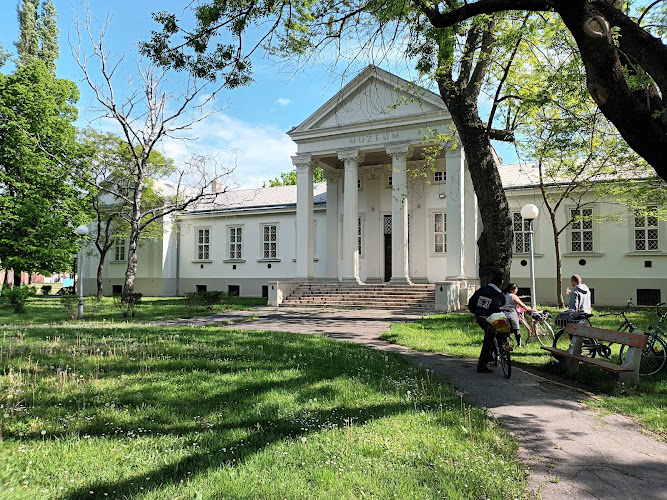
Katona József Museum
Find Accommodations Nearby
Recommended Tours & Activities
Visitor Reviews
There are no reviews yet. Be the first one to write one.
Share Your Experience
Have you visited Kecskemét csipogó kör? Help other travelers by leaving a review.