
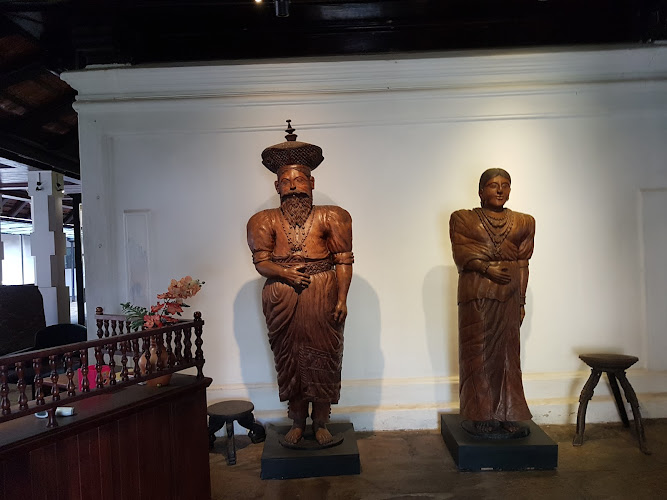
Kandy National Museum
About Kandy National Museum
The Kandy National Museum occupies part of the former royal palace complex in central Kandy, Sri Lanka, and presents a focused, often quietly compelling window into the Kandian era. Housed in rooms that once hosted courtly life and decisions, the museum displays weapons, regalia, daily utensils, ritual objects, and carved woodwork that together sketch how Kandian rulers lived, fought, worshipped and projected power. It feels less like a glossy modern museum and more like stepping into a living scrapbook — paint slightly faded, brass that has lost some shine, but authenticity very much intact.
Visitors with even a passing interest in history will appreciate how original architecture frames the collections: low ceilings in some chambers, timber columns, and ornate doorways that were part of palace circulation. The exhibits are arranged to emphasize the Kandian court and military culture. There are ceremonial swords, muskets and shields; judicial items and documents; combs, jewellery and personal effects; and some bone-dry but fascinating notes about colonial encounters and the last years of independent Kandian rule before the British takeover.
The museum also has a local, lived-in feel. School groups, older residents coming to reminisce about family heirlooms, and tourists from many countries all mingle here. That mix gives the place a flavour of being an institution that the city still claims as its own, not just a spot on every guidebook checklist. And yes, it is generally more appreciated by people who slow down and read, rather than those sprinting through on a tight itinerary. On the balance, most visitors leave with a deeper sense of the region’s craftsmanship and contested past — some surprised at how much detail survives in small objects.
Key Features
- Former royal palace rooms used as exhibit spaces, preserving architectural details from the Kandian period
- Extensive collection of Kandian era weapons: swords, spears, muskets and traditional shields
- Ceremonial regalia, including trappings of office and items used in court rituals
- Household and personal artefacts: jewelry, combs, textiles fragments and carved wooden items
- Displays on governance and colonial interaction that contextualize the fall of the Kandian Kingdom
- Interpretive panels (English and local language labels in many cases) explaining provenance and historical function
- Accessible entrance and wheelchair-accessible parking, making key areas reachable for visitors with limited mobility
- Family-friendly layout: manageable rooms and exhibits that can engage school-age children with tactile storytelling
- Small-scale, intimate atmosphere that rewards slower, curious visitors rather than crowds
Best Time to Visit
Kandy sits at a slightly cooler elevation than the coastal plains, and that matters. The best months to visit are generally from December to April when rainfall is lower and sightseeing is easier — less chance of a sudden monsoon washing out an afternoon stroll. Mornings, especially right after opening, tend to be the quietest; anyone who wants to browse exhibits without background chatter should aim for that window.
But the museum works year-round. If a traveler is in Kandy for a festival — such as the famed Pereah (Esala Perahera) in July or August — the museum can offer a calm historical counterpoint to the sensory overload of processions, drumming and throngs. Keep in mind that festival seasons bring heavy tourist footfall to the city, so expect longer lines at ticket points and a busier surrounding area.
Weather-wise, afternoons can feel humid after a sunlit morning, and the museum’s historic rooms may be dimmer than a modern gallery. A mid-morning visit combines softer light filtering through palace windows with fewer crowds. If the itinerary is tight, pairing the museum with nearby sites earlier in the day is usually the most pleasant option.
How to Get There
The Kandy National Museum sits within easy reach of central Kandy. From the main bus stand or train station, it is a short tuk-tuk ride — very typical in Sri Lankan city travel — or a 15 to 25 minute walk depending on pace and which part of town someone starts from. Tuk-tuks are the usual choice for travelers who want to save time and energy; always agree a fare before setting off, or insist the driver uses the meter when available.
For those who prefer public transport, local buses crisscross the city and can get a visitor close enough for a short walk. Walking offers the bonus of seeing streetside vendors, small temples, and colonial-era buildings en route, which is a small traveler's reward if the weather behaves. Drive-in visitors will find that wheelchair-accessible parking is provided, easing arrival for people with mobility needs. Parking capacity is moderate; weekends and festival days make it busier.
A word on directions: the museum occupies part of the old palace compound, so sometimes signage can be modest. If in doubt, asking a shopkeeper or guard nearby usually yields quick, accurate guidance — Kandy people are accustomed to helping visitors find the historic core. And if someone prefers, many hotels and guesthouses will organize a tuk-tuk or taxi pick-up; this is a small convenience that often feels worth it after a long day of travel.
Tips for Visiting
Plan for at least 60 to 90 minutes. It’s tempting to rush, but the museum’s strengths are the small items and the stories behind them; these need time. A slow read of display cards, a pause to see the craftsmanship on a shield or an ornament, and a walk around the palace rooms will make the visit feel more worthwhile than a quick tick-box photo session.
No restaurant is available on site. So bring water, a small snack, or plan to stop nearby after the visit. There are plenty of local cafés and tea shops in Kandy where one can recover with a cup of strong Ceylon tea and a samosa. Also, wear comfortable shoes — the palace floors are mostly flat but uneven in parts and sometimes polished wood or old stone can be slippery after rain.
Accessibility is a genuine plus here: the museum provides a wheelchair-accessible entrance and parking. However, not every corner of the historic building is fully adapted; visitors who rely on mobility aids might encounter narrower doorways or small thresholds, so a little extra patience and possibly assistance from staff will help. Families with strollers should note the same caveat.
Photography is usually allowed for personal use, but flash photography might be restricted near delicate textiles or paintings. It’s courteous to keep photos of staff and local visitors to a minimum unless permission is given. If someone is especially interested in a particular object — maybe a finely carved throne piece or an annotated document — asking a staff member for more detail sometimes reveals provenance stories that didn’t make it onto the display cards.
Guided tours are sometimes offered by local guides, and while they are not always strictly necessary, a short guided explanation can transform a set of objects into a digestible narrative about power, ritual and resistance in the Kandian kingdom. Guides are adept at connecting what seem like isolated items — a sword here, a document there — into a thread that makes sense of the period. If a visitor values stories over labels, a guide is worth the small extra cost.
Budget visitors should bring local currency for ticket entry and small purchases. Museum entry is typically modestly priced, but costs and opening hours can change, so checking current details with hotel staff or an official desk in Kandy before setting out is prudent. Also, consider visiting the museum in combination with nearby historic sites to maximize time — but do them in a way that allows breathing room. Trying to cram too many places into one day often results in forgetting most of them.
Finally, be curious and ask questions. The museum is richer when seen as part of a lived landscape: the streets, the temples, the food vendors, and the people who still treat parts of the palace complex as part of daily life. Those small, human interactions will often be the memory that outlasts the photographs. It’s an easy trap to only look for the headline objects; the real pleasure here is in the small, well-worn details that connect a visitor to the past.
All told, the Kandy National Museum rewards those who slow down and look closely. It won’t astonish with flashy multimedia, but it will whisper the story of a kingdom — through weapons, ornaments, and household objects — in a way that feels authentic and quietly persuasive. For travelers who enjoy history that requires a little imagination and patience, this museum is a satisfying stop in Kandy, Sri Lanka.
Key Features
- Former royal palace rooms used as exhibit spaces, preserving architectural details from the Kandian period
- Extensive collection of Kandian era weapons: swords, spears, muskets and traditional shields
- Ceremonial regalia, including trappings of office and items used in court rituals
- Household and personal artefacts: jewelry, combs, textiles fragments and carved wooden items
- Displays on governance and colonial interaction that contextualize the fall of the Kandian Kingdom
- Interpretive panels (English and local language labels in many cases) explaining provenance and historical function
- Accessible entrance and wheelchair-accessible parking, making key areas reachable for visitors with limited mobility
- Family-friendly layout: manageable rooms and exhibits that can engage school-age children with tactile storytelling
You Might Also Like
666 A9
8 Grusoult

Abhayagiriya
Tours & Activities
GetYourGuide provides this tour inventory. We may earn a commission if you book through it; verify current availability, prices, and terms with the provider.
Visitor Reviews
There are no reviews yet. Be the first one to write one.
Share Your Experience
Have you visited Kandy National Museum? Help other travelers by leaving a review.