
Inca Manco Capac International Airport
About Inca Manco Capac International Airport
Key Features
More Details
Updated June 11, 2025
Inca Manco Capac International Airport ( IATA: JUL – ICAO: SPJL) – Juliaca
## Inca Manco Cápac International Airport (JUL): what to expect in Juliaca, Peru
Inca Manco Cápac International Airport—IATA: JUL, ICAO: SPJL—serves Juliaca in Peru’s Puno Region and sits at 12,552 ft / 3,826 m above sea level, making it one of the highest commercial airports in the world.
Despite the “international” designation, it’s widely documented that there are no scheduled international nonstop flights (so most travelers use it as a domestic gateway into the southern Andes and the Lake Titicaca area).
Your provided location details match common mapping references for the airport in Juliaca:
– Location: Juliaca, Peru
– Coordinates: -15.4705053, -70.1566288
– Rating: 4/5 (as provided)
– Type: International airport (public)
## Why JUL matters: the high-altitude gateway problem (and advantage)
JUL’s defining feature is altitude. At 3,826 m, you’re arriving into thin air immediately—often before your body has had any chance to acclimatize. Weather and Aviation, Inc.
That has two practical consequences:
– You may feel altitude effects faster than expected. Even fit travelers can get headaches, nausea, shortness of breath, or poor sleep at elevations above ~2,500 m. (This is general high-altitude physiology, not unique to Peru.)
– The airport is strategically placed for overland connections to places people actually want to be—especially Puno and the Lake Titicaca region—without routing through Cusco. Travel providers commonly sell transfers between Juliaca Airport and Puno, and published journey times are often described as about an hour. Activities
## Airport layout and airfield facts you can plan around
This is a straightforward, single-runway airport:
– Runway: 12/30
– Length: 4,200 m (one of the longest in Peru)
– Surface: Asphalt
The high elevation plus the long runway is not a coincidence: higher airports require more runway for aircraft performance. (That’s basic aerodynamics and performance planning, and it’s exactly why high-altitude airports often have long runways.)
The airport is documented as being operated by CORPAC S.A. (Corporación Peruana de Aeropuertos y Aviación Comercial).
## Getting from the airport to where you actually want to go
Most travelers landing at JUL are using it as a ground-transport pivot. The big decision is whether you’re going:
### Juliaca city
Juliaca is the immediate urban base. If you’re staying in town, you’re optimizing for speed and cost, not scenery.
### Puno / Lake Titicaca area
Puno is commonly treated as the onward hub for Titicaca logistics, tours, and boat connections. Multiple transfer providers and booking platforms describe airport–Puno transfers with travel times commonly stated around 1 hour. Activities
Reality check (important): Transfer time is not a guarantee. Traffic, weather, roadworks, and seasonality can change your timing. The fact you can rely on is simply that many operators sell that route and describe it as roughly an hour. Activities
## Money + food: what “airport prices” usually means here
Your source snippet (in Portuguese) says: “Prices are high, but there are possibilities outside.” That aligns with a common pattern at smaller airports worldwide: limited concessions inside → higher prices; better value outside the perimeter.
What you can do, without over-claiming specifics:
– Assume selection is limited inside and budget accordingly.
– If you have time and mobility, plan a “buy outside” strategy (snacks, SIM/top-ups, water) before you head into the terminal area or immediately after landing, depending on your transport plan.
– Carry small cash denominations as a general travel tactic in regions where card acceptance can be inconsistent (this is general best practice, not a claim about this specific airport’s point-of-sale setup).
## High-altitude arrival playbook (practical, not dramatic)
If you’re coming from sea level (Lima, coastal Peru, or overseas), treat JUL as an acclimatization event.
– Go slow for the first 12–24 hours. The “I feel fine” trap is real—symptoms can lag.
– Hydrate, but don’t force water. Overhydration isn’t helpful; steady intake is.
– Avoid heavy alcohol on arrival. It can worsen sleep and dehydration at altitude.
– Plan your first night at a stable elevation. If your itinerary allows it, don’t stack intense activity immediately after landing.
If you have a medical condition or a history of altitude illness, use official medical guidance and consider speaking with a clinician before travel. (This is a safety note, not airport-specific.)
## What data is most likely to be outdated (so you should verify)
Airports are one of the most fast-changing travel categories online. The details below are especially likely to drift:
– Airlines serving JUL
– Flight schedules and seasonal frequencies
– Ground transport pricing and pickup rules
– Terminal amenities (lounges, food options, Wi-Fi availability)
Even Wikipedia-style summaries can lag reality for schedules and services, so treat published route lists as directional and confirm with the airline/airport before booking.
## Quick facts recap (for trip planning)
– Name: Inca Manco Cápac International Airport
– Codes: JUL / SPJL
– Elevation: 12,552 ft / 3,826 m
– Runway: 12/30, 4,200 m, asphalt
– Operator: CORPAC S.A.
– Scheduled international nonstops: documented as none
If you want, paste the next leg you’re optimizing for (Puno, Cusco via bus/flight, Titicaca homestays, etc.) and I’ll turn this into a tighter “arrival-to-hotel” logistics guide with only verified, source-backed steps.
Table of Contents
- Key Highlights
- Location
- Places to Stay Near Inca Manco Capac International Airport"Os preços são altos, mas há possibilidades do lado de fora, a menos ..."
- Find and Book a Tour
- Explore More Travel Guides
- Nearby Places You Might Like
- Traveler Reviews for Inca Manco Capac International Airport
- Share Your Experience
Key Highlights
Inca Manco Capac International Airport
Location
Places to Stay Near Inca Manco Capac International Airport"Os preços são altos, mas há possibilidades do lado de fora, a menos ..."
Find and Book a Tour
Explore More Travel Guides
No reviews found! Be the first to review!
Traveler Reviews for Inca Manco Capac International Airport
There are no reviews yet. Be the first one to write one.
Have you visited Inca Manco Capac International Airport? Help other travelers by sharing your review.
You Might Also Like
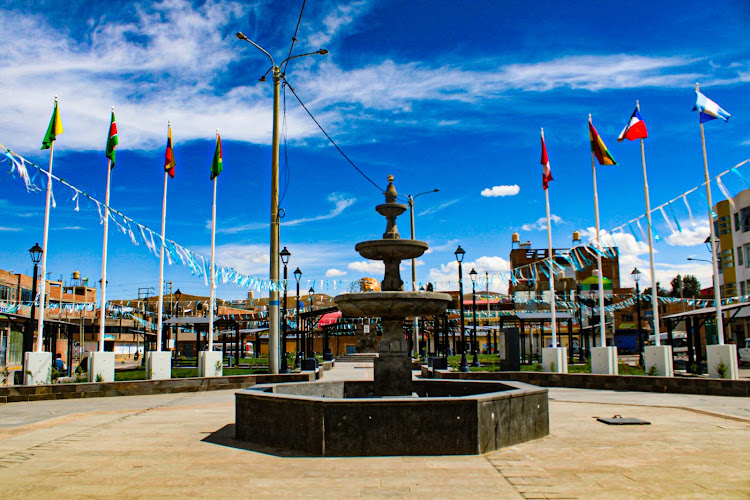
Las Americas JULIACA Park
BALCON DEL CONDE DE LEMOS
Iglesia de San Juan Bautista – Puno, Santuario de la Virgen de la Candelaria.
Find Accommodations Nearby
Recommended Tours & Activities
Visitor Reviews
There are no reviews yet. Be the first one to write one.
Share Your Experience
Have you visited Inca Manco Capac International Airport? Help other travelers by leaving a review.