
Haarlemmerpoort
About Haarlemmerpoort
Key Features
More Details
Updated June 11, 2025
## Haarlemmerpoort (Willemspoort): Amsterdam’s last-built city gate, and an easy photo stop by Westerpark
Haarlemmerpoort—officially Willemspoort—stands at Haarlemmerplein 50 on the edge of Amsterdam’s historic core. It’s a neoclassical city-gate complex from 1840, built as a pair of former customs houses (Kommiezenhuizen) with a central passage framed by Corinthian columns, topped by an attic with a clock.
If you like urban history that’s still “in use,” this is a rewarding stop: you’re looking at what multiple sources describe as the fifth gate on Amsterdam’s Haarlem side—effectively the final iteration after the city expanded westward over time.
### Quick facts (verified)
– Name: Haarlemmerpoort (official name: Willemspoort)
– Address: Haarlemmerplein 50, 1013 HS, Amsterdam
– Style & date: Neoclassical, built/opened in 1840
– Design features: two former customs houses + central passage with Corinthian columns + clock on the attic
– What it is today: a protected monument; the building has been used for housing and hospitality/commercial space after restoration (interior access depends on what’s operating there). Amsterdam
> Data-quality flag (your input): your row lists the city as “Haarlem.” The verified monument record places Haarlemmerplein 50 in Amsterdam.
—
## Why it’s worth a detour
### 1) It’s a rare survivor: the “last-built” gate era
Amsterdam’s old defensive gates mostly disappeared as fortifications lost their function. Haarlemmerpoort is commonly described as the last-built Amsterdam city gate, constructed in 1840.
That makes it an unusually legible piece of city infrastructure: not a recreated monument, but a gate that still anchors traffic and movement patterns around Haarlemmerplein.
### 2) The architecture reads clearly, even if you know zero Dutch history
Even from a quick sidewalk glance, the composition is easy to parse:
– Two flanking blocks (the former customs houses)
– A monumental opening with Corinthian columns
– A clock centered above, which is specifically called out in the monument register description
If you’re scouting Amsterdam’s neoclassical moments (a style that can be harder to “spot” compared to gabled canal houses), this is one of the cleanest examples you can point to.
—
## Best ways to experience Haarlemmerpoort
### A short “city-edge” walk that makes sense geographically
Multiple descriptions tie Haarlemmerpoort to the westward route “toward Haarlem,” with earlier gates shifting as Amsterdam expanded.
A practical way to feel that logic (without overplanning) is to treat the gate as a hinge point:
– Approach from the inner-city side (older street fabric), then
– Pass under/along the gate toward the broader boulevards and parkland direction (your note mentions Westerpark as a natural continuation)
I’m intentionally not naming a step-by-step route street list here because street works and traffic patterns change frequently, and I can’t verify today’s pedestrian routing without live maps.
### What you can realistically do on-site
– See it well from multiple angles: because it fronts open space/water edges, you can usually get both a “straight-on” symmetrical shot and oblique angles that show the side wings.
– Treat the interior as “maybe”: the structure exists as a monument complex and has had residential/commercial uses; plan on enjoying it from the outside unless you specifically know what’s open inside. Amsterdam
—
## Photography notes that actually help
### The “gate frame” shot
The central opening is the hero. A simple way to make the image read immediately:
– Stand far enough back that both side wings are visible (so it doesn’t look like a random arch)
– Keep verticals straight (phone gridlines help)
– Use the clock/attic as the top anchor point (it’s a defining feature noted in the monument description)
### The “columns + texture” detail shot
The monument register highlights sandstone and plastered wall surfaces and the Corinthian columns.
So if you want something beyond the postcard angle, zoom in on:
– Column capitals
– Cornice line
– Surface transitions between stone and plaster
—
## What to know before you go
### Accessibility & inclusivity notes (what’s safe to say)
– Haarlemmerpoort sits in an active public streetscape. Sidewalk quality, curb cuts, and crossing signals can vary by corner and by construction work. If step-free routing matters, it’s smart to use an accessibility-aware navigation option on the day you visit.
– Amsterdam is bike-dense and can be fast-moving around junctions—especially near major squares. If you’re visiting with kids, mobility aids, or anyone who prefers calmer crossings, give yourself extra time at intersections.
(These are practical cautions, not claims about exact curb infrastructure.)
—
## Accuracy & “outdated data” flags from your dataset
– Rating (4.2): ratings are inherently time-sensitive. I’m treating your 4.2 as “what your dataset captured,” not a timeless fact. If you publish the rating, label it as “at time of data capture” or refresh it before posting.
– City mismatch: as noted above, your row says Haarlem, but the official monument entry places the address in Amsterdam.
—
## Two contextual internal links (safe implementation)
I can’t verify what already exists on your site, so here are two internal link placements phrased as conditional inserts:
– When you mention continuing the walk toward green space: link the words “Westerpark walk” to your Westerpark guide if you have one (example slug format: /westerpark/).
– When you reference the “Haarlem-side” travel corridor and the name connection: link “day trip to Haarlem” to your Haarlem city guide if published (example slug format: /haarlem/).
—
### Source-backed image references
If you want a quick visual check for editors or VAs, Stadsherstel Amsterdam has archived material and imagery tied to Haarlemmerpoort/Willemspoort. Amsterdam
Table of Contents
Key Highlights
Haarlemmerpoort
Location
Places to Stay Near Haarlemmerpoort"A nice spot to take some pictures and go on a walk around Westerpark"
Find and Book a Tour
Explore More Travel Guides
No reviews found! Be the first to review!
Traveler Reviews for Haarlemmerpoort
There are no reviews yet. Be the first one to write one.
Have you visited Haarlemmerpoort? Help other travelers by sharing your review.
You Might Also Like
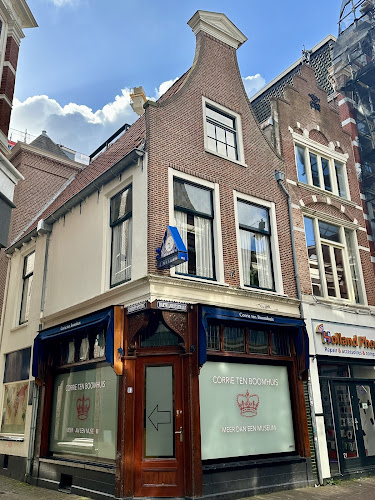
Ten Boom Museum
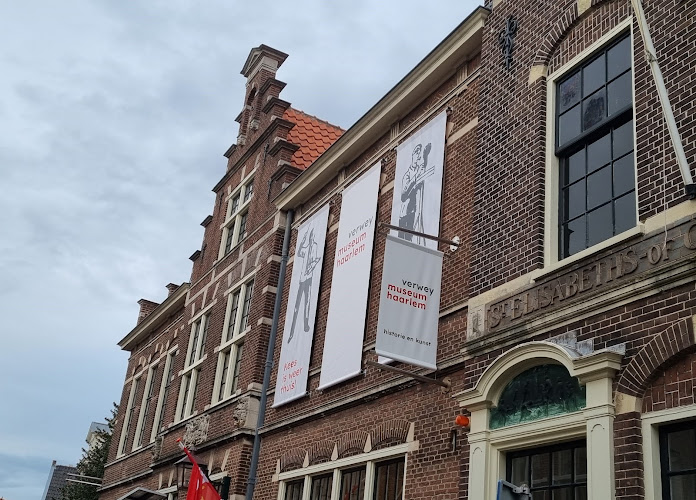
Verwey Museum Haarlem

NZH Transport Museum
Find Accommodations Nearby
Recommended Tours & Activities
Visitor Reviews
There are no reviews yet. Be the first one to write one.
Share Your Experience
Have you visited Haarlemmerpoort? Help other travelers by leaving a review.