
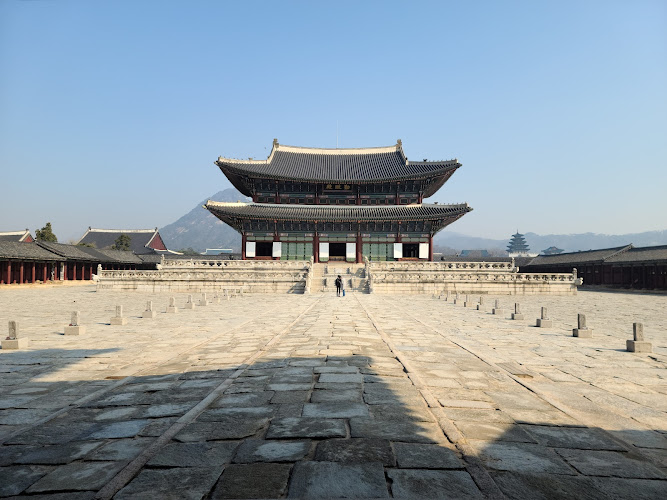
Gyeongbokgung Palace
About Gyeongbokgung Palace
Description
Standing proudly in the heart of Seoul, Gyeongbokgung Palace represents the grandest of Korea's Five Grand Palaces from the Joseon Dynasty. Built back in 1395, this architectural masterpiece sprawls across an impressive 410,000 square meters and honestly, when you first walk through those massive gates, the sheer scale of the place just takes your breath away. I remember my first visit – I thought I could cover the whole palace in a couple hours, but ended up spending nearly half a day there and still felt like I'd barely scratched the surface.
The palace served as the main royal residence for centuries, though it went through some rough patches including destruction during the Japanese invasions in the 1590s. What you see today is a combination of original structures and carefully reconstructed buildings that give visitors an authentic glimpse into royal life during Korea's most influential dynasty. And let me tell you, the attention to detail in those reconstructions is incredible.
What really sets Gyeongbokgung apart from other palaces you might visit around the world is how it manages to transport you back in time while still feeling accessible and relevant. The palace grounds include everything from grand throne halls to intimate living quarters, expansive gardens to the fascinating National Palace Museum of Korea. It's not just a bunch of old buildings – it's a living testament to Korean history and culture that continues to captivate millions of visitors each year.
The palace complex sits against the backdrop of Bugaksan Mountain, and the ancient architects really knew what they were doing when they chose this location. The feng shui principles they followed created this perfect harmony between the structures and the natural landscape. You can spend hours just wandering through the different courtyards and pavilions, each one revealing new perspectives and photo opportunities.
Key Features
The palace offers so many distinctive elements that you'll want to plan your visit carefully to catch the highlights:
- Gwanghwamun Gate – The main entrance is a spectacle in itself, with the changing of the guard ceremony happening twice daily. The colorful uniforms and precise movements of the guards make for incredible photos and give you an immediate sense of stepping into another era.
- Geunjeongjeon Hall – This is the throne hall where kings conducted state affairs and held important ceremonies. The building's double-tiered stone platform and ornate decorations showcase the absolute pinnacle of Joseon architecture. Trust me, standing in front of this building makes you feel pretty small.
- Gyeonghoeru Pavilion – Built on an artificial pond and supported by 48 stone pillars, this pavilion was used for royal banquets and receiving foreign envoys. The reflection of the pavilion in the water creates one of the most photographed scenes in all of Seoul, especially during cherry blossom season.
- National Palace Museum – Included with your palace admission, this museum houses over 40,000 royal artifacts including ceremonial objects, documents, and artwork. It provides crucial context that helps you understand what you're seeing as you explore the grounds.
- National Folk Museum – Also included in your ticket, this museum offers insights into traditional Korean lifestyle, from ancient times through the Joseon Dynasty. The exhibits help connect palace life to everyday experiences of common people during that period.
- Hanbok Experience – Here's something special – visitors wearing traditional Korean hanbok get free admission to the palace. You'll see dozens of rental shops near the palace entrance, and wandering the grounds in traditional dress really does enhance the whole experience.
- Hyangwonjeong Pavilion – A smaller hexagonal pavilion sitting on a lotus pond, connected by a charming wooden bridge. It's a bit more tucked away than some other structures, which means fewer crowds and a more peaceful atmosphere.
- Free Guided Tours – The palace offers complimentary guided tours in multiple languages throughout the day. These tours are genuinely informative and led by knowledgeable guides who share stories and historical details you'd never pick up on your own.
Best Time to Visit
Timing your visit to Gyeongbokgung can really make or break your experience, so let's talk strategy here.
Spring, particularly late March through early May, ranks as one of the most popular times for good reason. The cherry blossoms and other flowering trees create this almost dreamlike atmosphere throughout the palace grounds. But – and this is important – you'll be sharing that experience with massive crowds. If you don't mind navigating through throngs of other visitors, the visual payoff is worth it.
Autumn, specifically October and November, gives spring some serious competition. The fall foliage turns the palace grounds into a canvas of reds, oranges, and golds. The weather's typically mild and comfortable for walking, and somehow the autumn light just hits differently when it filters through those traditional Korean buildings. I've visited in both seasons and honestly can't pick a favorite.
Summer months from June through August bring hot, humid weather and occasional heavy rains. The palace is less crowded during this period, which is nice, but you'll be dealing with temperatures that can climb into the high 80s or 90s Fahrenheit. Not ideal when you're planning to spend several hours walking around outdoors. If you do visit in summer, go early in the morning before the heat really kicks in.
Winter offers the most unique experience if you can handle the cold. Snow-covered palace buildings look absolutely magical, and the crowds thin out considerably. Just bundle up properly – Seoul winters are no joke, with temperatures often dropping below freezing. The palace is particularly photogenic in snow, creating scenes that look like they've been pulled straight from a historical Korean drama.
Regarding time of day, getting there right when the gates open (usually 9 AM) gives you the best chance at experiencing the palace with fewer people. The golden hour before closing also offers beautiful lighting for photography, though you'll feel rushed trying to see everything. Weekdays are definitely less crowded than weekends, and if you can avoid Korean national holidays and school vacation periods, you'll have a much more pleasant visit.
How to Get There
Getting to Gyeongbokgung is remarkably straightforward thanks to Seoul's excellent public transportation system. The palace is located in the Jongno district, right in central Seoul, making it easily accessible from pretty much anywhere in the city.
The absolute easiest way is via subway. Gyeongbokgung Station on Line 3 puts you literally at the palace's doorstep – just take Exit 5 and you'll see the palace walls immediately. Alternatively, Gwanghwamun Station on Line 5 is also very close, about a five-minute walk away via Exit 2. Both stations are clearly marked and have English signage, so even if you're not comfortable with Korean, you shouldn't have any trouble.
If you're staying in popular tourist areas like Myeongdong, Hongdae, or Gangnam, the subway ride takes anywhere from 15 to 30 minutes depending on transfers. Seoul's subway system is clean, efficient, and incredibly affordable – a single journey ticket costs around 1,250-1,450 won (roughly $1-1.20 USD). Get yourself a T-money card though, it makes everything easier and gives you a small discount on fares.
Buses also serve the area extensively, with multiple routes stopping near the palace. Bus numbers 109, 171, 172, 601, 606, and 7025 all stop close by. However, unless you're already familiar with Seoul's bus system, the subway is more straightforward for first-time visitors.
Taxis are another option, though probably overkill given how accessible the palace is by public transit. If you do take a taxi, just show the driver "경복궁" (Gyeongbokgung) written in Korean, and they'll know exactly where to go. Uber doesn't operate in Seoul, but local apps like KakaoTaxi work similarly if you prefer ride-sharing.
For those staying in the Insadong or Bukchon Hanok Village areas, you can actually walk to the palace in about 10-15 minutes. It makes for a pleasant stroll through some of Seoul's most traditional neighborhoods, and you'll pass numerous hanbok rental shops along the way if you're interested in the free admission perk.
Parking is available if you're driving, with wheelchair accessible spaces provided. But honestly, driving in Seoul as a tourist is more hassle than it's worth, especially when public transportation is so reliable.
Tips for Visiting
After visiting the palace multiple times and learning from both my successes and mistakes, here's what you actually need to know to make the most of your trip.
First off, wear comfortable shoes. I cannot stress this enough. The palace grounds are enormous, and you'll be walking on a variety of surfaces including gravel paths, stone courtyards, and stairs. Those cute shoes you brought for Instagram photos? Save them for later. Your feet will thank you.
The palace is closed on Tuesdays, so double-check the day before you plan your visit. Nothing worse than showing up to find the gates locked – been there, done that, felt pretty silly about it.
Admission fees are incredibly reasonable, currently around 3,000 won (about $2.50 USD) for adults. Children, seniors, and people with disabilities often get discounted or free admission. And remember that hanbok hack I mentioned earlier – wearing traditional Korean dress gets you in free. Even if you factor in the rental cost (usually 15,000-20,000 won for a few hours), it's a fun experience that pays for itself if you're visiting multiple palaces in one day.
Download a palace map on your phone or grab a paper one at the entrance. The palace complex is larger than you think, and certain pavilions and buildings are easy to miss if you don't have a plan. The major structures are well-marked, but some of the more interesting smaller buildings are tucked away in corners you might not naturally wander to.
Join one of the free guided tours if your schedule allows. They typically run multiple times throughout the day in English, Japanese, Chinese, and Korean. The tours last about an hour and provide context and stories that transform the palace from just pretty buildings into a real understanding of royal life. Check the schedule when you arrive so you can time your visit accordingly.
Bring water and maybe some snacks, especially if you're visiting during warmer months. There are limited food options inside the palace grounds, and you'll be doing a lot of walking. There's no rule against eating in designated rest areas, just be respectful and don't leave any trash behind.
Photography is generally allowed throughout the palace, but flash photography and tripods are restricted in some indoor areas and museum spaces. Be respectful of signs and staff instructions. And please, please don't touch the buildings or artifacts – the oils from your hands can damage these centuries-old structures.
The changing of the guard ceremony at Gwanghwamun Gate happens twice daily (usually around 10 AM and 2 PM, but times can vary seasonally). Get there about 15 minutes early to snag a good viewing spot. The ceremony lasts about 20 minutes and is genuinely impressive, with guards in full traditional uniform performing the ritual that's been recreated from historical records.
If you're interested in the hanbok experience but don't want to commit to renting for several hours, some shops offer shorter rental periods specifically for palace visits. The area around Gyeongbokgung and nearby Bukchon Hanok Village has dozens of rental shops competing for business, so you can usually negotiate on price or get package deals.
Consider combining your palace visit with other nearby attractions. Bukchon Hanok Village is about a 15-minute walk away and features traditional Korean houses. Insadong, Seoul's art and culture district, is also walkable from the palace. The National Folk Museum and National Palace Museum included with your admission deserve at least an hour each if you're at all interested in Korean history and culture.
Watch the weather forecast and plan accordingly. The palace offers limited shade, so hot summer days can be brutal without sun protection. Bring sunscreen, a hat, and maybe an umbrella for both sun and unexpected rain. In winter, dress in layers since you'll be mostly outdoors.
Restroom facilities are available throughout the palace grounds and are generally clean and well-maintained. There are also wheelchair accessible restrooms in multiple locations. The palace has done a good job making the site accessible, with wheelchair accessible entrances, parking, and routes to major buildings.
One thing I wish someone had told me before my first visit – the palace looks completely different depending on which direction you're walking. Some of the best views are actually looking back toward entrances and gates rather than straight ahead at the main buildings. Don't be in such a rush to move forward that you miss opportunities to turn around and see things from different angles.
Finally, give yourself more time than you think you'll need. So many visitors allocate an hour or two and end up either rushing through or missing sections entirely. A thorough visit including the museums easily takes three to four hours. If you're
Key Features
- Gwanghwamun Gate and changing of the guard ceremony
- Geunjeongjeon (Throne Hall) and royal audience spaces
- Gyeonghoeru Pavilion overlooking landscaped ponds
- National Folk Museum located on the palace grounds
- Extensive reconstructions and traditional palace architecture
Nearby Attractions
Tours & Activities
GetYourGuide provides this tour inventory. We may earn a commission if you book through it; verify current availability, prices, and terms with the provider.
Visitor Reviews
There are no reviews yet. Be the first one to write one.
Share Your Experience
Have you visited Gyeongbokgung Palace? Help other travelers by leaving a review.